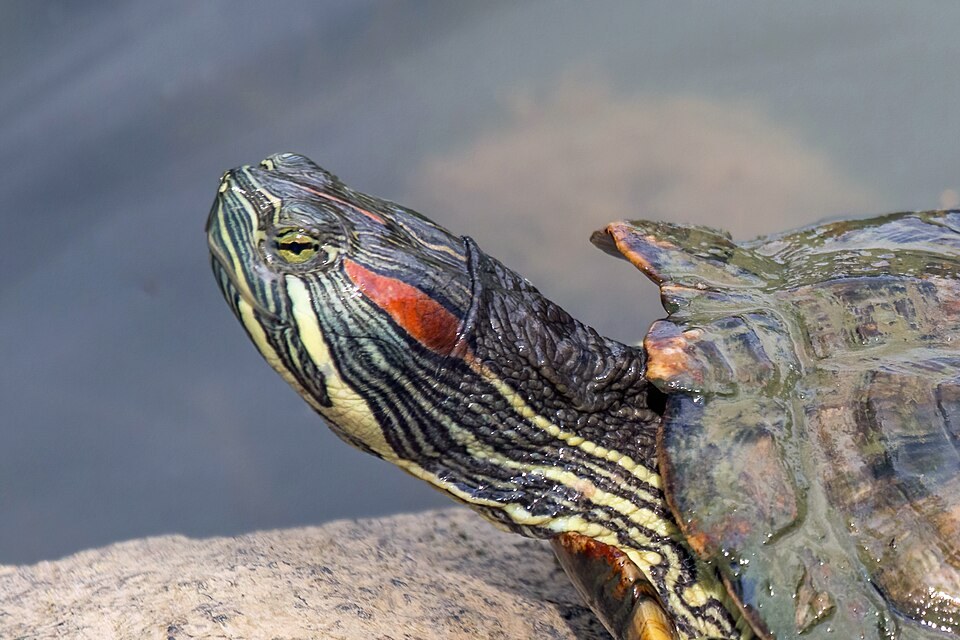
Red-eared slider feeding becomes easier when you stop treating every meal as a test of how much the turtle will eat. Sliders can be enthusiastic feeders, and an eager response is not a reliable portion guide. Build a plan around life stage, suitable foods, clean water, and body condition. The goal is steady health, not the fastest possible growth or an animal that always finishes an overflowing serving.
Understand why the diet changes with age
The red-eared slider is an aquatic omnivore, eating both animal and plant foods. The USGS describes younger animals taking insects and other small animals, while adults consume more vegetation. This shift matters in captivity: continuing a juvenile-style, animal-heavy menu throughout adulthood can displace useful plant variety and make excess feeding easier.
The Bio Dude offers a practical food-category shorthand of roughly 50% animal foods and 50% vegetables for young sliders, shifting to 25% and 75% for adults. These figures are not laboratory nutrient analyses. They do not mean that an adult diet should contain 25% chemical protein, nor do they define an exact ratio by calories or dried weight.
Use the transition as a direction of travel, not a birthday switch. Growth, health, sex, and body condition all influence the plan. Introduce suitable greens while the turtle is young so adult feeding does not depend on persuading an animal that has only ever seen shrimp.
Give each food a clear role
A suitable complete aquatic-turtle pellet can provide a consistent nutritional component, but read its intended species and life stage. A bag of dried shrimp or an occasional insect treat is not equivalent to complete food. Store pellets sealed, dry, and within the manufacturer's recommended period after opening. Old food and uncontrolled handfuls undermine an otherwise careful plan.
Offer varied safe leafy foods, such as romaine lettuce, collard greens, and pesticide-free dandelion leaves from a reliably identified source. Rotate choices rather than relying on one leaf indefinitely. Wash produce and cut or tear it to a manageable size. Avoid collecting plants beside treated lawns, roads, or unfamiliar ponds.
Appropriate animal foods belong within the age-based plan rather than becoming unlimited extras. Choose reputable captive feeder sources instead of wild-caught prey, and discuss suitable options with your veterinarian. Processed human foods, seasoned leftovers, and a diet of meat scraps do not reproduce a turtle's natural feeding ecology.
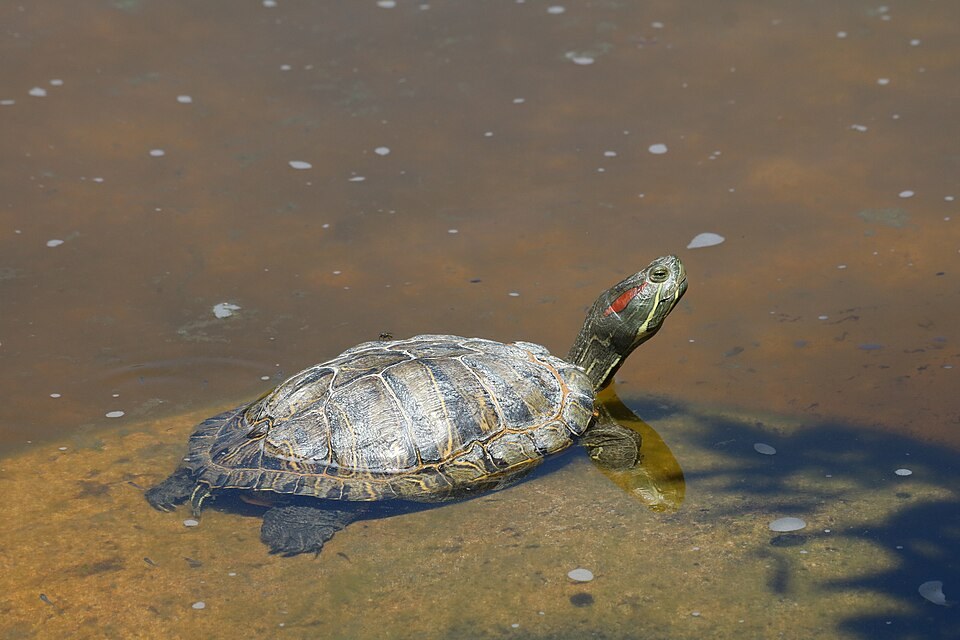
Set portions without turning feeding into a race
Published schedules differ. RSPCA gives a general routine of feeding every two days and offering only what the slider can eat in five minutes. The Bio Dude uses different food-specific portion descriptions. Neither should be converted into an automatic prescription for every hatchling, recovering turtle, or unusually active adult.
Start with the complete food's guidance and a veterinarian-approved schedule for the animal in front of you. Put the planned portion into a small measuring container before feeding, rather than repeatedly reaching into a large tub while the turtle follows your hand. If more than one person provides care, record what was offered so a convincing performance does not earn duplicate dinners.
Monitor body condition and growth over time. If you change the diet, make one manageable adjustment at a time so you can identify what improved acceptance or increased waste.
Coordinate calcium, vitamins, and UVB
Calcium intake and suitable UVB are connected parts of normal bone and shell health. A calcium product cannot compensate for a missing or incorrectly arranged UVB lamp, and a bright-looking lamp does not prove that useful UVB reaches the turtle. RSPCA recommends a gradient from basking UVI 3–5 to zero in shade, measured at the animal's basking position.
Review the pellet label before adding separate supplements. Complete foods may already contain vitamins and minerals, and casually combining several powders or concentrated drops can create excess as well as deficiency. Ask your reptile veterinarian how to coordinate the actual foods, any calcium source, and the lighting setup. This is especially important for growing animals and females with reproductive needs.
Bring product names and label photographs to appointments. Specific information allows a useful review; saying that the turtle receives a little vitamin powder does not establish what it actually gets.
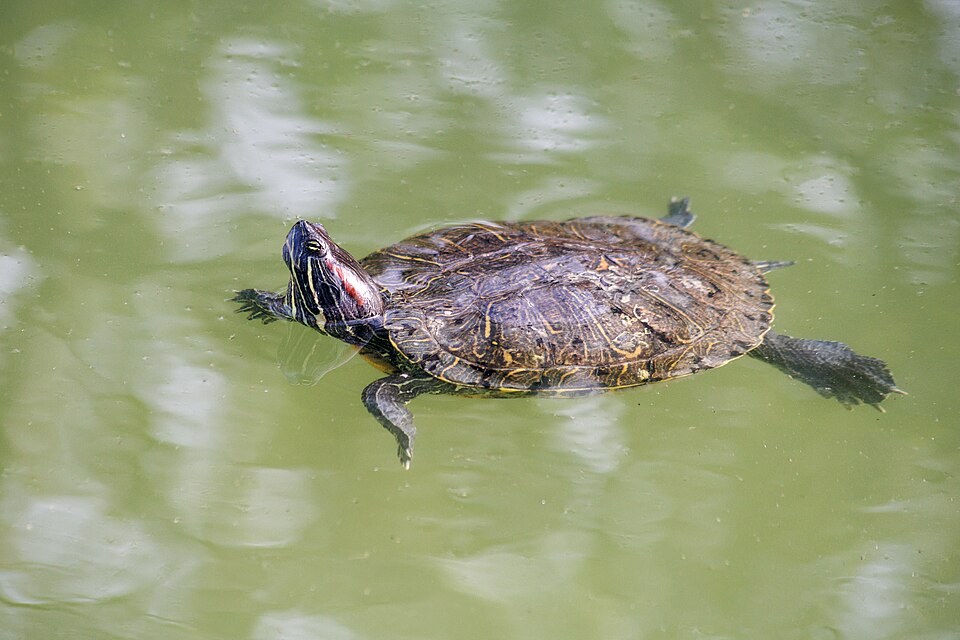
Feed in water without sacrificing water quality
Sliders normally swallow food in water. Do not expect a meal placed on a dry basking platform to work like a tortoise's food dish. Choose a predictable feeding area that lets you observe intake and retrieve leftovers without chasing the turtle around the enclosure.
A separate feeding container is not compulsory. Moving a nervous slider before every meal can cause avoidable stress, while feeding in the main habitat requires disciplined cleanup. If your veterinarian recommends a separate container, it must be secure, dedicated to the turtle, and supplied with suitable water; it is not permission to use the kitchen sink.
- Remove uneaten pellets and animal foods promptly.
- Retrieve deteriorating leaves before they accumulate around the intake.
- Keep feeding tools separate from household utensils.
- Wash hands after handling foods, tank water, or equipment.
Good filtration supports this routine but does not erase waste. Continue water testing and partial changes, and investigate an increasing maintenance burden before simply buying a stronger pump.
Troubleshoot refusal without rewarding a shrinking menu
If a previously keen turtle stops eating, first document what changed. Check the actual water temperature, basking access, lighting operation, and water conditions. Recent transport or repeated disturbance may also affect behavior, but do not assume that every refusal is harmless stress. Appetite loss accompanied by lethargy, breathing changes, swollen eyes, or abnormal swimming warrants prompt veterinary advice.
For an otherwise well turtle that rejects greens, offer small fresh portions consistently alongside the established plan. Vary safe textures and leaf types, but avoid replacing every rejected vegetable with a favorite treat. Do not starve a growing or unwell turtle into compliance.
Assess progress over repeated observations rather than one meal. A sustainable menu is one your turtle accepts, your household can provide consistently, and your veterinarian considers appropriate for its condition. Feeding success is balanced intake and normal function, not a bowl emptied at any cost.
Continue reading: Red-Eared Slider Health: Warning Signs and Safer Next Steps.
Sources and further reading:
- RSPCA: How to care for a terrapin
- The Bio Dude: Red Ear Slider Care and Maintenance
- CDC: Reptiles and Amphibians
- USGS NAS: Red-eared Slider Species Profile
- 21 CFR 1240.62: Turtles intrastate and interstate requirements
Photo credits: Charles J. Sharp (CC BY-SA 4.0), Grendelkhan (CC BY-SA 4.0), Godwin Borg (CC BY-SA 4.0). Images resized and compressed for web display. Each image retains its linked license.


