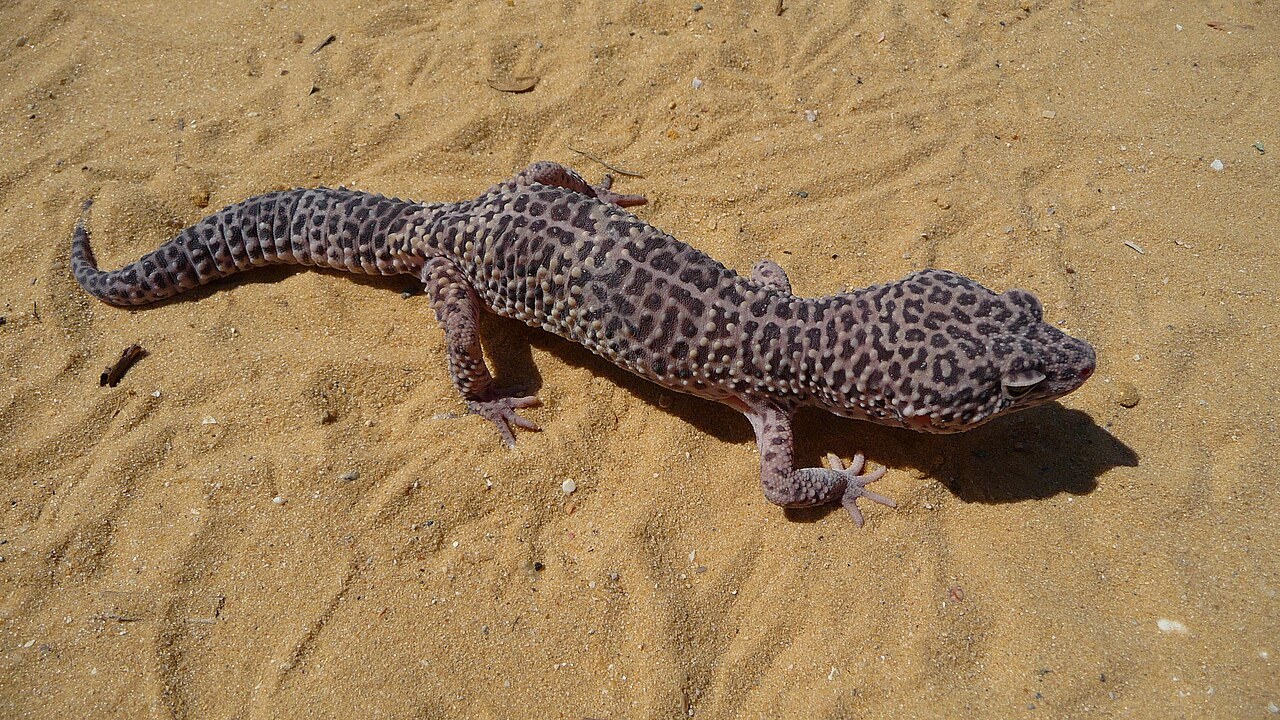
Leopard gecko shedding is skin renewal, not a grooming appointment. A healthy gecko usually manages the process using suitable humidity, safe rubbing surfaces, and its own behavior. Your role is to provide those conditions and notice areas that have not cleared. Repeated peeling, routine baths, and making the whole enclosure wet can create new problems without addressing why a shed was difficult.
Recognize a normal shed without disrupting it
Before shedding, the skin often looks dull, pale, or whitish as the old outer layer separates. Your gecko may spend more time in its humid hide and show less interest in food or handling. Young growing animals generally shed more often than established adults, but there is no single calendar interval that proves health. Track your own animal's pattern rather than trying to trigger a scheduled shed.
Leopard geckos commonly remove the old skin with their mouths and eat it. A keeper may therefore see the pale stage and then a normally colored gecko without finding a discarded skin. This is not automatically evidence that something went wrong. Keep the habitat quiet and avoid lifting every hide repeatedly to watch the process as it happens.
A short appetite change around shedding can occur, but weakness, persistent food refusal, falling weight, or eye swelling needs separate attention. Do not explain every change as shedding because the animal recently looked pale. Record when the color changed, what was eaten, and whether movement remained comfortable. That history is useful if a veterinarian needs to assess a later problem.
Separate dry surroundings from the humid hide
Aim for daytime background relative humidity around 30–40%, measured at gecko height on the cool side away from the water dish. This reflects a relatively dry, ventilated living space, not a requirement to remove every source of moisture. A brief natural rise overnight is different from continuous condensation or wet flooring. Avoid copying a tropical gecko's daily whole-enclosure misting routine.
Inside a separate humid hide, aim for about 70–80% RH. This localized microclimate lets the gecko choose moisture while dry warm and cool retreats remain available. Measure it with a suitable sensor rather than assuming a sealed plastic box is automatically correct. Place the hide where it remains comfortably usable, not beneath an intense lamp or in an excessively cold, wet corner.
Use clean, intact damp paper towel for a simple monitored setup, replacing it when soiled and before it breaks into loose shreds. Avoid flooding the hide or packing it with loose material that may be swallowed. The entrance should be smooth, large enough for easy movement, and free from sharp cut edges. Fresh shallow drinking water remains necessary even when the humid hide functions well.
Inspect toes, eyelids, and the tail tip gently
After the gecko returns to its usual color, look at the toes and tail tip during a calm observation or brief supported check. A tight pale ring around a toe can be easy to overlook beneath the body. Compare both feet and watch whether the animal places them normally. Do not bend digits repeatedly or restrain the tail to obtain a perfect photograph.
Leopard geckos have movable eyelids, not snake-style eye caps. Their eyes may close while resting or avoiding disturbance, but persistent squinting, swelling, discharge, or material around the eyelids is not a reason to attempt eye-cap removal. Lighting irritation, retained skin, injury, and disease can overlap in appearance. A veterinarian should assess an eye that remains abnormal.
- Look for tight skin rings around individual toes.
- Check the tail tip without gripping or stretching it.
- Observe both eyes opening normally when the gecko is active.
- Note swelling, discoloration, bleeding, or changed walking.
- Record persistent patches and contact your reptile veterinarian.
Know when retained skin needs veterinary care
Retained skin, sometimes called dysecdysis, is a sign to investigate rather than a diagnosis with one universal home remedy. Check humid-hide function, background conditions, hydration, nutrition, and recent illness. A superficial patch may look minor, but a constricting ring can affect circulation. Persistent skin around toes, the tail tip, or the eyes deserves veterinary advice rather than waiting through repeated sheds.
Swelling, a darkening or discolored toe, raw tissue, eye involvement, or difficulty walking makes prompt assessment particularly important. Do not pull, peel, or cut attached skin, even when an edge appears loose. Old skin may remain attached to delicate new tissue underneath. Tweezers and cotton swabs used without professional guidance can turn a retained patch into an injury.
Ask the veterinarian what to do while awaiting the appointment and follow those individual instructions. If a clinician recommends a specific assisted-moisture technique, that is treatment for an assessed problem, not a reason to add routine soaking to every healthy gecko's care.
Avoid baths and review the whole care system
Routine water baths are not required for normal shedding. A bath can cause stress and does not repair an ineffective humid hide, poor ventilation, nutritional imbalance, or unsuitable heating. Never submerge the head, leave a gecko unattended in water, or force fluids into its mouth. An animal that appears dehydrated or weak needs clinical assessment, not an improvised swimming session.
Check warm-end air at 28–30°C (82.4–86°F), cool-end air at 24–26°C (75.2–78.8°F), and the separately measured basking surface at 34–36°C (93.2–96.8°F). These are different measurement points, not competing thermostat settings. Maintain guarded thermostatic heating and a routine overnight air target of 18–20°C (64.4–68°F). Unchecked heat can dry a hide quickly or cause skin injury.
Review the insect diet and supplement labels with a reptile veterinarian if shedding problems recur. Calcium, D3, multivitamins, and measured UVB work together, but adding large amounts of vitamins is not a safe diagnostic trial. Albino or light-sensitive geckos that squint need their exposure reviewed as well. Repeated skin trouble should lead to better investigation, not progressively stronger home interventions.
Keep skin-supporting surfaces clean and safe
Provide stable textured furnishings that allow normal rubbing without sharp edges or abrasive traps. Leopard geckos lack adhesive toe pads but still use claws to grip rough surfaces. Reptile carpet can snag toes, and unstable rockwork can injure a shedding animal that squeezes beneath it. Inspect hide entrances and any new decoration before use, and keep heavy structures supported independently of loose substrate.
Remove waste promptly and replace dirty humid-hide lining. Clean equipment with reptile-appropriate products according to their directions, rinse as required, and dry items before returning them. A damp retreat should not become a reservoir of waste or mold. Keep cleaning tools dedicated to the enclosure and away from kitchen sinks, food utensils, and food-preparation surfaces.
Wash hands after contact with the gecko or its equipment because healthy-looking reptiles can carry Salmonella. Let the animal resume its normal routine after a straightforward shed rather than rewarding success with extended handling. The best skin-care routine is usually unobtrusive: accurate conditions, safe surfaces, a clean humid choice, and early professional help when a small area does not clear.
Continue reading: Living With a Leopard Gecko: Daily Care and Long-Term Plans.
Sources and further reading:
- RSPCA — Leopard gecko
- ReptiFiles — Leopard Gecko Lighting, Heating & Humidity
- ReptiFiles — Leopard Gecko Enclosure Size Requirements
- ReptiFiles — Leopard Gecko Food
- Merck Veterinary Manual — Management and Husbandry of Reptiles
Photo credits: George Chernilevsky (Public domain (copyright holder release; PD-self, not CC0)). Images resized and compressed for web display. Each image retains its linked license.

