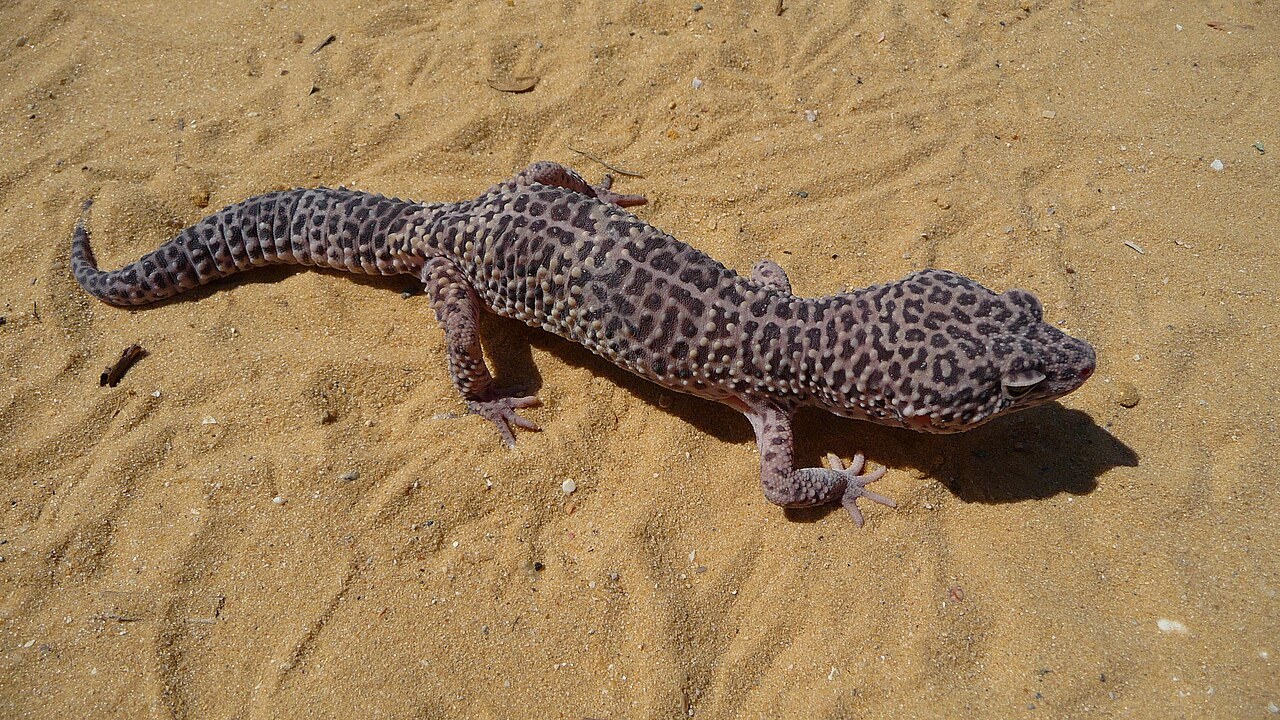
Leopard gecko care works best when you build choices into the habitat rather than chase one perfect thermometer number. Your gecko needs warm and cool places, dry shelters, a humid retreat, and the ability to avoid light. Set everything up before arrival, run it through several complete day and night cycles, and record what your instruments actually measure. A tidy enclosure is not automatically a functioning environment.
Choose adult space and secure the enclosure
For one adult, use at least 91.4 × 45.7 × 45.7 cm (36 × 18 × 18 in), measured as length, width, and height. This follows the larger ReptiFiles recommendation rather than treating smaller historical minimums as an ideal. Usable floor space matters more than a gallon label. Choose a larger footprint when you can furnish it with shelter and maintain a reliable gradient.
A Leopard Gecko is primarily terrestrial, but it still climbs textured rock and branches. It has claws and no adhesive toe pads, yet an unsecured door remains an escape route. Fit ventilation covers firmly, check cable openings, and position the enclosure away from direct sunlight, radiators, drafts, and access by cats or dogs. Front access often makes calm maintenance easier.
Start a new arrival on plain paper towel so you can inspect droppings and notice unwanted material. Avoid reptile carpet that can snag toes and calcium sand marketed as edible. Later substrate choices should reflect health, feeding habits, and husbandry competence, not an assumption that either all loose substrate or every solid surface is automatically safe.
Measure air and basking surfaces separately
Use a daytime warm-air target of 28–30°C (82.4–86°F) and cool-air target of 24–26°C (75.2–78.8°F). These operating ranges adapt RSPCA zone guidance into an explicit air-monitoring protocol. Place digital probes at gecko height, just above the substrate, shielded from direct radiant heating and not touching stone. A probe heated by a lamp is not a trustworthy ambient reading.
The exposed basking surface has a different target: 34–36°C (93.2–96.8°F), following ReptiFiles' specifically labeled surface recommendation. Measure matte stone with an infrared thermometer after the system stabilizes. Scan nearby surfaces for hotter patches and allow an immediate retreat into shade. Never set the whole enclosure's air to the surface temperature.
Control overhead heating with a compatible thermostat and protect the animal from lamps and fixtures. The thermostat regulates equipment; separate thermometers verify the result. Sources differ in their temperature wording, so do not average unlike readings together. A useful daily log records location and instrument alongside the number, making a displaced probe much easier to identify.
Provide gentle UVB and a dark night
A mainly crepuscular lifestyle does not mean that useful lighting is unnecessary. Provide low-intensity UVB over a limited area, with a conservative measured basking UVI of 0.5–0.7 and fully shaded retreats approaching zero. This uses the lower end of specialist guidance rather than trying to maximize exposure. Measure at the gecko's back height on its highest accessible basking surface.
Albino and other light-sensitive animals need especially generous cover. Persistent squinting or avoidance deserves a lighting review and reptile-veterinary advice, not forced exposure. Mesh, lamp distance, reflector design, and bulb aging change UVB delivery. Do not choose a bulb solely by its printed percentage, and do not rely on sunlight through window glass to provide dependable UVB.
Use a timer for 12 hours of daytime light followed by 12 hours of darkness. Aim for routine overnight air around 18–20°C (64.4–68°F). If the room would fall below 18°C (64.4°F), provide guarded, thermostatically controlled lightless heat. This nighttime target is not an instruction to refrigerate the enclosure, force seasonal dormancy, or use red or blue night bulbs.
Keep the habitat dry without denying humidity
Maintain daytime background relative humidity around 30–40%, measured on the cool side at gecko height away from the water bowl. Most of the enclosure should stay relatively dry and well ventilated. A brief nighttime rise is different from persistent damp substrate and condensation. Do not apply a tropical gecko's whole-enclosure misting routine to this species.
Provide three retreat types: a dry warm hide, a dry cool hide, and a separate humid hide. Aim for about 70–80% RH inside the humid retreat, checked separately from room air. Use clean, intact damp paper towel during straightforward monitoring, replacing it when dirty and avoiding loose shreds. The hide should be damp, not flooded, and accessible without crossing exposed space.
Offer a shallow dish of fresh drinking water continuously. Humidity does not replace drinking water, and routine bathing does not replace a working humid hide. Inspect toes after a shed without pulling attached skin.
Feed insects and furnish for natural choices
Growing juveniles usually need small insect meals daily; a healthy adult can start with meals every 2–3 days, adjusted to body condition. Offer varied, appropriately sized captive-bred feeders and gut-load them for 24–48 hours. Dust lightly with calcium immediately before feeding, then coordinate oral D3 and multivitamins with measured UVB and the directions for your actual products.
Avoid fruit-based crested gecko diets, fatty-worm staples, and wild-caught insects. A Leopard Gecko is an insect hunter, not a miniature omnivorous bearded dragon. Remove uneaten feeders before they hide or bite the resting gecko. Feeding on a clean dish or clear surface makes intake easier to observe without repeatedly moving the animal to another container.
Add low stable climbing opportunities, textured but nonabrasive surfaces, and covered routes between retreats. Position heavy furnishings securely before adding substrate. Change enrichment gradually, preserving familiar shelters, and never add another gecko as entertainment. Curiosity is best supported by choices within a safe solitary home.
Use a short daily welfare checklist
Good care includes noticing the animal, not only the equipment. Compare behavior with its own usual dusk activity, appetite, posture, and droppings. Daytime hiding can be normal; weakness, a narrowing tail, or ongoing food refusal needs investigation. Keep weight records and arrange a reptile-experienced veterinarian before an emergency limits your options.
- Confirm thermostat operation and independent temperature readings.
- Refresh water and remove waste or escaped feeders.
- Check that all retreats remain accessible and the humid hide is clean.
- Record unusual feeding, shedding, movement, or eye changes.
- Check locks and wash your hands after maintenance.
Reptiles can carry Salmonella without looking ill. Keep equipment away from kitchens, supervise appropriate older children, and prevent contact by children under five or immunocompromised people. A carefully measured habitat and consistent hygiene are more valuable than any claim that this is a maintenance-free pet.
Continue reading: Leopard Gecko Feeding: Insects, Calcium, and Body Condition.
Sources and further reading:
- RSPCA — Leopard gecko
- ReptiFiles — Leopard Gecko Lighting, Heating & Humidity
- ReptiFiles — Leopard Gecko Enclosure Size Requirements
- ReptiFiles — Leopard Gecko Food
- Merck Veterinary Manual — Management and Husbandry of Reptiles
Photo credits: George Chernilevsky (Public domain (copyright holder release; PD-self, not CC0)). Images resized and compressed for web display. Each image retains its linked license.

