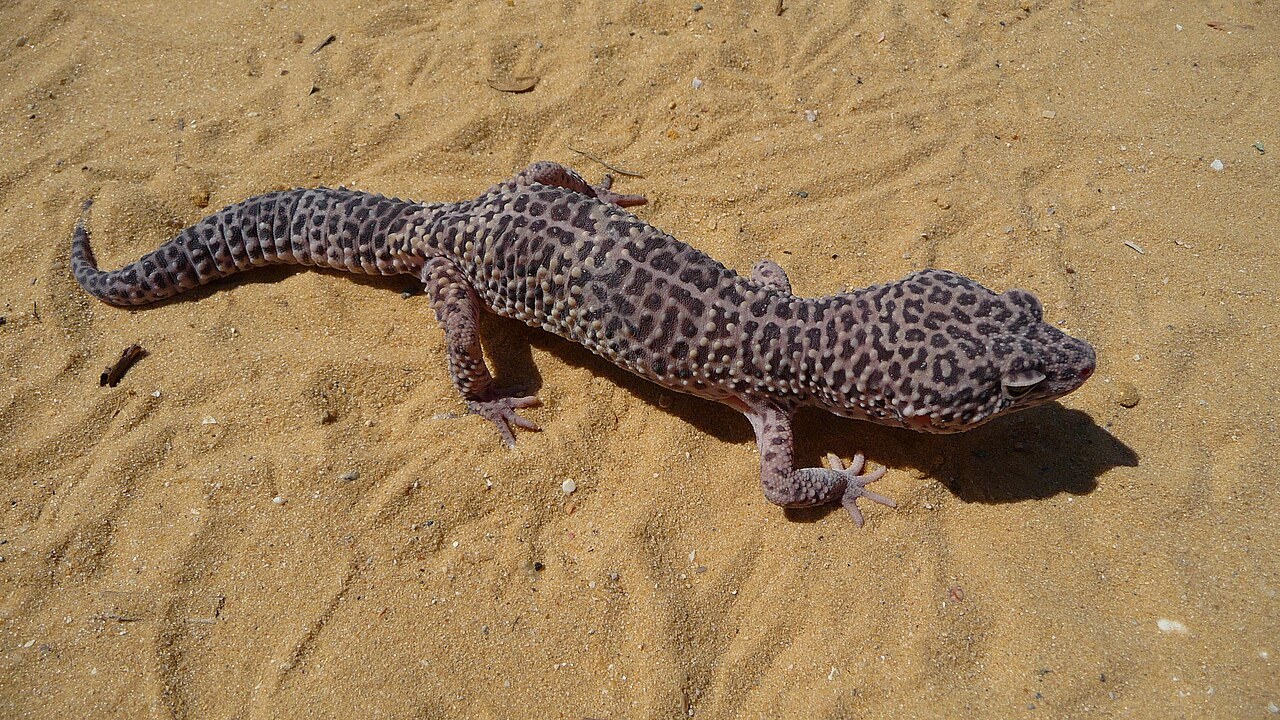
Leopard gecko handling should make routine care easier without making the animal feel trapped. A gecko that willingly walks onto a supported hand is having a different experience from one chased until it stops resisting. You do not need to turn every Leopard Gecko into a lap pet. Learn its activity pattern, read changes in posture, and give it a reliable way to decline contact.
Start with the gecko's natural schedule
Leopard geckos are mainly crepuscular, often exploring around dusk and dawn, with additional nighttime activity. Resting in a hide during much of the day is not automatically a sign of boredom or illness. Observe when your individual usually emerges and plan maintenance around that pattern where possible. Waking it repeatedly for visitors can turn an otherwise calm home into an unpredictable place.
After arrival, prioritize stable conditions, shelter, and a repeatable feeding routine. Wait until the gecko is reliably eating and behaving normally before attempting optional handling; there is no universal countdown that suits every individual. Necessary health checks may still be needed, but they should be brief and purposeful. A shy animal can need more time than an outgoing one without being defective.
Sit nearby, move slowly, and let your presence become uneventful. Open the enclosure for ordinary care without always reaching toward the gecko. Familiar routines can reduce surprise, but food anticipation is not proof of affection or permission to grab. Your most useful early achievement may be a gecko that continues exploring while you replace its water dish.
Read posture and context before touching
Look for a relaxed body, unhurried movement, and the ability to choose a route away. Backing into a hide, flattening defensively, opening the mouth, vocalizing, or repeatedly trying to flee means the approach should stop. Freezing is not reliable consent: an animal may become still because escape appears impossible. Compare the behavior with its normal response in a quiet setting.
Tail movements need context. A brief anticipatory vibration during an insect hunt is not necessarily the same as defensive waving while the body is tense. Do not test a reaction by touching the tail or presenting a threatening hand again. If the gecko is already disturbed, lower activity around the enclosure and let it recover without another handling attempt that evening.
Persistent changes may have a medical or environmental cause. A usually active gecko that becomes weak, stops eating, or loses weight needs a review of husbandry and possibly a veterinary examination. Hiding continuously after a new lamp is fitted can justify checking light exposure and heat, especially in albino or other light-sensitive animals. Behavior is information, not a diagnosis on its own.
Practice supported, voluntary handling
Approach slowly from the side rather than descending abruptly from above. Place a clean hand low and still, allowing the gecko to investigate or step across it. If it accepts contact, support the chest, abdomen, and all four feet with both hands. Avoid pinching the ribs, squeezing the body, or letting the rear half dangle while you adjust your grip.
Keep the first successful interactions brief and finish before the animal starts scrambling. Handle low over a secure, clear surface so a sudden movement cannot become a long fall. Keep doors closed and other pets out of the room. If it walks forward, provide another supported hand rather than trapping it tightly or letting it run up an arm beyond easy control.
- Check that your hands are clean and free of lotion residue.
- Let the gecko see the approach and choose whether to advance.
- Support the whole body, including every foot.
- Keep movements slow and the distance to a safe surface short.
- Return it calmly at the first signs of sustained avoidance.
Protect the tail and prevent escape
Never lift, restrain, or catch a gecko by its tail. Tail dropping is a defensive response, not a harmless trick. The lost tissue represents stored resources, and the wound needs appropriate assessment. A regenerated tail can grow but generally differs from the original in shape, texture, and pattern. This is not the same as restoring the animal to an untouched condition.
If tail loss occurs, secure the gecko quietly on a clean temporary surface within suitable housing and contact a reptile veterinarian for guidance. Do not apply household creams or attempt to manipulate the stump. Prevent escaped feeders from contacting the wound. Significant bleeding, weakness, contamination, or other injury makes the need for prompt care more urgent.
Leopard geckos have movable eyelids and lack adhesive toe pads, but those features do not make an open enclosure safe. Claws grip textured furnishings, and a low branch can become a route to a door edge. Check locks, ventilation panels, and cable gaps after maintenance. Never leave the animal roaming unattended on furniture or the floor, where crushing, chilling, and encounters with other pets are possible.
Offer enrichment without adding roommates
A well-designed enclosure lets a gecko investigate while remaining concealed. Provide low stable climbing surfaces, textured paths, and multiple routes between a dry warm hide, dry cool hide, and humid hide. Keep heavy objects securely supported and remove narrow gaps where the body or toes could become trapped. Change one feature at a time while preserving familiar sleeping places.
House one gecko alone. Two animals resting together may be competing for a particularly desirable retreat rather than seeking companionship. Subtle exclusion from heat or food can occur before obvious biting, and mixed sexes add reproductive pressure. Do not treat a larger enclosure as a guarantee that cohabitation will be safe. Individual housing makes appetite and droppings easier to monitor as well.
Bearded dragons, crested geckos, corn snakes, and ball pythons are useful species to compare when choosing a pet, not candidates for a shared habitat. Their environmental needs and physical risks differ. Likewise, contact with a household cat or dog is not enrichment, even when that animal usually appears gentle. Separation is more dependable than trying to interpret a predator's intentions.
Set realistic household boundaries
Handling tolerance varies throughout life and with health, shedding, and recent disturbance. Skip optional contact during an unsettled period or difficult shed, and avoid handling immediately after feeding. Brief observation from outside the enclosure can still be rewarding. If necessary care consistently causes severe distress, ask a reptile veterinarian about safer techniques rather than practicing repeated capture until the gecko gives up.
Children under five and immunocompromised people should not handle reptiles or their equipment. Older children need close adult supervision, a seated low handling position when appropriate, and handwashing afterward. Keep the gecko and its supplies away from food-preparation areas. If a bite breaks skin, clean the wound and seek medical advice when appropriate, particularly for anyone at increased infection risk.
The goal is a predictable relationship in which you can inspect, transport, and care for the animal safely. Some geckos will investigate you frequently; others prefer watching from cover. Respecting that difference supports welfare more reliably than expecting every individual to behave like a social mammal.
Continue reading: Leopard Gecko Shedding: Humid Hides, Toes, and Skin Safety.
Sources and further reading:
- RSPCA — Leopard gecko
- ReptiFiles — Leopard Gecko Lighting, Heating & Humidity
- ReptiFiles — Leopard Gecko Enclosure Size Requirements
- ReptiFiles — Leopard Gecko Food
- Merck Veterinary Manual — Management and Husbandry of Reptiles
Photo credits: George Chernilevsky (Public domain (copyright holder release; PD-self, not CC0)). Images resized and compressed for web display. Each image retains its linked license.

