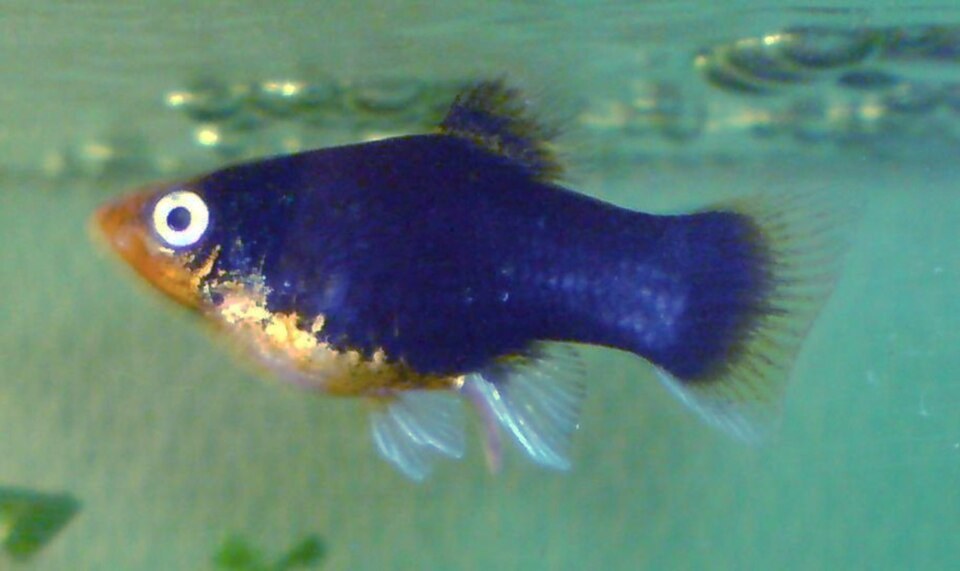
A Day in the Life of a Platy
Platies keep gentle office hours. As the tank light comes on, they drift out of the plants and pick up where they left off: grazing. A platy works its way along the glass, the leaves and the gravel, nibbling at the film of algae and micro-organisms that grows there. Mid-morning usually brings a burst of social activity, with fish moving through the group, testing one another and exploring the decor.
By evening, appetite takes over. A group that has learned your routine will be waiting at the front glass well before you reach for the food. When the light goes out, platies slow down, and many sink into the plants or rest near the bottom. Their colors often look duller overnight, which is completely normal.
Feeding times shape the rest of the day. A group fed at the same hours learns the schedule within days, and you may notice a small rush of activity at the glass just before each meal. Stand in the same spot and wait a moment before you feed, and you will soon have a group that performs on cue, which is a pleasant trick and also a reliable way to check that every fish is feeling well.
What matters is the pattern. A fish that joins the group, eats and explores every day is doing well. A platy that hides from morning to night, skips meals or hangs apart from the others is telling you to check the water.
Chasing and Sparring: What Normal Looks Like
Platy society is busy but rarely cruel. Males chase females, females occasionally chase each other, and two males will sometimes circle and tilt at one another for a few seconds before separating. None of this means the tank is failing; it is how a livebearer group sorts itself out.
The line between courtship and harassment is worth learning:
- A female that keeps feeding, grazing and resting normally is coping with the attention
- A female that hides constantly, clamps her fins or is chased every time she moves is being worn down
If one male will not leave a single female alone, add more females so the attention is shared, add plants and caves to break sightlines, or move the most persistent male to another tank for a holiday. Platies do not defend territories the way cichlids or bettas do, so serious aggression is uncommon. When it does appear, it almost always traces back to a cramped tank or a badly skewed sex ratio.
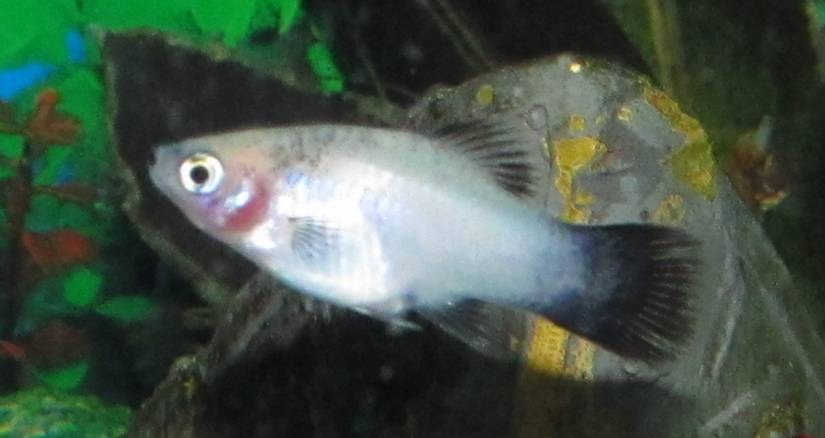
Begging at the Glass: Why Platies Follow You
Strictly speaking, your platy is not greeting you. It has learned, quickly and thoroughly, that the person-shaped blur near the tank predicts food. Platies are excellent at this kind of learning, and a group can go from shy to insistent within a few days of a regular feeding routine.
Begging is harmless, but it has a cost. It is very easy to overfeed a group of glass-dancing platies, and every extra pinch of food ends up as waste in the filter. Feed by portion, not by demand.
Use the habit to your advantage instead. A quick head count at feeding time is one of the simplest health checks there is. If every platy comes to the glass and eats with enthusiasm, the group is probably fine. A fish that stops joining the rush is often the first sign that something has changed.
Courtship and the Livebearing Habit
Males spend much of their day courting. A courting male swims alongside a female with his fins spread, tilting his body and nudging her flank, then uses his gonopodium, the rod-like anal fin, to transfer sperm. The behavior can look relentless, but it is normal, and a well-planted tank with the right sex ratio keeps it manageable.
Females give birth to live young rather than laying eggs. A pregnancy lasts roughly four to six weeks, ending in a brood that can number several dozen, and a female can store sperm to produce further broods from a single mating. This is why fry tend to appear in aquariums where nothing seems to have happened.
Newborn fry are ready to swim within minutes. They spend their first weeks hiding among plants and grazing constantly, growing quickly on a diet of micro-organisms and crushed food. Within a month or two they begin to look and act like miniature adults, joining the group at feeding time.
Color, Fins and Body Language
A platy's body tells you most of what you need to know once you learn its baseline. Strong color, relaxed fins, steady swimming and an interest in food all point to a fish that is comfortable in its tank.
Watch for the opposite signals:
- Fins held tightly against the body, a sign of stress or cold water
- Colors that stay washed out for days rather than fading only at night
- Constant glass surfing or swimming in tight circles
- Flashing and scratching against decor, which suggests irritation from parasites or poor water
- Hovering at the surface and gulping, which usually means oxygen or water quality trouble
Mood shows in color as well. A courting or competing platy may deepen its pigment within seconds, while a fish that has been chased hard can pale and shrink away into the plants. These shifts are quick and normal. A washed-out fish that stays that way for days is the one worth worrying about.
A healthy female also develops a dark gravid spot near the vent as she carries fry, and a courting male may quiver on the spot beside a female. Both are ordinary parts of platy life rather than symptoms.
How Platies Read Their Tank Mates
Platies are peaceable citizens. In a community tank they mostly ignore other species, staying in the middle and upper layers while neon tetras and corydoras work the lower half. Because they are calm, visible and always active, platies often act as dither fish, encouraging shy species such as zebra danios and rasboras to come out into the open.
Their good nature has limits. Fast, nippy tank mates can bully them, and platies have no way to retaliate beyond dodging away, so avoid known fin-nippers. Large fish may simply see a platy as a snack. Within their own group, platies squabble briefly and settle quickly, and a tank with the right numbers feels constant, cheerful and calm.
Changing this dynamic starts with tank mates and daily care, but it is worth repeating here: more females than males, plenty of plants, and nobody large enough to eat your smallest fish. Meet those conditions and platy behavior stays as pleasant as the fish itself.
Continue reading: Platy Tank Maintenance: Cleaning, Water & Equipment.
Sources and further reading:
- Seriously Fish species profile: Xiphophorus maculatus
- FishBase: Xiphophorus maculatus, Southern platyfish
- MSD Veterinary Manual: Disorders and Diseases of Fish
- USGS Nonindigenous Aquatic Species: Southern Platyfish
- RSPCA: Keeping freshwater fish as pets
Photo credits: Gourami Watcher via Wikimedia Commons (CC0 1.0), Montoya at da.wikipedia via Wikimedia Commons (CC BY-SA 2.5). Images resized and compressed for web display.

