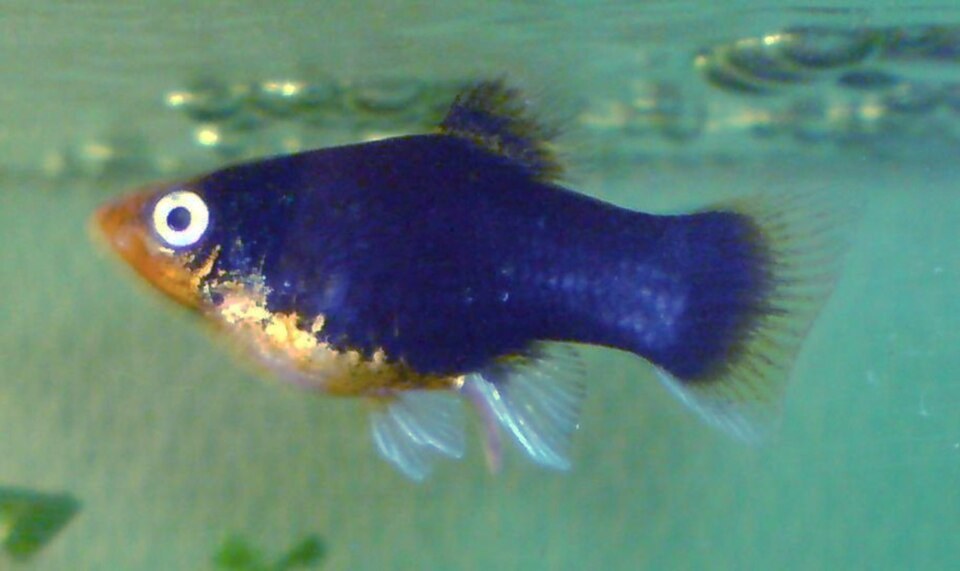
What Platies Eat in the Wild
In the wild, platies are constant grazers. They scrape algae from rocks and plant leaves, pick tiny insects and crustaceans out of the water, and sift mouthfuls of mud for anything edible. That is why the fish in your tank spend the day pecking at the glass, the gravel and every leaf in sight: eating is what a platy does.
Two lessons follow from that natural menu. First, platies need plenty of plant-based roughage; a fish fed nothing but rich protein food may look well for a while and then run into digestive trouble. Second, they eat small amounts very often rather than one large meal, which shapes how you should feed them at home.
The Daily Menu: A Balanced Diet Plan
A good platy diet is built from three layers, and quality matters more than quantity at every level:
- Staple: a tropical flake or micro-pellet with plant matter or spirulina among the first ingredients
- Greens: blanched zucchini, cucumber, spinach or shelled peas, offered two or three times a week
- Treats: frozen or live brine shrimp, daphnia or bloodworms, once or twice a week
Flakes and pellets should be small enough for a platy to swallow without a struggle. Freeze-dried foods are convenient, but they float and can swell inside a hungry fish, so soak them for a minute before you feed. Rotating two or three different staple foods is a simple way to cover any gaps in a single product.
A typical week might look like this: flake in the morning, a vegetable strip at midday, and a pinch of frozen food in the evening on three days. The timetable matters far less than the balance. If your platies are bright, active and producing solid waste, the diet is working. A varied menu also keeps fish from becoming fussy, and it covers nutrient gaps that no single product fills on its own. Keeping two or three different staples on the shelf and rotating them week by week costs nothing and covers more ground.
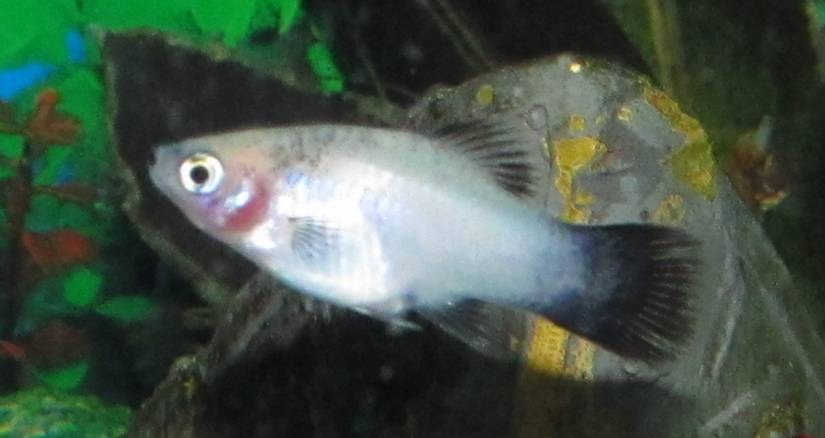
Vegetables and Plant Matter: The Platy Superfood
Greens are not a garnish for platies; they are the part of the diet that keeps the gut moving and the colors strong. Zucchini and cucumber are the easiest starting point. Cut a thin slice, pour boiling water over it, leave it for a minute, then cool it under the tap. Spear the slice on a fork and lower it in, or use a vegetable clip on the glass.
Other reliable options include spinach leaves, romaine lettuce, shelled peas and small pieces of broccoli. Take the leftover vegetable out after a few hours, because soft plant matter breaks down quickly and clouds the water. Spirulina wafers made for algae grazers are a useful backup on days when the kitchen has nothing suitable. Vary the color of the vegetables you offer, since different greens carry different nutrients.
One firm rule: never feed your fish anything collected from a pond, canal or river. Wild food can carry parasites and disease straight into your tank, and there is no way to know what it has been exposed to. Shop-bought frozen and live foods are cultured for aquarium use and remain the safer choice.
How Much to Feed and How Often
Adult platies do best on two small meals a day. Each portion should be gone within one to two minutes; if food is still drifting around after five, the portion is too large. A single fast day each week does no harm and gives the digestive system a rest, although it is not essential.
Growing fry and pregnant females need more, with three or four tiny meals spread across the light hours. The one number that must never change is the total amount of food entering the tank, because everything the fish do not eat becomes waste that the filter has to process.
Watch the group at each meal, too. If one fish hangs back, chews slowly or spits food out, that is useful information long before any spot or sore appears. Feeding time is the cheapest health check you will ever run.
Feeding Pregnant Females and Fry
A pregnant female carries a dark gravid spot near her vent and a deeply rounded belly. She does not need a special food, but she does benefit from more of the good stuff: a little extra frozen food and greens, offered in small amounts through the day. Leave her in the main tank with plenty of cover rather than isolating her too early, because netting a heavily pregnant fish adds avoidable stress.
Newly born fry are around a quarter of an inch long and need food almost constantly. Start with liquid fry food, microworms or baby brine shrimp, then move to finely crushed flake as they grow. A thin slice of boiled zucchini also makes a good nursery food, because it grows a film of micro-organisms that fry can graze between meals.
Fry tanks collect waste quickly, so small daily water changes with dechlorinated, temperature-matched water keep them growing steadily. Keep the fry well fed but never soupy: clean water matters more to young platies than any single food.
Red Flags at Feeding Time
Feeding is a window into health, and platies are usually enthusiastic about it. Treat any of these changes as a prompt to investigate:
- Refusing food for more than a day, especially in a fish that normally rushes the glass
- Spitting food out repeatedly, or chewing and dropping every mouthful
- Hovering at the surface or hiding while the rest of the group eats
- Uneaten food collecting on the gravel after every single meal
Check the water first, then the temperature, then the portion size. In most cases the answer shows up in a water test rather than in the food packet.
Good feeding is not about fancy products. It is about small portions, plenty of plant matter and a routine that keeps the water clean between meals. Get those three things right and your platies will reward you with color, energy and a steady stream of babies.
Continue reading: Platy Health: Common Issues & Prevention.
Sources and further reading:
- Seriously Fish species profile: Xiphophorus maculatus
- FishBase: Xiphophorus maculatus, Southern platyfish
- MSD Veterinary Manual: Disorders and Diseases of Fish
- USGS Nonindigenous Aquatic Species: Southern Platyfish
- RSPCA: Keeping freshwater fish as pets
Photo credits: Gourami Watcher via Wikimedia Commons (CC0 1.0), Montoya at da.wikipedia via Wikimedia Commons (CC BY-SA 2.5). Images resized and compressed for web display.

