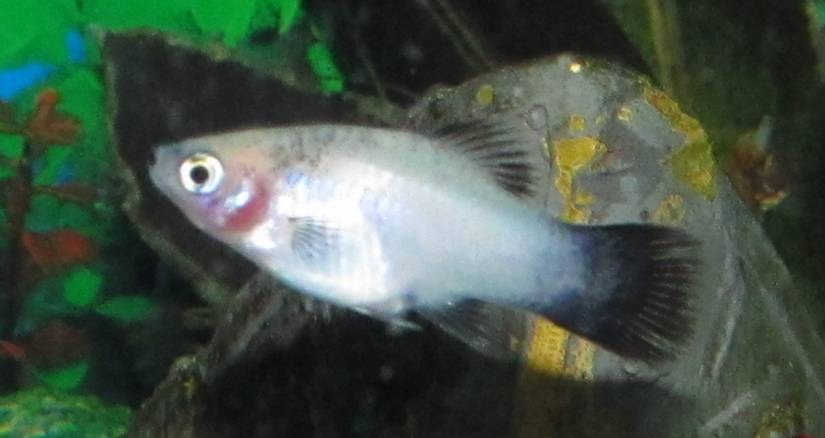
Meet the Platy: The Hobby Classic
The platy, Xiphophorus maculatus, is a small livebearer that has been a fixture of community aquariums for generations. Older books often call it the moonfish, and shops may sell it as the southern platyfish. Its wild home is the Atlantic coastal plain of Central America, where it lives in warm, slow-moving streams, ditches and drainage channels in Mexico, Guatemala and Belize.
That background explains a lot about the fish. Platies are adapted to hard, mineral-rich water, they cope with a wide range of temperatures, and they spend their days grazing on algae and tiny invertebrates. They are peaceful, endlessly colorful and genuinely easy to keep, which is why they remain one of the best choices for a first aquarium. They are also famously easy to breed, so decide early whether you want fry.
One quick identity check: a platy is not a swordtail. The swordtail (Xiphophorus hellerii) is a close relative whose males grow a long, sword-like extension on the lower tail fin. The two species can interbreed, so keep them apart if you plan to breed either one.
Choosing and Setting Up a Platy Tank
A group of five or six platies fits comfortably in a 10 to 20 gallon tank, and a 20 gallon long is close to ideal. Stock lightly at first, because the filter needs time to catch up with the waste the fish produce. A simple setup works well:
- A gentle filter, such as a sponge filter or a small power filter with adjustable flow
- A reliable heater set between 68 and 79F (20-26C)
- A close-fitting lid, because platies can jump when startled
- Live or silk plants, plus driftwood or a cave or two for cover
Cycle the tank before any fish arrive. Run the filter for two to four weeks and test until ammonia and nitrite both read 0 ppm. In an uncycled tank, fish waste turns into ammonia, which burns the gills and stresses the whole group. A liquid test kit is a better investment than any ornament.
When you bring platies home, float the bag for fifteen minutes so the temperature can equalize, then net the fish into the tank rather than pouring shop water in. Quarantine new arrivals in a separate tank for two to four weeks before they meet your main group. That single habit prevents most of the disease problems new keepers run into.
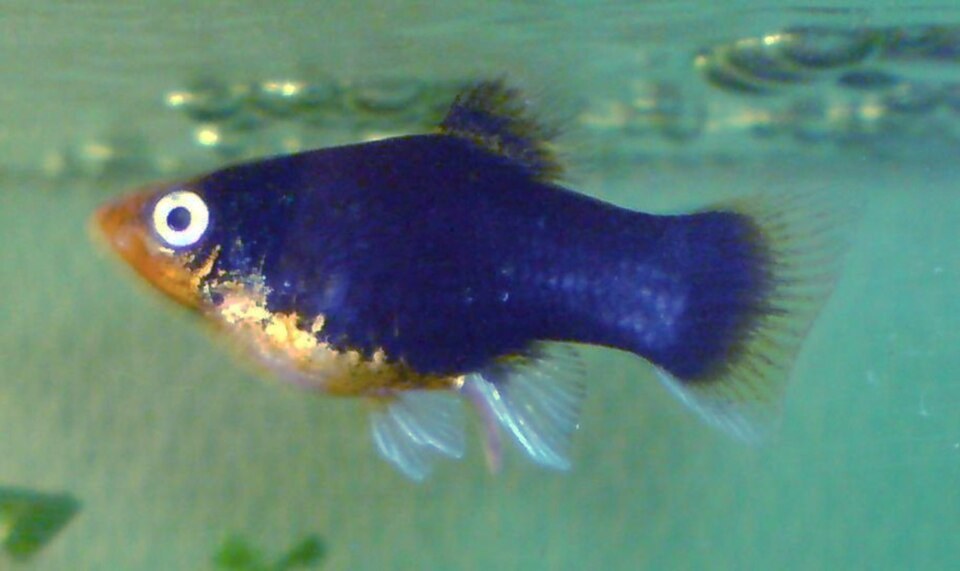
Getting Water Parameters Right
Platies come from mineral-rich water and do best in hard, alkaline conditions. Aim for a pH of 7.0 to 8.3 and treat soft, acidic water as a warning sign rather than a target. If your tap water is very soft, crushed coral or a small bag of aragonite in the filter can raise hardness gently and keep it stable.
Temperature is forgiving: anything from 68 to 79F (20-26C) suits them. The exact number matters less than stability, so set the heater and leave it alone. A swing of more than a degree or two in a day is more stressful than a steady reading at the edge of the range.
Water quality is where platies are least forgiving:
- Ammonia and nitrite must read 0 ppm at all times
- Nitrate should stay low and rise only slowly between water changes
- Chlorine and chloramine must be removed from every drop of tap water
Feeding, Companions and Daily Routine
Platies are unfussy eaters with a real taste for greens. Offer a quality tropical flake or micro-pellet as the base of the diet, then add variety: blanched zucchini, cucumber, spinach leaf, shelled peas or a spirulina wafer. Frozen foods such as brine shrimp and bloodworms make excellent occasional treats. Two small meals a day is plenty, and each should disappear within a minute or two.
Good companions include guppies, zebra danios, cherry barbs and small corydoras catfish. These fish share the platy's easygoing nature and, in the case of the danios, some of its preferred water chemistry. Avoid anything large enough to eat a platy, and think twice about fin-nippers such as tiger barbs.
The daily routine is short. Feed the group, watch for a minute, check that nobody is hiding or hanging at the surface, and remove any food that is still there after a few minutes. Once a week, change 20 to 25 percent of the water. For a full breakdown of foods and portions, see the platy feeding guide.
Breeding Happens: Plan for Fry
Female platies give birth to live young, usually every four to six weeks, and a large female can release up to 80 fry at once. Because females can store sperm, a single mating can produce several broods, so a mixed group will breed whether or not you plan for it.
Fry are tiny but surprisingly capable. They swim from birth and will eat finely crushed flake, microworms or baby brine shrimp within a day or two. Floating plants, moss and other dense cover give them somewhere to hide, and a sponge filter is much safer for them than a power filter that can pull them in.
If you do not want fry, keep a single-sex group of males. If you do, plan where the young will live well before they arrive. Aquarium shops sometimes take healthy juveniles, but they are not obliged to, and overcrowding is the quickest way to spoil a good tank.
Common Beginner Mistakes to Avoid
Most problems with platies trace back to a short list of avoidable slips:
- Adding fish to a brand-new, uncycled tank
- Cleaning anything that touches the aquarium with soap or household spray
- Feeding more than the fish can clear in two minutes
- Keeping more males than females, which leads to relentless chasing
- Skipping quarantine and dropping new fish straight into the group
- Letting the heater drift or the temperature swing during water changes
Every item on that list is easier to prevent than to fix. A quarantine tank can be as simple as a plastic storage tub with a small sponge filter and a spare heater, and it will save more trouble than any bottle of medicine.
Your Platy Care Checklist
Before you buy, work through a simple checklist:
- Set up a 10 to 20 gallon tank with a filter, heater and lid
- Cycle it until ammonia and nitrite both read 0 ppm
- Test pH and hardness, and adjust only if the water is very soft
- Plan a group of five or six with two or three females per male
- Buy a staple food plus a vegetable or two for variety
- Set aside a small tub, net and towel for quarantine and cleaning
- Ask your local shop whether it will take surplus fry
Work through those steps and the rest is routine: weekly water changes, sensible feeding and a daily glance at the group. A platy that is bright, busy and first to the food is a platy that is being kept well.
Continue reading: Platy Nutrition: The Complete Diet Guide.
Sources and further reading:
- Seriously Fish species profile: Xiphophorus maculatus
- FishBase: Xiphophorus maculatus, Southern platyfish
- MSD Veterinary Manual: Disorders and Diseases of Fish
- USGS Nonindigenous Aquatic Species: Southern Platyfish
- RSPCA: Keeping freshwater fish as pets
Photo credits: Gourami Watcher via Wikimedia Commons (CC0 1.0), Montoya at da.wikipedia via Wikimedia Commons (CC BY-SA 2.5). Images resized and compressed for web display.

