German Shorthaired Pointer Care: Activity With Purpose
Build a realistic German Shorthaired Pointer care routine with age-appropriate exercise, secure outings, useful enrichment, quiet rest, and health checks.
Read article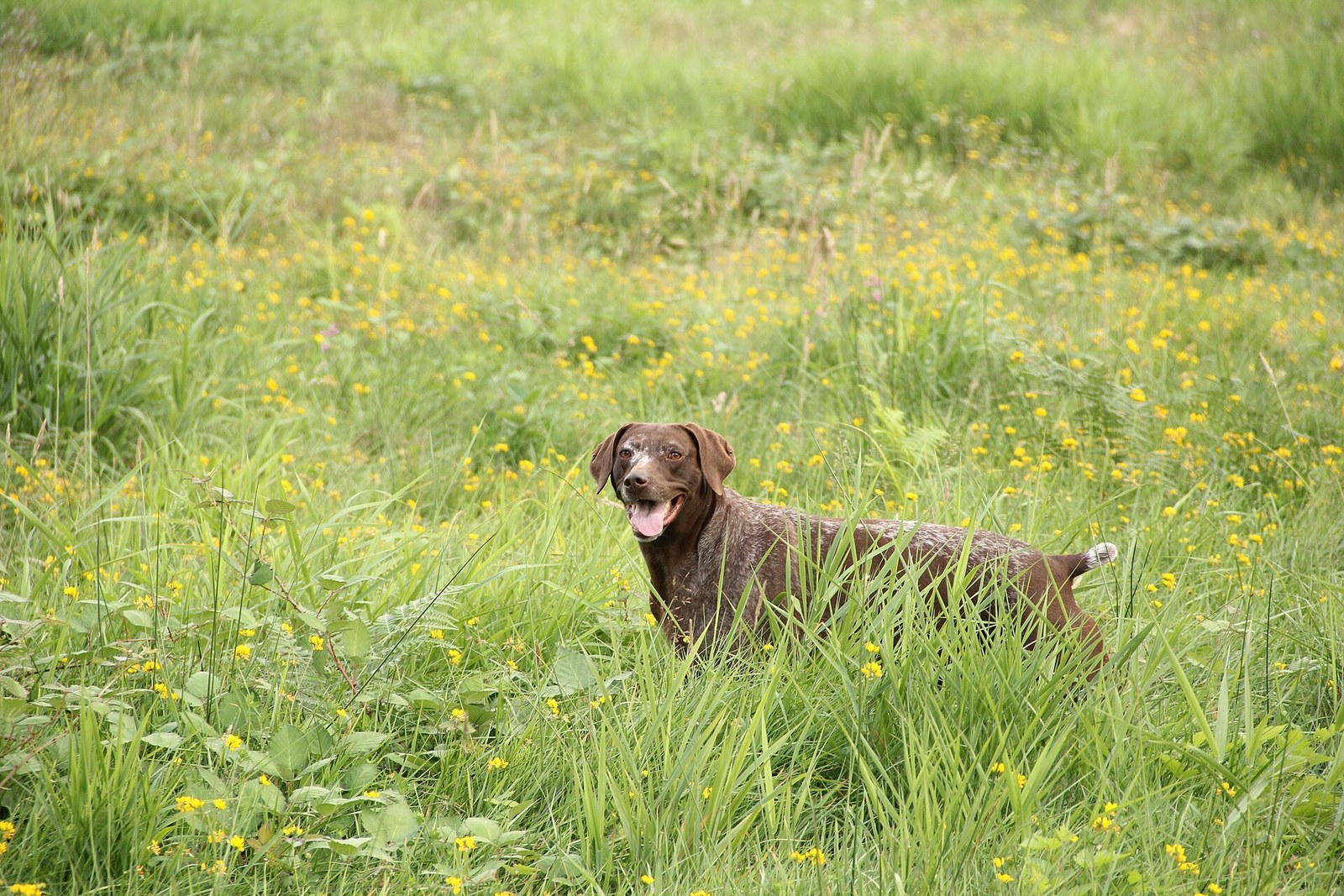
Canis lupus familiaris
A versatile hunting partner with a busy nose and a strong need for shared adventures.
Deep Dive
The German Shorthaired Pointer developed in Germany as a versatile hunting dog, rather than a specialist expected to perform just one task. The Royal Kennel Club describes a background involving Spanish Pointers, German hounds, and English Pointers. The resulting dog was selected to search, point, and retrieve, with working ability on land and in water. That breadth helps explain why a modern GSP can switch from carefully investigating a scent to moving rapidly across open ground. A pet does not need to hunt live animals to have a satisfying life, but its household should provide constructive outlets for searching, carrying, learning, and sustained companionship.
The German Shorthaired Pointer Club of America's illustrated standard emphasizes balance, endurance, agility, and a willing temperament. It describes a medium-sized dog; some general pet directories instead place the breed in a large-dog category. Neither label changes the practical need to assess the actual animal's strength and space requirements. PetlyWise uses Sporting Group for its US-style grouping, while UK readers will usually encounter Gundog. Those are registry categories, not different breeds. Today's dogs vary with breeding background, social experience, age, and health, so a working heritage is a useful planning guide rather than a personality guarantee. Ask a breeder or rescue about relatives, daily behavior, health records, and existing skills, not simply whether the dog has an impressive pedigree or a particular coat pattern. A successful match respects both the history and the individual in front of you.
A comfortable GSP often wants to be involved: following an interesting trail, carrying a toy, or joining its people after an outing. Intelligence is useful, but it does not mean the dog arrives with self-control. An exciting smell may compete strongly with a familiar cue, particularly during adolescence. Teach attention, recall, and relaxation with rewards in manageable settings instead of escalating corrections when the environment becomes too difficult. An apparently tireless dog can also be overtired or overstimulated. Provide predictable rest and observe whether activity leaves your companion settled, sore, or increasingly frantic. More exercise is not the answer to every behavior problem.
The breed's hunting interests deserve particular respect. A GSP that is affectionate with people may still chase birds, rabbits, or a running cat. Early experience can influence behavior, but it cannot guarantee safe access to prey animals or wildlife. Secure fencing, a well-fitted harness and lead, and careful long-line handling remain useful even when recall is improving. Many GSPs enjoy family company, yet children's games and unfamiliar dogs require adult supervision and opportunities to withdraw. Do not expect a patient response to grabbing, crowding, or interrupted sleep. The trait scores on this page are editorial tendencies, not measured behavioral results. Puppies, seniors, and dogs with pain or limited social experience can differ substantially. Sudden changes in sociability, touch tolerance, sleep, or activity merit a veterinary discussion rather than assumptions about stubbornness or dominance.
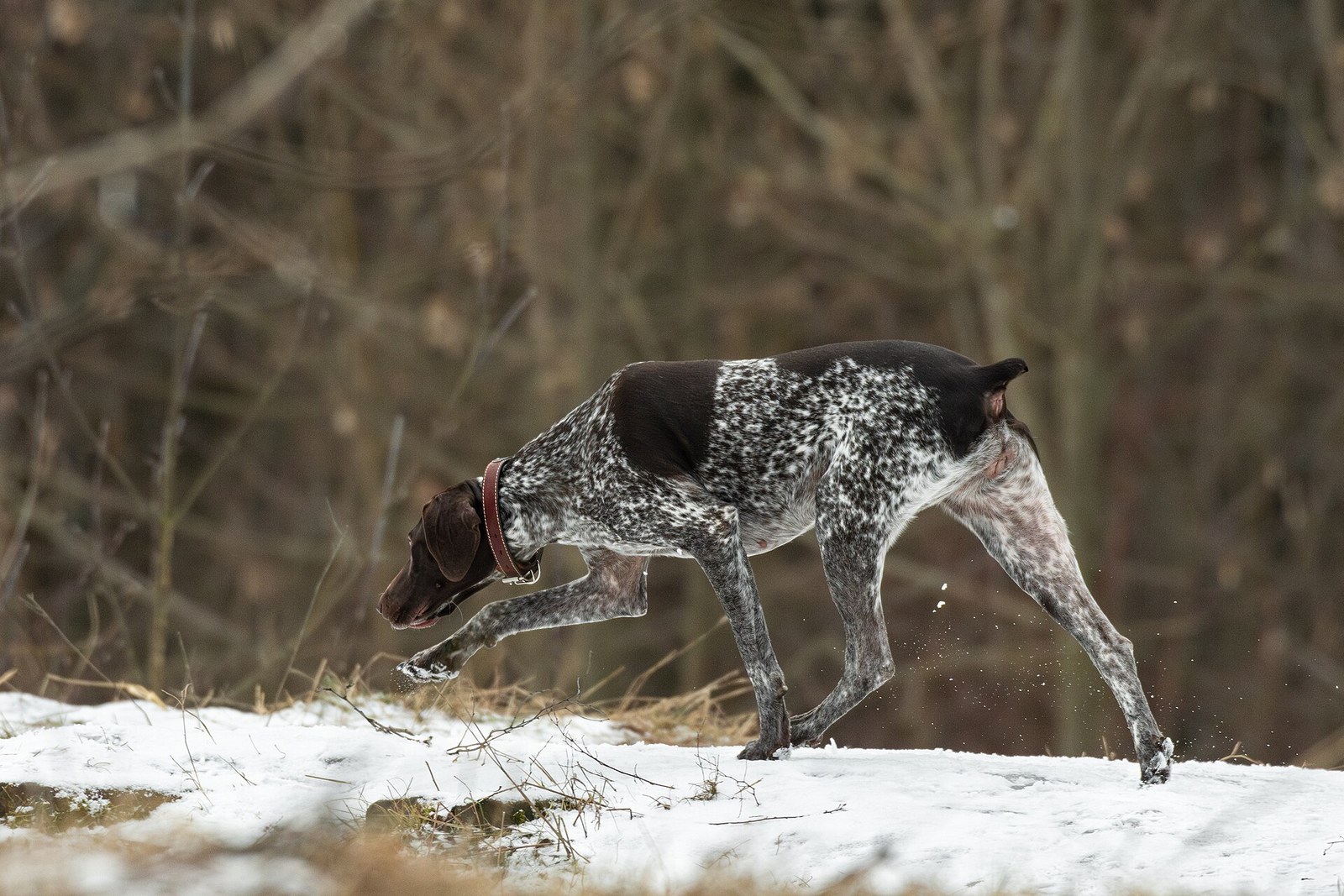
The GSP has a balanced, athletic outline, a deep chest, an expressive face, and a short, dense coat. The US breed-club illustrated standard gives males a height of 23-25 inches at the withers and females 21-23 inches, approximately 58-64 cm and 53-58 cm respectively. Standard weight ranges are 55-70 pounds for males and 45-60 pounds for females, approximately 25-32 kg and 20-27 kg. These describe a breed standard, not ideal weights to impose on every dog. Assess body condition, muscle, growth, and medical history with your veterinarian. An individual outside those ranges is not automatically unhealthy, and an individual inside them is not automatically fit.
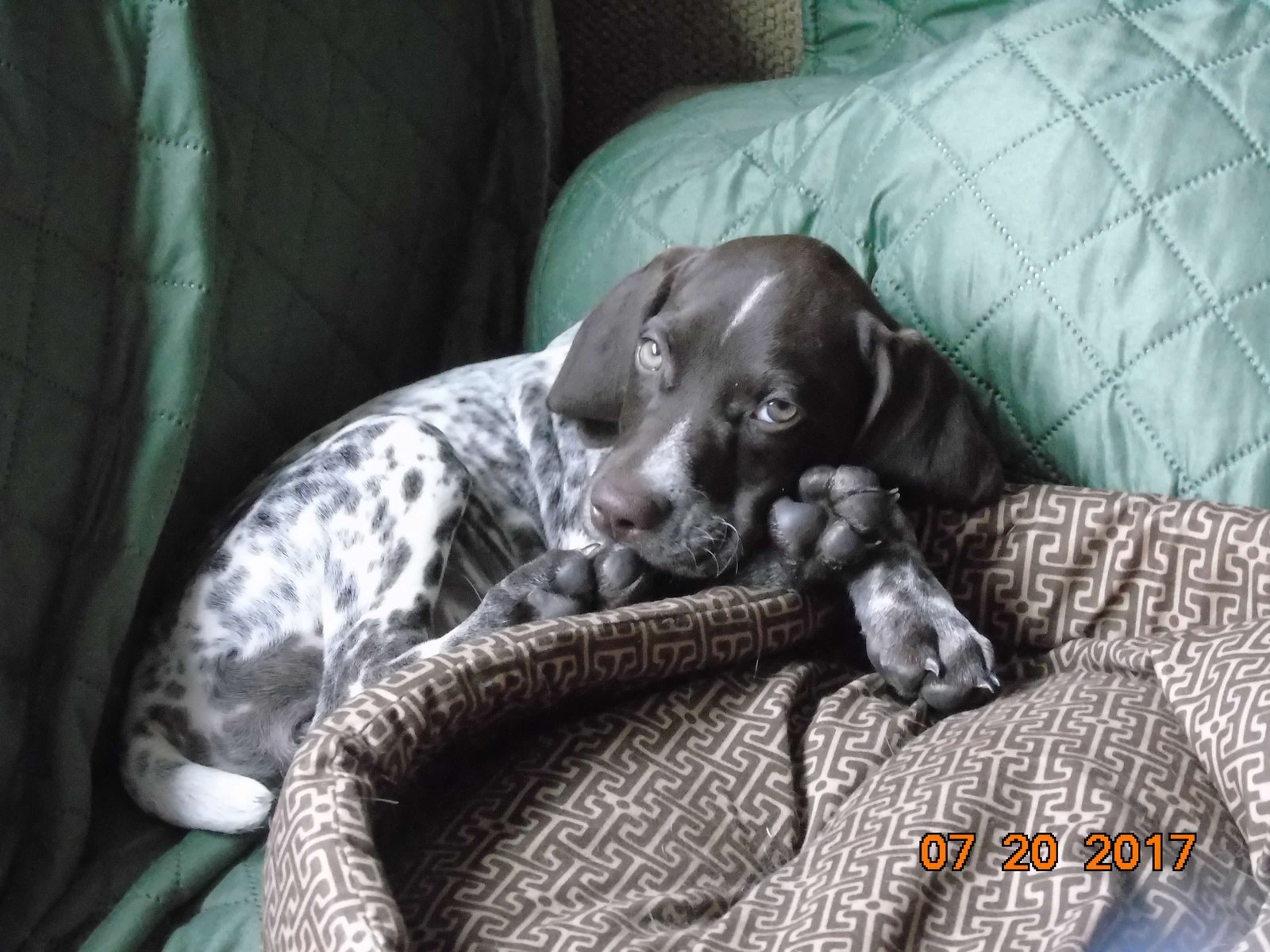
Liver coloring may appear as solid areas, patches, ticking, or roaning. Black-and-white patterns are also recognized in the UK standard; show-color rules differ between registries and versions of standards. None of those differences lets an owner establish ancestry, soundness, or health from a photograph. This profile is not a guide to proving pedigree through markings. The coat is easy to maintain compared with a long feathered coat, but its short hairs still shed into upholstery and clothing. Gentle brushing, practical washing when dirty, and checks after outdoor activity are more useful than an elaborate haircut. Look beyond the silhouette: a new limp, tender paw, skin sore, or change in breathing matters more than whether a dog matches an ideal illustration. Appearance supports description, never a complete medical assessment.
Photo credits: ~riley (CC BY-SA 4.0), Горбунова М.С. (CC BY-SA 4.0), TruckMatt (CC0). Images resized and compressed for web display. Each image retains its linked license. Image carries a small camera date stamp in the lower-right corner; accepted unchanged because the licence is CC0 and the breed is clearly identifiable.
Living with a GSP works best when activity is part of the household's normal week rather than an occasional ambitious weekend. Plan opportunities to sniff, train, explore safely, and spend time with people, alongside undisturbed sleep. Puppies need short, varied experiences and frequent recovery, not forced mileage. Mature dogs need conditioning appropriate to health, terrain, and weather; older dogs may benefit from gentler routes and accessible resting places. There is no universal daily minute target that fits every GSP. A garden can help with toileting and training, but it does not replace shared outings or make an insecure boundary safe around wildlife.
Before adoption, consider work absences, transport, holiday care, children, and other animals. Teach comfortable time apart gradually and arrange help before long absences are unavoidable. Keep small prey pets physically separated; a calm meeting cannot certify future safety. Adults should manage child interactions and protect the dog's bed and meals. Budget for veterinary examinations, individualized parasite and vaccination advice, and emergency treatment as well as food and training. This deep-chested breed can develop gastric dilatation-volvulus: unproductive retching, abdominal discomfort or swelling, drooling, or sudden weakness warrants immediate emergency veterinary care. Discuss preventive gastropexy with your veterinarian without assuming it removes every risk. The published 10-12-year lifespan estimate is a planning reference, not an expiry date or promise. A workable home supports a particular dog's needs through changing circumstances, not just its most energetic years.
At a Glance
Ownership Guide
Combine sniffing walks, safe exploration, training, and rest, adjusting to age, condition, weather, and recovery. Avoid forced running and repetitive high-impact activity in growing puppies; obtain veterinary guidance before structured endurance work.
Choose a complete diet appropriate to life stage and adjust measured portions using body condition and actual activity. Divide the daily ration into suitable meals; athletic ancestry alone does not justify a calorie-dense performance food.
Brush the short coat gently about weekly and wash only when genuinely needed with a dog-appropriate product. Check paws, skin, nails, and visible ears after outdoor activity, and arrange care for soreness, discharge, or persistent scratching.
Reward check-ins, recall, loose-lead walking, and settling in easy settings before adding distractions. Use secure fencing or a safely handled long line rather than testing recall against wildlife; never use pain or intimidation to suppress hunting instincts.
Offer calm, positive exposure to people, surfaces, transport, and suitable dogs at the individual's pace. Provide retreat options and keep prey animals physically separate; socialization cannot guarantee the absence of chasing.
Review breed-relevant screening records and arrange individualized preventive care with your veterinarian. Learn GDV warning signs and seek immediate emergency care for unproductive retching, abdominal distress, or collapse rather than trying home remedies.
Wellness
GDV can cause unproductive retching, drooling, restlessness, abdominal pain or swelling, weakness, and collapse. Seek immediate emergency veterinary care without waiting for every sign; gastropexy does not prevent all stomach dilation.
Joint developmental disease can cause stiffness, lameness, or reluctance to move, but those signs have other causes too. Ask about documented parent screening and your dog's assessment; screening cannot guarantee unaffected offspring.
PRA is an inherited cause of progressive vision loss reported in the breed. Night-time hesitation or bumping into objects needs an eye examination; a relevant DNA test covers a specific variant, not every eye disease.
This congenital heart problem is reported in GSPs and may be suspected when a veterinarian hears a murmur. Exercise intolerance or fainting needs assessment; collapse or breathing difficulty requires immediate emergency attention.
Head shaking, painful ears, persistent scratching, or new skin sores are reasons for examination rather than more shampoo. Moisture, irritation, parasites, and other causes need different treatments; do not use leftover ear medicines.
Enthusiasm can conceal fatigue, damaged pads, or overheating. Stop activity for lameness or unusual exhaustion; heavy panting with weakness, breathing difficulty, or collapse requires immediate veterinary contact: move the dog somewhere cool, begin gentle cooling with water right away, and call the emergency clinic for transport instructions rather than waiting on the call to start cooling.
Documented screening, sensible conditioning, body-condition monitoring, and regular examinations help inform decisions. Breed predisposition is not a diagnosis, and neither good care nor reassuring tests can promise a disease-free life.
Further Reading
Build a realistic German Shorthaired Pointer care routine with age-appropriate exercise, secure outings, useful enrichment, quiet rest, and health checks.
Read articleChoose food for your German Shorthaired Pointer using life stage, body condition, and activity, with practical meal routines and sensible bloat precautions.
Read articleUnderstand German Shorthaired Pointer health concerns, screening limits, joint and eye changes, and the bloat warning signs that need immediate veterinary care.
Read articleTrain your German Shorthaired Pointer with rewards, practical recall steps, safe prey-drive management, loose-lead skills, and calm routines for everyday life.
Read articleCare for your German Shorthaired Pointer's short coat, paws, ears, nails, and teeth with gentle routines, sensible bathing, and signs to call the veterinarian.
Read articleConsider daily life with a German Shorthaired Pointer, from family routines and other pets to work absences, safe travel, budgets, and care in later life.
Read articleYou May Also Like