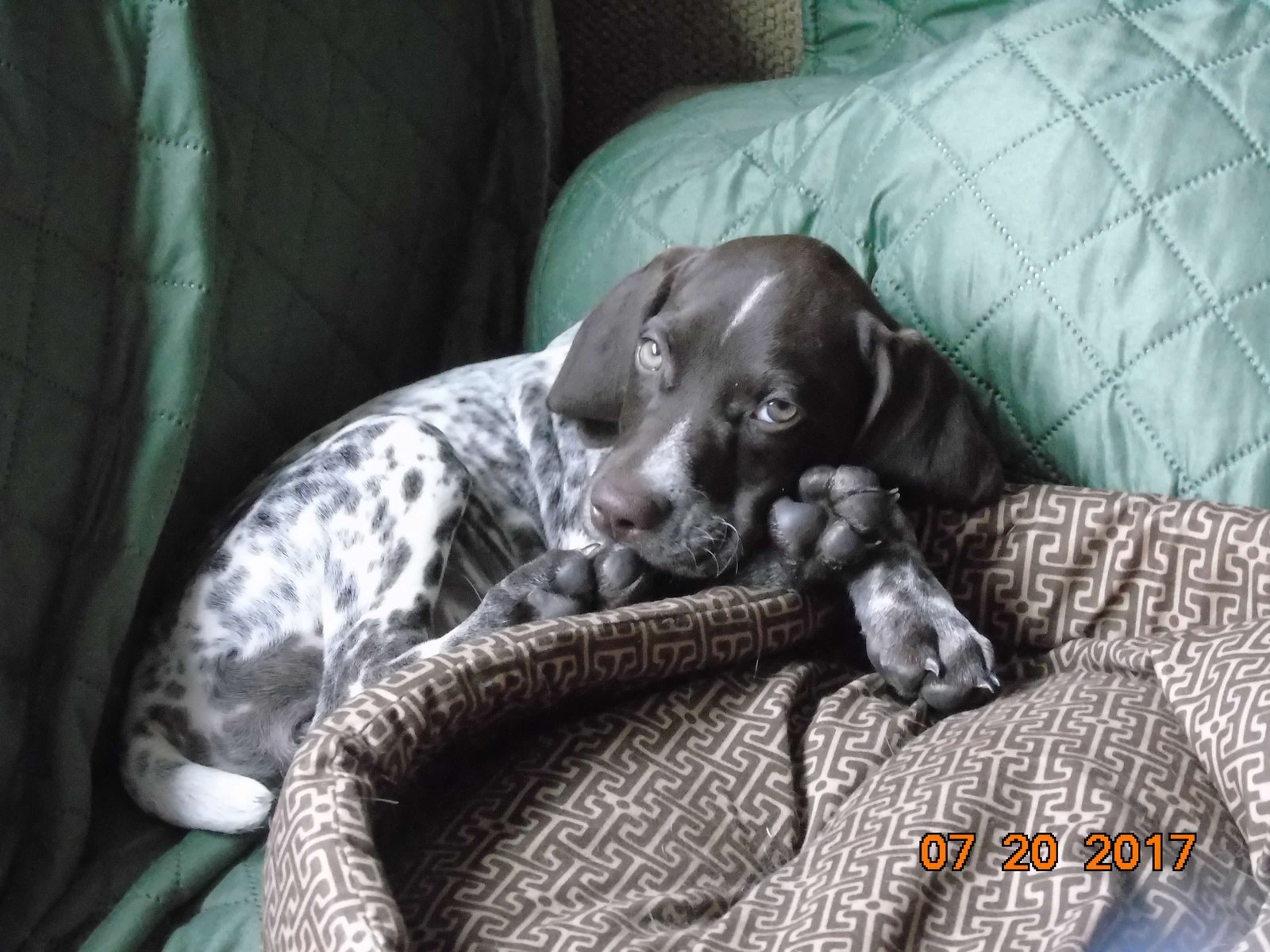
German Shorthaired Pointers can enjoy active lives, but athletic appearance is not evidence that a dog is free from inherited or acquired disease. Health planning combines documented screening, sensible daily observation, and recognition of urgent changes. This guide describes concerns reported in the breed without suggesting that every GSP will develop them or that symptoms can establish a diagnosis at home.
Read screening records as information, not a promise
Before buying a puppy, request identifiable health records for both parents rather than accepting a statement that they were vet checked. Ask about breed-relevant hip, elbow, eye, and cardiac assessment and any applicable DNA tests. Programs and recommendations vary by country and can change, so confirm the relevant current scheme with your veterinarian or national breed club. Look for the dog's identity, examination or test date, test type, and actual result.
A general examination is not interchangeable with formal joint scoring or a specific genetic test. Similarly, a clear result for one DNA variant says nothing about unrelated disorders, and a puppy's appearance cannot prove the parents were screened. Screening reduces uncertainty; it cannot guarantee unaffected offspring. An adult rescue dog may have incomplete background records without that being evidence of illness. Arrange its own baseline assessment and judge available information honestly instead of filling gaps with assumptions about pedigree, coat color, or athletic movement.
Recognize gastric dilatation-volvulus immediately
GDV involves dangerous stomach dilation and twisting and can progress rapidly to shock. Deep-chested dogs such as GSPs warrant particular awareness. Possible signs include repeated unproductive retching, drooling, restlessness, abdominal pain or swelling, panting, weakness, and collapse. A dog may seem unable to find a comfortable position. You do not need to see every sign, and the absence of obvious external swelling does not justify waiting.
The clinic must assess and stabilize the dog; imaging helps establish the diagnosis and urgent surgery may be necessary. Discuss preventive gastropexy before an emergency, considering individual risk and surgical circumstances. It secures the stomach to reduce twisting risk but does not prevent all stomach dilation. Divided meals and thoughtful routines are useful considerations, not guarantees. A dog with a previous gastropexy still needs prompt assessment for abdominal distress.
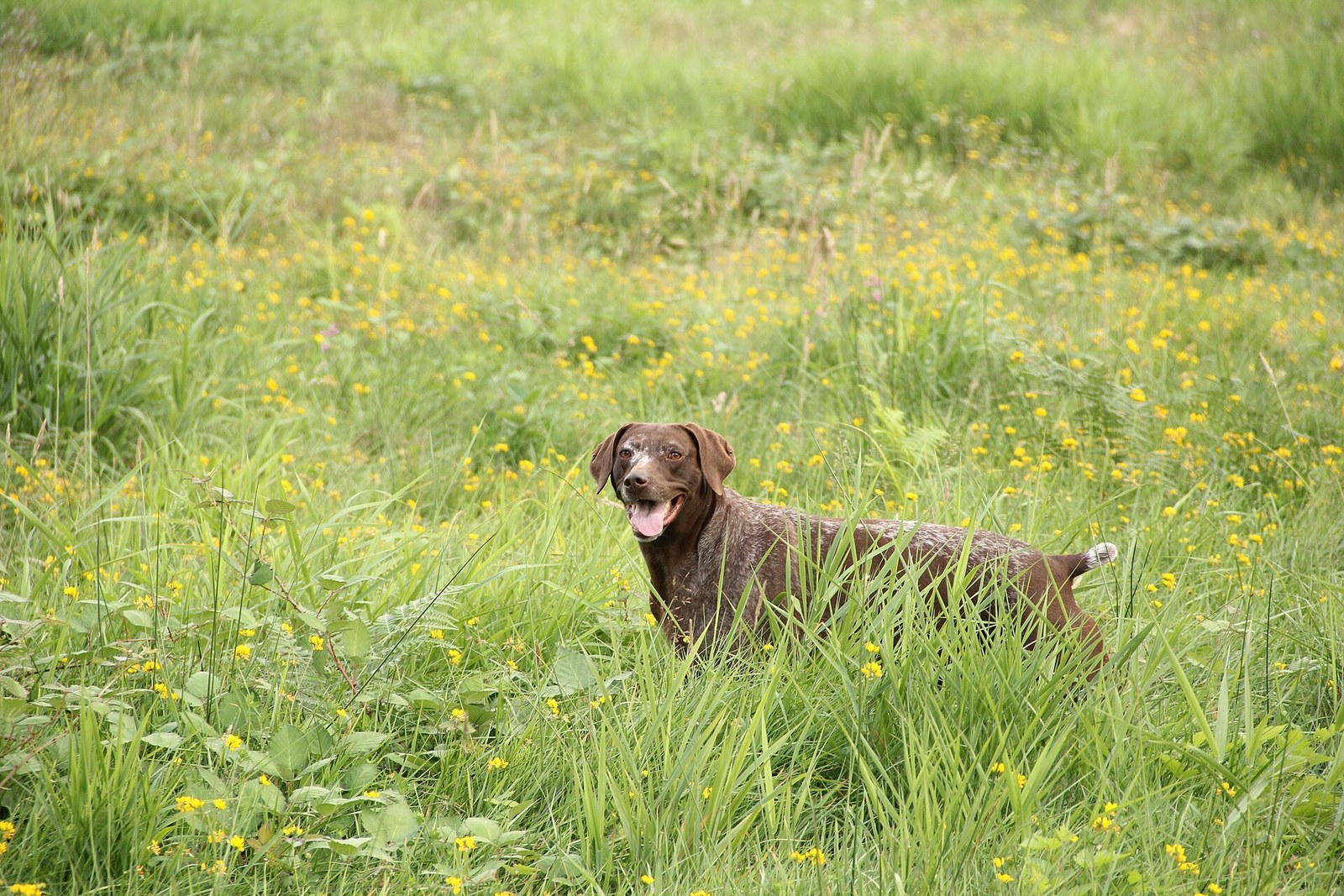
Investigate stiffness and lameness rather than pushing through
Hip and elbow dysplasia are developmental joint concerns reported in the breed. Signs may include stiffness after rest, altered gait, difficulty rising, reduced willingness to jump, or intermittent lameness. These signs also occur with injuries and other joint problems, so a video or online symptom list cannot identify the cause. Record when the problem appears and arrange an examination. Do not keep throwing a ball to check whether the dog can run it off.
Keep growth and conditioning sensible. Puppies need varied low-impact experiences rather than forced endurance work, and mature dogs need gradual preparation for demanding outings. Maintaining appropriate body condition reduces unnecessary load but cannot eliminate inherited joint risks. Once disease is diagnosed, management may include tailored activity, rehabilitation, weight planning, prescribed medication, or surgery, depending on the case. Do not give human painkillers or copy another dog's treatment. Sudden inability to bear weight, significant trauma, or severe pain requires urgent veterinary advice.
Take heart and vision changes seriously
Subaortic stenosis is a congenital heart disorder reported in GSPs. A veterinarian may first suspect it after hearing a murmur, with further cardiac testing needed to clarify what is happening. A murmur is not a diagnosis by itself, and some dogs show little obvious difficulty initially. Report exercise intolerance, unusual fatigue, or fainting. Collapse or breathing difficulty needs immediate emergency assessment, not an assumption that an energetic breed has simply overdone its exercise.
Progressive retinal atrophy is an inherited cause of deteriorating vision. A dog may hesitate in dim light, have difficulty on unfamiliar routes, or begin bumping into objects. Other eye diseases can produce similar changes, and sudden vision loss or a painful eye needs urgent attention. Ask about eye examinations and relevant genetic testing while recognizing the limits of each. If vision loss is diagnosed, predictable furniture placement, protected stairs, and verbal guidance can support safety without removing all opportunities to explore.
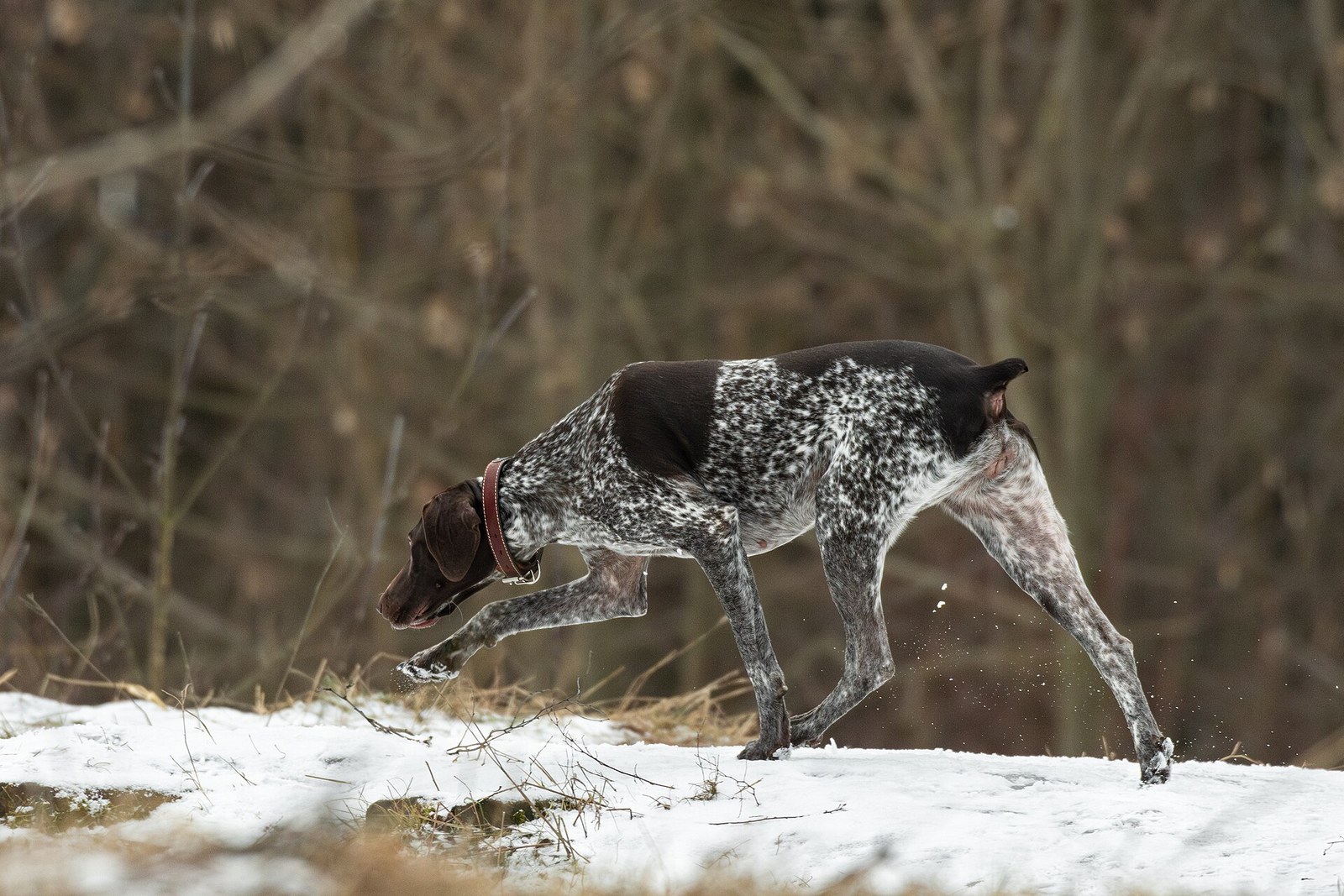
Include ears, skin, teeth, and outdoor exposure
Not every important health problem is a dramatic inherited disorder. Head shaking, sore ears, persistent licking, skin lesions, bad breath, or difficulty chewing can interfere with daily comfort. Check after swimming and field activity, but do not repeatedly fill painful ears with cleaner or apply leftover medicines. A trapped foreign body, infection, allergy, and simple surface dirt require different responses. Grooming should help you notice problems rather than conceal them.
Plan vaccinations and parasite protection with the veterinary team according to local risks, travel, age, and medical history. Review exposure to ticks, rough ground, and unsafe water when choosing activities. Stop exercise when panting, coordination, or stamina becomes abnormal. If overheating is suspected, move to a cooler place, start prompt cooling with water while contacting an emergency clinic, and follow its transport instructions. Weakness or collapse in hot conditions is an emergency, even if the dog initially seems willing to continue.
Make observations and emergency plans usable
A short, accurate history often helps more than a long list of suspected diagnoses. Keep ordinary records simple enough to maintain:
- Weight and veterinary body-condition assessments.
- Appetite, drinking, toileting, and changes from normal.
- Episodes of limping, coughing, fainting, or night-time hesitation.
- Medicines, supplements, preventive treatments, and screening results.
- Emergency clinic details and a safe transport arrangement.
The published lifespan estimate of 10-12 years describes a population expectation, not an individual prognosis. Some dogs need medical support much earlier; others live beyond that range. Revisit examination frequency as age and health change, and discuss insurance or an emergency fund before an urgent decision arises. Prompt observation and sound veterinary partnerships improve care without promising that every disease can be prevented.
Continue reading: Training a German Shorthaired Pointer: Recall, Focus, and Calm.
Sources and further reading:
- GSPCA: The German Shorthaired Pointer Illustrated Standard, hosted by AKC
- Royal Kennel Club: German Shorthaired Pointer
- PetMD: German Shorthaired Pointer
- American College of Veterinary Surgeons: Gastric Dilatation-Volvulus
- WSAVA Global Nutrition Committee: Guidelines on Selecting Pet Foods
Photo credits: TruckMatt (CC0), ~riley (CC BY-SA 4.0), Горбунова М.С. (CC BY-SA 4.0). Images resized and compressed for web display. Each image retains its linked license. Image carries a small camera date stamp in the lower-right corner; accepted unchanged because the licence is CC0 and the breed is clearly identifiable.


