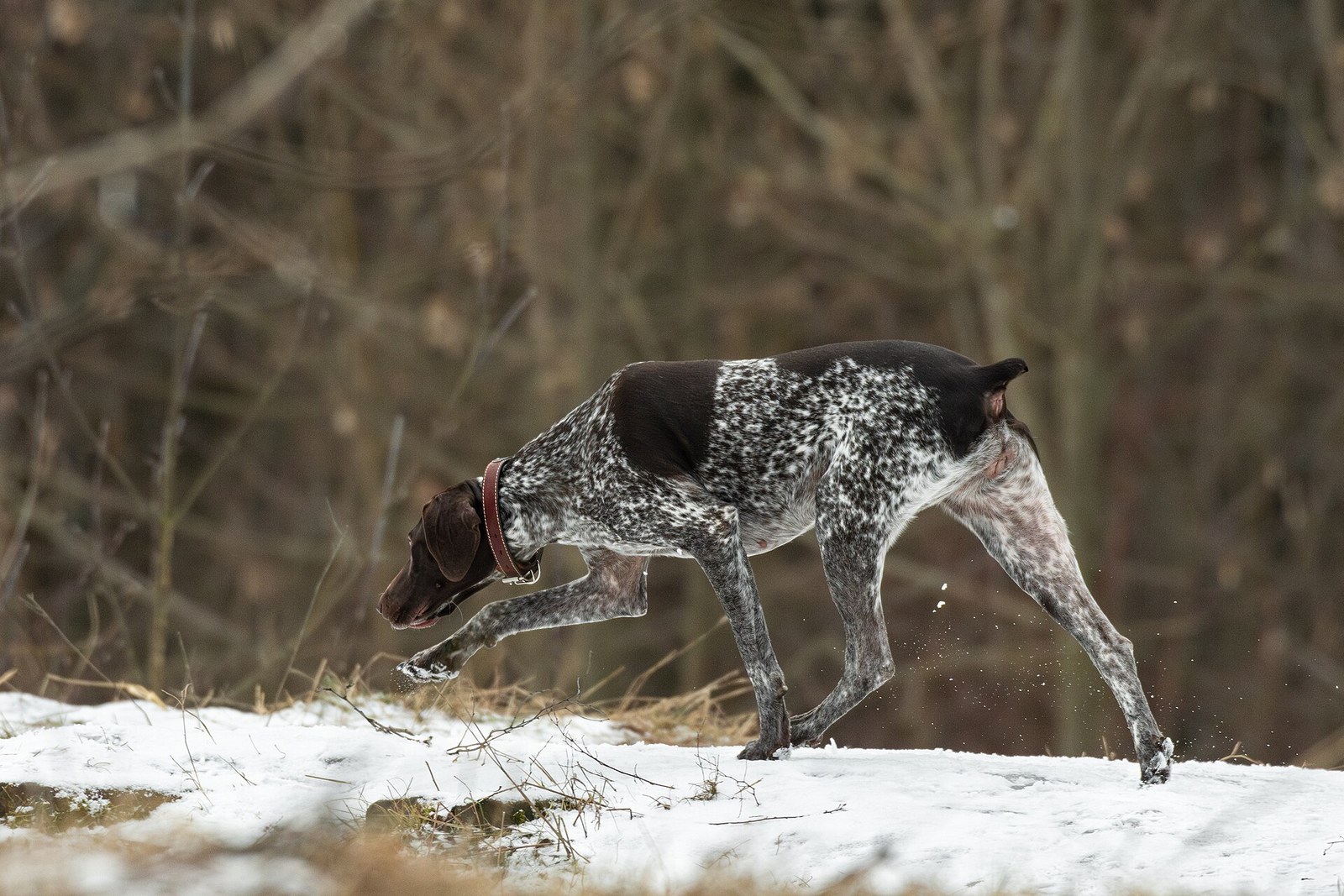
A German Shorthaired Pointer's coat is straightforward to maintain, but low styling needs do not mean no grooming. Short hairs still shed, outdoor adventures leave debris, and sore ears or damaged pads can go unnoticed beneath an athletic appearance. A practical routine combines gentle coat care with brief checks of the parts that do the daily work: feet, mouth, skin, and ears.
Brush the coat without scraping the skin
Use a soft brush or gentle rubber grooming mitt to remove loose hair, usually about weekly and more often if shedding increases. Work with the coat and keep pressure light. A GSP's hair is short and dense rather than a coat that needs extensive detangling. Aggressive scraping or prolonged passes over the same area can irritate skin without providing any useful benefit. Follow the dog's comfort rather than trying to fill a brush with fur.
The breed is not non-shedding, and short hairs can lodge in upholstery and clothing. Wash bedding, vacuum resting areas, and use washable furniture covers if desired. Normal shedding should not cause sore skin or progressive bald patches. Persistent scratching, new hair loss, scabs, or an unusual smell deserves veterinary assessment. Avoid assuming that every coat change is seasonal or that a supplement will fix it. Photographs in consistent lighting can help show whether a patch is spreading between appointments.
Bathe for actual dirt rather than a rigid calendar
Many muddy feet can be cleaned with a local rinse and towel rather than a full shampoo. When a bath is needed, prepare a non-slip surface, lukewarm water, towels, and a dog-appropriate shampoo before bringing the dog in. Wet and wash gently, keeping product away from eyes and avoiding water entering the ears. Rinse thoroughly so residue does not remain against the skin, then dry comfortably without using hot air.
There is no single bathing interval that fits every GSP's activities and skin. Repeated washing to remove every natural odor can become counterproductive, especially if the dog is already itchy. Human shampoos, perfumes, and essential oils are not substitutes for suitable canine products. If dirt is persistent because the dog cannot groom normally, has diarrhea, or repeatedly licks a painful area, address the cause. After contact with an unknown chemical, prevent licking and call a veterinarian promptly for decontamination advice rather than improvising with solvents or household cleaners.
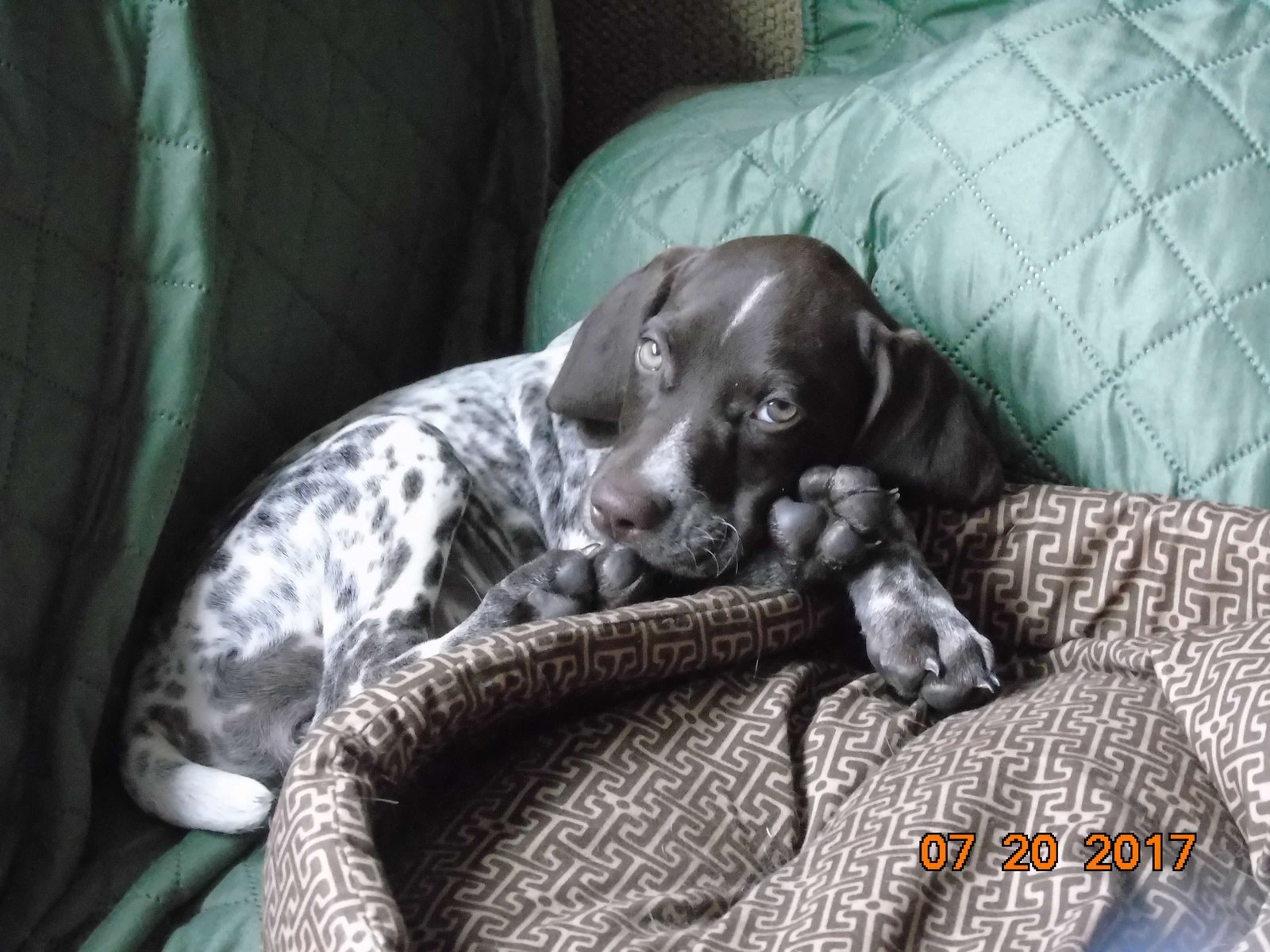
Inspect ears after swimming and field activity
Lift the ear flap gently and inspect the visible area for redness, unusual discharge, debris, or odor. Head shaking, repeated scratching, pain, or holding one ear differently is information worth reporting. A GSP that swims or works through vegetation may need particular attention after an outing, but routine checking is different from repeatedly pouring cleaner into a healthy ear. Ask the veterinary team whether your individual dog needs a cleaning plan and which product is suitable.
Dry the accessible outer ear gently after water exposure without probing the canal. Do not insert cotton swabs or tools, and do not try to extract a deeply lodged seed or other foreign body. Sudden intense head shaking after running through vegetation warrants prompt examination. Infection, inflammation, parasites, and foreign material cannot be reliably distinguished at home. Leftover drops may be inappropriate or unsafe, particularly if the eardrum's condition is unknown. Pain is a reason to stop handling and seek care, not to hold the head more firmly.
Protect paws and trim nails in manageable steps
After an outing, look at pads, nail beds, and the spaces between toes. Check for cuts, embedded material, ticks, or persistent redness, especially after rough ground or long grass. A dog may continue moving despite a minor injury, so enthusiasm should not replace inspection. Rinse away ordinary surface dirt and seek advice for punctures, swelling, a painful foreign body, or a limp. Avoid digging into the foot with household tools.
Introduce nail care gradually, using rewards for allowing a paw touch before expecting a complete trim. Ask a veterinary professional to demonstrate the safe cutting area on your dog, especially when dark nails obscure the quick. A practical sequence is:
- Work on a low, secure, well-lit surface.
- Touch and release one paw, then reward.
- Inspect each nail, including dewclaws where present.
- Remove only a small tip when confident.
- Stop before struggling replaces cooperation.
Seek help for a split nail, persistent bleeding, or obvious pain. Walking on hard surfaces does not guarantee that every nail wears evenly.
Build tooth care before discomfort develops
Teach the dog to accept a brief lip lift, then gradually introduce a suitable soft brush and dog toothpaste. Keep sessions short and reward cooperation. Human toothpaste is not appropriate, and cleaning only the easily visible front teeth is not a complete dental plan. Ask your veterinary team to demonstrate technique and advise on professional examinations. A dog that has previously accepted brushing but now pulls away may have pain rather than a new training problem.
Report bad breath, red or bleeding gums, drooling, chewing on one side, dropping food, or reluctance to take a familiar toy. Hard bones and very hard chews can damage teeth and are not a substitute for brushing or examination. Do not scrape tartar with household instruments. If prescribed dental products are part of the routine, account for edible ones in the daily food allowance. Mouth health affects comfort and appetite, so it deserves the same attention as a shiny coat.
Keep grooming cooperative and know when to stop
Use calm handling at a time when the dog is comfortable, with a non-slip place to stand or lie down. Split a full check across several short sessions if necessary. Teach voluntary participation rather than pinning the dog down to finish an arbitrary checklist. Seniors or dogs with joint pain may need extra support and different positions. Tell your groomer about medical problems and choose someone willing to pause when the dog is distressed.
Keep tools clean and inspect them for sharp or damaged edges. Write down a new lump, sore patch, or change in handling tolerance and arrange appropriate assessment rather than trying to diagnose it from appearance. Practical grooming is successful when the dog remains comfortable and problems are noticed early. A spotless photograph is less important than healthy skin, functional feet, and a trusting relationship.
Continue reading: Living With a German Shorthaired Pointer: An Honest Home Guide.
Sources and further reading:
- GSPCA: The German Shorthaired Pointer Illustrated Standard, hosted by AKC
- Royal Kennel Club: German Shorthaired Pointer
- PetMD: German Shorthaired Pointer
- American College of Veterinary Surgeons: Gastric Dilatation-Volvulus
- WSAVA Global Nutrition Committee: Guidelines on Selecting Pet Foods
Photo credits: Горбунова М.С. (CC BY-SA 4.0), TruckMatt (CC0), ~riley (CC BY-SA 4.0). Images resized and compressed for web display. Each image retains its linked license. Image carries a small camera date stamp in the lower-right corner; accepted unchanged because the licence is CC0 and the breed is clearly identifiable.


