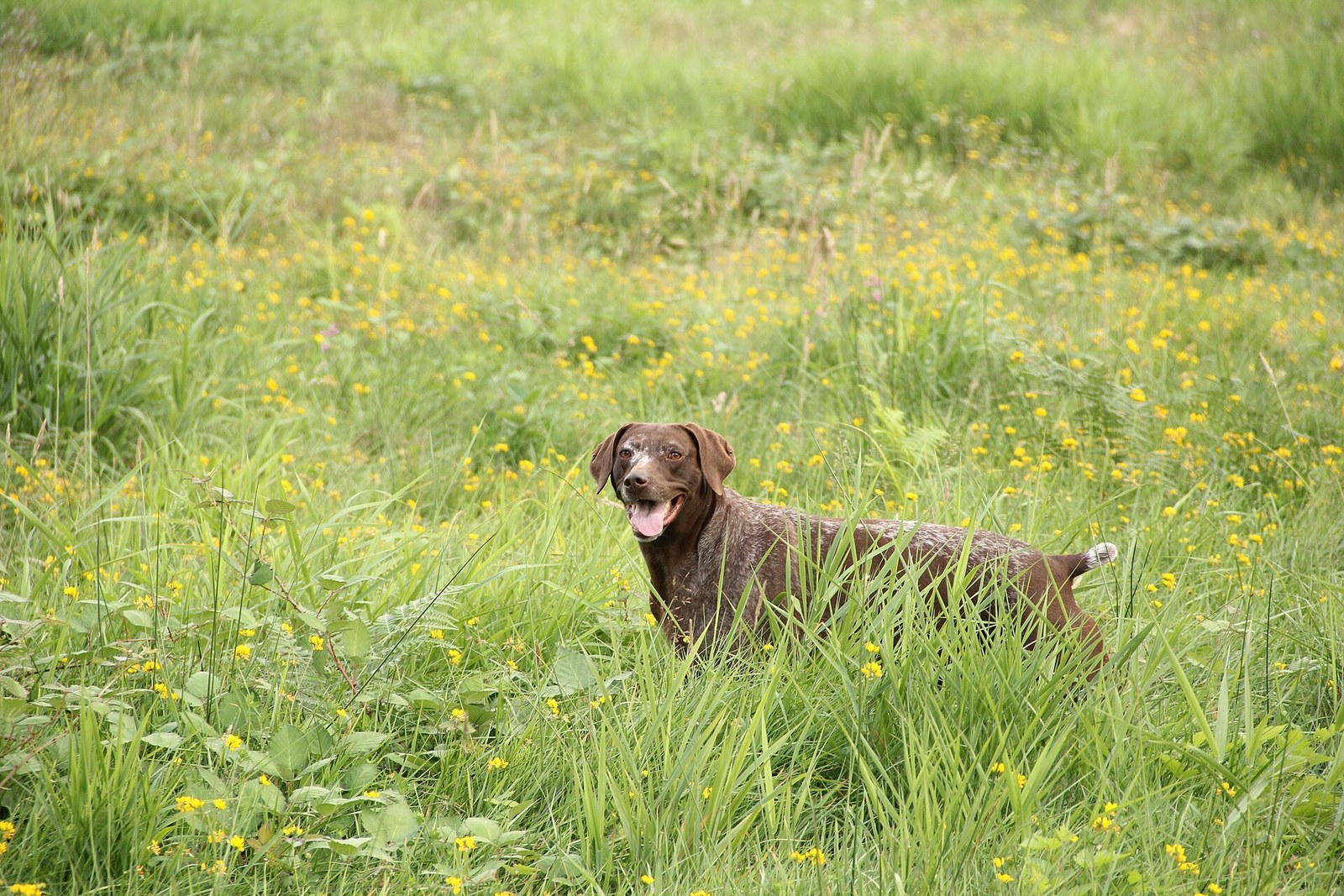
Training a German Shorthaired Pointer means teaching useful choices in a world full of competing scents. The same curiosity and persistence that support hunting work can make a quiet family walk challenging. Rather than trying to remove those interests, arrange safe opportunities to use them and reward cooperation. Recall, comfortable lead walking, settling, and confidence alone matter more than an impressive trick list.
Begin where your dog can actually learn
Choose a quiet setting and a reward the dog values, such as part of its food allowance, a suitable toy, or permission to investigate a safe smell. Mark the desired behavior with a consistent word, then deliver the reward promptly. Start with easy actions: looking toward you, touching a hand target, or stepping onto a mat. Several successful repetitions are more useful than continuing until the dog disengages.
Difficulty belongs in the training plan, not in the dog's character. If a dog cannot respond outdoors, reduce distraction or distance before assuming it is defiant. Pain, fear, fatigue, and unfamiliar surroundings can all affect performance. Use reward-based methods only; intimidation and painful equipment can add fear without teaching a useful alternative. Sudden handling resistance or an unexplained behavior change deserves veterinary assessment. A qualified reward-based trainer can help with timing and setup, while serious anxiety or aggression may need veterinary behavior support.
Build recall in layers and protect the cue
Begin indoors when the dog is already likely to approach. Say the chosen cue once, move invitingly if helpful, and reward arrival generously. Include a gentle collar or harness touch only after teaching that handling predicts good things. Release the dog back to a safe activity on many repetitions so coming to you does not always mean the fun ends. Never punish a dog that eventually returns.
Progress from one quiet room to a secure garden and then an appropriate outdoor area using physical containment. Change one challenge at a time rather than adding distance, unfamiliar ground, and moving dogs simultaneously. Useful steps include:
- Reward spontaneous check-ins before asking for more.
- Practice easy recalls at a short distance.
- Add a safely managed long line on a fitted harness.
- Increase distraction only after repeated comfortable success.
- Move farther from wildlife instead of testing the cue against it.
If the dog cannot respond, manage the situation calmly and make the next repetition easier. Repeating a cue continuously while the dog chases does not teach the desired association.
Manage hunting interests without gambling on safety
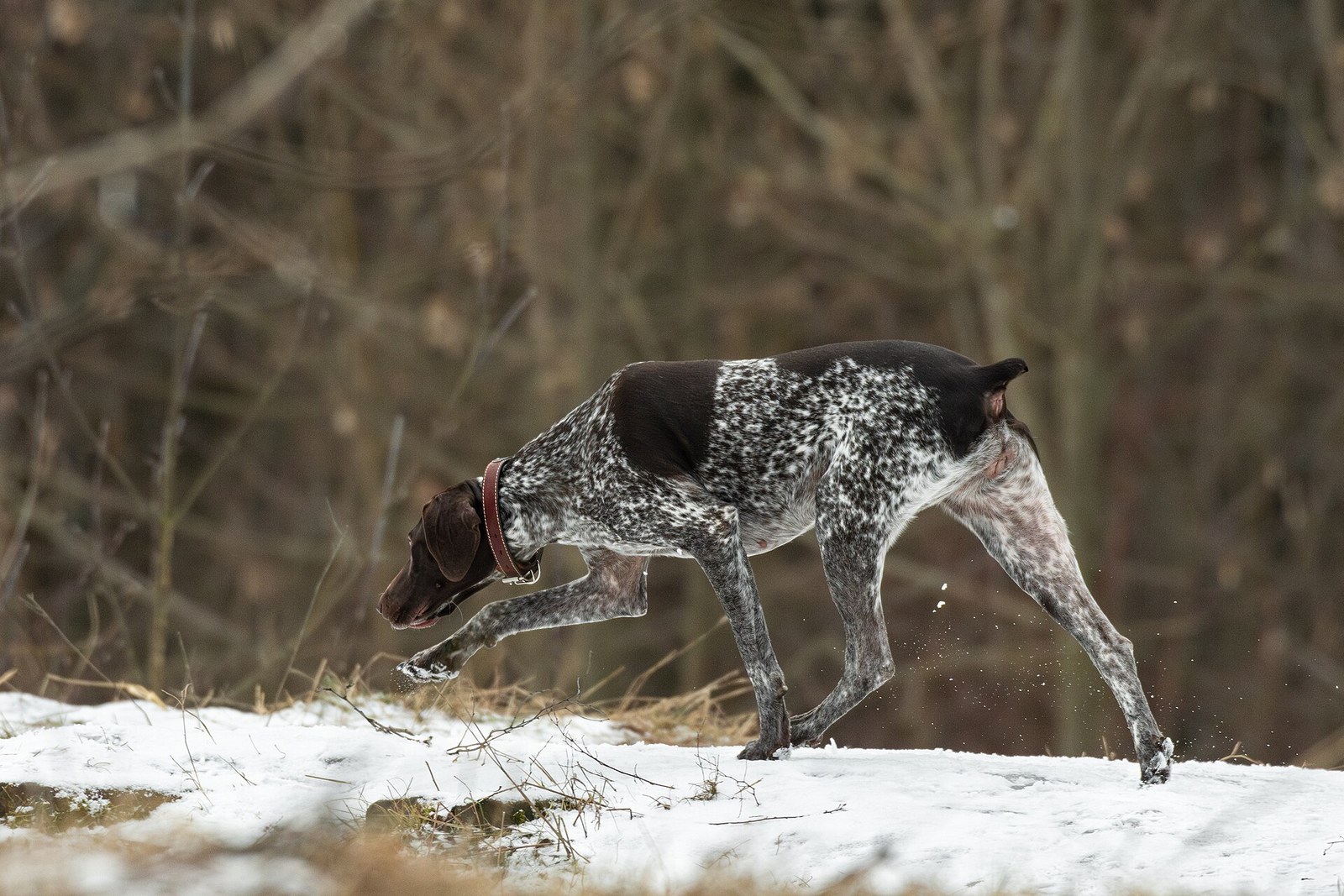
A GSP may point, track, or chase even if it has never hunted with a person. Seeing a cat quietly indoors is not the same as seeing that cat run across the garden. Likewise, friendly behavior toward humans says nothing about safety around rabbits or birds. Keep small prey animals physically separated and do not use close introductions as an obedience test. No trainer can responsibly guarantee the complete removal of predatory behavior.
Use secure fencing and a lead or long line where appropriate. Keep long lines away from roads, crowded paths, and tangling hazards; never allow a dog to hit the end at speed. Reward noticing a distant distraction and turning back while your dog can still think and eat comfortably. Increase distance when fixation develops. Scent searches and suitable retrieving provide alternative activities, but they do not make access to wildlife safe. Your management should remain effective on the day recall is least reliable, not only on its best demonstration.
Teach lead skills around realistic rewards
Begin loose-lead practice in a low-distraction place with a comfortable harness or ordinary well-fitted collar for short-lead walking. Reward the dog near your chosen walking position while the lead hangs loosely. Move a little, reward again, and gradually connect those moments. When tension develops, pause or change direction calmly rather than yanking. Keep expectations modest at first so the dog can discover what makes forward movement continue.
A scent-driven dog may value permission to sniff more than another biscuit. Use access to a safe verge as a reward for briefly reconnecting with you, and distinguish a relaxed exploration walk from a short section that requires closer positioning. Constantly preventing all sniffing can make the outing unnecessarily frustrating. If lunging or fixation is intense, work farther from the trigger and seek help. A stronger restraint device is not a substitute for an environment in which learning is possible.
Make settling a skill rather than enforced exhaustion
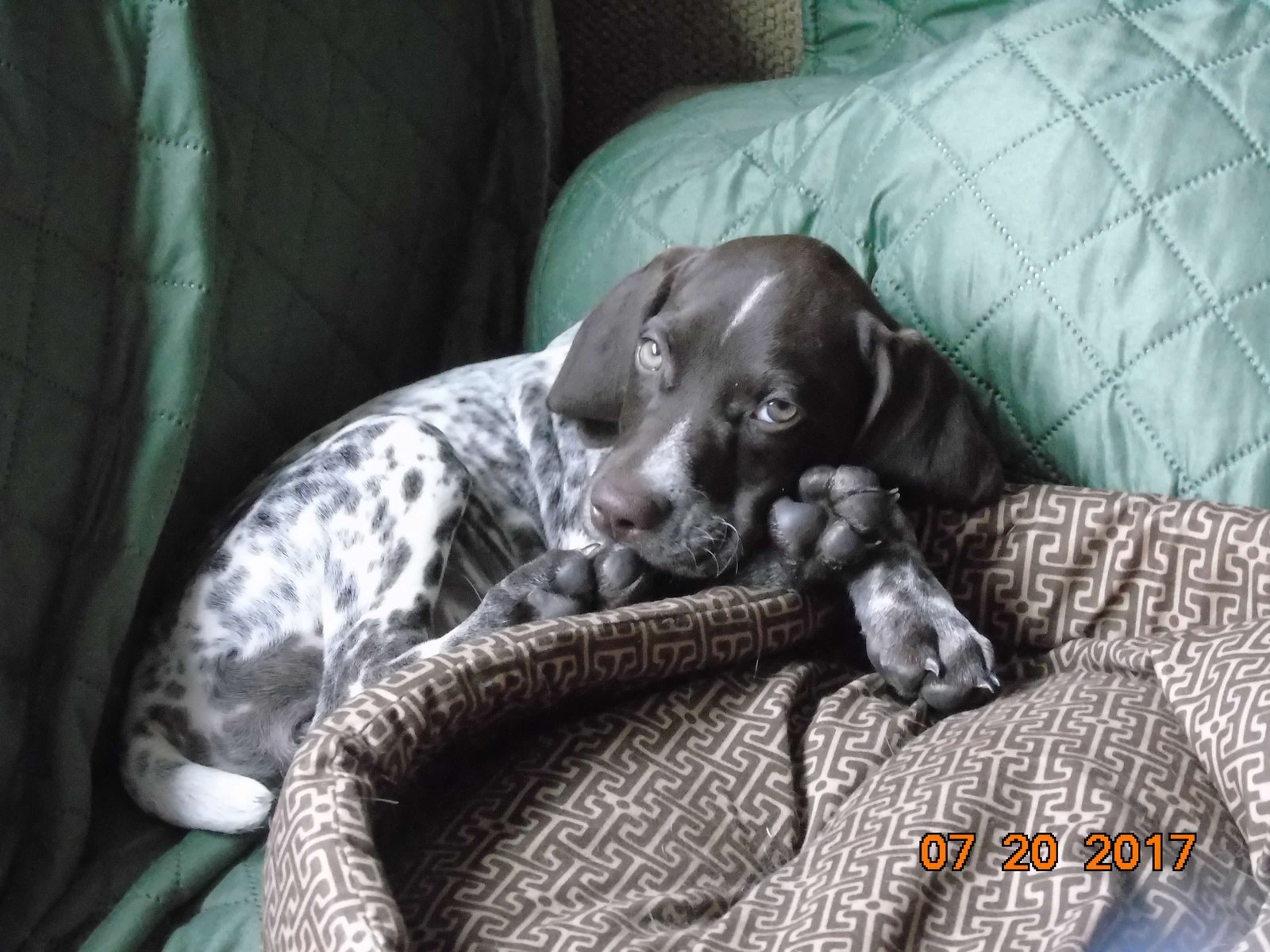
Place a comfortable mat where the dog can rest without being crowded. Reward choosing it, then quietly reinforce lying down and remaining relaxed. Keep your own behavior calm; rapid treat delivery and excited praise may turn the mat into another energetic game. Gradually add ordinary household movements while the dog remains comfortable, and allow access to water and an alternative resting spot. A bed should not become a punishment location.
Meet activity and toileting needs first, but avoid assuming that every restless evening requires more fetch. A dog can be physically tired and emotionally over-aroused. After an exciting outing, use a gentle transition such as quiet sniffing, water, and a familiar resting space. Puppies also need protection from constant interruption. If a GSP suddenly cannot settle, particularly with drooling, retching, abdominal discomfort, or weakness, seek urgent veterinary care rather than continuing a relaxation exercise.
Introduce independence and social experiences gradually
Practice brief, comfortable separations while the dog is settled, returning before distress develops. Use a camera when available to distinguish relaxed resting from pacing, vocalizing, drooling, or attempts to escape. Do not jump from constant company to a full workday alone, and do not confine a panicking dog more tightly as a training solution. Arrange care and obtain professional help when absences exceed current comfort.
Socialization means learning that everyday experiences are safe, not greeting everyone or enduring overwhelming contact. Let the dog observe suitable people, dogs, surfaces, and transport at a manageable distance, with a choice to withdraw. Ask your veterinarian how to balance puppy exposure with local infectious risks. Training success is a dog that can participate comfortably and safely in ordinary life. Expect progress to vary through adolescence and health changes, and protect that progress through patient practice rather than escalating demands.
Continue reading: German Shorthaired Pointer Grooming: Simple Coat, Careful Checks.
Sources and further reading:
- GSPCA: The German Shorthaired Pointer Illustrated Standard, hosted by AKC
- Royal Kennel Club: German Shorthaired Pointer
- PetMD: German Shorthaired Pointer
- American College of Veterinary Surgeons: Gastric Dilatation-Volvulus
- WSAVA Global Nutrition Committee: Guidelines on Selecting Pet Foods
Photo credits: ~riley (CC BY-SA 4.0), Горбунова М.С. (CC BY-SA 4.0), TruckMatt (CC0). Images resized and compressed for web display. Each image retains its linked license. Image carries a small camera date stamp in the lower-right corner; accepted unchanged because the licence is CC0 and the breed is clearly identifiable.


