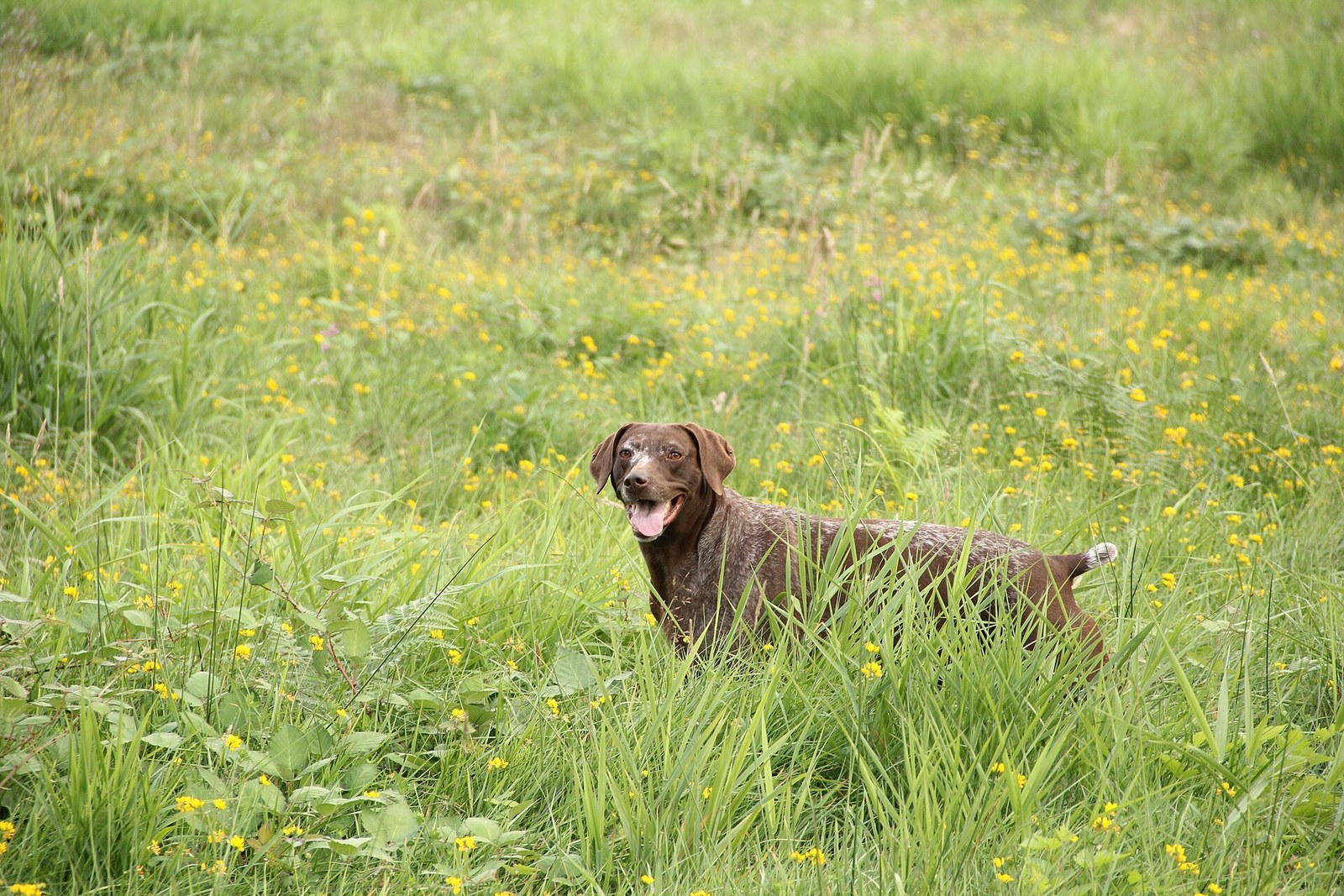
A German Shorthaired Pointer needs more than an open back door and a collection of tennis balls. This versatile gundog was developed to work with people while searching, pointing, and retrieving on land and in water. Good care channels those interests without expecting every pet to become a hunter or endurance athlete. Start with a sustainable routine that supports both activity and recovery.
Build a day with different kinds of activity
Think in terms of opportunities rather than a single exercise quota. A sniffing outing, a few easy training repetitions, a supervised search game, and time resting near the family meet different needs. Repeatedly adding harder exercise can create an increasingly fit dog without teaching it how to relax. Watch the outcome: comfortable movement and settled sleep are more useful feedback than whether your dog finally drops from exhaustion.
An adult routine might include a purposeful outing before the household gets busy, a care visit or suitable activity during a long workday, and another opportunity to explore later. This is an example, not a timetable every dog must follow. Keep access to drinking water and a quiet resting place reliable. If pacing or destruction persists despite an appropriate routine, consider anxiety, pain, frustration, and sleep disruption with your veterinary team rather than assuming that another run will solve it.
Match exercise to development and condition
Growing puppies should not follow an adult running program. Offer short, varied exploration, gentle play, and plenty of chances to stop. Avoid forced jogging, repetitive jumping, sharp twisting, and prolonged high-impact games while the skeleton develops. There is no scientifically established universal five-minutes-per-month rule that makes every puppy's activity safe. Ask your veterinarian how growth, health, surfaces, and the proposed sport should influence your own dog's progression.
For a mature dog starting hiking or other demanding work, build fitness gradually instead of moving from weekday inactivity to a strenuous weekend. Watch for lagging, altered gait, excessive panting, reluctance to continue, or stiffness afterward. Senior dogs need the same attention, with easier terrain and medical support when necessary. Enthusiasm is not proof that joints or cardiovascular fitness are ready. Swimming also requires supervision, safe entry and exit, and assessment of water conditions; hunting ancestry does not make every GSP a competent swimmer.
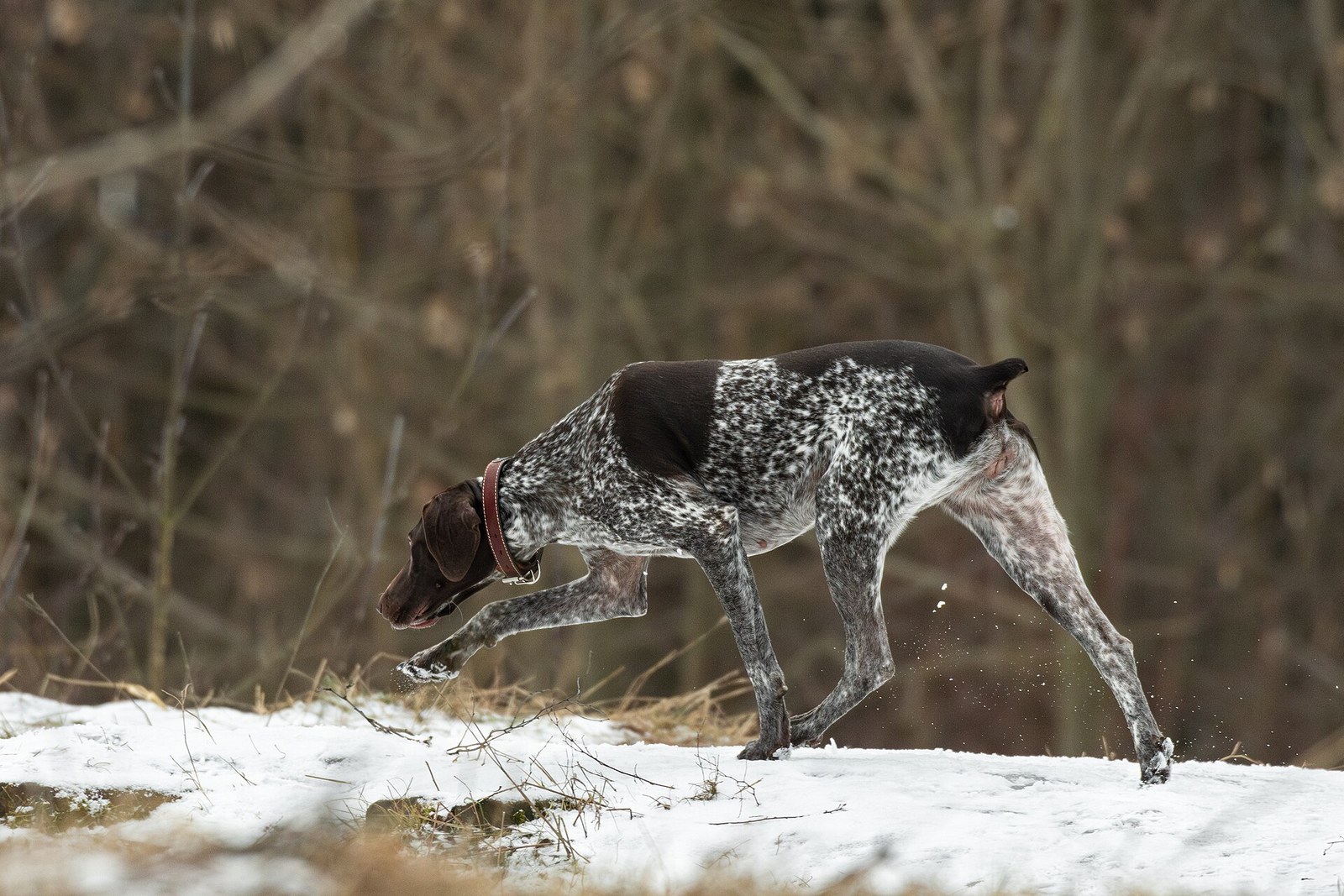
Make containment part of every outing
A GSP may follow scent before a person notices the rabbit responsible. Use a secure lead in public areas and near roads, livestock, or wildlife. A well-fitted harness and safely managed long line can provide more exploration in suitable open places, but the line must not wrap around people or legs. Do not attach it to a collar and let the dog accelerate into its full length. Practice handling before adding exciting distractions.
Inspect garden boundaries from the dog's perspective, including gaps beneath gates, damaged panels, and objects that provide a climbing route. Do not assume that supervision from a kitchen window is equivalent to secure containment. Teach a pause at doors while keeping a physical barrier in place. Identification and current contact details provide a backup if an escape occurs; they do not replace prevention. Recall is valuable, but even a well-practiced response should not be used as permission to test the dog beside a road or nesting birds.
Provide jobs that do not involve live prey
Scent-based activities let a dog use its nose without chasing animals. Begin with a little of the normal food allowance hidden in obvious places in a safe room. Increase difficulty gradually while keeping the search achievable. A washable food puzzle, carrying a suitable toy, or learning to locate a familiar object can provide variety. Supervise new equipment and remove it if pieces can be chewed off or swallowed.
Choose tasks around what the individual enjoys:
- Hide a toy behind a low barrier for an easy search.
- Reward voluntary check-ins during a quiet walk.
- Teach a gentle retrieve and exchange rather than a chase.
- Practice stepping onto a mat before rewarding calm rest.
- Explore a different safe route at the dog's sniffing pace.
The aim is satisfying engagement, not constant entertainment. End while your dog can still respond comfortably, and follow exciting work with a quieter transition. Avoid laser chasing or games that leave the dog repeatedly frustrated by an unreachable target.
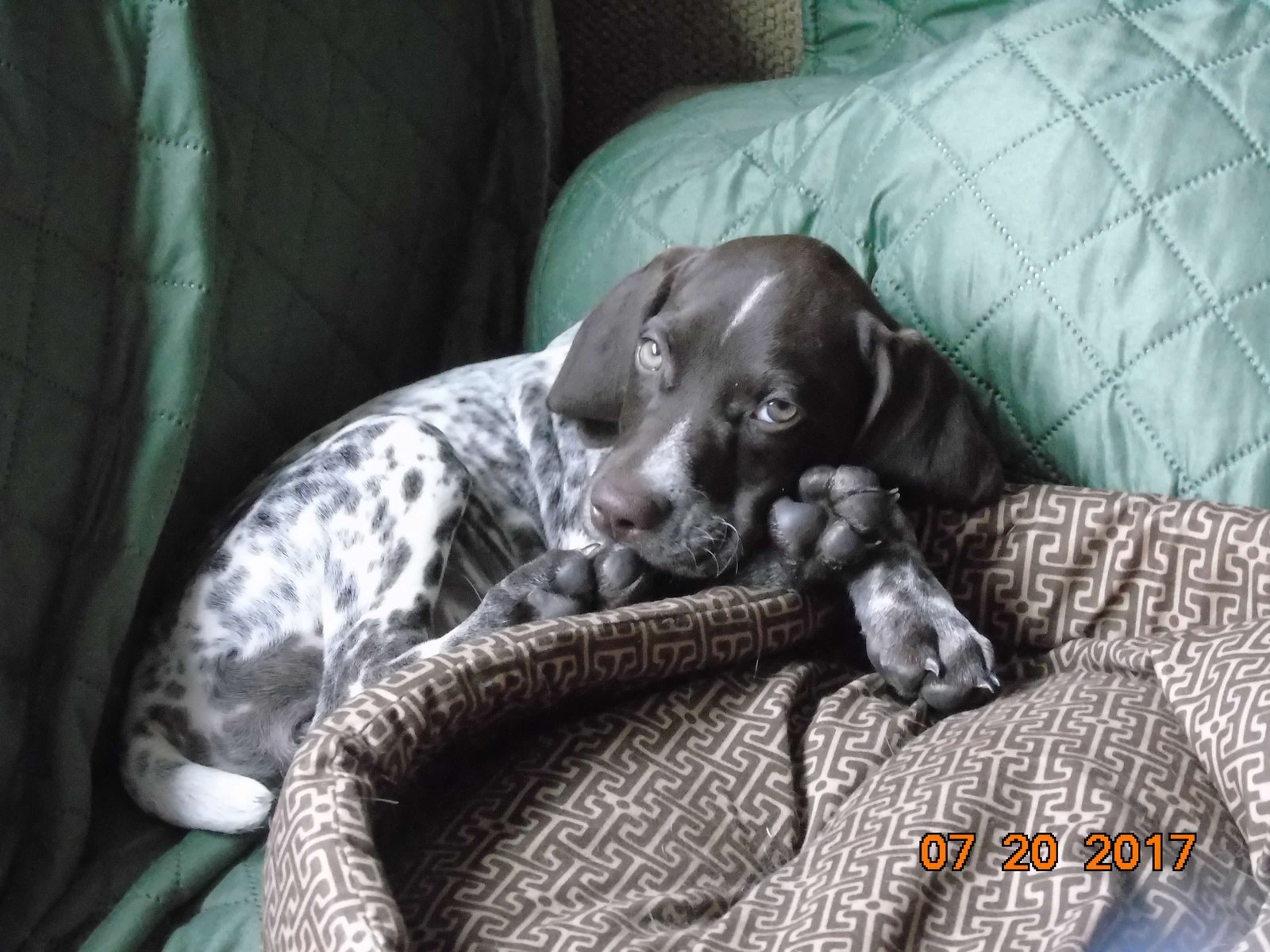
Keep food, grooming, and handling practical
Feed a complete food appropriate to life stage, measuring portions and adjusting them with veterinary guidance using body condition and actual activity. A working ancestry does not automatically require a high-calorie sport diet. Count training rewards within the day's intake, provide fresh water, and keep meals separate from boisterous group play. Learn the food and feeding history when adopting so the move does not also require an abrupt dietary change.
The short coat usually benefits from gentle weekly brushing and a wash when genuinely dirty, not a complicated haircut. After outdoor activity, look between toes, inspect pads, and check the visible ears and skin for debris or irritation. Introduce tooth brushing, paw handling, and brief examinations through rewards before treatment becomes necessary. A dog that suddenly objects to a familiar touch may be painful. Stop and investigate instead of using stronger restraint to complete an ordinary grooming task.
Plan preventive and emergency care early
Arrange a baseline examination and bring vaccination, parasite, diet, and any parent-screening records. Your veterinarian can tailor preventive care to age, local disease risks, travel, and exposure. Discuss joint and eye concerns, any heart findings, and whether preventive gastropexy is appropriate for this deep-chested dog. Screening improves information but cannot guarantee a healthy individual or unaffected offspring. Keep the emergency clinic's location and transport plan available to every caregiver.
A short daily observation of appetite, toileting, movement, and behavior is often more useful than a complicated checklist nobody maintains. Build care around your actual dog's responses, and revise the routine when work patterns, weather, or health change. A fulfilled GSP needs a dependable partnership, not a daily test of physical limits.
Continue reading: Feeding a German Shorthaired Pointer Without Guesswork.
Sources and further reading:
- GSPCA: The German Shorthaired Pointer Illustrated Standard, hosted by AKC
- Royal Kennel Club: German Shorthaired Pointer
- PetMD: German Shorthaired Pointer
- American College of Veterinary Surgeons: Gastric Dilatation-Volvulus
- WSAVA Global Nutrition Committee: Guidelines on Selecting Pet Foods
Photo credits: ~riley (CC BY-SA 4.0), Горбунова М.С. (CC BY-SA 4.0), TruckMatt (CC0). Images resized and compressed for web display. Each image retains its linked license. Image carries a small camera date stamp in the lower-right corner; accepted unchanged because the licence is CC0 and the breed is clearly identifiable.


