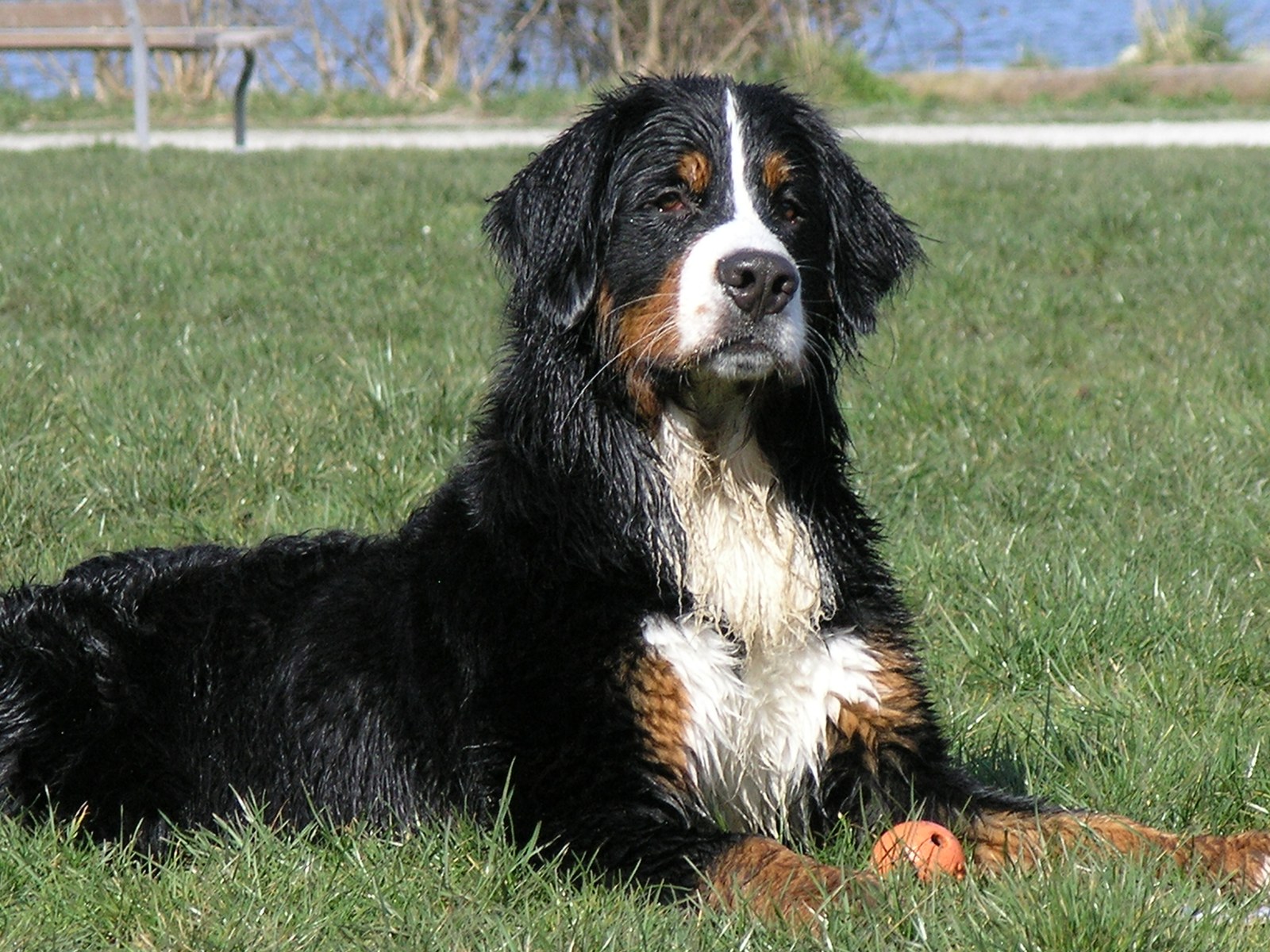
A Bernese Mountain Dog's beautiful coat can hide quite ordinary problems: a tangle behind an ear, damp skin beneath a collar or an overlong nail that changes the way a foot lands. Grooming works best as regular comfortable maintenance rather than an occasional endurance session. The aim is clean skin, a manageable coat and trust during handling, not a show finish or complete freedom from loose hair.
Set up a comfortable grooming space
Work on a nonslip surface with enough room for the dog to stand, lie down or change position. A floor-level setup is often easier than lifting a large dog onto an unsuitable table. Keep tools within reach and introduce them before you need a full session. Let the dog investigate a brush, reward a brief comfortable touch and gradually build duration. Stop if movement or restraint appears painful.
Prepare a gentle brush, a suitable comb, towels and any dog-specific products you actually need. Ask a professional groomer to demonstrate tools on your dog's coat rather than buying every de-shedding device advertised. Aggressive scraping or repeated passes over one area can irritate skin. Cooperation matters more than finishing in one sitting. An older Berner with joint discomfort may need supported positions and shorter sessions, while a puppy benefits from learning that handling ends before they become distressed.
Work through the coat systematically
PDSA recommends brushing several times a week, with more frequent attention during heavy seasonal shedding. Separate the coat into manageable sections so you check beneath the surface rather than smoothing only the outer hairs. Follow the direction of growth and use gentle strokes. A comb can help identify remaining tangles after brushing, but resistance is a reason to inspect the area, not pull harder.
Pay particular attention behind the ears, under the legs, around the collar or harness and through the longer hair on the hindquarters. Friction and trapped moisture make these easy areas to overlook. Support a small loose tangle close to the skin while working carefully if it releases without discomfort. Tight mats, inflamed skin or a dog that becomes defensive need professional help. Never cut blindly into a mat with scissors: folds of skin may be pulled into the fur and are easy to injure.
Bathe for cleanliness, then dry the skin properly
Use bathing when the dog is genuinely dirty or when a veterinarian recommends it for a skin condition. There is no universal breed calendar that suits every activity level or coat. Brush manageable tangles beforehand, prepare secure footing and use a dog-appropriate shampoo according to its instructions. Keep water and products away from the eyes and ear canals. Rinse thoroughly because retained shampoo can leave skin uncomfortable.
Dry gently with towels and make sure moisture is not left trapped in dense areas or beneath equipment. If using a dryer, choose a cool or comfortably low-temperature setting and introduce its sound gradually; stop if the dog is frightened or overheating. A professional may be preferable when home facilities cannot safely accommodate the dog. Persistent soiling around the rear, recurrent odor or a greasy coat deserves investigation rather than increasingly frequent baths that never address the cause.
Treat shedding and skin changes differently
Seasonal coat loss can be substantial and does not mean the dog needs supplements or a radical haircut. The breed standard describes a natural, moderately long coat and discourages undue trimming for presentation. For household care, focus on removing loose hair gently, keeping the dog clean and obtaining help for localized problems. Do not assume routine shaving will make a Berner safe in hot weather; environmental cooling and suitable activity choices remain essential.
Hair loss accompanied by bare patches, persistent scratching, redness, sores or a new smell is a different matter. PDSA lists hot spots, areas of sore infected skin, among breed concerns. Such lesions may expand beneath the coat and can be painful, so contact the veterinarian promptly. Avoid covering them with an assortment of oils, powders or leftover creams. The clinic may need to assess moisture, parasites, allergy or another underlying cause rather than treating the fur alone.
Make feet, ears and teeth part of maintenance
Introduce paw handling gradually and inspect between the toes for debris, irritation or damaged nails. If trimming, ask the veterinary team to demonstrate how to avoid the quick and work conservatively with suitable tools. A few calm nails at a time are better than restraining a struggling dog to finish every foot. Broken nails, swelling, persistent bleeding or new lameness require professional attention rather than further clipping.
Check the visible outer ears for redness, odor or discharge. Do not push cotton buds into the canal or pour in homemade cleaners. If a product is prescribed, use the demonstrated technique and tell the clinic if the ear becomes more painful. For teeth, gradually introduce brushing with a pet toothbrush and dog-safe toothpaste; human toothpaste is inappropriate. New bad breath, dropping food or resistance to face handling can reflect oral pain and deserves an examination, not merely a stronger cleaning product.
Use grooming observations to improve ongoing care
A hands-on routine gives you information that looking across the room cannot. Feel body condition beneath the fur and notice new lumps or areas the dog repeatedly protects. You cannot decide whether a lump is benign by touch, and a glossy coat does not rule out internal disease. Record a change and ask the veterinarian what follow-up is appropriate. If the dog suddenly dislikes being brushed, consider discomfort before concluding that they have become stubborn.
For a groomer or sitter, leave a concise care note:
- Which tools and products the dog tolerates.
- Positions that are comfortable and areas that are sensitive.
- Known skin conditions and veterinary instructions.
- Whether nails or ears need professional handling.
- A request to stop and report distress rather than force completion.
Wash bedding, clean tools and inspect collars and harnesses so the coat is not immediately exposed to dirty, damp equipment again. Expect some fur on clothes and furniture; that is part of living with a heavily shedding breed. Success is a comfortable dog whose coat and skin can be checked without fear, with medical concerns recognized early and ordinary maintenance shared consistently.
Continue reading: Living With a Bernese Mountain Dog: The Household Reality Check.
Sources and further reading:
- BMDCA: The Bernese Mountain Dog Standard
- PDSA: Bernese Mountain Dog
- Life expectancy and causes of death in Bernese mountain dogs in Switzerland
- MSD Veterinary Manual: Feeding Practices in Small Animals
- PDSA: Heatstroke in dogs
Photo credits: Shari F from Vancouver, Canada (CC BY 2.0), Lori Branham from Laguna Niguel, CA, US (CC BY 2.0), FriendlyToaster (CC BY 4.0). Images resized and compressed for web display. Each image retains its linked license.


