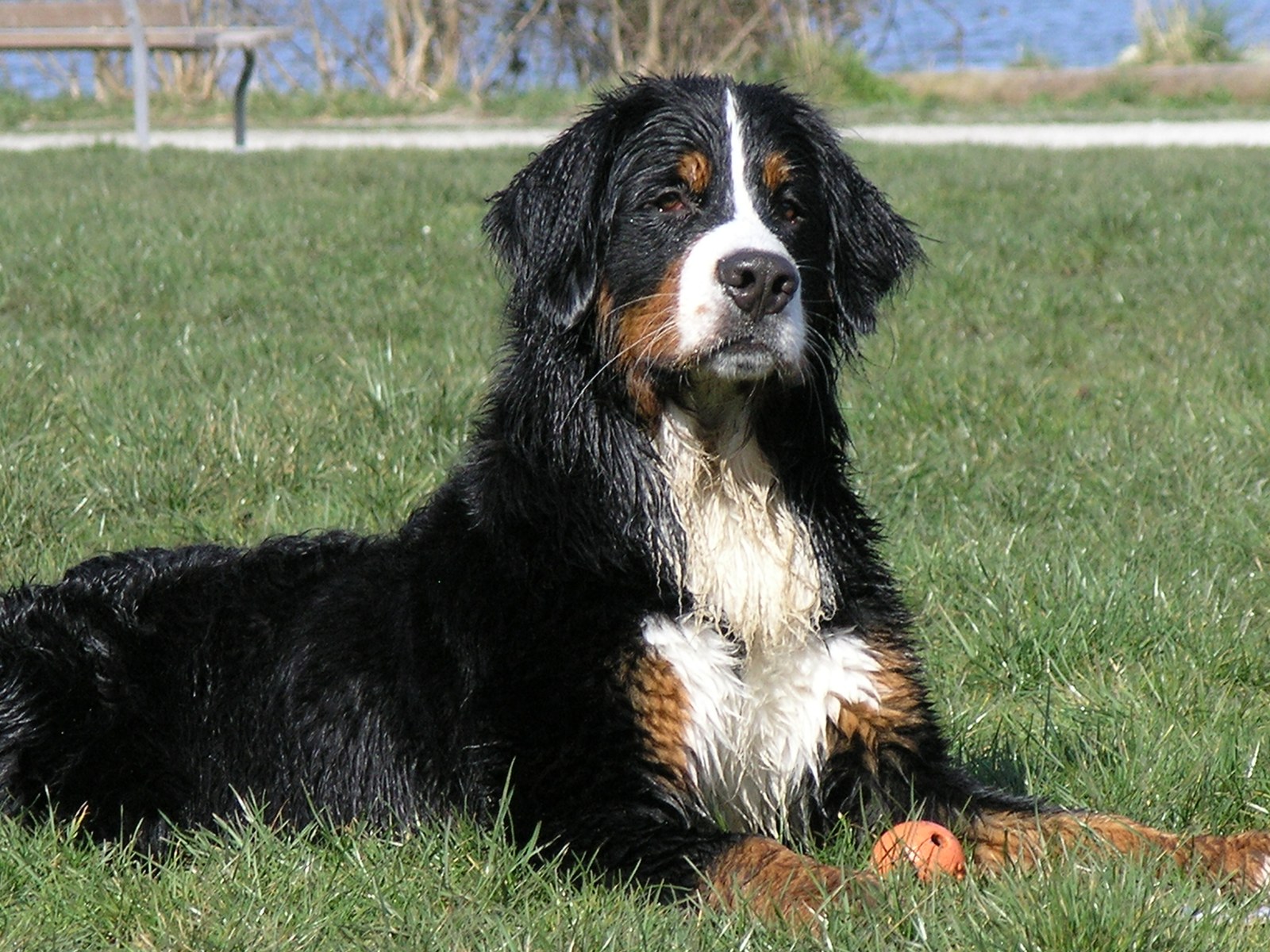
Feeding a Bernese Mountain Dog is not a race to produce the biggest puppy. A growing Berner needs the right nutrient balance and enough energy for steady development, while an adult needs a plan that maintains comfortable body condition. The bag's feeding guide is a starting point, not a prescription. Combine an appropriate complete food with measured portions, regular assessment and veterinary advice when growth or appetite changes.
Read the life-stage statement, not just the front label
For a puppy, choose a complete balanced food suitable for growth of large-size dogs. In the United States, look for an AAFCO nutritional adequacy statement that includes growth of large-size dogs, defined in that labeling context as 70 lb or more as an adult. A product can look like puppy food yet exclude that growth category. Read the whole statement rather than relying on a large dog photograph or a marketing word.
In the UK, choose a complete puppy diet explicitly appropriate for large-breed growth and ask the manufacturer or veterinary team to clarify suitability if the label is ambiguous. A complementary food is not intended to provide the whole diet. Adult maintenance food is not an appropriate shortcut for slowing a puppy's growth because developing dogs still require growth-specific nutrition. An all-life-stage food also needs explicit suitability for large-breed growth; the broad description alone does not settle the question.
Support steady growth without extra building materials
Overfeeding can promote excessively rapid growth and excess body fat, neither of which helps a developing skeleton. Lean growth is not the same as underfeeding. A puppy should receive a nutritionally adequate ration, have their growth tracked and be assessed for body condition, rather than being kept hungry or thin through guesswork. A veterinarian can help interpret a growth chart and investigate an unexpected change in trajectory.
Do not add calcium, bone meal, phosphorus or vitamin D to a complete growth diet because your puppy has large feet or seems smaller than a littermate. MSD notes that supplementation beyond a balanced growth diet is rarely necessary and may be contraindicated. Mineral balance matters as much as the amount of any one nutrient. Likewise, do not dilute meals with large quantities of meat, rice or vegetables in an attempt to create a homemade large-breed formula. A home-prepared diet needs formulation by a qualified veterinary nutrition professional.
Use hands-on condition checks, not a breed weight target
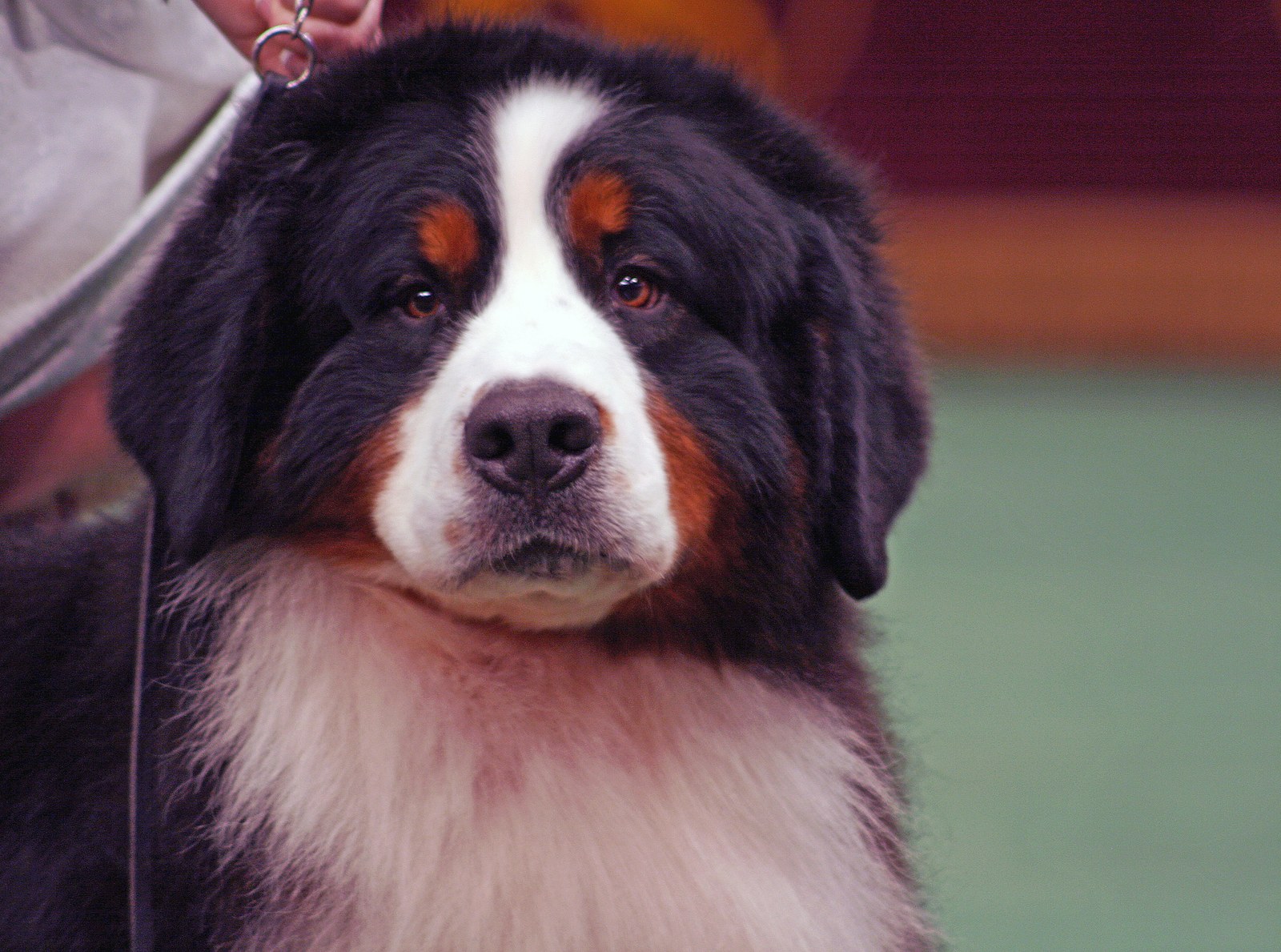
The thick coat can conceal both a waist and unwanted fat. Ask your veterinary team to demonstrate how the ribs should feel, how to assess the waist from above, and how muscle differs from fat. Record weight on a consistent scale where practical, using regular puppy growth checks and a schedule suited to an adult's needs. The direction of change matters more than a single isolated reading.
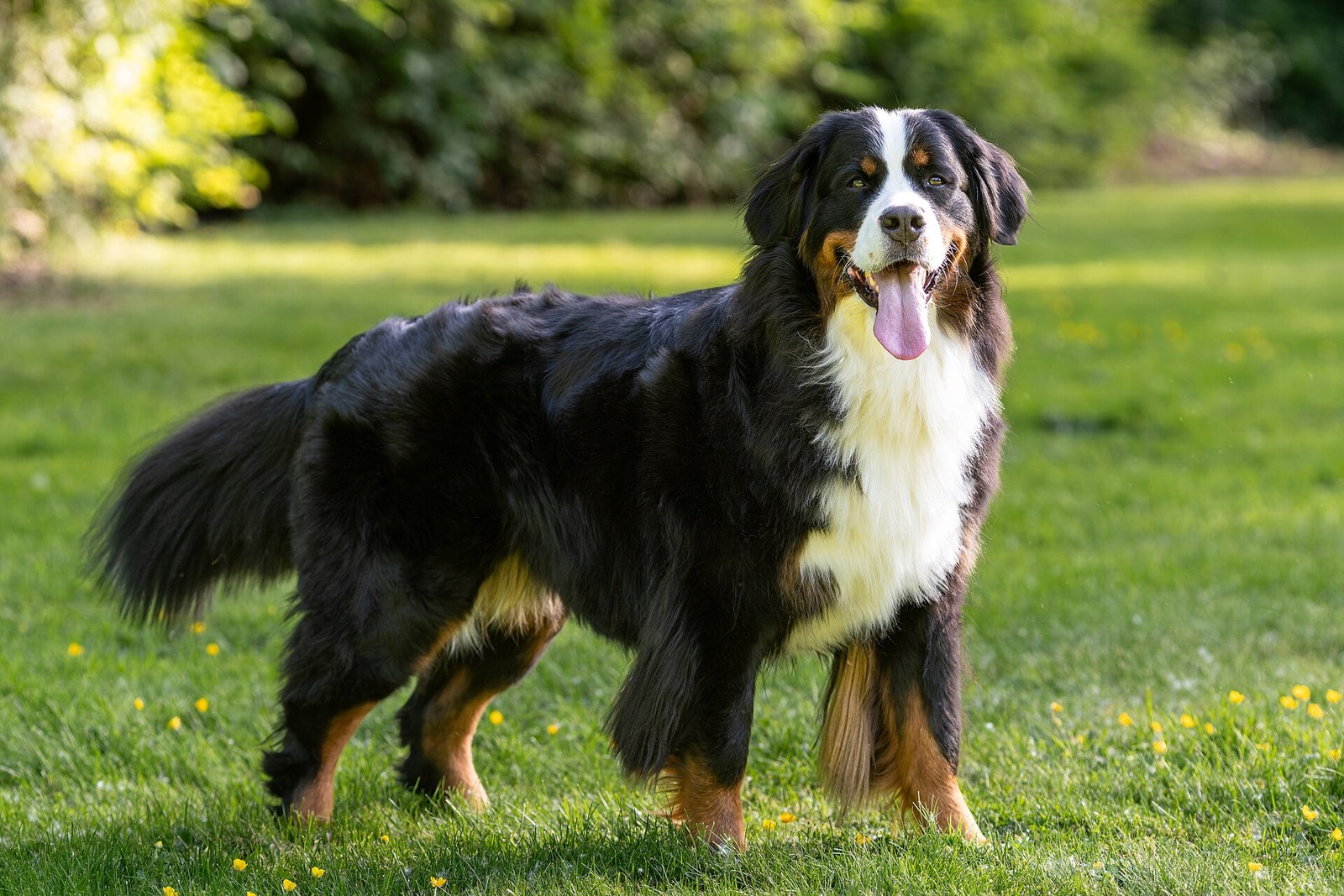
Published references are not prescriptions. PDSA gives average adult ranges of 48-63 kg for males and 42-53 kg for females, approximately 106-139 lb and 93-117 lb respectively. These are that source's estimates, not weight requirements in the breed standard, and other summaries differ. A smaller-framed dog should not be fed up to the bottom of a range, nor is a dog automatically lean because they fall inside it. Set an individual target with the veterinarian and reassess it as growth, neutering, activity or illness changes energy needs.
Turn the ration into a workable household routine
Use the feeding instructions as an initial estimate, then adjust according to the dog's response with veterinary guidance. Weighing food in grams can improve consistency because cup measurements vary with kibble shape and how the cup is filled. Do not copy another owner's portion: foods differ in energy density, and dogs of similar height may have different requirements. Divide the daily allowance into age-appropriate meals rather than encouraging continuous overeating.
Coordinate everyone who feeds or trains the dog. A useful household system includes:
- One written daily ration and a clearly identified measuring method.
- A portion of that food reserved for training rewards.
- Small treats counted within the day's energy intake.
- Separate feeding spaces where pets cannot steal one another's meals.
- Fresh drinking water and clean bowls throughout the day.
Keep additional treats modest; PDSA advises no more than 10 percent of daily calories. This is an upper limit, not a target to fill. Medical diets may require stricter restrictions. Food puzzles should be easy enough to use comfortably and supervised until you know your dog will not chew and swallow the container.
Change foods and life stages thoughtfully
Obtain the exact previous diet before adoption and avoid unnecessary changes during the first unsettled days. When a change is needed, introduce it gradually while observing appetite and stool quality. The appropriate pace depends on the dog and any medical reason for changing. Repeatedly replacing foods because one meal is refused can make it harder to recognize an underlying problem or identify what caused a digestive upset.
Keep a growing Berner on suitable growth nutrition until the veterinary team considers skeletal maturity and nutritional needs, not simply until growth looks less obvious. There is no universal birthday that makes every large dog ready for adult maintenance food. Later, activity changes or reduced mobility may require an energy adjustment without sacrificing nutritional completeness. Avoid choosing a diet on claims that it prevents cancer, fixes dysplasia or eliminates the need for screening. No food can make those promises.
Recognize when feeding questions become medical questions
A dog that approaches food but cannot chew comfortably may have dental pain. Persistent vomiting, diarrhea, weight loss or increased thirst deserves assessment rather than a supplement trial. Tell the veterinarian about medications, possible scavenging and the timing of changes. For a puppy, repeated missed meals or reduced intake is especially concerning, and you should seek prompt advice rather than trying to outwait the problem.
Keep meals calm and discuss any bloat-related concerns with your veterinarian, but do not assume a bowl design or a fixed exercise interval prevents GDV. A complete diet, lean condition and a consistent routine support wellbeing without guaranteeing freedom from illness. The most effective feeding plan remains flexible enough to respond to the individual dog rather than chasing a number on a chart.
Continue reading: Bernese Mountain Dog Health: Joint Care, Cancer Awareness and Red Flags.
Sources and further reading:
- BMDCA: The Bernese Mountain Dog Standard
- PDSA: Bernese Mountain Dog
- Life expectancy and causes of death in Bernese mountain dogs in Switzerland
- MSD Veterinary Manual: Feeding Practices in Small Animals
- PDSA: Heatstroke in dogs
Photo credits: Shari F from Vancouver, Canada (CC BY 2.0), Lori Branham from Laguna Niguel, CA, US (CC BY 2.0), FriendlyToaster (CC BY 4.0). Images resized and compressed for web display. Each image retains its linked license.


