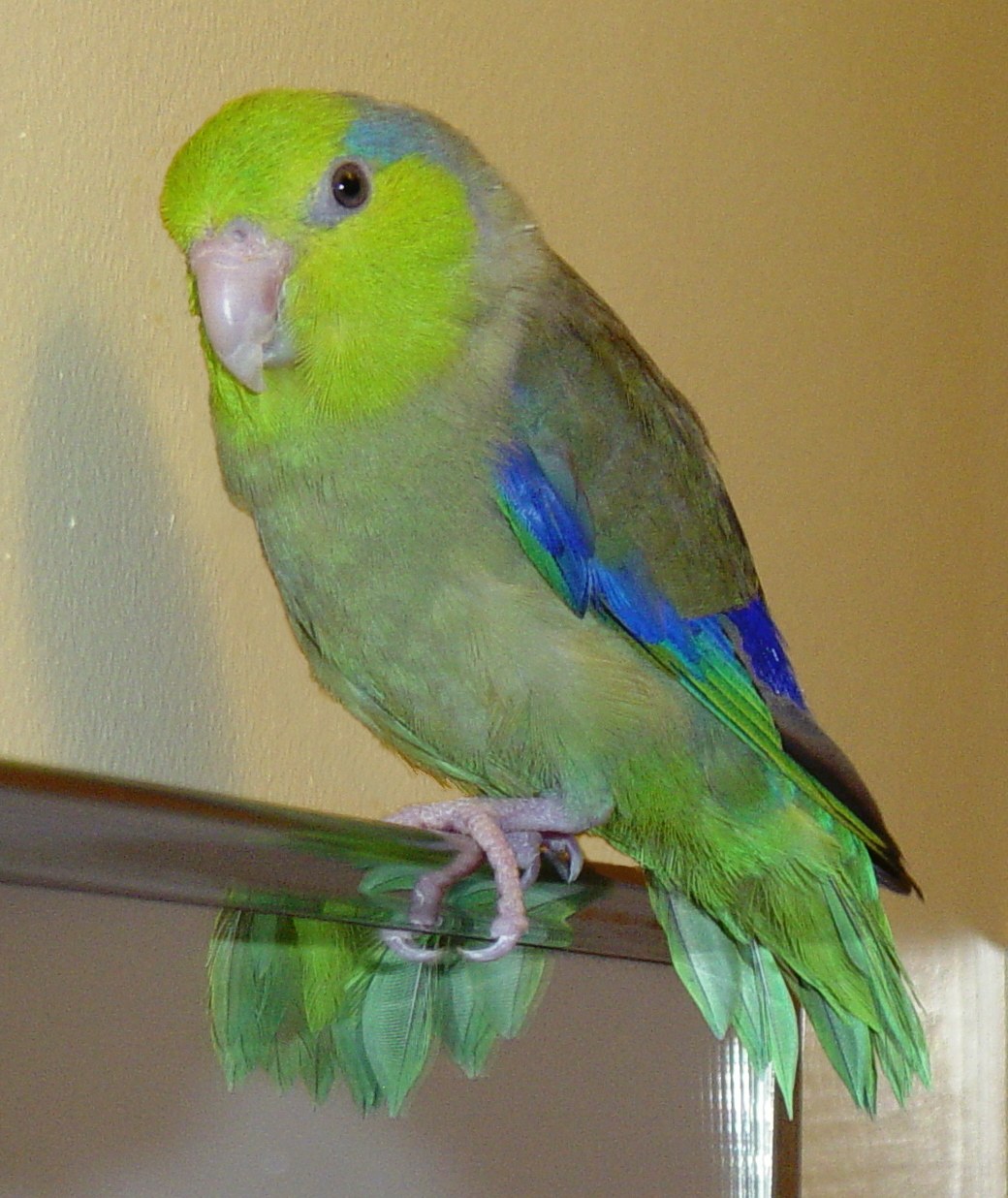
Pacific Parrotlet grooming is mostly a matter of supporting the bird's own feather care. It is not a schedule of haircuts, shampoos, and cosmetic shaping. A healthy Forpus coelestis preens, replaces feathers during molt, and uses its feet and beak throughout the day. Your role is to provide clean water, suitable surfaces, safe movement, and observation, while leaving potentially injurious procedures to an avian professional.
Understand what normal feather care looks like
Preening rearranges feathers and helps maintain their condition. A bird may work through its wing or chest feathers quietly, pause to stretch, and return to another activity. Normal grooming should be considered alongside appetite, breathing, posture, and engagement. A bird that suddenly stops caring for its feathers, remains fluffed, or spends much of the day with closed eyes may be ill rather than simply untidy.
Pacific Parrotlets have compact bodies, so subtle damage can be difficult to see without disturbing them. Observe from nearby and use ordinary photographs to compare changes over time. Do not repeatedly restrain the bird to inspect every feather. Persistent bare skin, chewed feather shafts, wounds, or asymmetrical damage warrants a veterinary assessment, even if the bird remains active and the affected area seems small.
Offer bathing as a choice, not a handling exercise
World Parrot Trust notes that Pacific Parrotlets like bathing, but an individual may prefer one method or decline on a particular day. Offer a shallow dish with secure footing and clean, comfortably temperate water. Place it where the bird can approach and leave independently without crossing a defended or frightening area. Supervise and remove the dish afterward so dirty bathwater does not become the drinking supply.
Some individuals accept a light mist from a dedicated clean sprayer. Introduce the bottle without spraying first, then observe the response to a gentle mist nearby. Never chase the bird around the cage, soak it against its wishes, or spray directly into its face. A retreat, tense posture, or escape attempt is a reason to stop and reconsider the setup, not evidence that more persistence is needed.
Choose a time that leaves plenty of opportunity for natural drying before the quiet nighttime period. Keep the room comfortable and free of drafts. Do not use a hair dryer, direct heater, or strong sunlight as a drying shortcut. Feathers do not need shampoo, scented conditioner, oil, or routine spray-on products. If contamination requires more than plain water, contact an avian veterinarian for advice specific to the substance.
Distinguish molt from damage that needs investigation
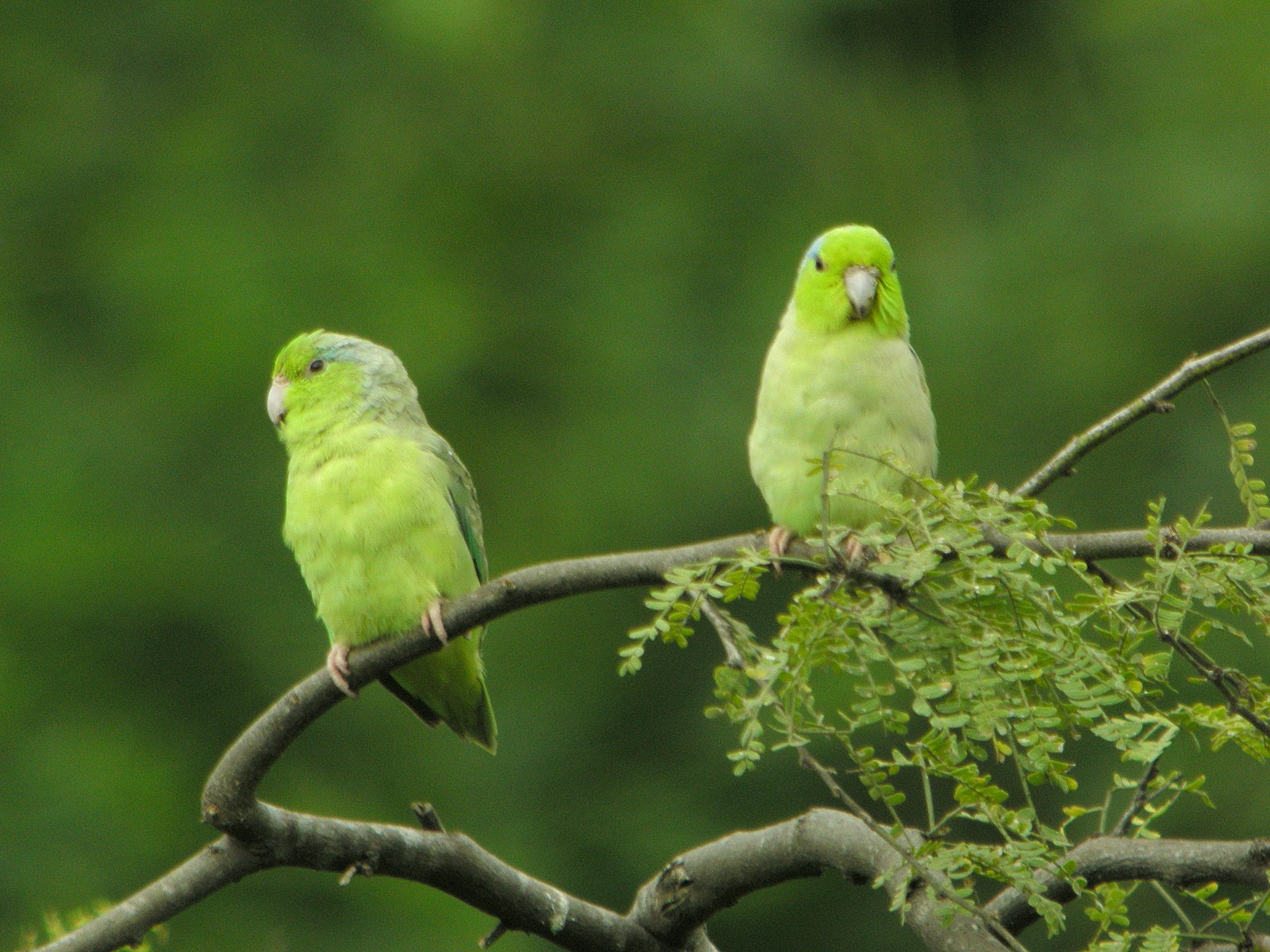
During molt, old feathers are replaced and emerging feathers may appear as small sheathed pins. Timing and intensity can vary with the individual and environment; do not force every Pacific Parrotlet into a precise annual calendar. Maintain its balanced diet, predictable rest, and optional bathing opportunities. There is no need to add unprescribed supplements simply because a normal feather has fallen.
Growing feathers can be sensitive. If a bird invites gentle head contact, stay within the touch it clearly accepts and stop when it moves away. Do not pick at developing feather shafts or try to remove their coverings by force. Many parrotlets do not welcome this kind of handling at all, and a refusal does not mean they need to be trained into tolerating it.
Molt should not be used to explain away weakness, sustained appetite loss, bleeding, injured skin, or persistent bald patches. Feather destruction has several possible contributors, including discomfort and medical disease as well as environmental and behavioral factors. Photograph the change and arrange an avian examination rather than buying a mite spray or assuming a companion bird will solve it.
Protect feet through perch design and cleanliness
Offer stable bird-safe perches with varied diameters and textures so the feet do not remain in one position all day. Position them for comfortable movement without forcing awkward stretches past cage furniture. Natural branches must be correctly identified, free from pesticide exposure and contamination, and prepared appropriately. Unknown roadside branches are not automatically safe because they look natural.
Check the surfaces your parrotlet uses most often. Droppings, wet food, and frayed materials can accumulate around a favored perch or swing. Clean soiled equipment and let it dry before reuse; keep spare perches available to make this practical. Avoid sandpaper sleeves and rough abrasive surfaces intended to grind nails, because the feet contact those surfaces too.
A useful inspection routine is:
- Look for redness, swelling, sores, or altered grip without forcibly unfolding the feet.
- Check whether nails catch repeatedly on fabrics or change the resting stance.
- Remove damaged rope, loose loops, splinters, and exposed sharp hardware.
- Clean bath and drinking containers separately from food preparation areas.
- Record new reluctance to climb or bear weight for the avian veterinarian.
Let clinical need guide beak, nail, and wing decisions
A parrotlet uses its beak to climb, manipulate food, and chew. Safe chewing opportunities support activity, but neither a toy nor a cuttlebone can diagnose abnormal beak growth. A sudden change in shape, difficulty eating, cracking, or unusual overgrowth deserves professional assessment. Do not file, cut, or reshape the beak at home; the visible problem may have an underlying cause.
Nails likewise need assessment rather than automatic shortening on a fixed schedule. An avian professional can consider stance, grip, perch suitability, and health before deciding whether a trim is appropriate. A tiny bird can be injured by poor restraint as well as by cutting too deeply. Train voluntary carrier entry and calm perch transfers to make professional care less stressful without trying to reproduce clinical handling yourself.
Routine wing clipping is not part of a good feather-care checklist. Flight is a normal activity, and clipping does not remove the need for secured doors, stopped fans, and separation from other pets. Any individual medical or welfare decision about flight feathers belongs in a discussion with an avian veterinarian. A bird with altered flight can still escape, fall, or become injured.
Keep the surrounding air and cleaning routine safe
A freshly cleaned enclosure is not beneficial if the process exposes the bird to fumes. Keep aerosols, fragranced products, smoke, and fumes from overheating nonstick equipment out of its air. Move the bird safely away from cleaning work, follow product directions, rinse appropriate surfaces thoroughly, and return equipment only when dry and free of irritating residues. Never mix cleaning chemicals.
Make feather care part of ordinary observation rather than a series of forced grooming sessions. Voluntary bathing, clean perches, an appropriate diet, and unobstructed movement support the bird's own maintenance. When appearance changes alongside behavior, appetite, or comfort, investigate the whole bird with professional help instead of trying to make its feathers look better first.
Continue reading: Living With a Pacific Parrotlet: Household Fit, Boundaries, and Long-Term Care.
Sources and further reading:
- World Parrot Trust: Pacific Parrotlet
- WebMD: What to Know About the Pacific Parrotlet
- MSPCA-Angell: How to Care for Birds: Parrots as Pets
- MSD Veterinary Manual: Management of Pet Birds
- MSD Veterinary Manual: Illness in Pet Birds
Photo credits: Jhwodchuck (English Wikipedia) (Public domain (copyright holder release; PD-user, not CC0)), markaharper1 (CC BY-SA 2.0 Generic). Images resized and compressed for web display. Each image retains its linked license.


