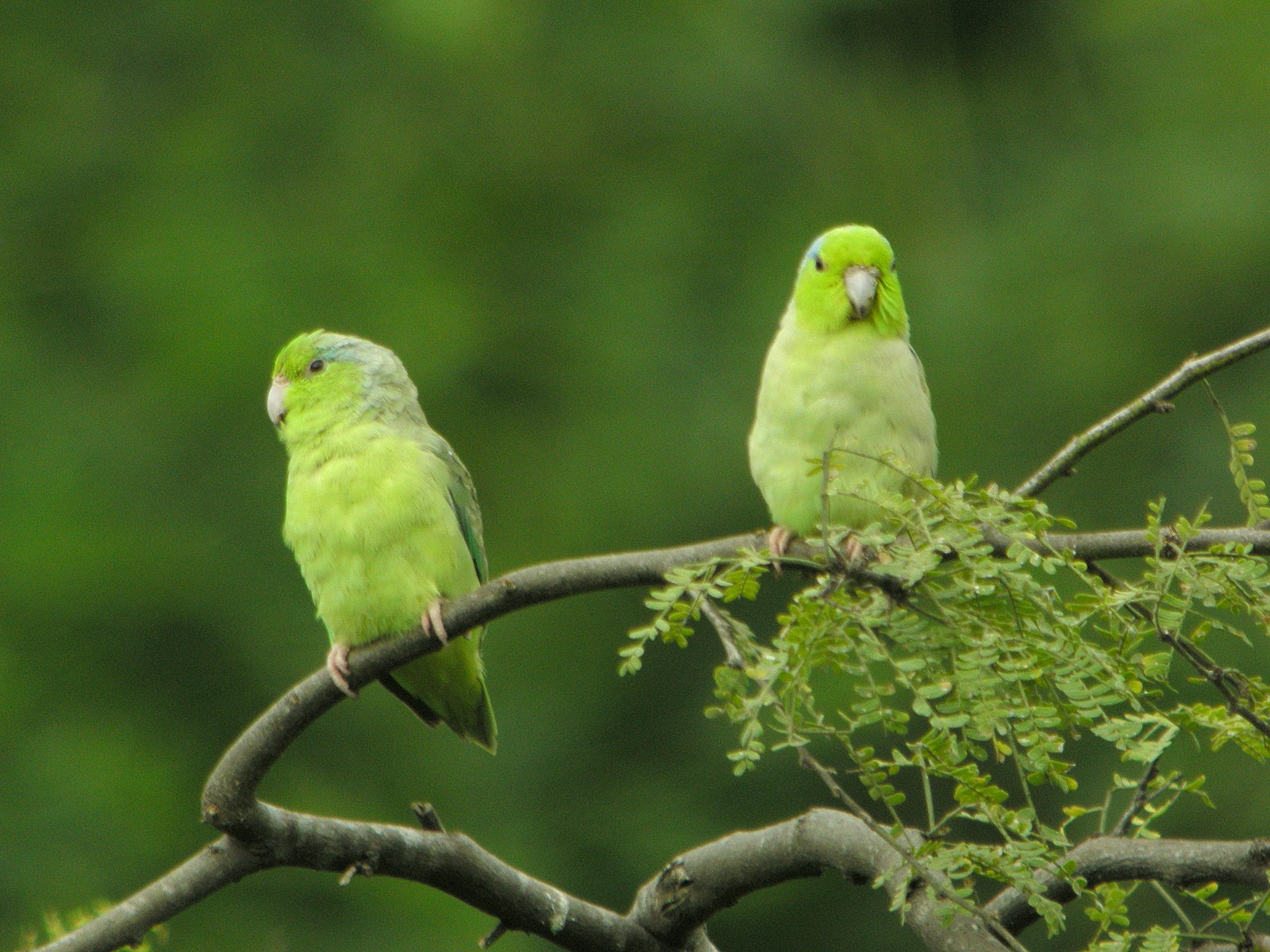
Pacific Parrotlet training is most useful when it gives a small bird more predictable choices. The aim is not to prove that you control a determined beak. It is to teach practical behaviors while noticing when the bird wants distance. Forpus coelestis can form strong preferences for places and people, but individuals differ considerably: a bird that enjoys target work may dislike touch, while another willingly seeks a familiar hand.
Observe before deciding what behavior means
Start by recording what happens before and after an unwanted behavior. Does the bird lunge only when you reach toward its bowl? Does it step away when a particular sleeve approaches? Does biting occur late in a long interaction rather than at the start? Those patterns help distinguish a difficult setup from a broad label such as aggressive or stubborn.
Look for early signs of reluctance, including moving away, leaning away, freezing, or opening the beak as a hand approaches. Interpret signals in context rather than relying on one gesture as a universal rule. Stop advancing and give space while the bird can still choose calmly. Sudden changes in tolerance, activity, or posture should prompt an avian veterinary check, because pain and illness can alter behavior.
Find rewards that do not depend on deprivation
A reinforcer is something the bird values enough that a behavior becomes more likely when it follows that behavior. It might be a tiny portion of a familiar food, access to a favored perch, or a brief interaction the bird actively seeks. Offer a few safe options and observe actual preferences. What worked yesterday may be less interesting after a meal or in a distracting room.
Keep edible rewards small and account for them in the overall diet. Never remove essential meals or require a hungry bird to perform before it can eat. Establish a consistent marker, such as a quiet word, immediately followed by the chosen reward. The marker helps identify the exact moment that earned reinforcement; it is not a command or a substitute for delivering the promised outcome.
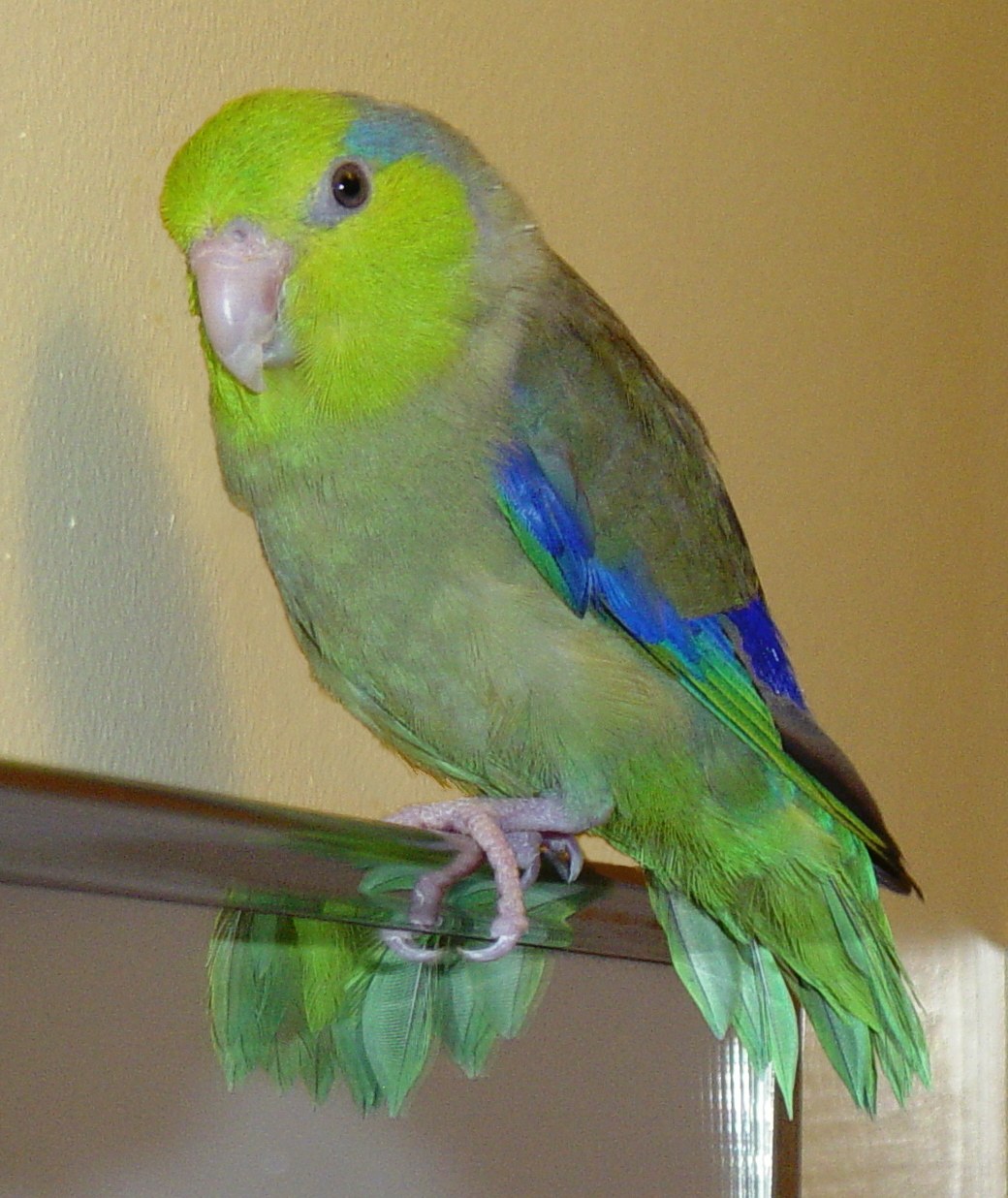
Teach targeting and a genuinely voluntary step-up
Use a smooth, bird-safe target with no sharp end, initially held far enough away that it does not provoke a defensive reaction. Reward looking toward it, then a comfortable approach, and eventually a gentle touch if the bird chooses. Do not chase the bird with the target or poke it. A target is a guide to an achievable destination, not a tool for overriding refusal.
Once approaching is easy, introduce a stable handheld perch or a still hand at a comfortable height. Some Pacific Parrotlets find the perch less intrusive. Reward successive small movements, including leaning forward or placing one foot, and let the bird step back. Avoid pressing into the chest, lifting the feet by force, or moving the support unexpectedly. Trust grows when the offered surface remains predictable.
A short practice sequence might be:
- Offer the target at a distance the bird already accepts.
- Mark and reward a calm approach.
- Position a stable perch on the route without blocking retreat.
- Reward a voluntary step, even if only one foot moves initially.
- End with a familiar easy action and access to a comfortable resting place.
Work around cage territoriality instead of confronting it
A Pacific Parrotlet may feel very differently about hands inside its enclosure than hands at a neutral play stand. Respect that difference. Teach a station, a designated perch where the bird earns reinforcement, and use it to make routine dish changes more predictable. Exterior-access dishes can also reduce unnecessary intrusion, provided their doors and gaps are secure.
Invite the bird out when it is comfortable rather than reaching into a corner. Start new training away from intensely defended objects, at a safe location the bird already knows. If it repeatedly protects a dark hut, cupboard, or other nest-like site, block access when it is elsewhere and discuss reproductive triggers with an avian veterinarian. Do not turn nest removal into a physical confrontation.
If a bite occurs, maintain safe support and create distance as calmly as possible; do not jerk the bird off its perch. Later, change the setup so the same conflict is less likely. The goal is not to suppress all warnings. A bird that can refuse without escalation has a safer way to communicate than one repeatedly pushed past its limits.
Teach practical independence and safe transitions
Carrier entry and returning to the enclosure are valuable skills that protect welfare beyond trick training. Place the carrier securely nearby, reward looking toward it, and progress through approaching, entering briefly, and remaining comfortably inside. Only close the door after shorter steps are easy, reopening it promptly before increasing duration. Keep the carrier ventilated and familiar rather than producing it only for stressful trips.
Make returning home worthwhile with a familiar activity or ordinary food opportunity, without using hunger as leverage. Occasionally reward going into the cage and then allow another safe outing, so entry does not always predict the end of everything interesting. A flighted bird also benefits from a reliable recall practiced indoors, but recall is never a substitute for closed doors and windows. Do not test it outdoors.
Broaden relationships without forcing sociability
Teach other household members to use the same cues, movements, and limits. A new person can begin by calmly offering a reward at a distance rather than immediately asking for a step-up. Let the bird choose whether to approach. Familiarity with several respectful caregivers can make holidays and veterinary transport easier, even if the bird retains a favorite person.
Another parrotlet is not a behavioral treatment. This species can defend territory fiercely, so any additional bird needs separate housing and a veterinary quarantine plan; training sessions must prevent physical conflict. Likewise, speech, cuddling, and tolerance of children are not guaranteed achievements. Measure progress through useful changes: easier transfers, less avoidance, calmer routine care, and a bird that can engage or retreat without being forced.
Continue reading: Pacific Parrotlet Feather Care: Bathing, Molt, Feet, and Safe Grooming.
Sources and further reading:
- World Parrot Trust: Pacific Parrotlet
- WebMD: What to Know About the Pacific Parrotlet
- MSPCA-Angell: How to Care for Birds: Parrots as Pets
- MSD Veterinary Manual: Management of Pet Birds
- MSD Veterinary Manual: Illness in Pet Birds
Photo credits: markaharper1 (CC BY-SA 2.0 Generic), Jhwodchuck (English Wikipedia) (Public domain (copyright holder release; PD-user, not CC0)). Images resized and compressed for web display. Each image retains its linked license.


