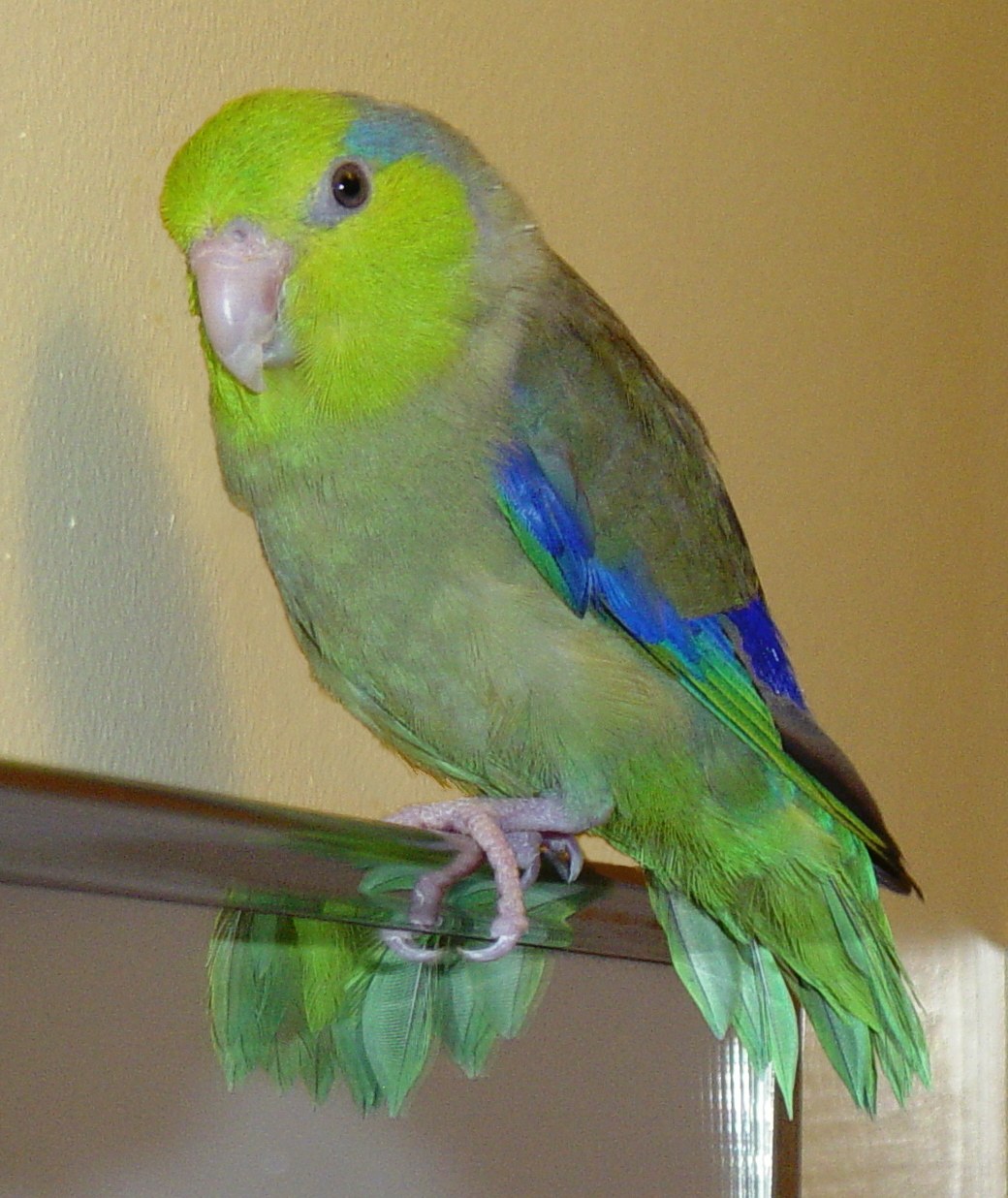
Pacific Parrotlet health monitoring works best when it begins before illness. A small parrot may continue perching or responding to a familiar person while already unwell, and feathers hide much of its body condition. This guide explains what to observe and when to seek help; it cannot diagnose a disease from appearance. A change in your bird's normal behavior is often more useful than a list of conditions said to be common in parrotlets.
Learn the difference between normal variation and a warning
Watch your Pacific Parrotlet at consistent points in its daily routine. Note how it stands, breathes at rest, moves between perches, approaches food, and responds to ordinary activity. A brief rest with relaxed feathers differs from persistent fluffing, closed eyes during normally active periods, or reduced interest in food. Unusual silence can matter in a normally chatty bird, but a naturally quiet individual needs its own baseline.
Use plain cage paper to make droppings visible and record meaningful changes before replacing it. Bird droppings contain fecal material, pale urates, and liquid urine; a wetter dropping after watery produce is not automatically diarrhea. Nevertheless, a sustained change in frequency, volume, appearance, or accompanying behavior needs veterinary advice. Photographs with a date and diet note are more useful than trying to diagnose an infection from color alone.
Regular weights add another observation, preferably through voluntary training onto a gram scale. Compare readings under similar conditions and keep a trend rather than reacting to one uncertain measurement. Do not aim to make every bird weigh the species reference of about 33 grams. Ask the veterinarian to establish an appropriate body-condition baseline and contact the clinic promptly about an unexplained downward trend.
Recognize emergencies that cannot wait
Breathing difficulty is urgent. Open-mouth breathing at rest, pronounced tail bobbing with each breath, wheezing with effort, or collapse should trigger an immediate call to an avian veterinarian or emergency service. Do not keep chasing the bird to obtain a perfect video. A short recording from a distance can help if it does not delay transport or add stress.
Other emergency signs include active bleeding, sudden severe weakness, inability to perch, repeated straining, cage-floor sitting with an abnormal posture, seizures, or significant trauma. A bird that cannot eat normally or has sharply reduced dropping output also needs prompt assessment. Call the clinic and describe the symptoms, their onset, possible exposures, and whether the bird can stand and breathe comfortably.
If fumes may be involved, move to uncontaminated air if you can do so safely and contact emergency veterinary care immediately. Do not endanger people by entering an unsafe room. Apparent improvement after leaving an exposure does not establish that the bird is unharmed. Avoid direct heaters or improvised hot enclosures during transport, which can create additional problems.
Prevent nutritional problems without creating new ones
An all-seed diet may look successful because a parrotlet eats eagerly, but preference is not proof of nutritional adequacy. Energy imbalance and missing nutrients can affect body condition and health over time. A veterinarian can evaluate the entire diet alongside activity, medical history, and examination findings. No color mutation, sex, or enthusiastic appetite removes the need for that assessment.
Diet changes themselves can become a hazard when familiar food is withdrawn before the bird recognizes an alternative. Introduce an appropriate formulated food and vegetables gradually, monitor actual swallowing, and retain reliable foods during the process. Reduced intake, fewer droppings, or weight loss should lead to veterinary contact, not a stricter conversion schedule. Avoid supplements chosen by guesswork; extra nutrients are not a universal treatment for weakness or abnormal feathers.
Address reproductive signs before they become a crisis
Female Pacific Parrotlets can produce eggs without a male. Repeated laying uses nutritional resources and deserves an avian veterinary review even when the bird initially seems bright. Ask about diet, nighttime routine, access to nest-like cavities, and interaction patterns that may encourage reproductive behavior. Do not add a nest box simply because the bird explores dark spaces or defends a corner.
Straining, a widened stance, weakness, abdominal swelling, breathing effort, or sitting on the cage floor may indicate a reproductive emergency, but other illnesses can look similar. Seek urgent professional assessment rather than assuming an egg will pass if you wait. Never massage the abdomen, insert anything into the vent, or try to pull an egg out. The correct response depends on examination and sometimes imaging, not an online visual comparison.
If eggs have already appeared, ask the veterinarian how to manage the clutch and environment. Repeatedly removing eggs without a plan may not resolve the underlying pattern. Likewise, adding calcium products without understanding the diet is not a substitute for evaluating a bird that is laying excessively or showing illness.
Reduce injuries, exposure, and infectious risks
Pacific Parrotlets may approach birds much larger than themselves or defend a cage against a similar-sized neighbor. Separate enclosures with no reachable bar contact prevent many avoidable injuries. Supervised exercise must also prevent access to another bird's cage. After a cat or dog bite or scratch, obtain urgent veterinary advice even if the wound looks tiny; feather coverage can hide damage.
Household prevention requires more than avoiding fights. Stop fans before flight, secure windows, remove hot liquids, and check cushions and clothing before sitting or moving. Keep smoke, aerosol products, scented fumes, and overheating nonstick equipment away from the bird's air. Inspect toys and hardware for sharp edges, entangling threads, and accessible unknown metals. A determined tiny beak can reach objects overlooked during a quick room inspection.
New birds need separate equipment and an avian-veterinarian-designed quarantine arrangement, ideally in a separate room before any social introduction. The duration and tests depend on provenance, exposure, and examination results. A bird that looks well can still carry infection, and one reassuring test does not assess every possible disease. Wash hands between groups and avoid sharing dishes or toys during quarantine.
Investigate feather changes and prepare useful records
Normal molt produces shed feathers and emerging replacements. Persistent bald patches, damaged skin, bleeding, feather chewing, or a sudden decline in plumage quality require a wider assessment. Medical discomfort, nutrition, the physical environment, and behavior can overlap. Do not assume parasites or boredom, apply a shop-bought spray, or acquire a companion as a treatment.
Bring the following to a veterinary visit:
- A timeline of symptoms and any household changes.
- Weight records and dated dropping photographs.
- Exact food and supplement names with approximate amounts offered.
- Details of other birds, new arrivals, travel, and possible toxin exposure.
- Enclosure photographs and a description of exercise and sleep routines.
An initial examination and regular preventive visits give the veterinarian useful context when a problem develops. Be explicit about what you do not know in a rescued bird's history. Honest records, early recognition, and prompt professional help offer more protection than promising that this species is hardy or unlikely to become ill.
Continue reading: Pacific Parrotlet Training: Build Trust and Respect Territorial Boundaries.
Sources and further reading:
- World Parrot Trust: Pacific Parrotlet
- WebMD: What to Know About the Pacific Parrotlet
- MSPCA-Angell: How to Care for Birds: Parrots as Pets
- MSD Veterinary Manual: Management of Pet Birds
- MSD Veterinary Manual: Illness in Pet Birds
Photo credits: Jhwodchuck (English Wikipedia) (Public domain (copyright holder release; PD-user, not CC0)), markaharper1 (CC BY-SA 2.0 Generic). Images resized and compressed for web display. Each image retains its linked license.


