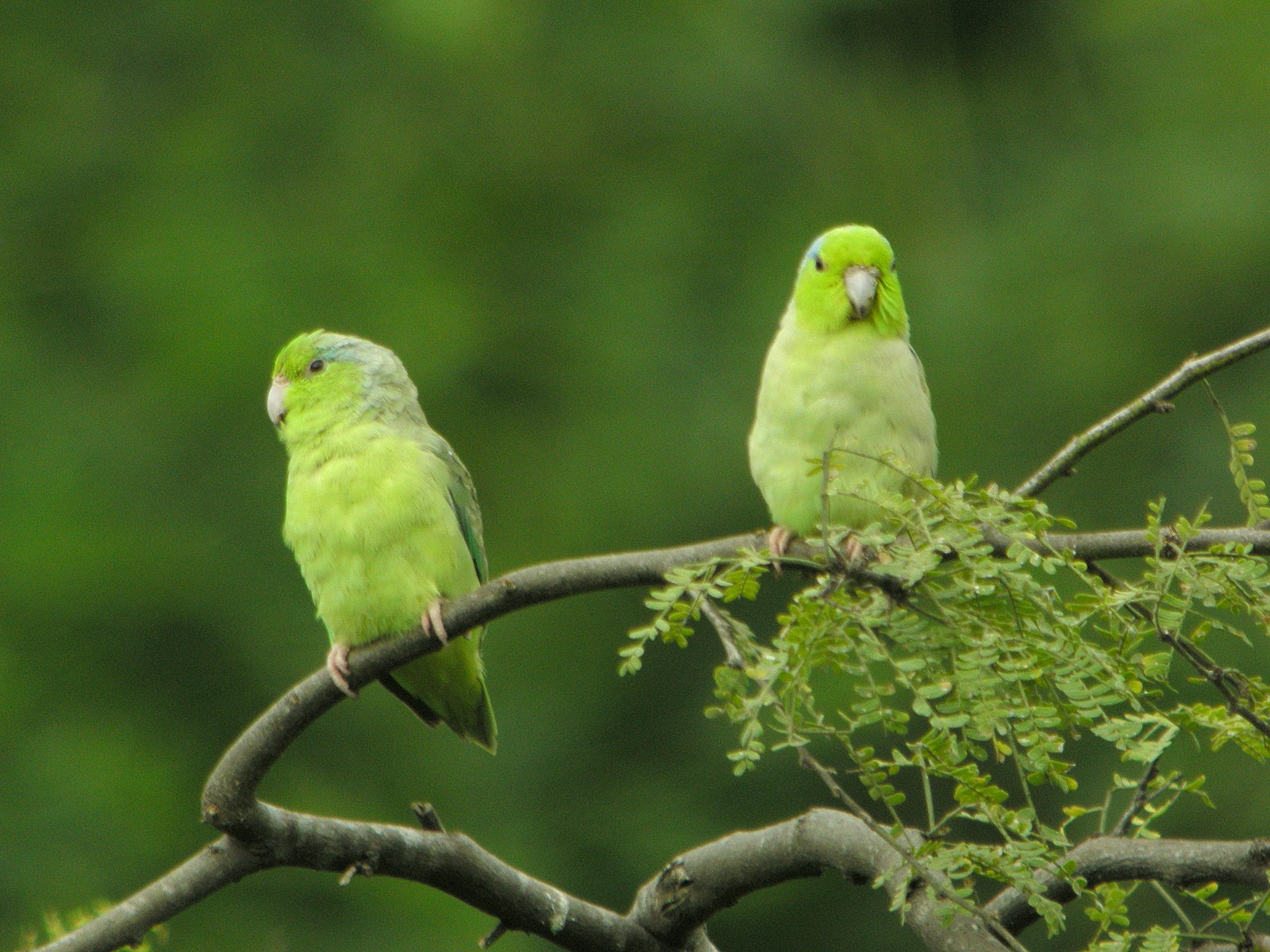
Living with a Pacific Parrotlet changes small household habits as much as it changes your pet budget. You check a chair before sitting, pause before opening an exterior door, and notice whether the usual morning chatter has changed. Forpus coelestis may weigh only a few dozen grams, but it needs a home organized around safe movement, meaningful activity, and its individual boundaries. Decide whether that daily arrangement suits you before choosing a color or imagining a pocket-sized companion.
Judge the commitment by daily needs, not body size
Pacific Parrotlets are often described as compact parrots with substantial personalities. The useful part of that description is the mismatch between their size and the care they require. A bird can be inexpensive to purchase yet still need specialist veterinary treatment, a spacious enclosure, safe exercise space, and many years of consistent support. Supplies designed for larger parrots are not automatically safe in miniature.
A frequently quoted captive lifespan is fifteen to twenty years, with uncertainty for any individual and some longer-lived birds. Think through changes that may happen over that period: moving, new employment, children, housemates, or your own health needs. Choose a documented captive-bred or rescue bird with a transparent history, and check applicable local rules. A fully weaned adult with known preferences may be a better fit than a youngster selected on appearance alone.
Design a workday the bird can understand
A predictable daily routine includes observation and feeding in the morning, independent activity during appropriate periods, supervised movement and interaction, and a quiet nighttime environment. There is no magic amount of handling that compensates for an otherwise barren day. Some Pacific Parrotlets prefer several brief interactions; others remain content nearby without wanting hands on their bodies. Watch what your bird seeks rather than filling a timetable with forced contact.
If you work outside the home, make the enclosure engaging without making basic resources difficult to obtain. Provide familiar, achievable foraging opportunities alongside reliable food access, safe chewing materials, and usable movement space. Ask a competent person to check on the bird when your absence exceeds the normal routine. Remote observation can supplement care, but it cannot refresh contaminated water or respond physically to an emergency.
Be realistic about noise, mess, and shared space
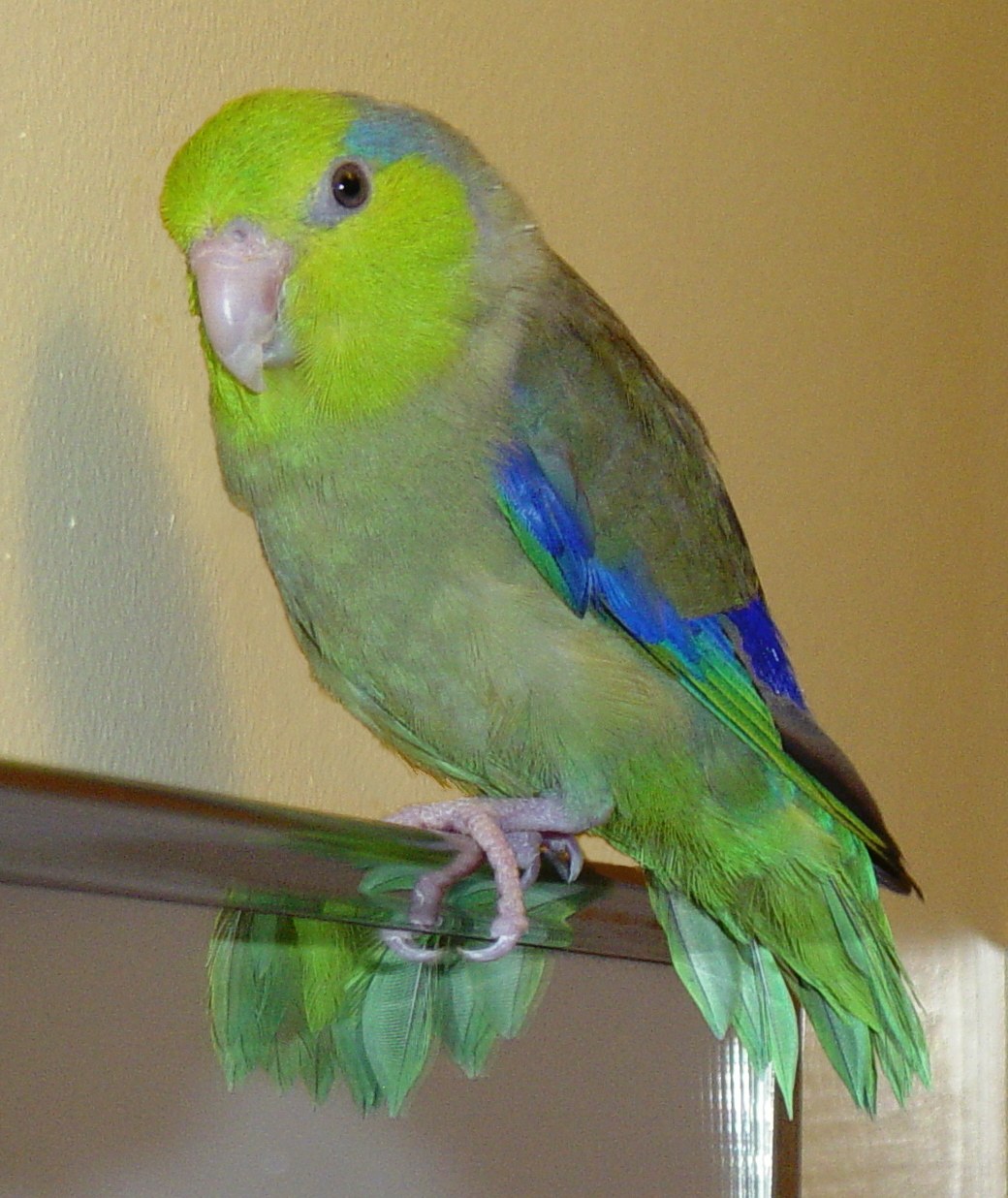
Pacific Parrotlets produce high-pitched chirps and chatter. Their voices are usually less powerful than those of much larger parrots, but that does not make them silent or automatically suitable for every apartment. World Parrot Trust describes rapid calls, with more subdued calling when perched than in an active flock. Individual vocal behavior and the sound transmission in your home matter more than an unverified noise rating.
Listen to real birds if possible and consider neighbors, shared walls, remote meetings, and household sleep schedules. Learn the difference between ordinary contact calling and a sudden change associated with distress or illness. Do not routinely darken the cage to suppress daytime sound. Instead, provide predictable interaction, independent activities, and a nighttime location that genuinely permits rest.
Expect seed hulls if seeds are fed, vegetable fragments, discarded toy material, feathers, and droppings. Put washable protection where appropriate and organize cleaning equipment so maintenance is easy to repeat. Avoid fragrance sprays intended to hide odors; keeping dishes and surfaces clean is safer than adding chemicals to the bird's air. Kitchens are unsuitable cage locations because of heat, smoke, and cooking fumes.
Make boundaries clear to children, visitors, and other pets
A Pacific Parrotlet may trust one household member while avoiding another. Introduce people gradually and let them begin with calm presence rather than grabbing or immediate touching. Children need adult supervision and explicit instruction: no squeezing, chasing, reaching into the cage, or offering food without permission. The adult remains responsible even when the child is enthusiastic and helpful.
Cats and dogs must be physically excluded from exercise areas. A placid animal can react suddenly, and a bold parrotlet may approach rather than avoid it. Another bird is not automatically safer. Pacific Parrotlets can defend territory and injure smaller companions or be injured by larger ones; separate cages and individually managed outings are safer defaults. The species shown in comparison lists are not recommendations for shared housing.
Develop a household flight and location protocol
Before opening the enclosure, agree who is responsible for watching the bird. Shut external doors and windows, stop fans, remove hot liquids, and secure open water. Make large glass surfaces recognizable and block dangerous gaps behind furniture. Other household members should know not to enter casually or turn on equipment until the bird is safely back inside.
Use a short shared checklist:
- Confirm that other pets are behind a closed door.
- Check the room for new hazards introduced since the last outing.
- Locate the bird before sitting, moving cushions, or folding clothing.
- Keep visitors away from exterior doors during exercise.
- Verify that the bird is inside and the latch is secure before ending supervision.
Despite the nickname pocket parrot, pockets and bedding are not safe unsupervised resting places. A small bird can be crushed, trapped, or carried somewhere dangerous unnoticed. Offer designated visible perches instead. Teach voluntary return to the enclosure and carrier entry with rewards, while remembering that training supplements physical safety rather than replacing it.
Plan holidays, emergencies, and a future caregiver
Find a sitter or boarding arrangement familiar with small parrots before you need one. A caregiver should be able to recognize reduced eating, breathing difficulty, cage-floor sitting, straining, or bleeding and contact an avian veterinarian promptly. Provide written food instructions, weight records, emergency contacts, transport arrangements, and authorization for veterinary care. Discuss separation and disease precautions if other birds will be present.
Prepare a longer-term backup as carefully as a weekend absence. Keep provenance and medical records together and identify someone willing and able to maintain appropriate housing. If your circumstances change, contact a reputable rescue early rather than waiting until care breaks down. A Pacific Parrotlet can be an engaging companion, but the successful relationship is one built around reliable care and respect for the bird's preferences, not a promise that it will always be cuddly, quiet, or easy.
Continue reading: Pacific Parrotlet Care: Space, Safety, and a Reliable Daily Routine.
Sources and further reading:
- World Parrot Trust: Pacific Parrotlet
- WebMD: What to Know About the Pacific Parrotlet
- MSPCA-Angell: How to Care for Birds: Parrots as Pets
- MSD Veterinary Manual: Management of Pet Birds
- MSD Veterinary Manual: Illness in Pet Birds
Photo credits: markaharper1 (CC BY-SA 2.0 Generic), Jhwodchuck (English Wikipedia) (Public domain (copyright holder release; PD-user, not CC0)). Images resized and compressed for web display. Each image retains its linked license.


