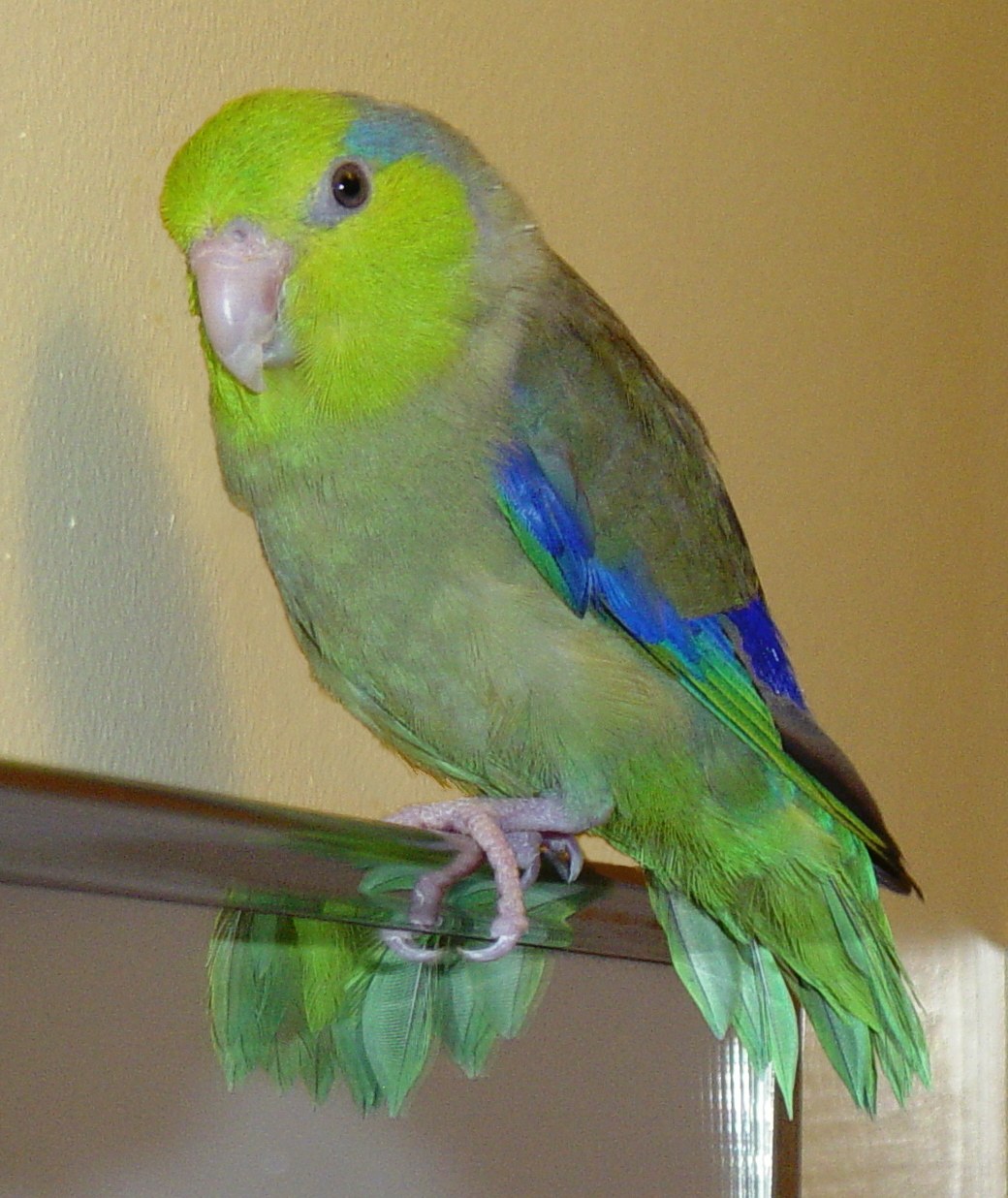
A Pacific Parrotlet care plan should start with the bird's behavior, not its dimensions. Forpus coelestis is only about five inches long, yet it explores, flies, defends valued spaces, and needs choices throughout the day. A tiny cage and occasional handling cannot substitute for that life. The goal is a safe, predictable home in which your particular bird can eat reliably, move freely, rest, and interact without being pressured.
Prepare for this species before bringing it home
Pacific Parrotlets are distinct from green-rumped and spectacled parrotlets. Confirm the species through trustworthy records rather than assuming every bird sold as a parrotlet has the same identity or temperament. Choose a documented captive-bred or rescue bird and check the rules that apply to ownership and transport where you live. Favor transparent care history over a fashionable color.
Ask what the bird actually eats, how it reacts to people, whether it has lived with other birds, and which veterinary assessments it has received. A fully weaned bird should eat independently; an unweaned youngster is not a shortcut to a close bond. Arrange an avian veterinarian before collection and keep the existing diet available during settling. A new home is already a major adjustment without an immediate nutritional experiment.
Before arrival, set up the enclosure, test door latches, and identify a quiet place for the first days. Keep spare clean dishes, suitable transport equipment, and the clinic's contact details ready. Let the bird locate its food and resting places before asking for handling. If it does not appear to eat, do not assume that hiding from unfamiliar people explains everything; observe discreetly and contact the clinic for advice about reduced intake.
Build usable flight space rather than decorative housing
The World Parrot Trust recommends an indoor aviary length of at least 1.8 meters, approximately six feet, for this species. This is a husbandry target, not a universal legal minimum. It emphasizes an important principle: small parrots still need horizontal movement. If a day cage forms part of a wider supervised exercise arrangement, have its suitability assessed in that context rather than treating a seller's small-bird label as proof of adequacy.
Whatever the design, the bird must spread its wings without striking furnishings, travel between stable perches, and reach food without squeezing past toys. Choose narrow, secure bar spacing appropriate to the individual's head size; around half an inch or less is a common small-parrot starting point, not a guarantee that every door or feeder gap is safe. Inspect those gaps separately. Check for sharp wire ends, damaged coatings, trapping points, and unreliable latches.
Offer varied bird-safe perches, avoiding an entire enclosure of identical smooth dowels or abrasive sleeves. Keep food and water out of the dropping line. Leave an open movement corridor and place a few accessible toys around it rather than filling every available space. A cage near ordinary family activity can support engagement, but it also needs a retreat from constant disturbance and must never sit in the kitchen.
Treat housing compatibility as a safety decision
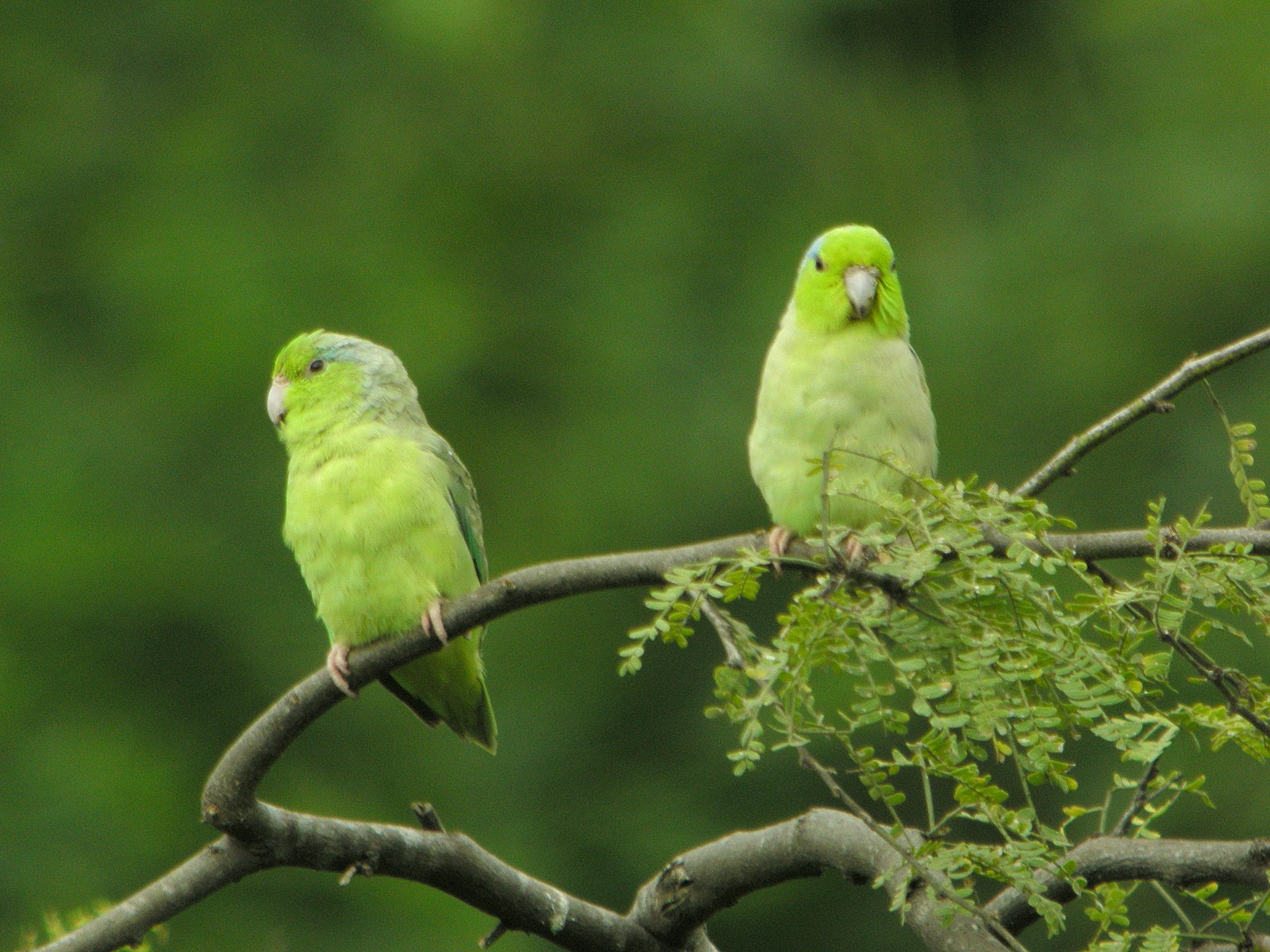
Pacific Parrotlets can be territorial around a cage, food bowl, favorite person, or chosen resting spot. A friendly bird on your hand may behave very differently when another bird approaches its enclosure. Do not house one with finches, canaries, budgerigars, or another parrot merely because their sizes appear compatible. Larger birds are not safe opponents either.
Separate cages are the safer default, including for two Pacific Parrotlets whose relationship has not been carefully assessed. Leave enough distance that beaks and toes cannot meet through the bars, and prevent a loose bird from landing on another bird's cage. A prospective companion needs a veterinary quarantine plan before any introduction. Social opportunities can be considered later; buying a companion does not erase territoriality.
Make food, water, and observation a daily system
A balanced feeding plan generally includes an appropriate formulated food and varied vegetables, with seeds used thoughtfully rather than as the entire diet. Exact proportions depend on the individual, previous diet, activity, reproductive status, and veterinary assessment. During conversion, retain familiar foods and verify consumption. A bowl of pellets does not prove that a seed-eating bird recognizes them as food.
Use a small digital gram scale and a trained perch routine to establish the bird's own baseline. Weigh under comparable conditions without deliberately fasting it, and record appetite and droppings alongside the number. The species reference weight of roughly 33 grams is not an ideal weight for every individual. Changes matter more than matching a chart, especially when a small bird has begun sorting or discarding unfamiliar food.
Clean water containers and food dishes daily, replace water whenever soiled, and remove wet food before it deteriorates. Keep avocado, chocolate, caffeine, alcohol, and heavily salted or spoiled foods inaccessible. Parrotlets hull seeds and do not need grit. Avoid adding vitamins or calcium indiscriminately; supplements should solve a defined need rather than compensate for an unassessed diet.
Plan movement, enrichment, and rest together
Before every exercise session, close doors and windows, stop ceiling fans, cover or make large glass surfaces recognizable, and remove open water and hot objects. Exclude other pets physically. Tell everyone in the household that the bird is out, then supervise its location continuously. Pacific Parrotlets can disappear behind cushions, into clothing, and beside furniture faster than a caregiver expects.
A useful daily sequence is:
- Observe breathing, posture, appetite, and overnight droppings before cleaning.
- Refresh food and water and check toy attachments for damage.
- Offer a short voluntary training session and a safe flight opportunity.
- Provide easy foraging or shredding while the bird spends time independently.
- Finish with a predictable, quiet settling routine away from late television and bright lights.
Begin enrichment at a level the bird can solve: a familiar food beside a loosely folded piece of clean paper is more useful than an inaccessible puzzle. Introduce objects gradually and watch whether they attract curiosity or avoidance. Rest should be genuinely quiet and consistent, not repeated disturbance under a cage cover. Adjust the arrangement if the bird appears frightened by covering.
Establish preventive care and an emergency route
Schedule an initial avian examination and ongoing checkups, commonly yearly with frequency adjusted for age and health. Bring diet details, weight records, and photographs of the enclosure. Ask about testing and quarantine based on the bird's history rather than buying a generic collection of treatments. Keep a secure, ventilated transport carrier ready and rehearse voluntary entry when the bird is well.
Birds often conceal illness. Labored breathing, pronounced tail bobbing at rest, cage-floor sitting, straining, bleeding, sudden weakness, or inability to perch call for urgent avian veterinary attention. Contact the clinic immediately, minimize handling, and use calm, safe transport. Do not force food or water, attempt home procedures, or wait for a bath or dietary change to fix an emergency. Good routine care makes problems easier to notice; it does not make a small parrot invulnerable.
Continue reading: Feeding a Pacific Parrotlet: Balanced Meals Without Risky Diet Changes.
Sources and further reading:
- World Parrot Trust: Pacific Parrotlet
- WebMD: What to Know About the Pacific Parrotlet
- MSPCA-Angell: How to Care for Birds: Parrots as Pets
- MSD Veterinary Manual: Management of Pet Birds
- MSD Veterinary Manual: Illness in Pet Birds
Photo credits: Jhwodchuck (English Wikipedia) (Public domain (copyright holder release; PD-user, not CC0)), markaharper1 (CC BY-SA 2.0 Generic). Images resized and compressed for web display. Each image retains its linked license.


