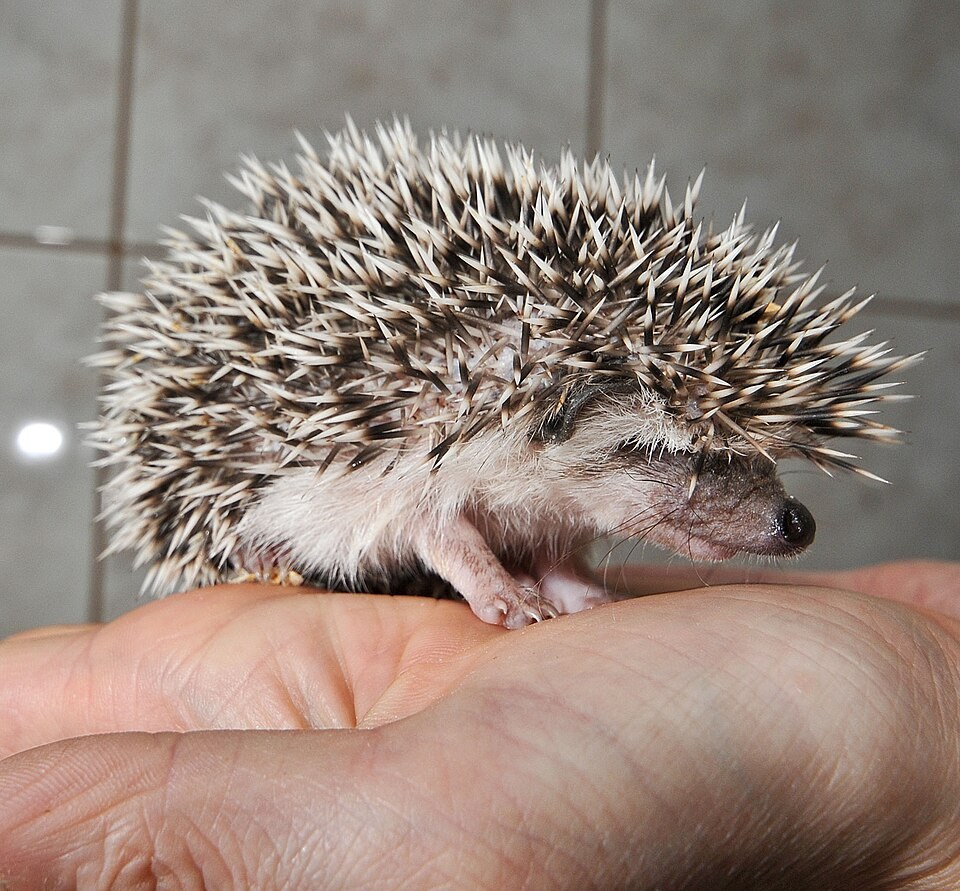
Living with an African pygmy hedgehog is often quieter and more scheduled than social-media clips suggest. The rewarding moments may be an evening exploration or a calm health check rather than daytime cuddles. Before adopting, consider whether your household can provide individual housing, dependable warmth, and specialist care throughout the animal's life. A small body does not make those responsibilities small or optional.
Choose the relationship you can actually support
African pygmy hedgehogs are solitary, nocturnal animals. Many become familiar with their caregivers, but not every individual enjoys prolonged handling. If you want an animal that welcomes daytime visitors or plays readily with children, this species may not meet that expectation. Visit an experienced rescue or responsible source and ask about the animal's normal waking time, handling tolerance, diet, and health history rather than choosing solely by color.
Merck gives a typical captive lifespan of four to six years. Longer-lived individuals exist, but reports of eight to ten years should not be treated as the ordinary outcome; wild estimates describe a separate context. Plan for the full commitment, including changes in accommodation, work, or family circumstances. Identify a veterinarian who treats hedgehogs before acquisition and ask how emergency care is arranged. A source that cannot explain previous care or provide basic records deserves more questions, not a rushed deposit.
Match the household timetable to nighttime activity
Place the enclosure where the hedgehog can sleep undisturbed during the day and become active without a television, bright lamp, or curious dog beside it. Wheel noise and nighttime cleaning needs matter when deciding whether a bedroom is suitable. Preserve a consistent day-night rhythm and a dark retreat rather than moving the enclosure around whenever its schedule becomes inconvenient. Individual housing is the normal plan, not an exception for unusually unfriendly animals.
An evening routine should include temperature readings, fresh water, measured food, wheel cleaning, and a look at movement and body condition. Interaction can follow when the animal is awake and receptive. Some nights a brief check is enough; repeated forced handling is not necessary to prove dedication. Share responsibilities explicitly so one person does not assume another already checked the heater. A dependable ten-minute inspection is more useful than occasional elaborate play sessions separated by days of minimal observation.

Treat heating reliability as part of the budget
A practical starting band is 24-26°C, about 75-79°F, measured as ambient air inside the enclosure and around the sleeping area. This sits within the cited veterinary recommendations but still requires individual monitoring. Budget for suitable thermostatic heating, independent thermometers, secure installation, and electricity, not merely the purchase price of a cage. Keep hot surfaces and cords inaccessible, and verify actual temperatures rather than trusting the equipment dial.
Think through disruptions before they happen:
- Where can the hedgehog stay if the home loses power?
- Who can check the enclosure if you are delayed overnight?
- How will safe warmth be maintained during transport?
- Is replacement equipment available if a heater fails?
- Who has authority to arrange veterinary care in your absence?
Do not create an improvised heating system during an emergency without professional guidance. Direct hot packs and unregulated surfaces can burn an animal even while the surrounding room feels cold. Reliable warmth is a continuing welfare requirement, not a seasonal luxury.
Set realistic boundaries for children and other pets
Children can help prepare clean bedding, read a thermometer, or write down a weight while an adult supervises. Direct handling should happen at floor level with the whole body supported. Teach that curling and huffing mean the hedgehog needs more security, not that it should be opened like a toy. Do not wake the animal repeatedly for demonstrations or pass it between a group of excited visitors.
Keep dogs, cats, and other small pets away from the enclosure and exercise area. Defensive spines do not make a hedgehog invulnerable, and a curious paw or bite can cause serious injury. It does not need another hedgehog or another species for companionship. Hygiene is another family rule: wash hands after contact, avoid kissing, and keep equipment away from kitchens and food-preparation surfaces. Healthy-looking hedgehogs can carry Salmonella, so precautions should be routine rather than introduced only after someone becomes ill.

Plan holidays and legal checks before booking
A competent sitter must do more than replenish a bowl. Demonstrate temperature checks, cleaning, gentle observation, and how the animal normally responds when awake. Leave written feeding amounts, equipment instructions, veterinary contacts, transport arrangements, and permission for treatment. Ask the sitter to report actual food intake and behavior, not just that the enclosure looked tidy. Arrange a practice visit while you are available to explain unfamiliar signs.
Before purchase, relocation, or travel, check current requirements with the relevant local regulator. Ownership permission, import rules, transit rules, and return requirements are separate questions. USDA APHIS guidance is useful for US imports but is not a complete ownership-legality list. Do not rely on a seller's shipping policy or a copied list of states. If travel is permitted and necessary, use a secure ventilated carrier and a veterinarian-approved warmth plan; never leave the hedgehog unattended in a parked vehicle.
Adapt care when age or illness changes the routine
As the hedgehog ages, make the layout easier to navigate without removing all opportunities to explore. Keep food, water, and the hide accessible, and discuss changes in wheel use or handling tolerance with your veterinarian. Weight loss, repeated soiling, lumps, altered chewing, or reduced activity should not automatically be blamed on age. Dental disease, tumors, and neurological or other illnesses may need investigation and a comfort-focused plan.
Keep emergency funds or suitable coverage where available, understanding exclusions before relying on a policy. Discuss quality of life honestly if chronic illness develops, including pain, eating, mobility, and the burden of handling. A successful long-term relationship respects what this particular animal needs, from energetic nighttime exploration to quieter supported routines. Planning makes room for both the enjoyment and the responsibility of sharing your home with a solitary hedgehog.
Continue reading: African Pygmy Hedgehog Care: Warmth, Space, and Routine.
Sources and further reading:
- Merck Veterinary Manual: Management of four-toed African pygmy hedgehogs
- Merck Veterinary Manual: Diseases of four-toed African pygmy hedgehogs
- Animal Diversity Web: Atelerix albiventris
- South Pasadena Animal Hospital: Hedgehog health problems
- USDA APHIS: Pet hedgehogs and tenrecs imports into the United States
Photo credits: Pueri Michał Klimont (CC BY-SA 3.0), Jason Graham (CC0), B. P. White (CC BY-SA 4.0). Images resized and compressed for web display. Each image retains its linked license. Young animal according to the source; its size on a person's hand is not an adult-size reference. Wild night-time photograph according to source metadata, not a pet-housing example. Wild habitat photograph according to the source, not a pet-housing example.


