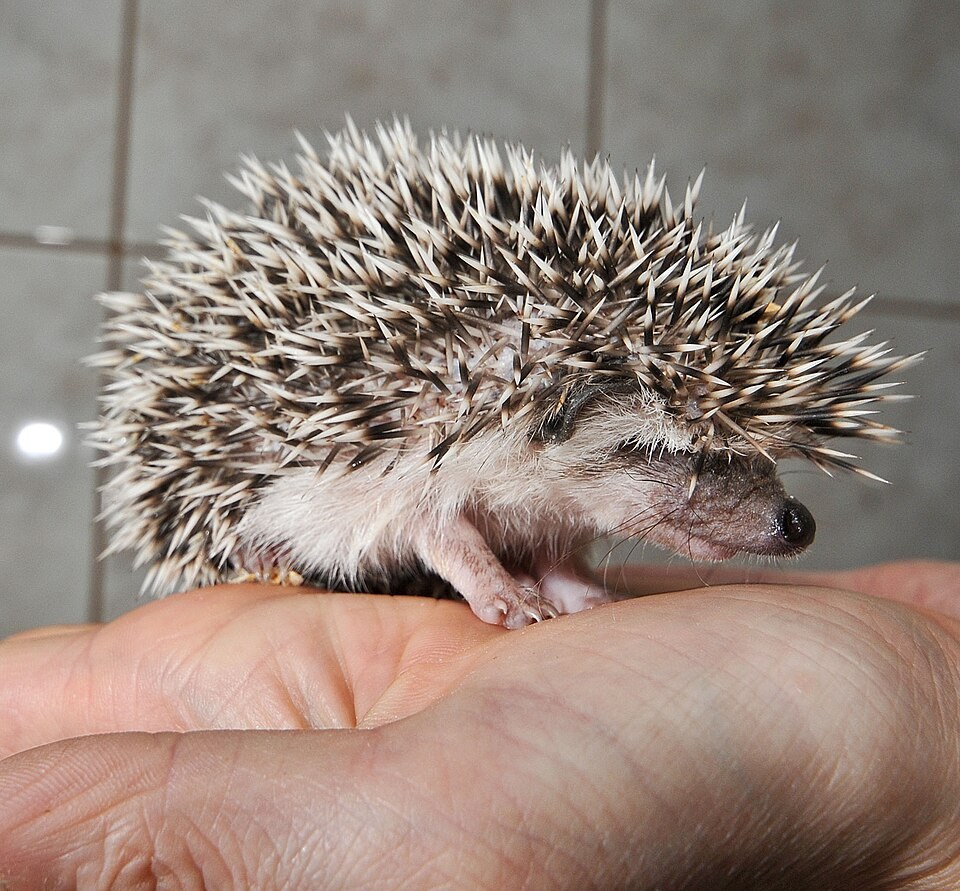
African pygmy hedgehog nutrition requires more thought than offering a bowl of insects. These nighttime foragers need balanced nutrients, suitable portions, and consistent access to water. Captive obesity is common, yet an animal that loses interest in food may be ill rather than simply full. Build a feeding routine that lets you distinguish the two, without treating an internet weight average as a compulsory target.
Choose a complete staple rather than a familiar label
Merck describes commercially prepared hedgehog or insectivore food as the ideal dietary base, alongside appropriate invertebrate additions. Look for a nutritionally complete product and have your veterinarian review the formulation, especially if local choices are limited. A picture of a hedgehog or the word natural does not prove that a product is balanced. Avoid rodent seed mixtures, garden hedgehog snacks, and products designed only as treats.
Check the manufacturer's feeding guidance, life-stage suitability, storage instructions, and contact information. If a veterinarian recommends an alternative food, clarify the exact formulation rather than assuming all products sold for that species are interchangeable. Ingredient lists alone cannot show the quality of the whole diet. Likewise, matching an online protein percentage does not resolve calorie density or nutrient balance. A feeding plan needs a reliable staple, not an assortment of foods chosen because each sounds individually healthy.
Use insects as planned additions, not unlimited rewards
Invertebrates provide dietary variety and opportunities to forage, but their nutritional composition varies. Discuss appropriate captive-bred prey such as gut-loaded crickets or suitable roaches with your veterinarian. Gut-loading means feeding the prey an appropriate nutritious diet before it is offered; it does not make every insect a complete food. Avoid wild-caught insects because pesticide exposure, parasites, and species identification cannot be controlled reliably.
Calorie-dense treats can quietly dominate the daily intake. Count insects and other rewards as part of the ration rather than adding them whenever the hedgehog emerges. Mealworms should not become the entire menu or the automatic response to every handling session. Use feeding tongs appropriately or a clean feeding area where prey cannot escape into bedding indefinitely. Remove uneaten prey rather than leaving it to hide, die, or disturb the animal. Dietary variety should remain compatible with consistent, measurable nutrition.
Match portions to the individual hedgehog
There is no universal spoonful that fits every animal and every food. Calorie density, body size, activity, age, and illness affect requirements. Begin with the product guidance and veterinary advice, measure what is offered, and record what remains. Feed around the normal evening waking period so that fresh food is available when the hedgehog is ready to investigate. Maintain clean drinking water continuously in an accessible, stable container.
Weigh your hedgehog regularly using the same scale and a secure container, subtracting the container weight. Animal Diversity Web gives a descriptive average around 600 grams, but that is not a healthy target for every individual. A naturally smaller hedgehog should not be fed up to it, and a larger one should not be starved down to it. Your veterinarian can assess body condition and interpret trends. Difficulty moving or curling warrants assessment, but curling behavior alone is not a reliable obesity test.
Change the menu without losing track of intake
Obtain the current diet before bringing a hedgehog home. A move already changes smells, noise, and routine, so changing every food immediately can make appetite problems difficult to interpret. If a transition is needed, agree on a gradual approach with your veterinarian. Introduce a small amount of the new staple while monitoring acceptance, droppings, and weight. Do not assume mixing foods means the animal eats both.
If intake drops, pause and seek advice rather than withholding the familiar food until the animal gives in. Repeatedly adding tastier treats can also hide a problem by replacing balanced nutrition. A hedgehog that eats insects but avoids its usual kibble may have a preference, but dental pain or a mouth lesion is another possibility. Note whether it drops food, chews awkwardly, or drools. A sudden food preference should be considered alongside behavior and weight, not treated automatically as stubbornness.
Keep food hygiene and supplements straightforward
Food handling matters because hedgehogs and their surroundings may carry Salmonella even when the animal seems healthy. Wash hands after feeding or cleaning and keep bowls and equipment away from human food-preparation areas. Clean water dishes and remove perishable leftovers promptly. Follow storage instructions, protect dry food from damp, and retain batch details in case a product needs to be traced. A sealed container should be cleaned before a new bag is added.
Use a conservative safety list:
- Do not offer milk, sweets, alcohol, or seasoned leftovers.
- Keep chocolate and caffeinated products inaccessible.
- Avoid wild insects and scraps of unknown origin.
- Do not add vitamin or mineral powders without advice.
- Keep treats small enough to avoid displacing the staple.
Supplements are not insurance against an unsuitable diet and can create excesses. If a homemade menu is being considered, involve a veterinarian with nutrition expertise rather than relying on a recipe assembled from scattered feeding charts.
Investigate appetite loss before adding home remedies
A nocturnal schedule can make reduced intake easy to miss. Check the dish in the morning and compare with your own records rather than waiting to see the animal eat. Cold enclosure air, dental disease, infection, pain, or other illness can affect appetite. Read thermometers and observe movement, but do not assume correcting one environmental problem proves the animal is well. Contact an experienced veterinarian promptly when intake falls markedly.
Bring the food label, recent weight notes, and details of treats to the appointment. If weight reduction is necessary, the veterinarian can plan measured changes and safe activity rather than fasting. The aim is a hedgehog that maintains appropriate condition and eats comfortably, not one that meets a social-media ideal or cleans every bowl regardless of how much was offered.
Continue reading: African Pygmy Hedgehog Health: Warning Signs Worth Acting On.
Sources and further reading:
- Merck Veterinary Manual: Management of four-toed African pygmy hedgehogs
- Merck Veterinary Manual: Diseases of four-toed African pygmy hedgehogs
- Animal Diversity Web: Atelerix albiventris
- South Pasadena Animal Hospital: Hedgehog health problems
- USDA APHIS: Pet hedgehogs and tenrecs imports into the United States
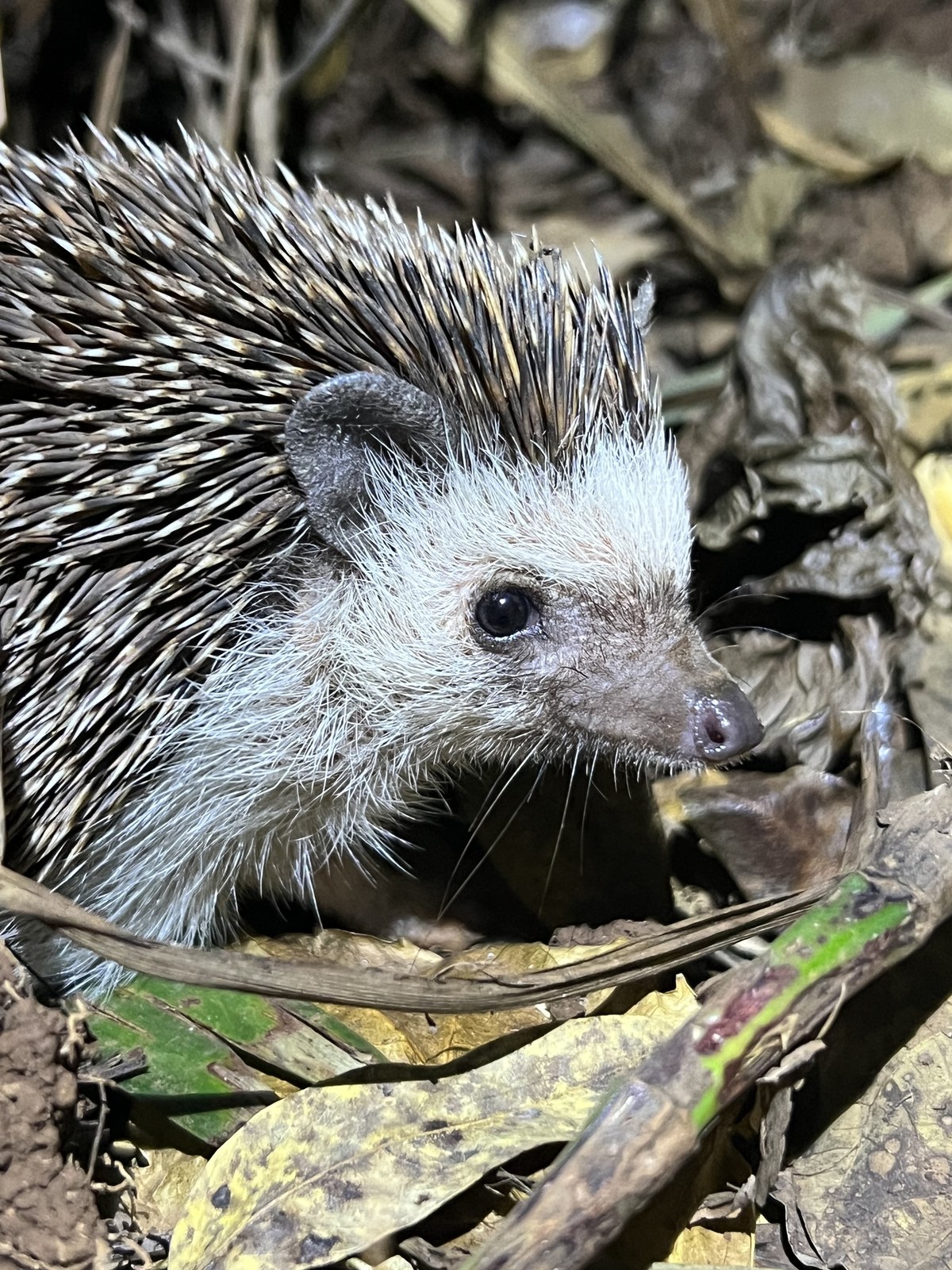
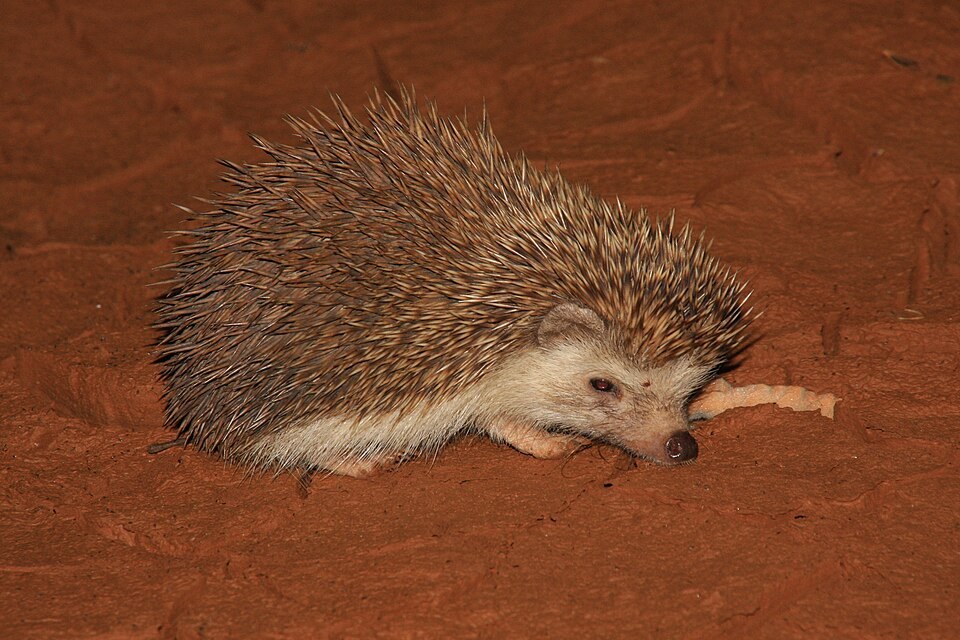
Photo credits: Pueri Michał Klimont (CC BY-SA 3.0), Jason Graham (CC0), B. P. White (CC BY-SA 4.0). Images resized and compressed for web display. Each image retains its linked license. Young animal according to the source; its size on a person's hand is not an adult-size reference. Wild night-time photograph according to source metadata, not a pet-housing example. Wild habitat photograph according to the source, not a pet-housing example.


