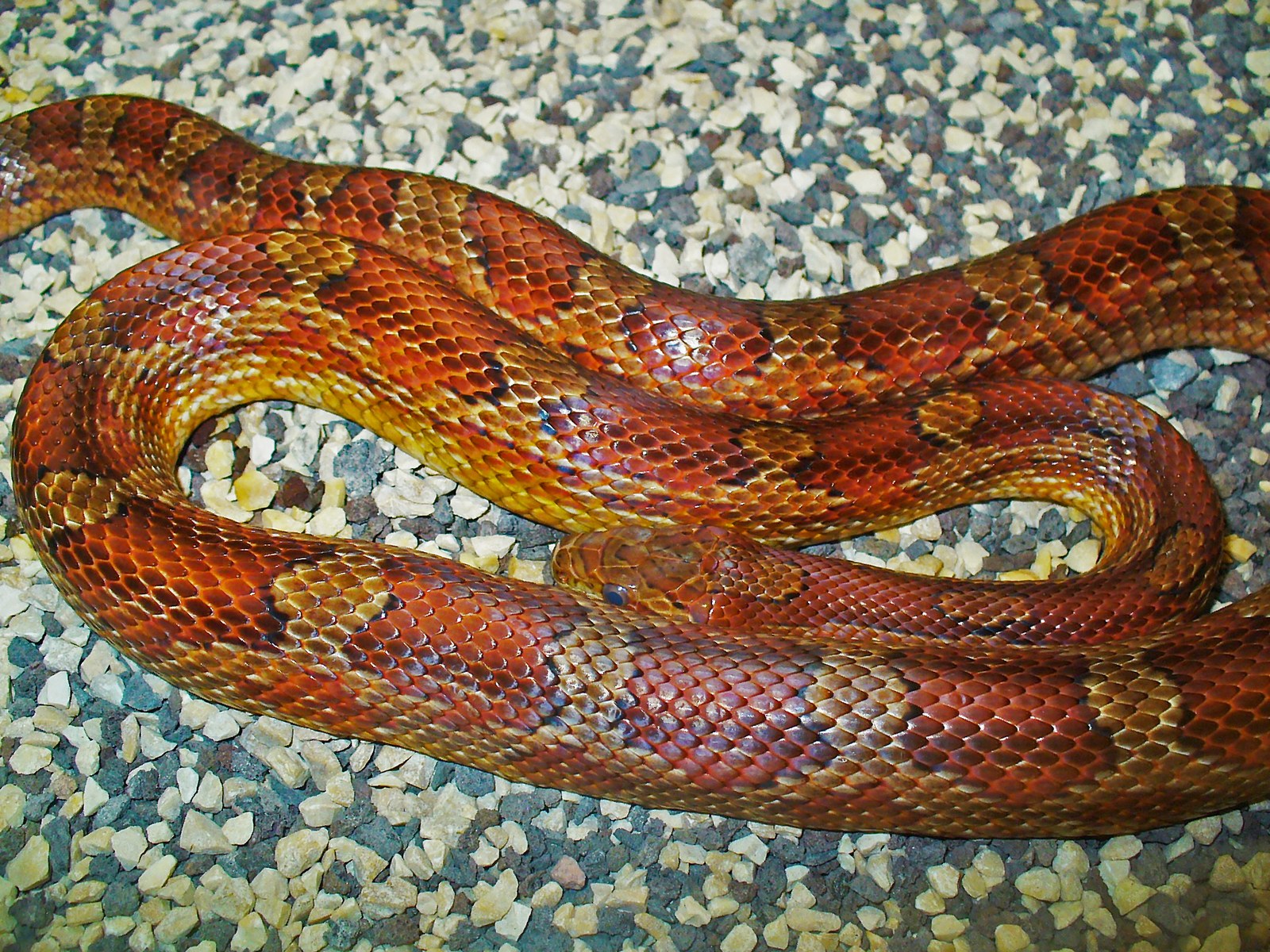
Corn snake handling works best when the aim is cooperation rather than control. Many individuals tolerate gentle contact, but tolerance is not the same as enjoying every interaction. A snake that wants cover should not have to struggle to obtain it. Learn to recognize stress signals, support the body, and secure the surrounding space so that necessary care can happen without turning each opening of the enclosure into a chase.
Read behavior in its immediate context
Tongue flicking helps a corn snake collect chemical information. Slow investigation with a loosely supported body may simply be exploration; it does not automatically signal hunger or affection. A rapid retreat, tense muscles, repeated attempts to flee, or a head pulled back into a defensive curve indicates that you should pause. A strike is a defensive or feeding response, not evidence of spite.
Context matters. A hatchling may feel vulnerable in open space, a shedding snake may have reduced vision, and an animal disturbed repeatedly may anticipate another interruption. Hands carrying feeder scent can also create confusion. Wash before handling as well as afterward, and keep feeding tools separate from ordinary care equipment.
Observe your snake at different times without opening the enclosure. Corn snakes often become active around dusk or at night, although individual schedules vary. Knowing when yours normally explores helps you avoid misreading quiet daytime sheltering as boredom or illness.
Let a new snake settle before contact
Have the enclosure running and tested before arrival, with hides, cover, water, and the full environmental gradient already available. Avoid unnecessary handling during at least the first week. This is a starting settling period, not a promise that every snake will be ready on the next day. An unsettled animal or one that is not feeding reliably may need longer and a husbandry review.
Keep routine care predictable. Change water and remove waste calmly without repeatedly opening hides to show the snake to visitors. If it accepts a meal, wait at least 48 hours afterward before routine handling, even if the initial settling period has ended. Avoid handling during shedding and while illness is being investigated.
Do not try to make the snake accustomed to you by holding it until it stops resisting. Immobility may reflect fear rather than comfort. Allowing secure retreats teaches a more useful lesson: your approach does not always remove the animal's control over its surroundings.
Support movement without grabbing or squeezing
Prepare a quiet, secure area before opening the door. Keep the session low over a safe surface so an unexpected movement does not become a long fall. Approach calmly from the side where practical and scoop beneath the body rather than grabbing from above. Support more than one section, allowing the snake to pass between relaxed hands without dangling.
Do not grip the neck, suspend it by the tail, or squeeze the body to stop movement. Avoid restraining the head during routine handling. If the snake coils around a hand, stay calm and support it while allowing forward movement; pulling on the tail can injure it. Remove jewelry or clothing features that could trap a moving animal.
- Close room doors and exclude other pets before starting.
- Keep hands clean and free from prey odors.
- Support the body continuously as it moves.
- End the session before repeated flight or tension escalates.
- Return the snake gently and verify every enclosure closure.
Begin with brief contact rather than aiming for a fixed endurance target. Room conditions and the individual snake determine what is reasonable.
Keep feeding responses separate from handling
Feeding in the home enclosure is appropriate and avoids moving a recently fed snake. Use tongs, not fingers, to present fully thawed pre-killed prey. Maintain ordinary nonfeeding care so that every door opening does not predict a meal. Do not tease the snake with prey scent or repeatedly wave a feeder near it to test its reactions.
After a meal, keep the minimum 48-hour handling pause visible in the care record. Access to a secure thermal gradient allows digestion without disturbance. Do not move the animal to a lap, bathing container, or separate display space to see whether the meal has gone down. A body bulge alone is not an invitation to palpate it.
If defensive behavior changes suddenly, consider shedding, painful injury, unsuitable temperatures, or recent disturbance. Persistent unexplained change merits a reptile veterinary discussion, especially with appetite or weight changes.
Provide exploration inside an escape-proof habitat
A corn snake can climb cords, push at loose fittings, and investigate tiny gaps. Enclosure security is therefore a daily care task, not a one-time purchase feature. Start with 150 × 60 × 60 cm of adult usable space and ensure the individual can straighten completely; larger snakes need longer housing. Secure climbing structures and covered routes make this space genuinely usable.
Check locks, sliding-door overlaps, ventilation panels, cable openings, and lid clips after maintenance. Never rely on tape where it could contact the snake or on objects balanced on a lid. Do not leave the enclosure open while fetching water or cleaning supplies. A quick animal can disappear while you assume it is still under a hide.
Persistent nose rubbing or repeated pushing at one boundary calls for assessment of heat, shelter, space, and possible injury. It should not automatically be celebrated as curiosity. Enrichment means safer opportunities to choose, not constantly rearranging everything or letting the snake roam unobserved around the house.
Plan for family handling and unexpected escapes
An adult should take responsibility for every session. Keep the snake away from faces and never pass it around a crowded room. Children under five should not handle reptiles or their equipment because of infection risk; older children still need close supervision and prompt handwashing. Adults aged 65 and older and people with weakened immune systems also require extra caution when considering reptile contact.
If an escape occurs, close the room, exclude pets, and search systematically near sheltered edges and warm hiding places. Check furniture carefully before moving it, and do not use glue traps, poison, or loose live prey as bait. Protect the snake from crushing and uncontrolled heat. Seek practical help from an experienced reptile professional if it cannot be located.
Corn snakes do not need companions or constant entertainment from people. Safe handling is one small part of care; secure shelter, meaningful space, and the freedom to decline contact remain more important.
Continue reading: Corn Snake Shedding and Skin Care: Moisture Without Soaking.
Sources and further reading:
- RSPCA: Corn snake care
- ReptiFiles: Corn Snake Temperatures, Lighting & Humidity
- ReptiFiles: Feeding Your Corn Snake
- Merck Veterinary Manual: Management and Husbandry of Reptiles
- CDC: Reptiles and Amphibians
Photo credits: H. Zell (CC BY-SA 3.0 Unported). Images resized and compressed for web display. Each image retains its linked license.
