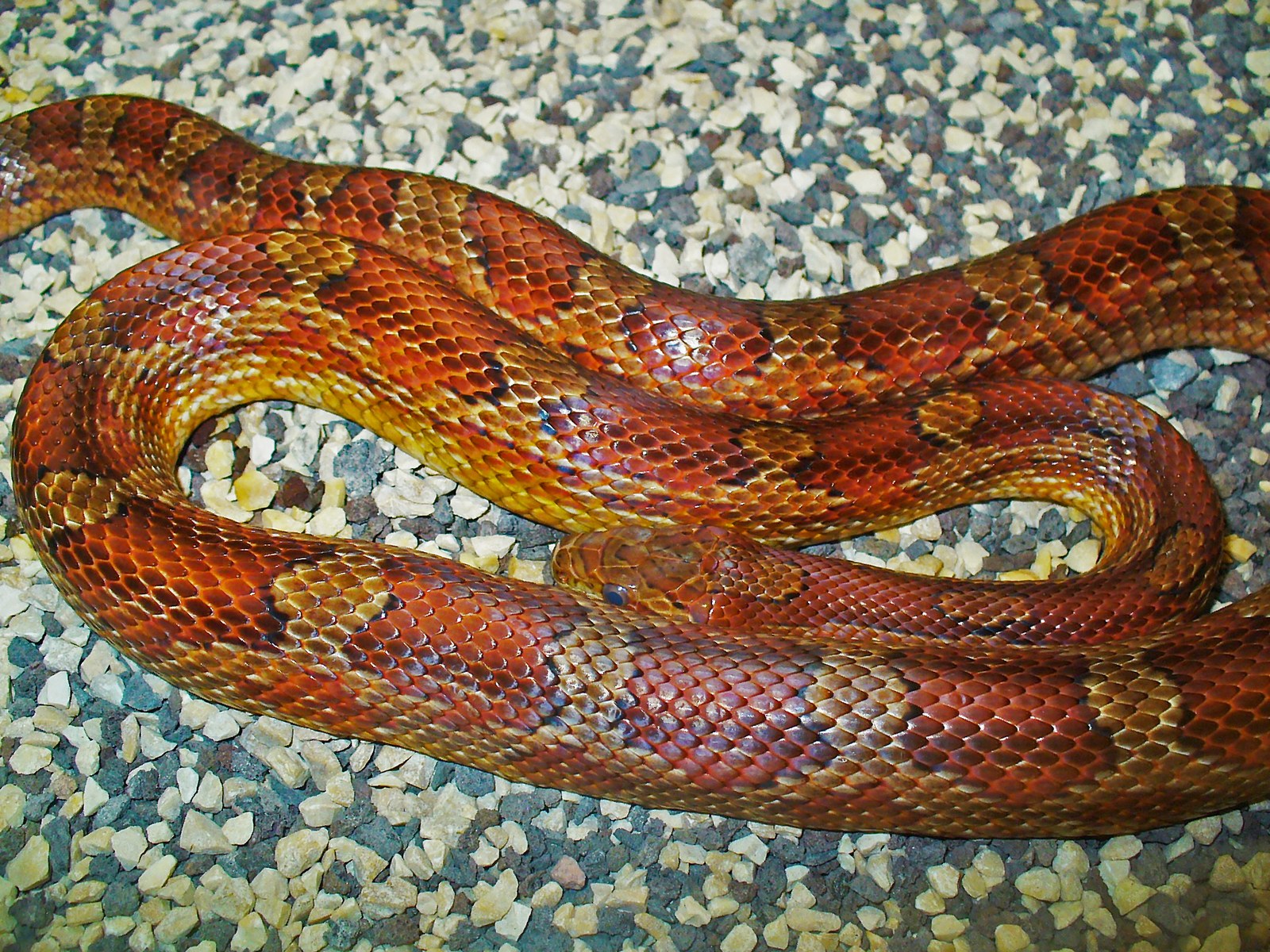
A corn snake that readily takes food can still be fed badly. The goal of corn snake nutrition is steady, appropriate growth followed by healthy adult maintenance, not the fastest possible increase in size. Whole prey, careful preparation, and a record of body condition make decisions more reliable than appetite alone. An exploring snake is gathering information about its surroundings; it is not necessarily asking you to thaw another mouse.
Choose complete prey rather than meat pieces
Use commercially produced, pre-killed whole rodents from a reliable supplier. A whole animal includes muscle, organs, and skeleton, which is why it cannot be replaced by chicken breast, strips of beef, or an assortment of kitchen leftovers. Mice are a practical staple for many corn snakes. Select prey by its actual dimensions, not only labels such as small or medium, which differ between suppliers.
Choose a prey item about as wide as, or only slightly wider than, the snake's thickest body section. Its head is not the sizing reference. Avoid routinely stacking several small items into a large meal, and do not jump to oversized prey to accelerate growth. A veterinarian can help assess an unusually small, thin, or recovering individual.
Do not use wild-caught rodents: parasites, poison exposure, and uncertain health add avoidable hazards. Inspect deliveries and storage conditions, date packages, and rotate stock. Frozen prey is not sterile, and prolonged or unsuitable storage can reduce its quality.
Match feeding intervals to the individual
As starting points, offer hatchlings a suitable meal about every 5–6 days, growing juveniles every 7–10 days, and many adults every 14–21 days. These intervals represent different life stages, not a schedule to switch on an exact birthday. A slowly growing juvenile and a mature adult do not need identical energy intake simply because they accept the same mouse size.
Prey size, activity, growth, and body condition must all influence timing. The adult interval is deliberately less frequent than a young snake's routine, because overfeeding a willing adult is easy. It is not a rule that an underweight animal must wait regardless of clinical needs. Avoid power-feeding youngsters or putting an overweight snake on an abrupt prolonged fast without advice.
Record the date, prey type and size, whether the meal was accepted, and any regurgitation. Review several entries together. A feeding chart is most useful when it explains what happened, rather than merely reminding you that another calendar date has arrived.
Thaw safely and keep feeders separate
Thaw frozen prey completely in a sealed container in a refrigerator, separated from human food. Just before feeding, warm the fully thawed item gently inside a sealed bag placed in warm water. The center must not remain frozen. Do not microwave, cook, leave prey thawing all day at room temperature, or repeatedly warm and cool an unused item.
Use dedicated containers, utensils, and feeding tongs outside human food-preparation areas. Freezing does not eliminate Salmonella and other contamination risks. Wash your hands with soap and running water after touching feeders, packaging, equipment, or the enclosure; clean the work area appropriately. Discard rejected thawed prey rather than refreezing it.
- Confirm the next meal is appropriate before thawing it.
- Inspect the item for spoilage or damaged packaging.
- Keep the warmed prey free of attached loose substrate.
- Offer it with tongs while keeping fingers out of the feeding path.
- Record acceptance and remove uneaten food promptly.
Feed inside the familiar enclosure. Moving a snake into a separate feeding tub is unnecessary and creates an avoidable return trip immediately after eating.
Protect digestion and avoid automatic supplements
After feeding, leave your corn snake undisturbed for at least 48 hours before routine handling. Maintain access to its usual thermal gradient: warm air of 28–30°C, cool air of 20–24°C, and a separately measured basking surface near 32°C. Do not heat the whole enclosure to the surface target or keep the snake trapped in one warm hide. Digestion needs suitable conditions and choice, not constant maximum heat.
Good-quality whole prey generally supplies nutrients without routine calcium, multivitamin, or D3 dusting. Powdered insect-feeding schedules for lizards should not be copied onto rodents. Supplementation is a clinical and dietary decision, not insurance against every possible deficiency. Discuss feeder quality, health history, and the measured UVB arrangement with a reptile veterinarian if there is a concern.
Keep drinking water available throughout the digestion period. Quiet care such as replacing soiled water should continue without lifting or disturbing the snake unnecessarily.
Track condition instead of rewarding appetite
Weigh the snake periodically with a dedicated scale and a secure ventilated container, ideally under comparable conditions and not immediately after a meal. Monthly records are a useful starting routine for a stable animal; younger or unwell snakes may need a different monitoring plan. Track trends rather than reacting to every small difference caused by food, water, or droppings.
Look at the whole body as well. A sharply prominent spine, marked thinning, unusual swelling, or accumulating folds deserves assessment. Photographs taken from similar angles can support the record, but internet shape charts cannot diagnose disease or define an ideal weight for every corn snake. Adults vary in length and build.
If weight is steadily increasing after growth has slowed, review prey size and frequency with qualified guidance. More climbing opportunities help support normal activity but do not cancel excessive calories. If weight falls unexpectedly, do not simply offer larger meals; illness, parasites, and husbandry problems must be considered.
Respond thoughtfully when a meal is refused
First check whether the snake is entering a shed, recently moved, or has been disturbed repeatedly. Confirm actual temperatures, secure hides, water access, and the condition of the prey. Record the refusal without immediately offering another succession of meals. Repeated attempts can add stress and make it harder to identify what changed.
A small hatchling missing meals needs earlier professional advice than a well-conditioned adult with one isolated refusal. Weight decline, marked lethargy, abnormal breathing, mouth changes, or regurgitation warrants prompt veterinary contact. Do not assume a corn snake shares another snake species' reputation for harmless long fasts, and do not label every winter refusal as brumation.
The most useful feeding plan is one you can explain: appropriate whole prey, a justified interval, safe preparation, and a body-condition trend that supports the decision.
Continue reading: Corn Snake Health Issues: Warning Signs and Practical Prevention.
Sources and further reading:
- RSPCA: Corn snake care
- ReptiFiles: Corn Snake Temperatures, Lighting & Humidity
- ReptiFiles: Feeding Your Corn Snake
- Merck Veterinary Manual: Management and Husbandry of Reptiles
- CDC: Reptiles and Amphibians
Photo credits: H. Zell (CC BY-SA 3.0 Unported). Images resized and compressed for web display. Each image retains its linked license.
