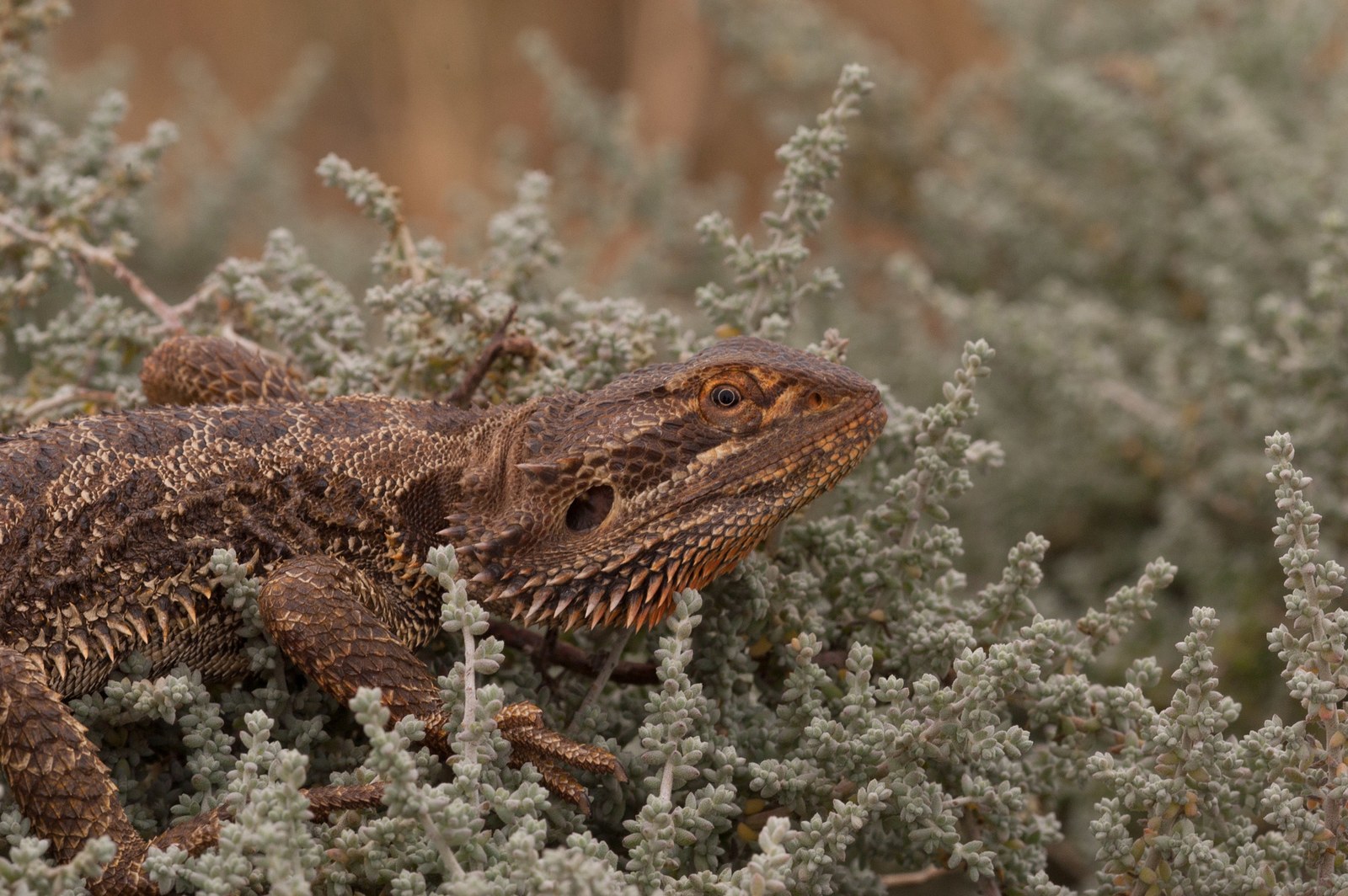
Bearded dragon care begins with a habitat that lets your lizard make choices. Pogona vitticeps is a daylight-active basker, not an animal that should sit at one temperature all day. Before bringing it home, build and test an enclosure with distinct warm, cool, bright, and shaded areas. Attractive furnishings are useful only when the dragon can safely reach them and your instruments confirm that the environment works.
Choose an adult enclosure with usable space
Plan for an adult around 45 cm, or about 18 inches, in total length including the tail. A baseline enclosure is 120 × 60 × 60 cm L × W × H, approximately 48 × 24 × 24 inches. Larger usable space is preferable, particularly for a larger individual. A tall decorative cabinet with little floor area is not an equivalent substitute for a broad enclosure that allows walking and turning.
House one dragon alone. Animals sitting together may be competing for the same basking site rather than enjoying companionship. Include a stable basking platform, shaded hides, open movement routes, and secure branches or ledges. Support heavy furnishings independently of loose substrate so digging cannot cause a collapse. Lock doors and check ventilation openings before your dragon arrives; climbing ability makes an apparently unreachable gap surprisingly accessible.
For a new arrival, an easily cleaned, non-looped surface helps you monitor droppings and feeding. A suitable digging area can follow once health and husbandry are established. Avoid calcium sand, sharp particles, and fabrics that snag claws.
Measure air and basking surfaces separately
The basking surface should reach 42–45°C (107.6–113°F). This means the actual platform touching the dragon, not air beside the lamp. Use an infrared thermometer after the enclosure has warmed and stabilized, checking several points across the resting area. A tiny hot patch surrounded by cold stone does not provide even whole-body warmth, and one acceptable reading can conceal an excessively hot edge.
Measure warm-zone air at 30–35°C (86–95°F) and cool-zone air at 22–26°C (71.6–78.8°F). Secure digital probes at resting body height, away from direct radiant heating and without touching the floor. These selected working zones sit within a broader published air gradient; they are not replacements for the separately measured basking surface. A wall dial high above the animal can miss conditions where it actually rests.
Use suitable thermostatic controls, secure fixtures, and guards wherever a dragon could touch a heater. The correct equipment depends on room conditions and enclosure construction, not a universal bulb wattage. Never use a heating rock. Recheck all measurements after changing branches, platforms, lamps, or mesh.
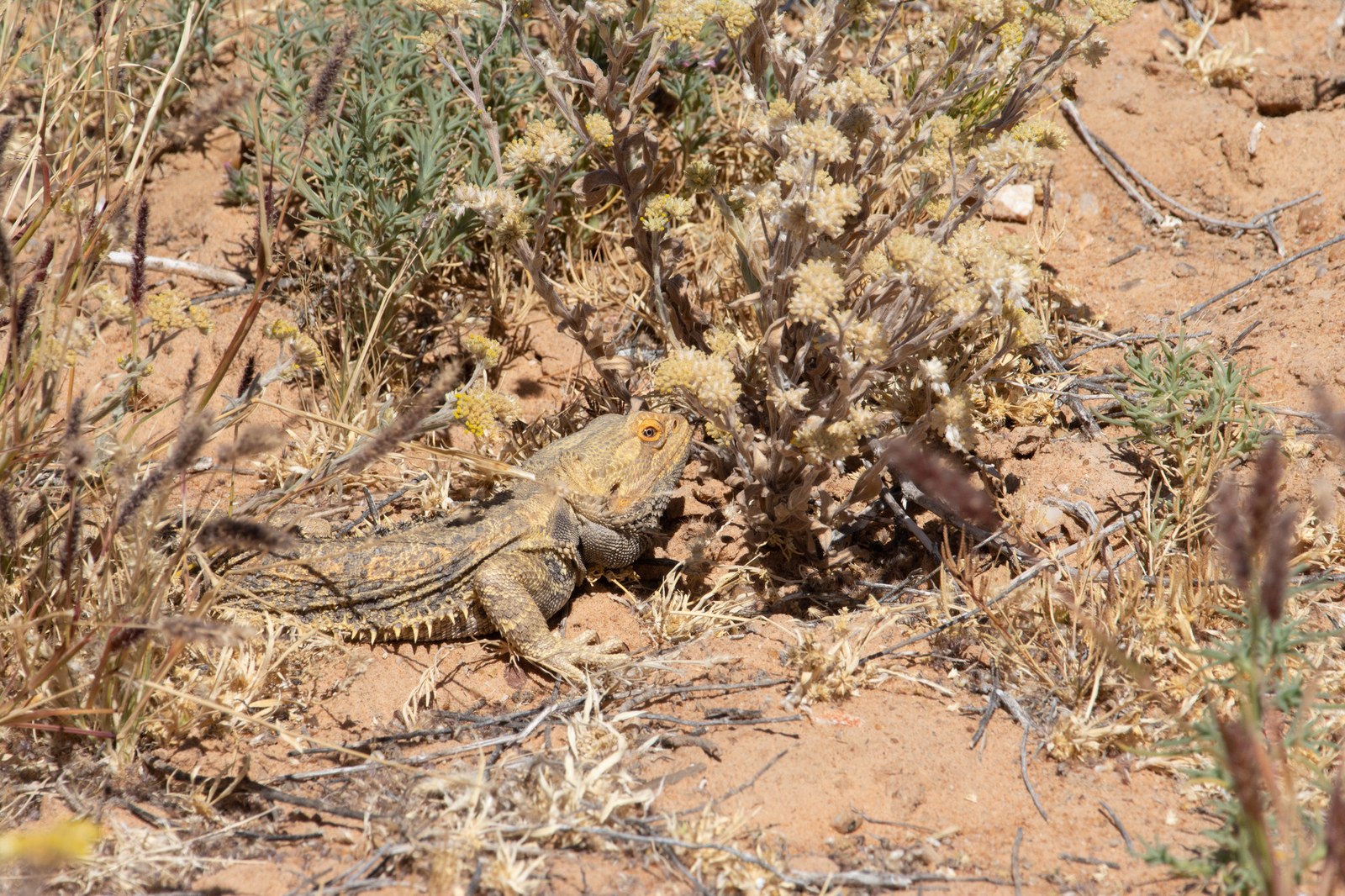
Build a usable light and shade gradient
For a normally scaled dragon, target UVI 4.0–4.5 at basking back height, with shaded retreat near zero. UVI describes ultraviolet intensity at a location; a lamp's printed percentage does not tell you what reaches your animal. A reptile-appropriate UVI meter lets you check the top of the back in its actual basking posture and identify unexpectedly strong exposure on nearby climbing routes.
Arrange linear UVB, bright daytime illumination, and overhead warmth so the animal can obtain light and heat together. Follow the specific fixture's placement guidance and account for mesh obstruction. Glass and plastic block useful UVB, so a bright window is not a replacement. Track installation dates and replacement guidance; visible light alone cannot confirm useful ultraviolet output.
Use 12 hours of lighting and 12 hours of darkness as a straightforward household routine. Silkbacks and unusually UV-sensitive individuals need individualized advice rather than automatic use of the standard target. Their care should never be marketed as ordinary beginner maintenance.
Manage nighttime conditions, humidity, and water
Our conservative overnight air target is 20–22°C (68–71.6°F), checked near the occupied sleeping hide. Healthy dragons may tolerate cooler conditions under appropriate circumstances, but beginners need not experiment with deliberate cooling. If the room requires supplemental warmth, use guarded, thermostatically controlled equipment that produces no visible light. Red or blue night bulbs still interrupt darkness.
Measure daytime ambient humidity at the cool end, at animal height and away from the water dish. Aim for 30–60% RH while maintaining ventilation and a dry main floor. A brief nighttime rise can occur naturally; do not spray the whole enclosure to copy a tropical wet-and-dry cycle. An optional lightly damp shedding retreat should remain a small, clean microclimate rather than turning every resting surface wet.
Offer fresh water in a stable shallow dish and clean it whenever contaminated. Plant foods also contribute moisture, but neither vegetables nor baths justify withholding drinking water. Persistent changes in drinking, droppings, or body condition deserve investigation.
Establish a practical daily care sequence
Check equipment before offering food. A dragon needs access to suitable warmth for normal activity and digestion, and a failed lamp should not remain unnoticed beneath an otherwise normal feeding routine. Offer fresh greens daily. Growing dragons generally receive insects daily, while mature adults typically have insect meals about twice weekly, with portions adjusted to body condition.
- Confirm daytime lighting and inspect the animal's posture and movement.
- Read both air probes and check the basking surface after warm-up.
- Offer the planned meal, then remove uneaten insects and spoiled greens.
- Replace dirty water, remove droppings, and inspect high-contact surfaces.
- Confirm secure doors, nighttime darkness, and the overnight minimum record.
Wash hands after handling the dragon or its furnishings. Keep reptile cleaning equipment separate from kitchens and food preparation. A written routine also helps a sitter notice when something is wrong rather than simply checking that the food bowl is full.
Recognize problems before changing the whole setup
Repeated glass surfing, prolonged hiding, or appetite loss can reflect stress, unsuitable conditions, or illness. Start with actual measurements and recent changes, then contact a reptile-experienced veterinarian when abnormalities persist. Do not raise every temperature because the animal looks inactive, and do not lower lighting to force a seasonal rest.
Arrange an initial veterinary examination and keep the records with your habitat notes. A sound care plan combines measured conditions, responsive observation, and professional help when needed. The goal is not a perfectly staged enclosure photograph; it is a dragon that can move, shelter, bask, and feed safely every day.
Continue reading: Bearded Dragon Feeding: Age, Greens, Insects, and Calcium.
Sources and further reading:
- RSPCA: Bearded dragons
- ReptiFiles: Bearded Dragon Lighting, Heating & Humidity Requirements
- ReptiFiles: What Do Bearded Dragons Eat?
- Washington State University Veterinary Teaching Hospital: Metabolic bone disease in bearded dragons
- CDC: Reptiles and Amphibians
Photo credits: Rolf Lawrenz (CC BY 4.0 International), Edward Bell (CC BY 4.0 International). Images resized and compressed for web display. Each image retains its linked license.

