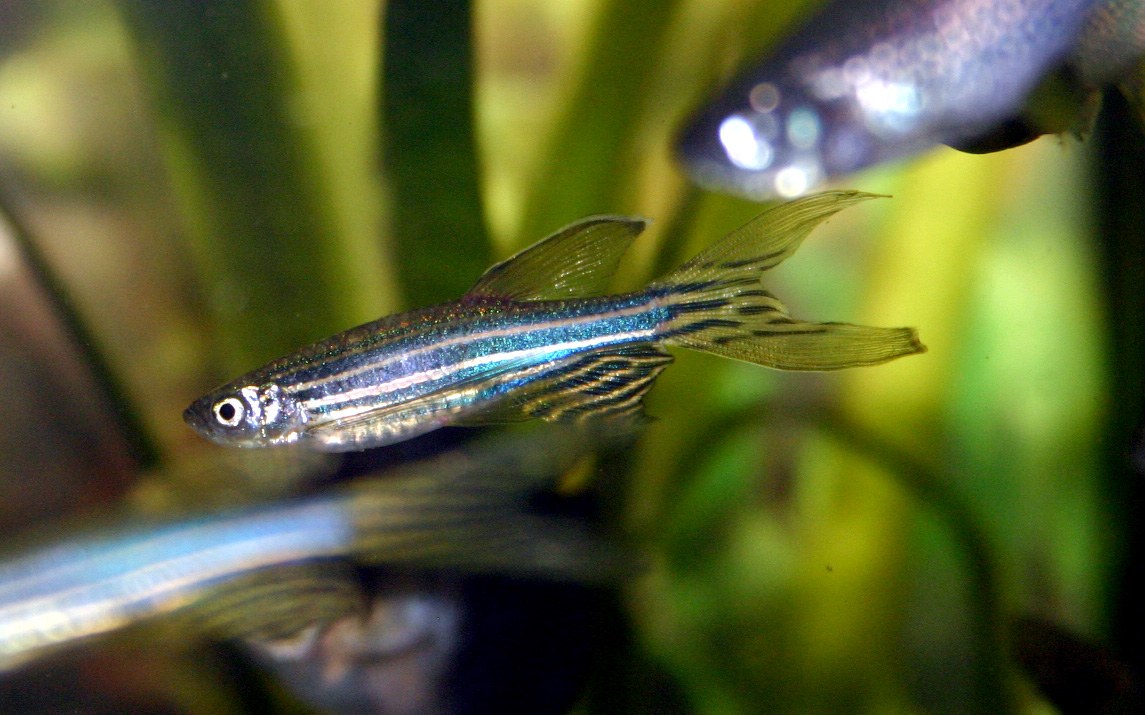
Living with zebra danios means living with movement. They are the busiest fish in the average community tank, and their constant shoal life makes even a modest aquarium feel alive. This article covers what daily life is actually like, from the first week to the day you move house.
What to Expect in the First Week
New danios rarely behave like the calm fish in the shop tank. After a move they may hang close to cover for a day or two, and a few fish may refuse food entirely. That is normal. Give them dim light, keep the room quiet and resist the urge to add more fish until the group has settled.
By the end of the first week, most shoals are investigating the glass, chasing food and starting to bicker, which is a good sign. If the fish are still hiding after a week, check the temperature, test the water and look at how much open swimming space the tank actually offers.
Test ammonia and nitrite daily for the first fortnight. A new tank combined with a new shoal is the moment when water quality is most likely to wobble, and a ten-second test is far easier than diagnosing sick fish later. Feed lightly during this period and remove anything that is not eaten.
A Day in the Life of Your Shoal
The lights come on and the shoal is already awake. Morning is for chasing and display, especially in a mixed group, and for inspecting every corner of the tank as if it changed overnight. Expect the most dramatic behaviour of the day in that first hour.
Feeding time is the main event after that. Danios spend the rest of the day in loose formation, riding the filter current, investigating plants and hammering at anything that looks edible. Mid-afternoon tends to be quieter, with the shoal drifting in open water rather than racing the length of the tank.
As evening approaches, activity picks up again before the light fades. Once the room goes dark the shoal settles near the plants or the substrate. Danios do not sleep the way people do, but they slow down and become far less responsive at night, which is why a predictable lighting schedule keeps them comfortable.
Watching these patterns is genuinely useful. The day the rhythm breaks, you will notice within hours, and that is usually soon enough to trace the cause to a clogged filter, a temperature dip or an unnoticed arrival in the tank.
Choosing Companions for a Community Tank
Tank mates for zebra danios should share two things: a tolerant nature and a preference for the cooler half of the tropical range. White cloud mountain minnows, corydoras catfish and most rasboras fit naturally. Guppies, platies and neon tetras work well if the tank sits near 74-75°F (23-24°C), where all three species overlap comfortably with danios.
Avoid fish that are slow, fancy-finned or large enough to eat a two-inch danio. Bettas, with their long flowing fins and their need for warmer water, are a poor match for an energetic shoal, as the betta care guide makes clear. Big cichlids or goldfish belong in setups with very different needs. If a tank mate disappears, the culprit is usually a size mismatch rather than aggression.
This is also where the danio's own behaviour matters. In a small shoal, surplus energy can spill over onto long-finned neighbours as nipping. Keep the shoal at eight or more, provide open water for swimming, and the problem usually disappears without any other change.
Quarantine every new arrival, even the peaceful ones, and add tank mates in small groups rather than all at once. A community tank is built slowly, and patience is the ingredient most beginners forget.
Sharing the Tank with Children
Zebra danios are an excellent family fish. They are visible, busy and inexpensive enough that a beginner's mistake is not a disaster. Children can take part in testing water, feeding and choosing plants, all of which build a practical understanding of what an animal actually needs from its keeper.
Set a few rules early: hands out of the tank, fingers out of the food tub and no tapping the glass. Danios are bold, but constant tapping raises stress and increases the chance of a jump. A small stool beside the tank is safer than a child climbing on furniture to get a better view.
Sharing the maintenance is the best part of the lesson. A ten-year-old who can run an ammonia test, work out why nitrate is rising and predict what happens if you double the food has learned something that transfers well beyond aquariums.
Keep a sturdy lid on the tank, place the aquarium on furniture that can carry the weight of water, and secure the cables. Child-proofing a fish tank protects the fish as much as it protects the children.
Lifespan and Long-Term Commitment
A well-kept zebra danio usually lives three to five years, and many reach the upper end of that range. FishBase notes an average of around three and a half years for domesticated stock, which is a fair expectation for a shoal housed in clean, cool water with proper company.
Longevity is mostly a maintenance story. Ammonia kept at zero, nitrate kept low, stable temperatures and regular water changes do more for lifespan than any supplement or gadget on the shelf. The keepers whose danios live longest are almost always the ones with the least exciting equipment and the most consistent routine.
There is one commitment that beginners rarely plan for: replacing fish as the shoal ages. Danios are social, so if you lose one, top the group back up rather than letting the shoal shrink. Buying two or three new companions is far kinder than leaving four nervous fish in a tank built for eight.
Budget for the running costs as well: food, water conditioner, replacement filter media and the occasional new heater for a quarantine tub. None of it is expensive, but knowing the annual total makes the commitment honest.
Moving, Rehoming and Responsible Ownership
At some point you may need to move the tank or give the fish away, and both are easier with a plan. For a move, bag the fish in tank water, keep the filter media wet in a container of tank water, drain the tank last and set it up first at the other end. Moving a tank without the filter media is the quickest way to lose the cycle.
If you cannot keep the fish, rehome them through a retailer, a local club or another keeper. Danios are popular, hardy and easy to rehome, so there is rarely any reason to let a shoal suffer through neglect.
Keeping danios well is not difficult. Give them length, company, cool water and a clean routine, and they will turn a plain glass box into the liveliest corner of the house.
Continue reading: Zebra Danio Care Guide: Everything You Need to Know.
Sources and further reading:
- Seriously Fish: Danio rerio (Zebra Danio) species profile
- FishBase: Danio rerio summary
- MSD Veterinary Manual: Routine Health Care of Fish
- USGS Nonindigenous Aquatic Species: zebra danio
- Zebrafish Models of Human Disease: Gaining Insight into Human Disease at ZFIN
Photo credits: Marrabbio2 via Wikimedia Commons (Public domain (author dedication)). Images resized and compressed for web display.

