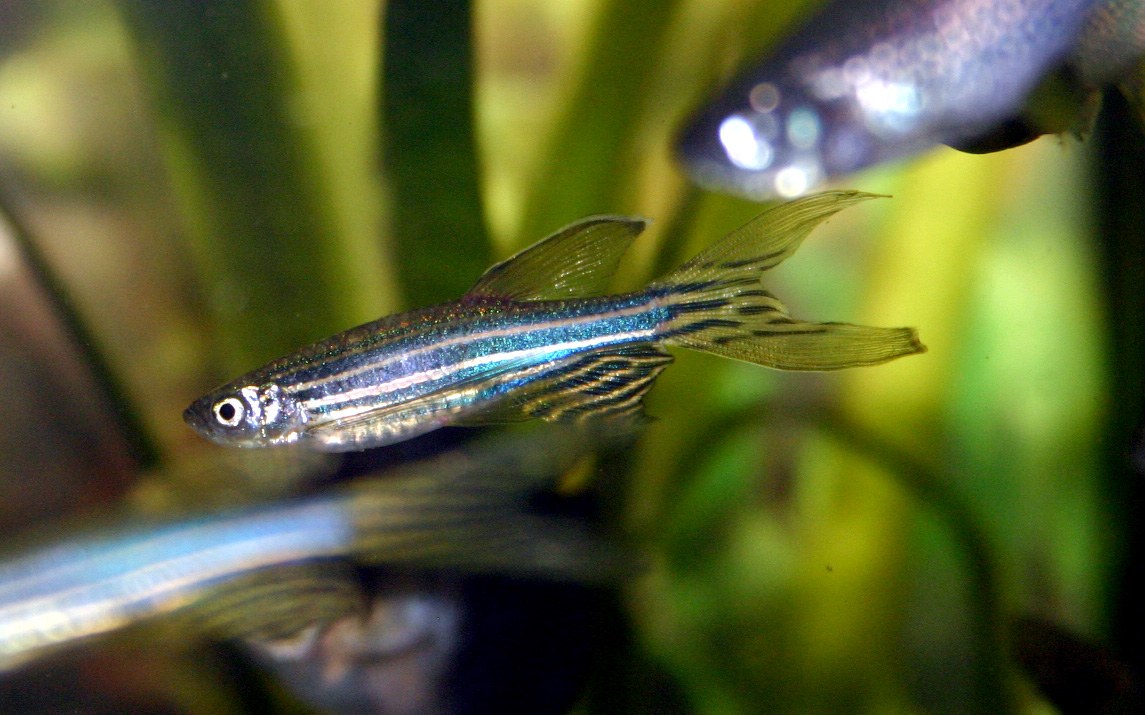
Zebra danios eat almost anything, which is a blessing and a trap. The blessing is that feeding them is easy. The trap is that easy eaters are easy to overfeed. This article explains what to offer, how much, and how to build a diet that keeps a shoal bright and active for years.
What Zebra Danios Eat in the Wild
Their native streams, canals and rice paddies in South Asia are full of small, drifting protein. Wild zebrafish act as micropredators, snapping up water fleas, insect larvae, tiny crustaceans and the occasional morsel of plant matter. Feeding happens constantly and opportunistically, in whatever corner of the water column food appears.
Two habits from the wild carry over into aquarium life. Danios patrol the upper half of the tank, watching for anything that lands on the surface, and they investigate new items by mouthing them. That curiosity is why a fussy danio is rare, and why a piece of food rarely survives long in a tank full of them. It also means a danio will taste things it cannot actually eat, from plant fragments to tiny snails, so offer food in sizes the fish can genuinely swallow.
Building a Balanced Diet at Home
A quality micro-pellet should form the base of the diet. Choose one sized for small fish so a piece fits comfortably in a two-inch mouth, and check that fish meal or whole fish appears near the top of the ingredient list rather than fillers or colourings.
Flake food works too, though it is easy to over-serve and it loses vitamins once the tub is open. Store flakes and pellets in a cool, dry cupboard and replace them every few months rather than using a stale tub for years on end.
Frozen foods add the protein and variety that dry food alone cannot match. Daphnia, brine shrimp, cyclops and bloodworm are all taken eagerly. Thaw a small cube in a cup of tank water, then pour it in gradually so the shoal catches most of it before it reaches the substrate.
A simple weekly rhythm keeps everything balanced: pellets or flakes as the everyday ration, frozen food two or three times a week, and a fast day here and there. That combination covers nutrition without turning the tank into a soup of uneaten food.
How Much and How Often to Feed
Two small meals a day suits adult zebra danios. Each portion should disappear within a minute or two, and the shoal should still look interested when the food runs out. That slight disappointment is a feature, not a problem.
A useful test is to drop a small pinch and watch where it ends up. If any of it settles on the gravel, halve the next portion. A fish stomach is roughly the size of its eye, and a stomach that is permanently full leads to bloating and fat, unhealthy fish over a period of months.
Temperature affects appetite. In a cool tank sitting at 66-70°F digestion is slower than at 75°F, so feed a little less in winter. Females carrying eggs look rounder regardless of food, so do not read a plump belly as hunger. Feed the fish in front of you, not the calendar.
Live, Frozen and Fresh Foods
Live food is the most exciting option for the fish and the easiest to skip. A bag of daphnia or a portion of newly hatched brine shrimp turns a quiet tank into a hunting ground, and the chase is genuine enrichment.
If live food is hard to find, white worms or vinegar eels are simple home cultures for keepers who enjoy the challenge. Both are richer than daphnia, so use them as a treat rather than a daily ration, and rinse them in tank water before serving.
Some danios will nibble a blanched spinach leaf or a thin slice of courgette left on a clip overnight, though plant matter should stay a small side dish. Fruit, bread and kitchen scraps are not suitable and should never go in the tank.
Whatever you choose, introduce new foods slowly and watch how the shoal responds. If a food is ignored for several feeds, it is probably too large or simply not to their taste. Variety across a week matters far more than any single wonder food.
Foods and Feeding Habits to Avoid
Big pellets, dog or cat food, bread and table scraps do not belong in a danio tank. They are hard to digest, break apart quickly and leave a mess that the filter cannot remove before it fouls the water.
Overfeeding is the mistake that causes the most damage. Uneaten food decays, ammonia rises, and the result is cloudy water followed by sick fish. When in doubt, feed less, and remember that a danio looking for more is not a danio in need.
Automatic feeders can help during holidays, but test any feeder for a week before you travel. Many models drop far more food than a small shoal can eat, and a broken feeder can empty a whole tub into the tank while you are away.
A Feeding Plan for the Week
A written plan removes the guesswork that leads to overfeeding. A simple one looks like this:
- Morning, every day: one small pinch of micro-pellets, scattered across the surface.
- Evening, most days: a second small pinch, or a few crushed flakes.
- Two evenings a week: swap the second meal for thawed frozen daphnia or brine shrimp.
- One day a week: no food at all, with a partial water change instead.
Keep a short note in your phone for the first month. Beginners consistently overestimate how much they are feeding, and a record makes the pattern obvious within a couple of weeks. Adjust the portions to the shoal rather than the calendar, and a tub of food will last months instead of weeks. Feeding is also the easiest moment to check every fish is eating, which is one of the best early warnings a keeper has.
Continue reading: Zebra Danio Health: Common Issues & Prevention.
Sources and further reading:
- Seriously Fish: Danio rerio (Zebra Danio) species profile
- FishBase: Danio rerio summary
- MSD Veterinary Manual: Routine Health Care of Fish
- USGS Nonindigenous Aquatic Species: zebra danio
- Zebrafish Models of Human Disease: Gaining Insight into Human Disease at ZFIN
Photo credits: Marrabbio2 via Wikimedia Commons (Public domain (author dedication)). Images resized and compressed for web display.

