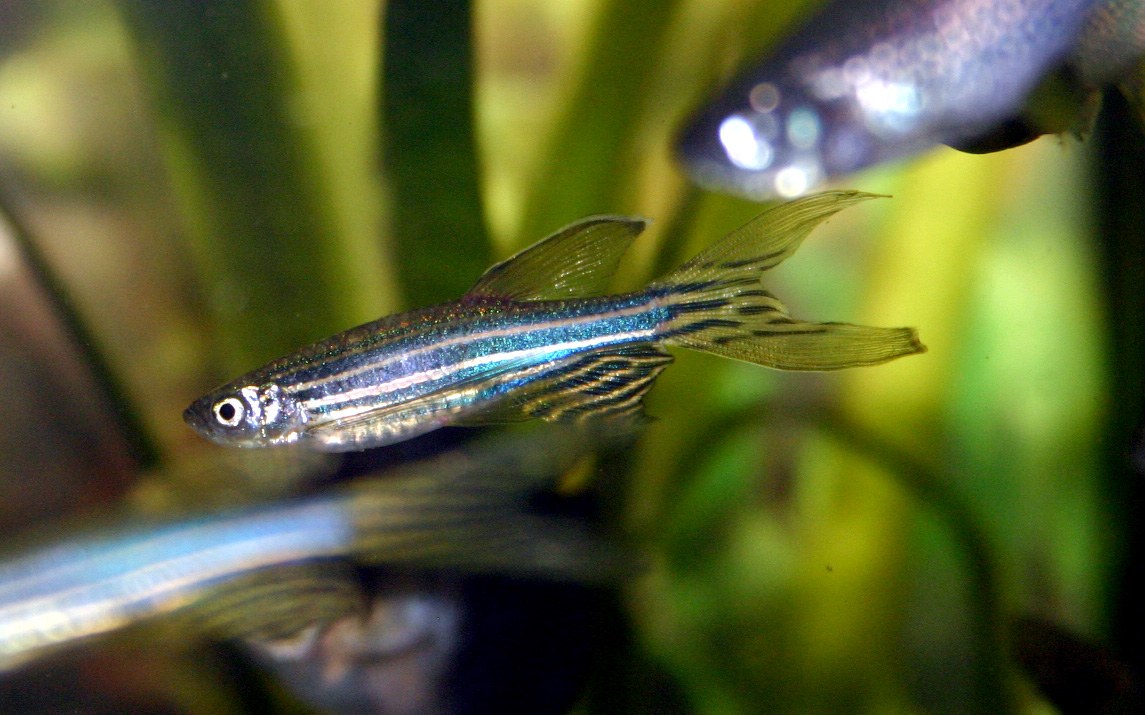
Zebra danios are the fish that hook a lot of people on the hobby. They are small, striped, endlessly busy and forgiving of the small mistakes beginners make. This guide covers what actually matters: the tank they need, the water they prefer, how to feed them and how to keep a shoal thriving for years.
Why Zebra Danios Suit Beginners
Few freshwater fish combine hardiness with this much personality. Zebra danios accept a wide range of water chemistry, shrug off cooler temperatures that would leave tropical species sulking, and stay active from the moment the light comes on. They are inexpensive, widely available and famously unfussy about food.
Their native range in South Asia takes in slow streams, irrigation canals and flooded rice paddies, and those changeable habitats taught the species to adapt. In a home aquarium that flexibility shows up as resilience: a danio that misses a meal or rides out a small temperature swing usually carries on as if nothing happened.
None of this makes them indestructible. Like every fish, they need a cycled filter, clean water and company of their own kind. The difference is that the learning curve is gentle. A beginner who keeps to the basics with danios will usually succeed, and the mistakes that do happen are easy to correct. That forgiving nature is exactly why so many first tanks start with a shoal of tiny striped fish.
Setting Up the Right Tank
The most important purchase is length, not volume. Zebra danios swim in fast, straight lines, so a 20-gallon long tank, roughly 30 inches or 75 cm across, suits a shoal of six far better than a tall tank with the same volume. If you can stretch to a 29 or 40-gallon breeder, the shoal will use every extra inch.
Inside, aim for an open middle lane with plants pushed towards the back and sides. Vallisneria, java fern and anubias all cope with moderate light and give the shoal somewhere to retreat. A gentle to moderate current from the filter recreates the moving water they evolved in, and a dark background helps those stripes stand out.
Then there is the lid. Zebra danios are accomplished jumpers, and a startled fish can clear an open top with ease. Choose a tight-fitting lid or hood and check that cables, pipes and feeding hatches do not leave wide gaps. A lid also slows evaporation, which keeps temperature and water chemistry steadier.
Finally, cycle the tank before any fish arrive. Run the filter for several weeks, feed it with a source of ammonia and test until ammonia and nitrite both read zero. Only then should you bring your shoal home, and even then add the fish as one group rather than in dribs and drabs.
Water Temperature and Quality
Zebra danios are happiest between 64-75°F (18-24°C), which means most heated homes do not need an aquarium heater at all. That cool preference is a genuine advantage: it saves electricity, widens your choice of tank mates and keeps the fish comfortable in rooms where tropical species would struggle.
Stability matters more than the exact number. A tank that swings from 66°F to 78°F every day is stressful even if both values sit inside the comfortable range, so position the aquarium away from radiators, draughty doors and direct sun. If your room drops below the mid-60s in winter, a small heater set low will smooth out the dips.
Water chemistry is equally forgiving. Anywhere from pH 6.0 to 8.0 works, and moderately hard water is fine. What the fish cannot tolerate is waste: ammonia and nitrite must always read 0 ppm, and nitrate should stay low through regular partial water changes. Always dechlorinate tap water before it touches the tank.
Feeding Your Zebra Danios
In the wild, zebrafish are micropredators. They pick tiny crustaceans, insect larvae and whatever else drifts past in streams and flooded fields. Captive danios keep that opportunistic streak, which is why they accept almost anything small enough to swallow.
A good staple is a quality micro-pellet or a flake food crumbled between your fingers so it sinks slowly. Supplement it a few times a week with frozen or live daphnia, brine shrimp or bloodworm. That variety covers their nutritional needs and gives the shoal something to chase, which is enrichment as much as dinner.
Feed twice a day, offering only as much as the shoal clears in a minute or two. Danios are enthusiastic surface feeders, and enthusiasm is exactly how tanks get overfed. One skipped day a week does no harm at all and helps prevent the bloated look that follows a permanently full stomach.
If food reaches the substrate, you are feeding too much. Siphon out what lands and adjust the next portion downwards. Overfeeding is the single most common cause of cloudy water, algae outbreaks and rising nitrate in danio tanks.
Keeping a Happy Shoal
Six is the absolute minimum, and eight to ten is better. A single zebra danio is a shadow of the fish it could be: pale, skittish and prone to hiding. Give the species company and the same fish turns bright, bold and constantly on the move.
Because the fish sort out their own mild hierarchy among themselves, the energy goes sideways rather than towards tank mates. A shoal also acts as a calming influence on timid species such as corydoras or rasboras, which read the busy danios as a sign that no predator is nearby. Fish keepers call this dithering, and it is one of the quiet benefits of keeping a lively shoal.
Occasional fin nipping does happen, especially in small groups or when a slow, long-finned fish shares the tank. If you notice ragged fins, check the shoal size first, then look at the tank mates. Sorting both usually ends the problem without any intervention.
Males and females can be mixed freely. The species is not territorial, does not pair up and has no livebearer-style ratio rules, so a mixed shoal of eight will settle into an easy rhythm within days.
Common Mistakes and a Simple Routine
The mistakes that trip up new keepers are consistent. A tank that is too small or too tall, an open top, water kept at tropical temperatures, a shoal of two or three, and a pinch of food that is really a handful. Add skipped water changes and you have the recipe for a short-lived shoal.
The routine that prevents all of it is just as simple. A quick daily glance at the fish and the thermometer, two small feeds, a weekly change of about 25 per cent of the water with a siphon over the substrate, and a monthly rinse of the filter media in old tank water. The tank maintenance guide walks through the whole routine step by step. None of it takes more than twenty minutes a week.
Beyond that, danios ask very little. Keep a spare filter sponge and a spare thermometer, check the lid for gaps, and quarantine any new fish for two to four weeks before they meet the shoal. That last habit alone will keep most diseases out of the tank entirely.
Do those few things and a zebra danio shoal will repay you with years of movement and colour for a fraction of the cost of more demanding species.
Continue reading: Zebra Danio Nutrition: The Complete Diet Guide.
Sources and further reading:
- Seriously Fish: Danio rerio (Zebra Danio) species profile
- FishBase: Danio rerio summary
- MSD Veterinary Manual: Routine Health Care of Fish
- USGS Nonindigenous Aquatic Species: zebra danio
- Zebrafish Models of Human Disease: Gaining Insight into Human Disease at ZFIN
Photo credits: Marrabbio2 via Wikimedia Commons (Public domain (author dedication)). Images resized and compressed for web display.

