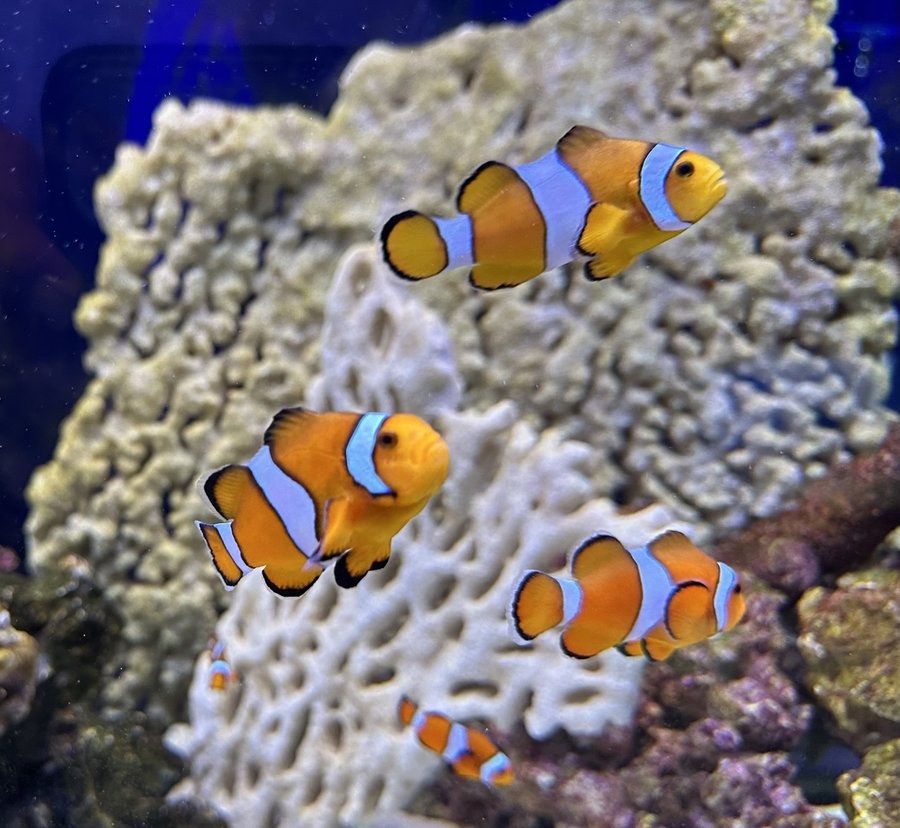
Living with ocellaris clownfish can be a focused, satisfying marine project rather than the beginning of an endless equipment race. A compatible pair offers plenty to observe without requiring a collection of corals, an anemone or a crowded display. The practical question is whether you can keep the seawater stable and the daily routine sustainable through ordinary life, not just during an enthusiastic first month.
Choose a fish you can identify and trace
Ask for Amphiprion ocellaris by scientific name, and confirm the origin of the actual fish being sold. FishBase records commercial captive breeding for this species, so a clearly identified captive-bred fish is a realistic option. Do not assume every unusual pattern has the same provenance or that a marketing label is a substitute for identification.
Ask what food the fish accepts, whether it has lived with the proposed partner and whether there have been recent health concerns. Observe both fish eating if possible. An established history is more useful than choosing solely by symmetry, color intensity or a memorable nickname.
Captive breeding does not mean disease-free or suitable for an uncycled aquarium. Prepare quarantine and the permanent system before purchase. A responsible seller should be able to discuss adult housing and water preparation without presenting an anemone as an obligatory accessory. Be willing to delay the purchase if the information or your preparation is incomplete.
Keep lifespan claims honest and plans long-term
The Florida Museum gives an approximate lifespan of six to ten years in the wild for ocellaris clownfish. That is not a verified captive lifespan range, and the sources used here do not establish one. Avoid turning the wild figure into either a promise or an expiry date for an aquarium pet.
You should still plan for a substantial commitment. Consider whether you can maintain the system through changing work hours, travel, a house move or a period when someone else must help. Regular water preparation and equipment checks do not disappear because the fish are small.
Budget for the ordinary recurring items: suitable food, marine salt, purified water provision, test supplies, electricity and replacement equipment. Include access to professional advice and veterinary care where available. The most expensive fish in the shop is not necessarily the largest ongoing cost, and a bargain purchase is not a bargain if the necessary system is beyond your means.
Give the aquarium a realistic place at home
Choose a location with appropriate support, safe electrical access and enough room for maintenance. Leave space for containers, hoses and any filtration cabinet. A system that can only be serviced by moving furniture every time is more likely to become a chore than a satisfying routine.
Think about water handling as carefully as the viewing angle. Where will freshwater be stored, where will seawater be mixed and how will used water be removed? Keep aquarium containers away from household cleaning chemicals, and make sure children or visitors cannot casually pour something into an open reservoir.
Noise and light also affect household acceptance. Equipment should be suitable for the room, while the fish needs a predictable day-night cycle rather than permanent illumination for decoration. Introduce children to quiet observation, counting meals and drawing the fish. An adult remains responsible for water chemistry, equipment and decisions about animal health.
Make shared care and holidays unambiguous
Assign clear roles for feeding, testing, top-off and water changes. Ocellaris can become familiar with feeding cues, so an eager approach cannot tell the second person in the room whether breakfast already happened. Use premeasured food and one simple record everyone can understand.
Before travel, teach a sitter the difference between freshwater used for evaporative loss and prepared seawater used to replace removed seawater. Demonstrate normal pump flow, the temperature display and the aquarium's ordinary water level. Let the sitter perform the tasks once while you can answer questions.
- Label containers by their exact purpose.
- Leave premeasured meals and a feeding record.
- Show normal behavior for both fish.
- Provide local backup and veterinary contact details.
Test automatic feeders and top-off devices well before departure. They can assist a trained person, but they cannot replace observation or respond sensibly to every failure.
Resist additions that change the whole project
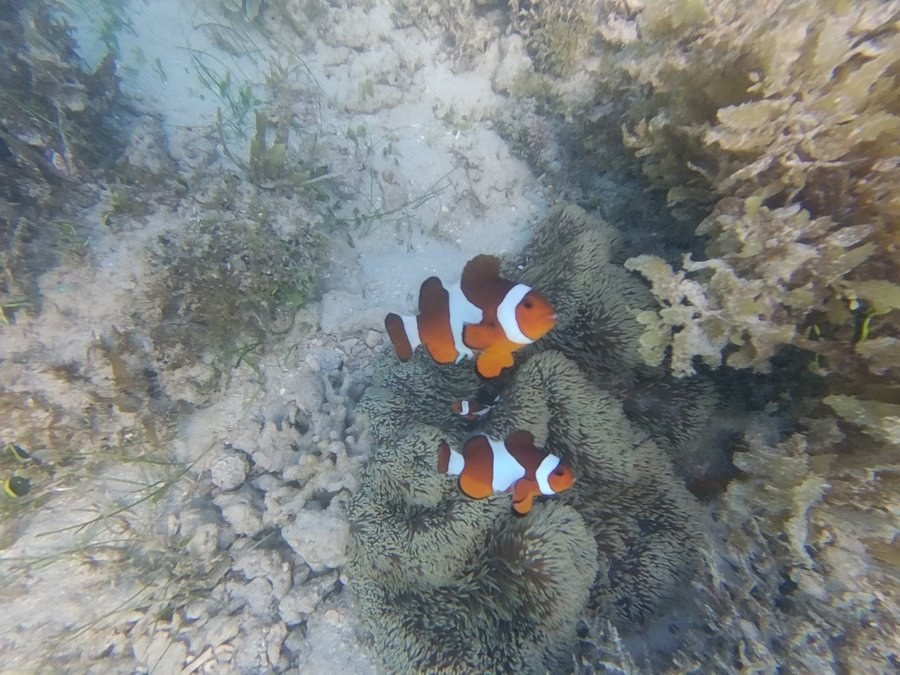
A pair of ocellaris does not need an anemone in captivity, as both OATA and Coralife make clear. Adding one introduces another animal with its own environmental and feeding requirements. Do not make that commitment simply because a fish has chosen an unattractive resting place or a photograph suggests the display is incomplete.
Corals, extra fish and specialist equipment should also follow a deliberate plan. Every addition can change space use, nutrient input and the difficulty of treating disease. A minimum pair aquarium is not spare capacity waiting to be filled. Review the needs of the entire adult community before expanding it.
It is perfectly reasonable to keep a modest, fish-focused marine system for the long term. Consistency offers more to the fish than upgrades that outpace your ability to understand and maintain them.
Prepare for moves, emergencies and handovers
Keep a safe backup aeration plan and know how equipment should be restarted after an interruption. Contact a qualified person for electrical problems rather than improvising around saltwater. Store instructions where a helper can find them, and inspect essential components before they become obvious failure points.
If moving home, arrange an appropriate transport and destination plan in advance. Fish, biological media, prepared water and equipment need coordinated handling. Seek experienced marine-aquarium help when the move exceeds your skills, and avoid leaving the fish in temporary accommodation while the new system is assembled from scratch.
If you must rehome the fish, use a responsible specialist or experienced keeper with appropriate marine accommodation. Share the pair's history, food, water conditions and any health problems honestly. Never release aquarium fish into the sea or another natural water body. A good handover preserves the same principle as good daily care: decisions should follow the needs of these identifiable animals, not the convenience of the moment.
Continue reading: Ocellaris Clownfish Care: A Stable Marine Home Without an Anemone.
Sources and further reading:
- Clown Anemonefish (Amphiprion ocellaris) - Florida Museum of Natural History
- Amphiprion ocellaris - FishBase
- How to look after clown fish - OATA
- Ocellaris Clownfish Care Guide - Coralife
Photo credits: Bruxton (CC0), Bruxton (CC0), Zoltán Stekkelpak (CC0). Images resized and compressed for web display. Each image retains its linked license. Wild underwater scene according to the source. An anemone is not required for keeping captive ocellaris clownfish.


