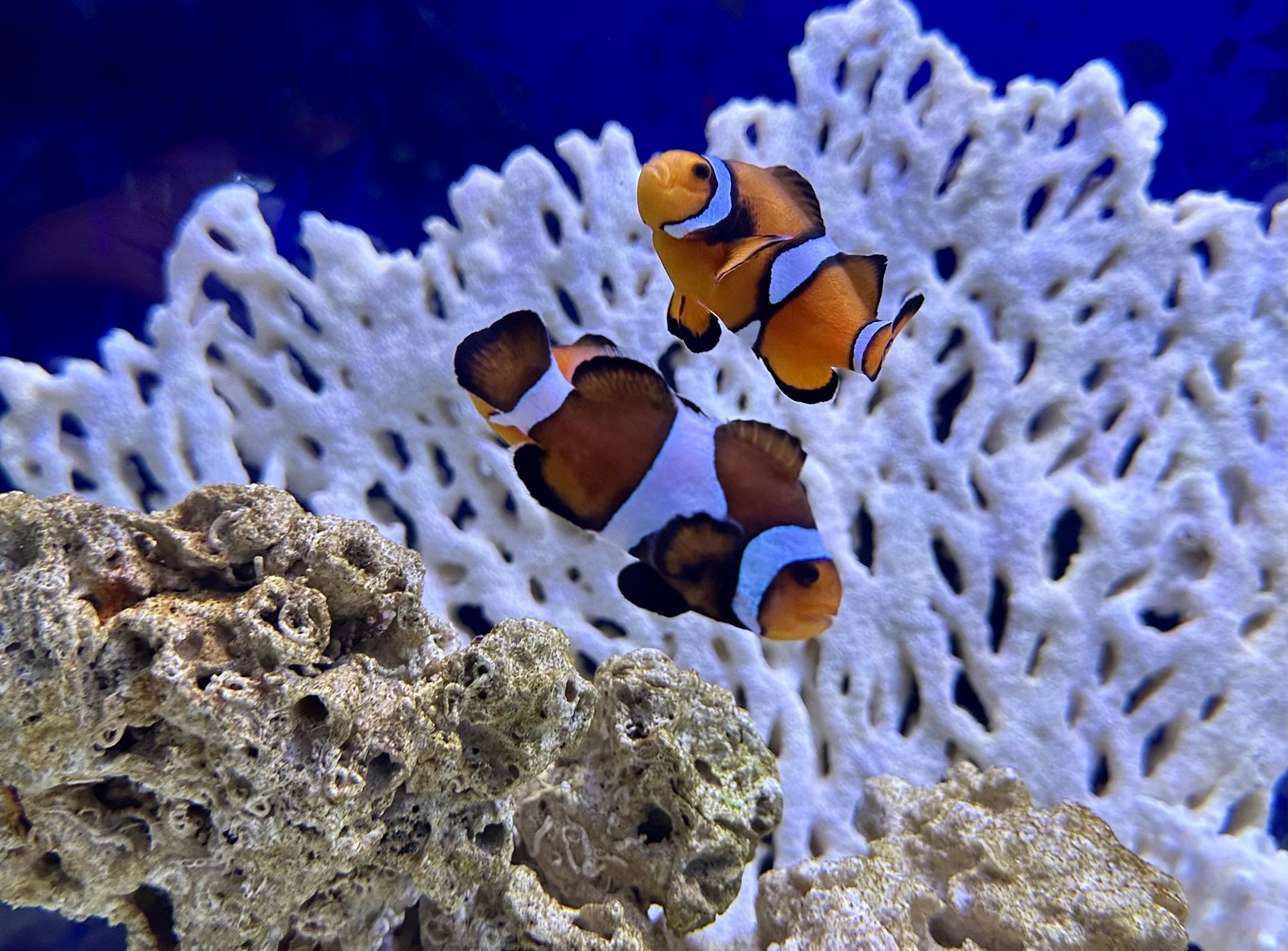
Ocellaris clownfish health is easiest to protect when you notice change before assigning it a name. A fish that breathes quickly, develops mucus or stops feeding may have an environmental problem, an injury, an infection or several issues together. Familiarity with its ordinary behavior helps, but it does not replace testing. Start with urgent needs, then gather the information required for a useful professional assessment.
Recognize signs that should not wait
Severe gasping, collapse, loss of balance, rapidly worsening breathing or substantial injury calls for urgent aquatic-veterinary advice. Watch both fish in a pair and any other livestock. Several animals affected at once makes a shared water or equipment problem especially important to investigate, though it does not exclude disease.
Check that circulation and aeration are functioning and that the water temperature is what you think it is. Improve oxygen exchange if needed without creating a flow that pins an exhausted fish in place. Look for a stopped pump, blocked intake, failed heater or an unusual addition to the system.
Avoid unnecessary capture while gathering evidence. A short video through the glass can show respiration, posture and movement without another stressful chase. If transfer is necessary, use prepared marine accommodation with suitable water and filtration, not a bucket filled with an improvised mixture. Ask a professional how to move a severely compromised fish safely.
Verify the marine environment before treating
Test ammonia, nitrite and nitrate and check pH, water temperature and salt concentration. Record actual numbers, units and the type of instrument used. A salinity result and a specific-gravity reading are not interchangeable labels; calibration and temperature conventions affect their interpretation. Confirm an unexpected result before making a major correction when the fish's condition allows.
Review recent top-off and water-change work. Was evaporated water replaced with suitable freshwater, or was saltwater accidentally added? Was removed seawater replaced with properly mixed marine water? Did an automatic top-off system deliver too much freshwater? These errors can create distress even when the aquarium appears clean.
If water is unsafe, arrange appropriate corrective action using verified replacement water and seek professional guidance for significant deviations. Do not abruptly swing chemistry toward a favorite target or add several products at once. Preserve a sample if practical, but never delay urgent support solely to complete a perfect set of tests.
Treat skin changes as observations, not diagnoses
White spots, pale patches, excess mucus, cloudy eyes and damaged fins deserve attention. They do not each map neatly to one disease that can be identified from a photograph. Record where the change began, how quickly it progressed and whether breathing or appetite changed before the visible lesion appeared.
Photograph the fish under ordinary lighting when possible. Strongly colored reef lights can obscure skin detail, and digital enhancement can create misleading colors. Include a view of the whole animal as well as a closer view, while avoiding repeated attempts that disturb an already stressed fish.
A veterinarian may need an examination or diagnostic sample to distinguish causes. Do not attempt skin scraping, gill sampling or other invasive procedures yourself. Describe what you have actually seen, and disclose any product already added so the clinician can account for interactions and prior exposure.
Check whether the pair is the problem
Ocellaris clownfish have a structured hierarchy and defend a home area. That biology does not make every chase harmless. A smaller fish confined to a corner, prevented from eating or repeatedly bitten is experiencing a practical welfare problem, whatever explanation is offered for the hierarchy.
Observe from a distance so the approach of the food provider does not interrupt the behavior you need to see. Look for damaged fins, declining body condition and restricted movement. Both fish should have an opportunity to feed and rest, rather than one merely surviving outside the other's preferred territory.
If separation is needed, use an appropriate prepared marine system and consult an experienced specialist about the next step. Do not add more clownfish to distract the aggressor or introduce an anemone as a peacekeeping device. A pair that was compatible previously can still require reassessment after environmental or reproductive changes. Physical injury and disease may coexist, so continue health monitoring after separation.
Make quarantine a separate, supported system
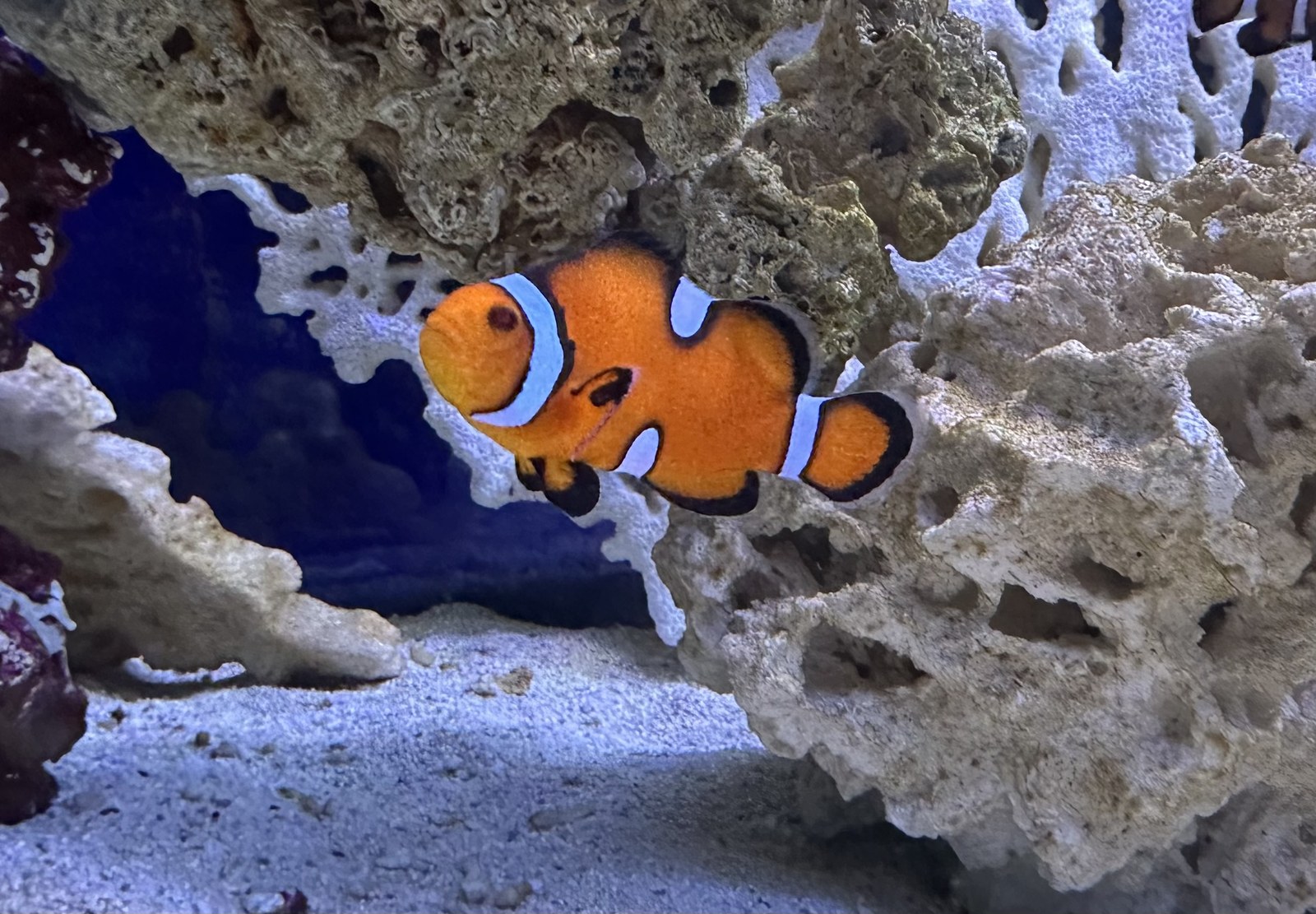
A quarantine aquarium needs suitable seawater, filtration, temperature control and dedicated equipment. Isolation is not effective if nets, siphons and wet hands move freely between systems without appropriate precautions. Keep tools clearly labeled and care for established healthy livestock before attending to suspect animals.
Ask an aquatic veterinarian or knowledgeable marine professional for an observation and testing plan suited to the fish's origin and exposure history. This guide does not invent a universal quarantine duration for every marine disease. A fish that looks normal on arrival is not necessarily free of infection, including when it was captive-bred.
- Record the source and arrival date.
- Monitor breathing and actual food consumption.
- Test quarantine water as carefully as display water.
- Keep all treatments and observations in one record.
Avoid automatic medication routines unless a qualified professional has designed a specific, justified protocol.
Give the clinician a clear timeline
Start your history with when the fish last looked normal. Include new arrivals, feeding changes, salt-mixing mistakes, maintenance, equipment failures and any household chemical exposure near the tank. Describe whether one fish or several are affected and provide water results with their units.
Ask whether the clinician wants photographs, a separate water sample or the fish itself, and follow transport instructions. Do not improvise freshwater dips, temperature elevation or medicated feeds while waiting for a reply. Those actions may complicate the problem or obscure the evidence needed for diagnosis.
After a treatment plan is agreed, continue observing the whole system rather than watching only the original lesion. Appetite, respiration, behavior and filtration performance all help show whether the fish is improving. Responsible health care is neither panic dosing nor passive waiting: it is prompt support, careful evidence and targeted action appropriate to this particular marine fish.
Continue reading: Ocellaris Clownfish Behavior: Pairs, Territory and the Anemone Myth.
Sources and further reading:
- Clown Anemonefish (Amphiprion ocellaris) - Florida Museum of Natural History
- Amphiprion ocellaris - FishBase
- How to look after clown fish - OATA
- Ocellaris Clownfish Care Guide - Coralife
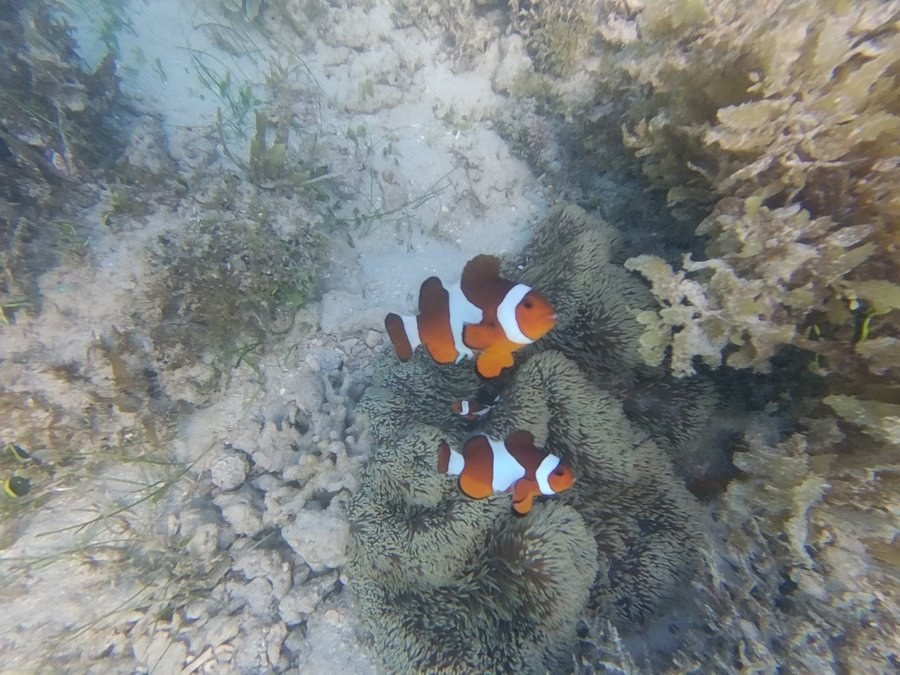
Photo credits: Bruxton (CC0), Zoltán Stekkelpak (CC0), Bruxton (CC0). Images resized and compressed for web display. Each image retains its linked license. Wild underwater scene according to the source. An anemone is not required for keeping captive ocellaris clownfish.


