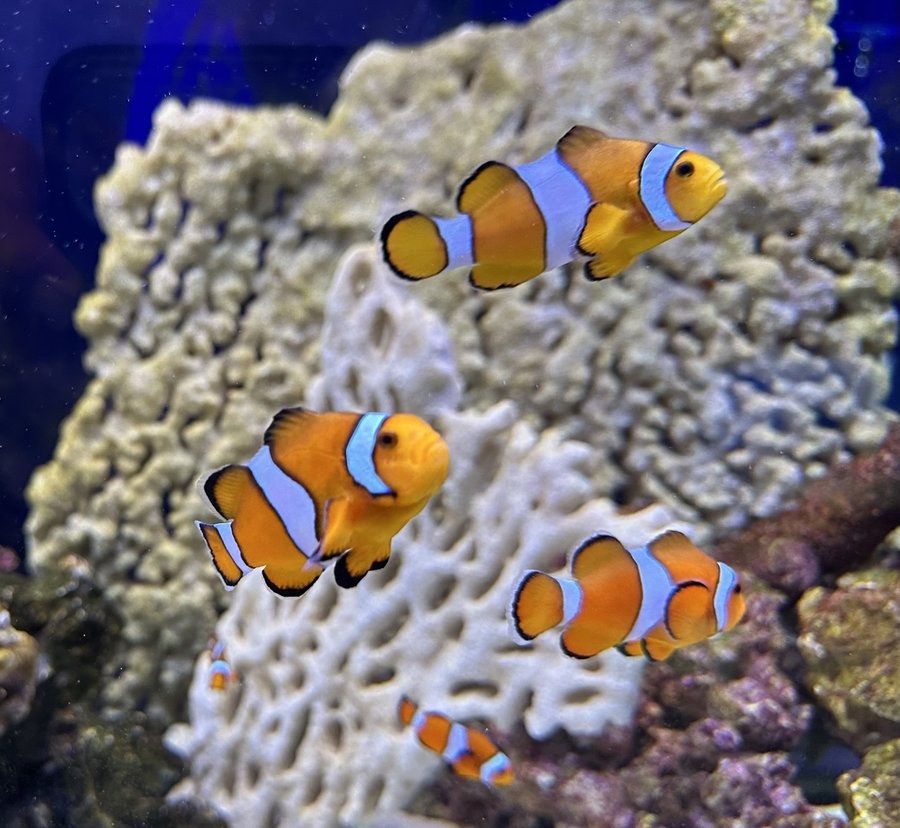
Ocellaris clownfish nutrition is partly a menu question and partly an observation skill. In a pair, the fish that reaches the food first can make a meal look successful even while its companion receives very little. Your aim is not to see food vanish from the surface. It is to provide an appropriate diet that both fish actually swallow, without sending unnecessary nutrients into the aquarium.
Use wild feeding ecology as context
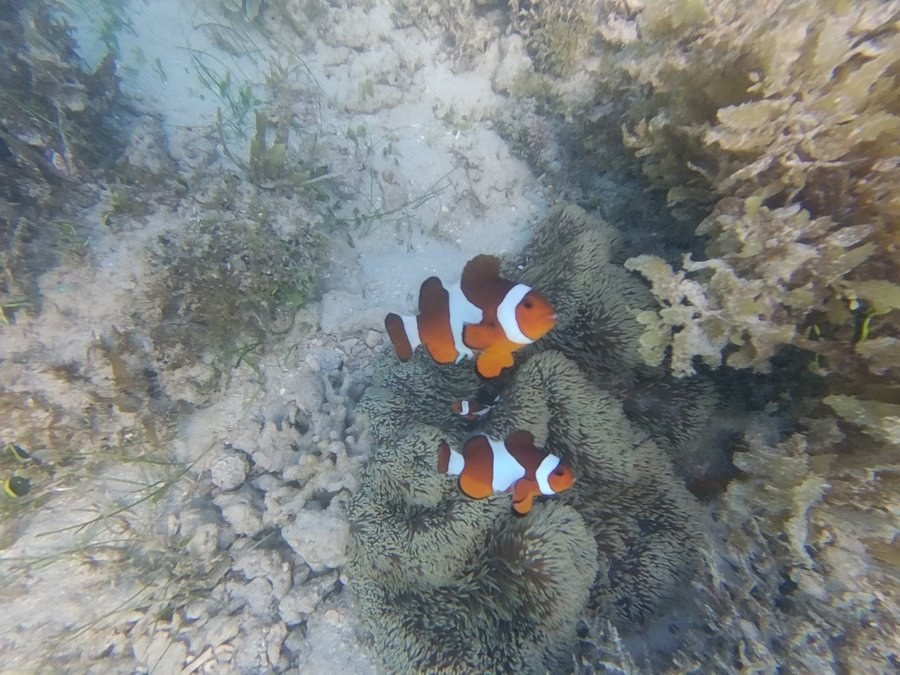
The Florida Museum describes Amphiprion ocellaris eating algae, copepods, isopods and other zooplankton in nature. That supports an omnivorous diet, not an assumption that one frozen item supplies everything. Wild feeding ecology also includes opportunities associated with host anemones, but those interactions are not a requirement for feeding aquarium fish.
OATA recommends a good-quality flake or pellet with frozen supplements. Choose a complete marine food suitable for omnivorous fish and check its intended use on the label. A product marketed as a treat or supplement should not quietly become the entire ration because the fish takes it eagerly.
Select a particle size each fish can capture and swallow. A juvenile and a larger adult may handle different textures, and food accepted into the mouth may still be spat out. Watch the fish after capture instead of immediately adding another pinch. Fine fragments drifting away are part of the feeding outcome, too.
Give both members of the pair access
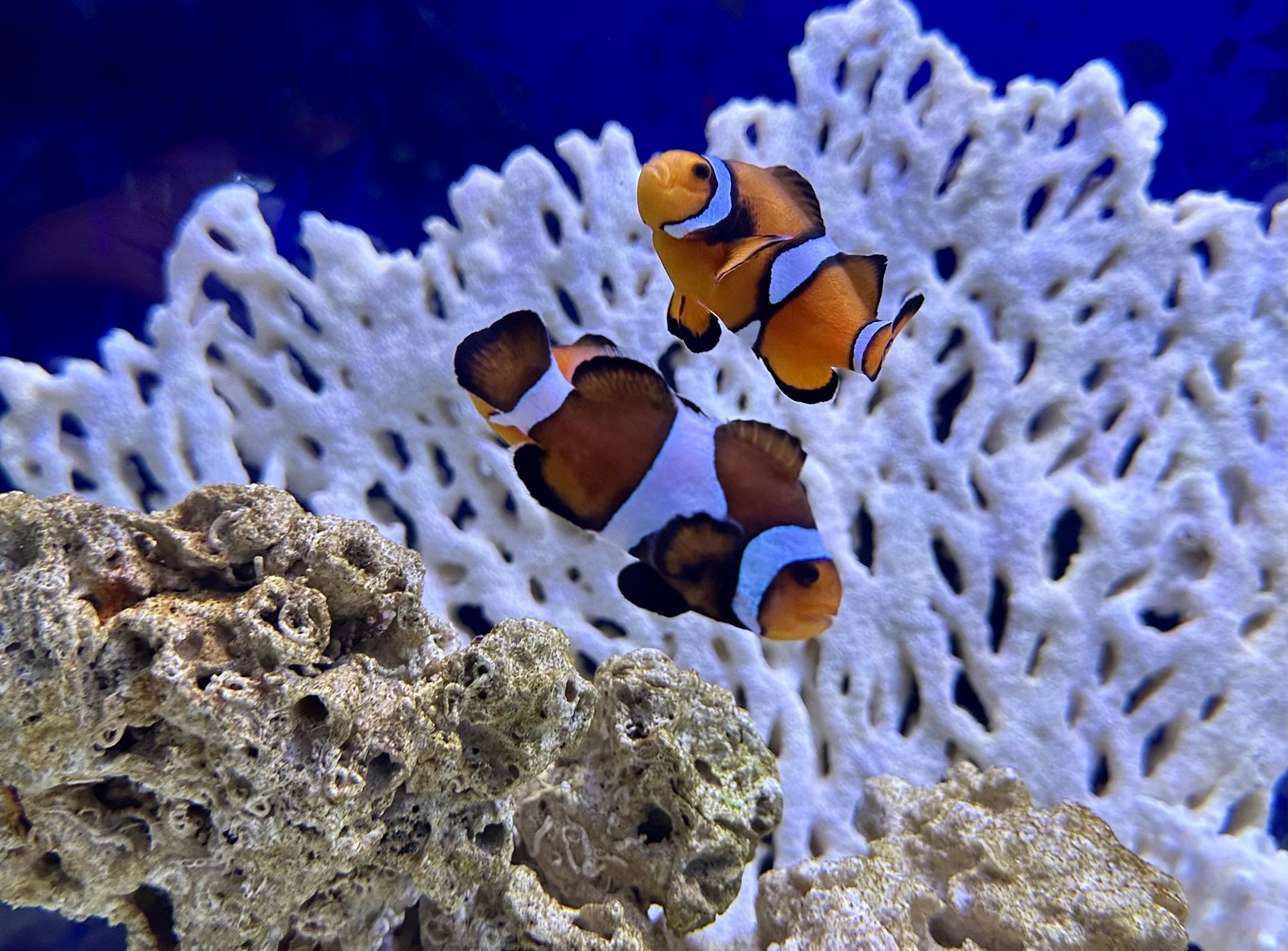
A stable-looking pair can still have unequal access to food. Observe the smaller fish separately: does it approach, swallow and maintain condition, or does it remain behind the larger animal until the meal is over? Strong site loyalty and hierarchy make this more informative than counting how many fish appear at the front glass.
Offer small portions at accessible positions rather than dropping a large clump into one defended spot. You may be able to occupy the dominant fish briefly while placing a little food where its companion can reach it. Keep the method calm and avoid chasing either fish around with a feeding tool.
If the smaller fish is repeatedly blocked or attacked, reassess compatibility and space. More food may simply produce a better-fed dominant fish and poorer water. Persistent exclusion, injury or declining condition calls for intervention and possibly appropriate separation. A pair should not be judged successful merely because both animals remain alive in the same aquarium.
Make small meals repeatable
OATA describes small feeds twice daily. Use that as a practical starting routine rather than an instruction to deliver an identical volume to every fish. Portion size depends on the food's density, the fish's size and whether other foods are also offered. Begin modestly and add only when the previous amount is clearly being eaten.
Choose a repeatable way to measure your particular food. A dry scoop or a counted portion of one pellet product can make household feeding consistent. It is not a universal ration to copy across different pellet sizes. Include treats and training portions in the same daily allowance.
- Observe each fish swallowing, not merely approaching.
- Note food left on the substrate or trapped in rockwork.
- Compare body condition over time.
- Review nutrient trends after changing the menu.
Do not repeatedly top up a meal because a clownfish remains interested. Learned anticipation and nutritional need are not the same thing.
Handle frozen foods as supplements
Frozen marine foods can provide variety and suitable textures when chosen for the fish's mouth size. Follow the product's handling instructions and thaw only the portion needed. Keep utensils and containers clean, and do not return thawed leftovers to the freezer for repeated reuse.
A small amount can be offered where the fish can reach it before flow carries it into inaccessible spaces. Avoid switching off essential circulation for long periods just to keep food stationary. If you use an equipment feeding mode, understand how it restarts and verify that normal circulation returns afterward.
Do not rely exclusively on one appealing frozen food. The prepared staple supplies a consistent nutritional foundation, while variety should have a defined role. An algae-based component can fit an omnivore's diet, but aquarium algae growth is not a reliable substitute for deliberately feeding the fish. Household scraps and seasoned foods are unsuitable shortcuts. Keep the feeding plan focused on products intended for marine aquarium use.
Investigate refusal before escalating the menu
A newly arrived fish may not immediately recognize an unfamiliar food. Ask the seller what it was eating and use that suitable food during the transition. If it approaches but rejects particles, review size, freshness and texture. Make changes deliberately rather than offering several foods at once and losing track of what worked.
Check water conditions and respiration when appetite changes. Temperature, salt-concentration errors, poor water quality and social pressure can all make a feeding problem look like fussiness. Record whether one fish or both are affected and whether the change followed a move, new tank mate or maintenance event.
Remove uneaten food rather than letting repeated experiments decay. If a fish is deteriorating, contact an aquatic veterinarian with water results, a feeding history and a short video of its attempts to eat.
Connect nutrition with a cleaner marine system
Uneaten food does not disappear when it slips behind a rock. It becomes part of the aquarium's waste load, affecting filtration and water maintenance. When nutrients rise after a dietary change, examine portion size, fragment loss and feeding access before assuming that additional chemical media is the only answer.
Store dry foods sealed and protected from moisture according to the label. Use a clean, dry scoop rather than wet fingers, and buy an amount you can use within the product's recommended period. A cupboard full of old foods is not meaningful nutritional variety.
Review the plan as the fish grow and the pair's interactions develop. Both animals should maintain a healthy outline, eat reliably and move without persistent interference. Good clownfish feeding is deliberately observable: you know what was offered, who ate it and what remained. That knowledge is more valuable than an elaborate menu whose effects you never check.
Continue reading: Ocellaris Clownfish Health: Separate Water Problems From Disease.
Sources and further reading:
- Clown Anemonefish (Amphiprion ocellaris) - Florida Museum of Natural History
- Amphiprion ocellaris - FishBase
- How to look after clown fish - OATA
- Ocellaris Clownfish Care Guide - Coralife
Photo credits: Bruxton (CC0), Bruxton (CC0), Zoltán Stekkelpak (CC0). Images resized and compressed for web display. Each image retains its linked license. Wild underwater scene according to the source. An anemone is not required for keeping captive ocellaris clownfish.


