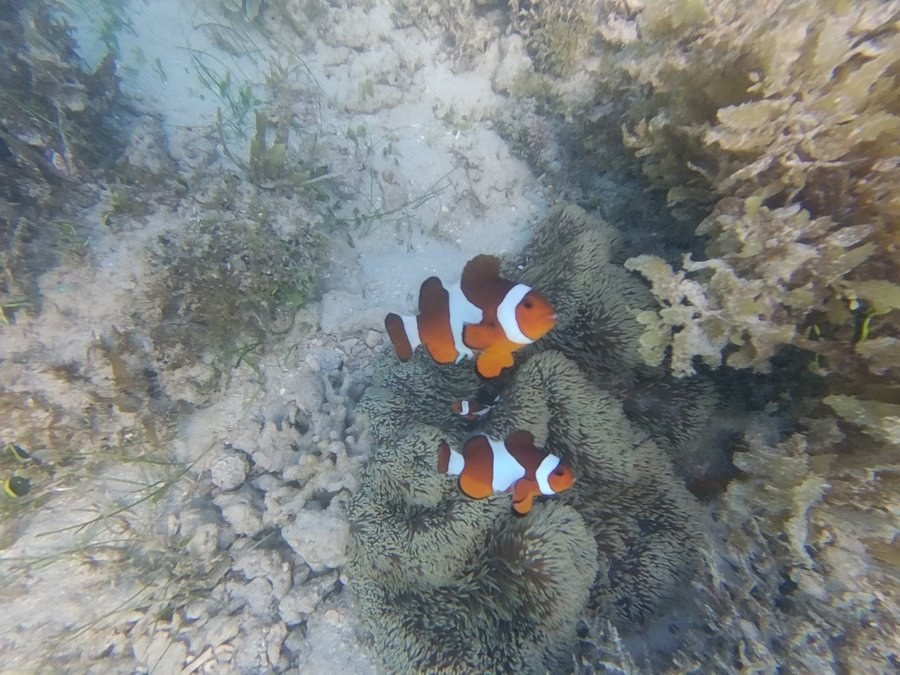
Ocellaris clownfish behavior is more interesting than the simple label peaceful suggests. Amphiprion ocellaris can be strongly attached to a home area, organized around a strict hierarchy and assertive toward intruders. A well-matched pair is absorbing to watch, but a pair is not created merely by putting two fish in the same aquarium. Learning to read access, posture and context helps you distinguish an ordinary interaction from a situation that needs intervention.
Watch the home area before judging the fish
The Florida Museum describes strong site fidelity, meaning that a fish remains closely associated with a particular place. In an aquarium, that place may not match the attractive shelter you chose. An ocellaris can spend considerable time near one corner or familiar structure without using every part of the tank equally.
Location alone does not tell you whether the fish is comfortable. Observe respiration, feeding and the ability to leave voluntarily. A fish calmly returning to a preferred spot is different from one pressed against the surface by a dominant companion. A sudden location change also deserves more attention than a long-established resting habit.
Watch from a distance occasionally. Approaching the aquarium with a food container can interrupt ordinary behavior and make both fish appear more active. Brief notes about where each animal rests and feeds help you recognize changes without turning every unusual position into an emergency or a joke.
Understand hierarchy without trying to control sex
Amphiprion ocellaris is described as protandrous: its reproductive pathway can involve a transition from male to female. In the natural hierarchy, the loss of the dominant female can allow the breeding male to become female. This is a biological process within a social system, not an instant or reversible setting for aquarium keepers.
Do not assume that the smaller of two purchased adults is definitely male or that two females will sort themselves into a workable pair. Ask a reputable supplier about their history and whether the fish are already established together. Color, pattern and a brief peaceful shop observation cannot confirm a lasting relationship.
OATA recommends a male-female pair, but meeting that recommendation requires compatibility as well as a head count. Introductions should be planned with appropriate space and a way to separate fish if necessary. A small aquarium is not a suitable experiment in managing multiple competing pairs or an uncertain group of adults.
Judge interactions by their consequences
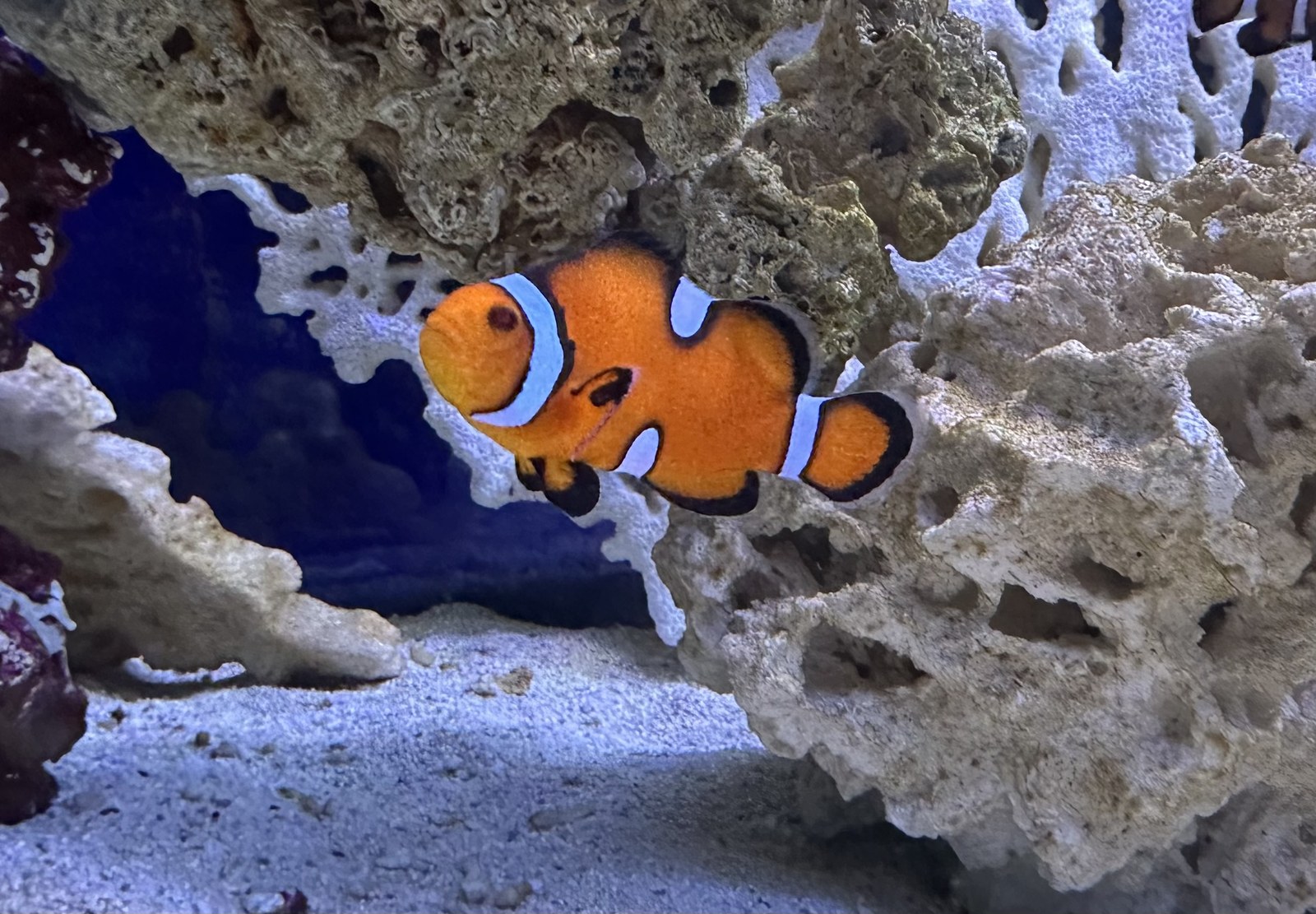
Brief displays, following and quivering can occur during social interactions. Their meaning depends on what happens before and afterward. Does the interaction end with both fish swimming and feeding normally, or does it become a repeated sequence in which one fish cannot escape? The outcome matters more than a reassuring behavior label.
Look for practical signs of trouble: damaged fins, missing scales, relentless pursuit, restricted movement or a progressively thin subordinate. A fish may be stressed even without visible wounds if it cannot reach food or rest undisturbed. Observe more than a single feeding, since the dominant animal may behave differently when you are nearby.
- Check each fish's access to food.
- Notice whether shelter is shared or monopolized.
- Watch for recurring attacks at boundaries.
- Record changes after new livestock or layout alterations.
Remove the pressure to find an anemone
Wild ocellaris associate with particular host anemones, but captive fish do not require one. OATA and Coralife both support anemone-free keeping. A clownfish that rests beside a filter guard or in an unfashionable corner is not automatically signaling that you must buy a host. First establish that the chosen location is safe and the fish is otherwise well.
Do not move the fish into an anemone by hand, confine it against one or repeatedly disturb its chosen resting place to force a preferred photograph. Adding a host also does not resolve an incompatible pair. A defended resource can introduce another focus for territorial behavior rather than functioning as a peace offering.
Avoid buying corals as substitute hosts purely to satisfy a perceived obligation. Any additional animal needs its own appropriate care plan.
Keep daily interaction voluntary and predictable
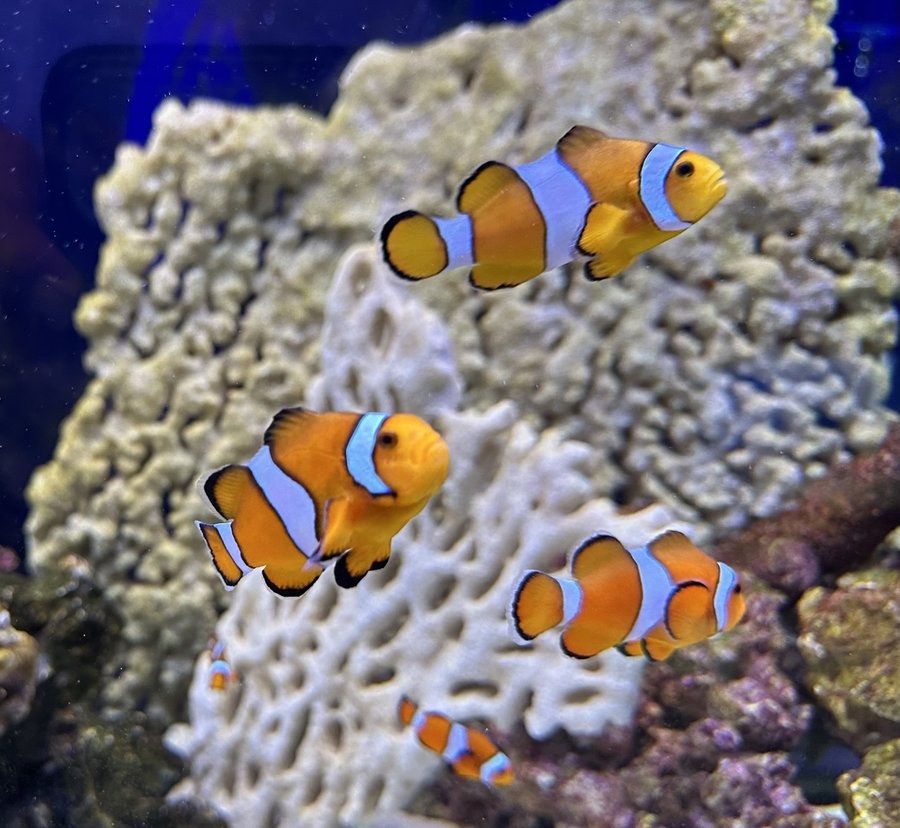
Clownfish may learn that a particular person or container predicts food. Use that familiarity to observe each fish closely without unnecessary handling. Offer measured meals at accessible positions and allow the fish to approach rather than chasing it with a feeding tool. A feeding response does not mean the fish needs another meal.
Keep the day-night schedule predictable and avoid repeated tapping or sudden light changes for entertainment. If the fish retreats during maintenance, work calmly and preserve a safe route away from your tools. Territorial approaches toward a hand are not invitations to touch, tease or test how strongly the fish will defend its space.
Reproductive activity may make an established pair more protective of an area. Do not continually rearrange their surroundings to investigate. If you intend to raise offspring, treat that as a separate project requiring specialized planning, not an automatic next step simply because the adults show nesting behavior in the display.
Know when movement becomes a medical question
An unusual swimming style should never excuse persistent respiratory distress, loss of balance, repeated scraping or a sudden failure to eat. Check temperature, salt concentration, water quality and equipment when behavior changes. A short video can preserve the pattern for a professional without the stress of catching the fish.
Consider recent events rather than guessing at emotions. A pump adjustment, an accidental top-off error, a new tank mate or a collapsed structure may explain why the behavior changed at that moment. Correct a clear hazard and obtain aquatic-veterinary help for severe or continuing abnormalities.
The goal is not to decode every flick of a fin with certainty. It is to understand enough of the species' social biology to make sensible decisions for your particular fish. Stable conditions, compatible relationships and voluntary access to resources give ocellaris a better home than an aquarium arranged around myths about what a clownfish should do.
Continue reading: Clownfish Tank Maintenance: Top-Off Water Is Not Water-Change Water.
Sources and further reading:
- Clown Anemonefish (Amphiprion ocellaris) - Florida Museum of Natural History
- Amphiprion ocellaris - FishBase
- How to look after clown fish - OATA
- Ocellaris Clownfish Care Guide - Coralife
Photo credits: Zoltán Stekkelpak (CC0), Bruxton (CC0), Bruxton (CC0). Images resized and compressed for web display. Each image retains its linked license. Wild underwater scene according to the source. An anemone is not required for keeping captive ocellaris clownfish.


