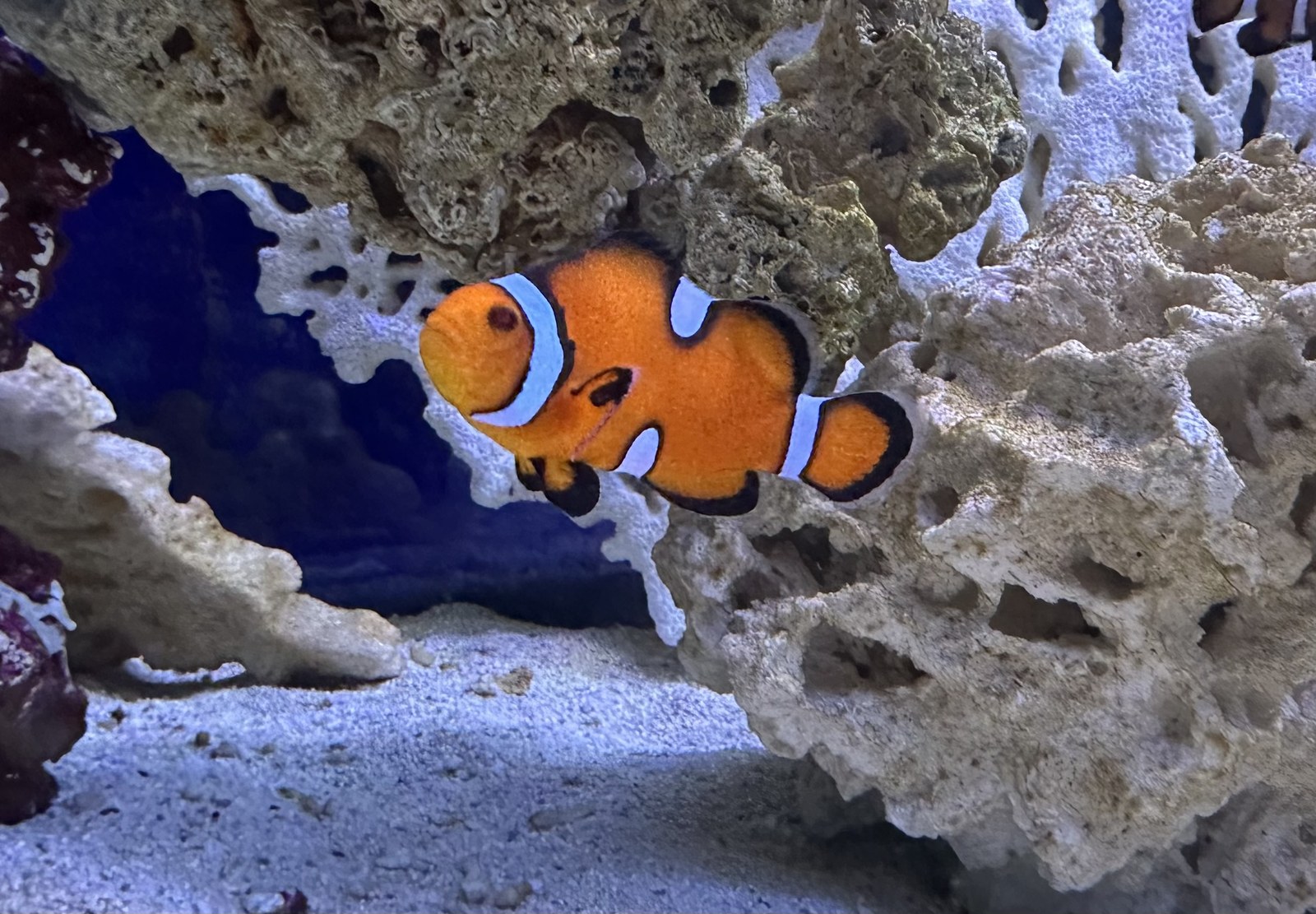
Ocellaris clownfish care begins with a distinction: Amphiprion ocellaris is a marine fish, not a freshwater pet with a little salt added. Its small size and familiar appearance can make the project seem simpler than it is. A stable, modestly stocked saltwater aquarium is entirely achievable, but it needs preparation before the fish arrives. An anemone is not part of the essential shopping list.
Identify the fish and plan for adults
Ask the supplier to confirm Amphiprion ocellaris. Common names such as false percula can confuse it with Amphiprion percula, a different species. Color forms also complicate identification, so do not apply this guide to every fish sold under the general clownfish label. Prefer a clearly identified, traceable captive-bred individual or compatible pair when available.
FishBase reports a maximum of 11 cm total length, including the tail. Plan around adult needs rather than the size of a juvenile in a sales tank. OATA recommends at least 60 litres for a single pair of smaller clownfish species. That is a minimum pair reference, not a generous allowance for several adult pairs or additional territorial fish.
Favor more usable space and a layout with separate retreat opportunities. A single fish still needs a properly designed marine aquarium; halving the pair figure does not create an evidence-based single-fish minimum. Consider the complete adult stocking plan before choosing equipment.
Build a home without a compulsory host
The Florida Museum describes the species' natural association with particular host anemones. That relationship is real, but aquarium care does not require reproducing every element of wild ecology. OATA and Coralife explicitly say captive clownfish do not need an anemone. A beginner can keep a fish-focused system without depriving the fish of a required companion.
Provide stable aquarium-safe structures, open swimming room and areas where the fish can retreat from activity. Secure the layout so it cannot collapse during cleaning. Choose circulation that supports oxygen exchange and filtration without preventing the fish from resting comfortably, and protect intakes appropriately.
A suitable cover can reduce escape risk, while equipment access and ventilation still matter. Set a predictable lighting schedule rather than leaving display lights on whenever someone wants to look at the fish.
Make seawater a measured preparation task
Use a marine aquarium salt mix with suitable source water and follow the manufacturer's preparation instructions. Household table salt does not recreate seawater. Mix replacement water in a dedicated container, allow the product's required mixing process to finish and verify its condition before it reaches the fish.
OATA gives aquarium water temperature of 24-26 C, pH 7.9-8.3 and specific gravity of 1.020-1.025. These are attributed care-sheet values, not a range assembled from several sources. The temperature range describes the water around the fish; it is not a declared calibration temperature for a salinity instrument.
Specific gravity is a density ratio, while salinity describes salt concentration. Their relationship depends on measurement conventions and temperature. Use an instrument suitable for seawater, calibrate it as instructed and record what scale it reports. Do not relabel an SG reading as parts per thousand or assume that a temperature-compensated instrument makes aquarium temperature irrelevant.
Establish biological filtration before stocking
A running pump and clear water cannot prove that a marine system is ready for fish. Establish the biological filter through a fishless cycling method and track ammonia, nitrite and nitrate. Follow the method consistently and verify processing capacity rather than declaring success after a fixed number of days.
When stocking approaches, confirm that the planned ammonia input is being processed without ammonia or nitrite remaining detectable on suitable tests. Avoid immediately adding every animal on a wish list. Biological capacity, feeding load and space all need to remain aligned as the system develops.
- Check that temperature remains stable through the day.
- Verify salt concentration with a calibrated instrument.
- Confirm normal circulation and protected intakes.
- Prepare food, quarantine space and emergency contacts.
Keep freshwater for evaporative top-off separate from prepared seawater for changes. Label both clearly; their jobs are different even when they look identical.
Choose a social plan rather than a collection
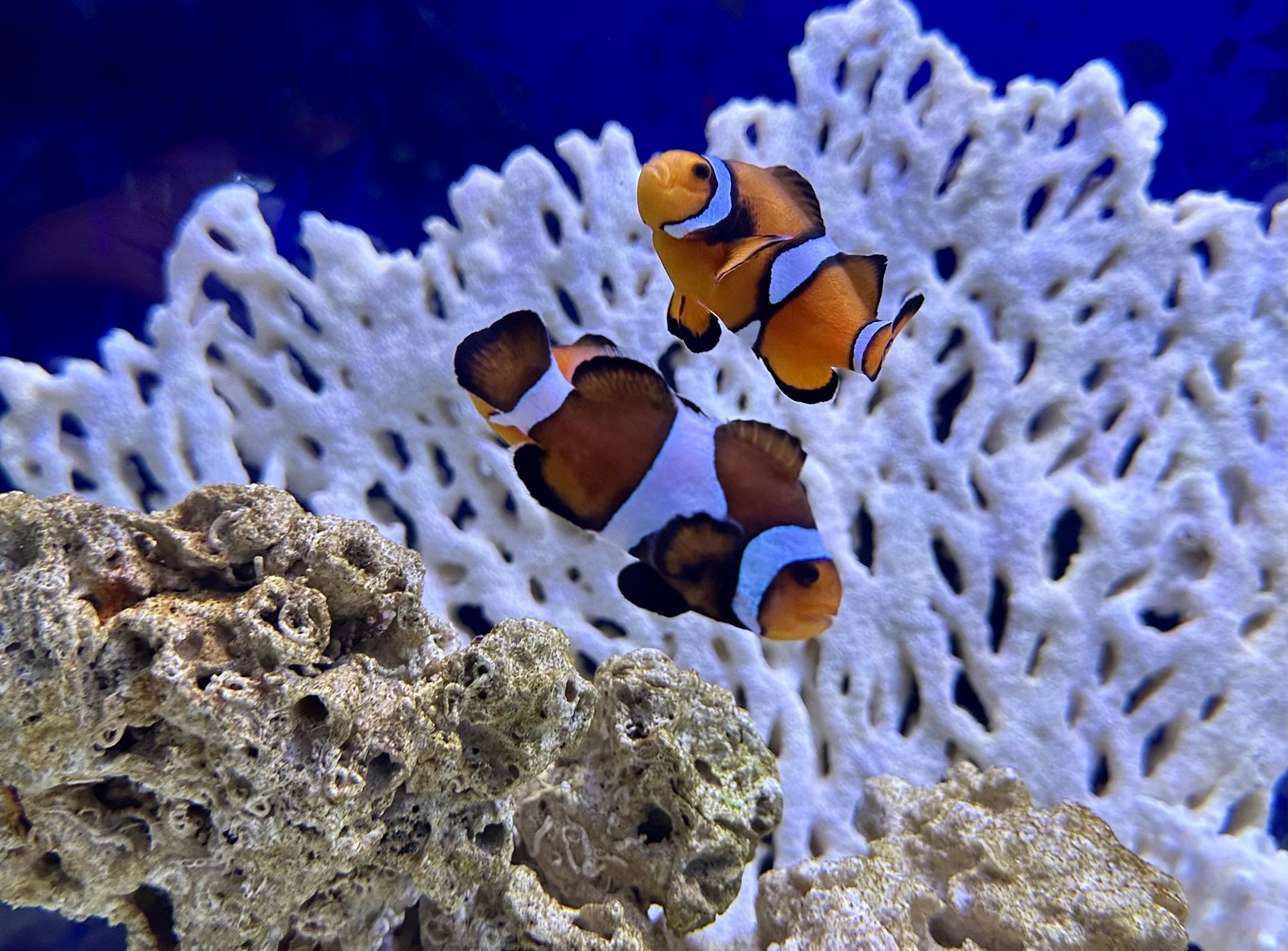
OATA recommends a male-female pair, and the Florida Museum describes a structured hierarchy and strong site fidelity. Those facts do not mean two random adults will peacefully become a pair. Ask for the history of any proposed pair and observe whether both fish can swim and feed without persistent harassment.
Ocellaris are capable of a male-to-female transition within their reproductive hierarchy, but sex is not a reversible switch the keeper controls. Two established females can be a poor match. Size difference may inform a specialist's assessment but does not certify compatibility on its own.
Avoid adding more clownfish to a small system in the hope that aggression will spread harmlessly. Be cautious with shy tank mates that may struggle around a defended shelter. Prepare an appropriate marine separation option before introductions, and intervene if a fish is injured, excluded from food or relentlessly pursued.
Make arrival the start of observation
Ask about the fish's existing food, water conditions and health history. Use a prepared marine quarantine setup with suitable filtration and separate tools, and agree on a plan with a knowledgeable professional where necessary. Captive-bred origin is helpful information but does not prove freedom from disease.
Adapt transport and acclimation to the journey and the difference between source and destination conditions. Follow supplier or veterinary guidance rather than automatically prolonging time in opened shipping water. Minimize unnecessary handling and avoid introducing transport water into the established display.
After arrival, watch respiration, posture and food access while continuing water tests. Offer modest familiar meals and resist adding an anemone, supplements or extra fish to solve ordinary settling behavior. A successful beginning often looks quiet: one carefully planned pair, stable seawater and a keeper who can explain what each piece of equipment is doing.
Continue reading: Ocellaris Clownfish Nutrition: Feed the Pair, Not Just the Bold Fish.
Sources and further reading:
- Clown Anemonefish (Amphiprion ocellaris) - Florida Museum of Natural History
- Amphiprion ocellaris - FishBase
- How to look after clown fish - OATA
- Ocellaris Clownfish Care Guide - Coralife
Photo credits: Bruxton (CC0), Bruxton (CC0), Bruxton (CC0). Images resized and compressed for web display. Each image retains its linked license.


