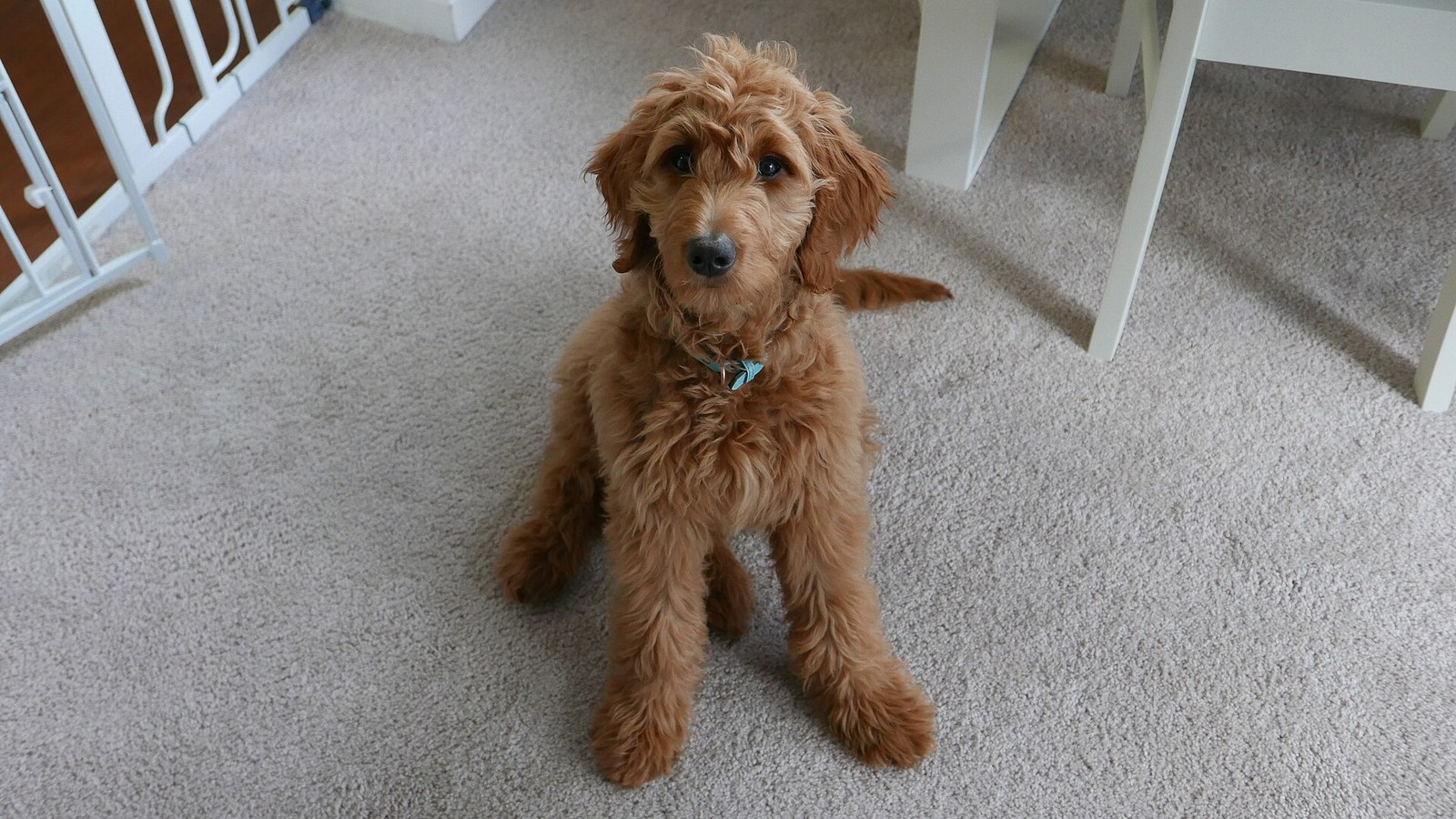
Goldendoodle training works best when it makes ordinary life easier: greeting without knocking someone over, walking comfortably, relaxing apart from family, and accepting necessary coat care. A Golden Retriever–Poodle cross is not guaranteed to be sociable, calm, or instantly obedient. Reward-based practice gives you a way to teach useful choices without relying on ancestry stereotypes or turning everyday mistakes into conflict.
Observe the dog before choosing the exercise
Start by noticing what your dog finds rewarding and what makes concentration difficult. One dog enjoys food; another prefers sniffing or a brief toy game. A puppy on a busy pavement may be too worried to eat, while an adolescent in the garden may be distracted by every movement. Change the setting or make the task easier rather than increasing pressure. Learning improves when the dog can notice you without being overwhelmed.
Behavior changes can be health information. New resistance to sitting, touch, grooming, or movement deserves consideration of pain. Sudden irritability is not a reason for tougher handling. If a familiar skill deteriorates, review sleep, environment, recent experiences, and physical comfort before assuming the dog is refusing on purpose. Editorial breed tendencies cannot explain every individual response, and a coat photograph cannot tell you whether a dog feels safe.
Teach a small set of skills with clear rewards
Choose a marker word that tells the dog exactly when a useful behavior has occurred, then follow it with a reward. Begin with actions the dog can easily offer: looking toward you after hearing its name, touching a hand, or standing with four paws on the floor. Keep sessions brief enough to end while engagement remains comfortable. Use part of the measured food allowance when practical and avoid fasting to create motivation.
Practice a recall indoors before adding distance or distraction in a secure space. Reward returning generously and sometimes release the dog back to exploration, so coming to you does not always end fun. Outdoors, physical safety still matters: use appropriate secure equipment and do not rely on a developing recall near roads or wildlife. Introduce one difficulty at a time instead of simultaneously asking for greater distance, longer duration, and a busier location.
A practical starter set includes:
- A name response and a rewarded return to you.
- A comfortable hand target for moving without pulling.
- Settling on a mat with an easy release cue.
- Exchanging an object for a suitable reward.
- Calm entry into a car or carrier, as appropriate to size.
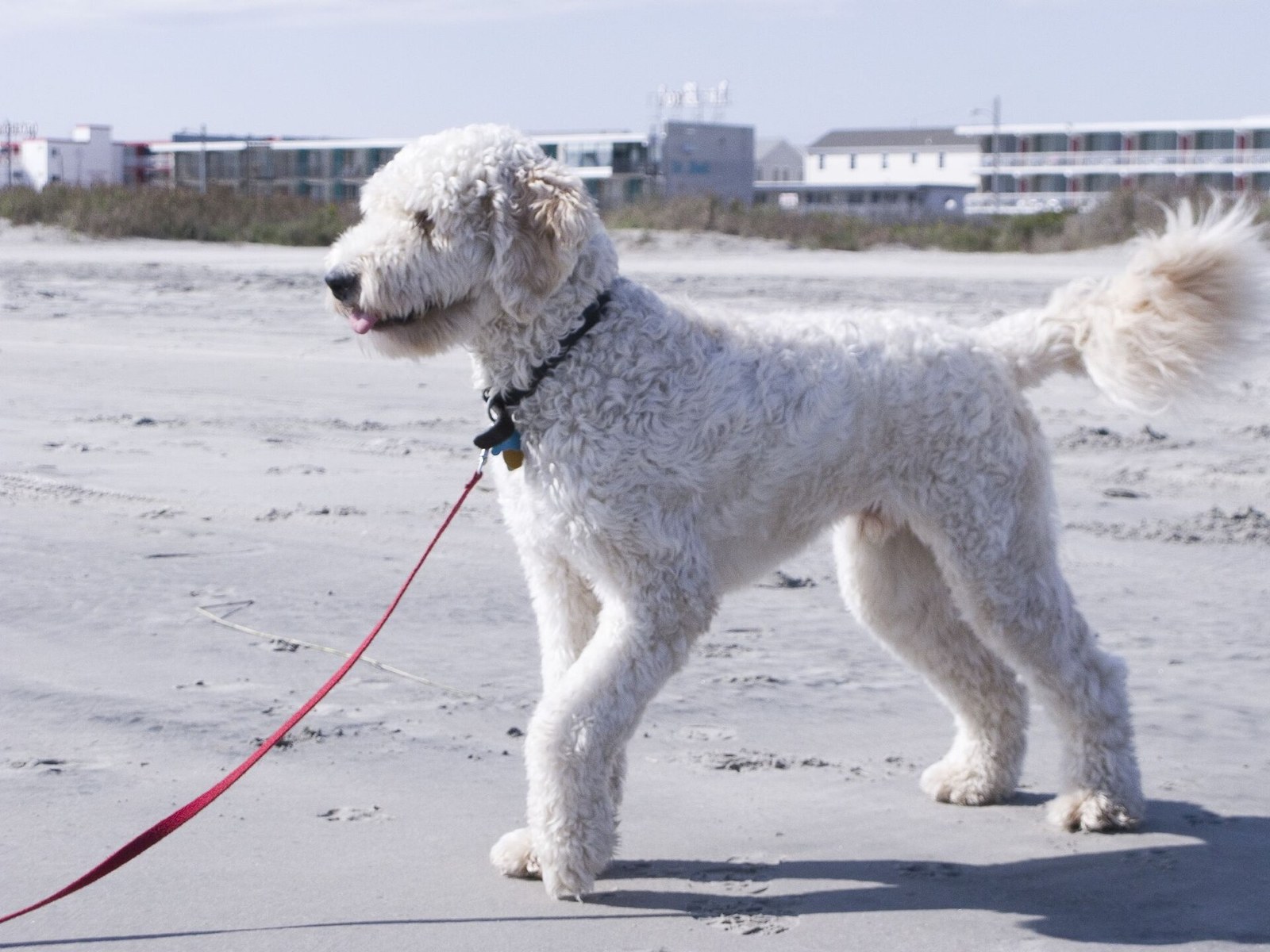
Make greetings and walks easier to get right
A large excitable youngster can hurt someone unintentionally, while a small dog can still be frightened by crowded greetings. Set up the environment before visitors enter. Use a barrier, provide space, and reward calm observation. Invite a greeting only when the dog can manage it, and allow retreat. Ask guests not to lean over, grab the face, or repeatedly stir up excitement and then complain about jumping.
On walks, reward moments of a loose lead near you and allow planned sniffing breaks. If the lead tightens, pause or change direction gently before resuming an achievable distance. Practice in a quiet area before demanding the same skill beside another dog. Avoid lead jerks, choke or prong collars, shock devices, and intimidation. These do not explain the desired alternative and can worsen fear. A qualified reward-based trainer can help with equipment fit and timing when size or strength makes management difficult.
Socialize through safe choice rather than forced contact
Socialization is learning that ordinary surroundings can be manageable, not accumulating as many close encounters as possible. Introduce different surfaces, household sounds, people at a comfortable distance, and suitable known dogs gradually. Let the puppy watch and withdraw. Arrange early experiences alongside veterinary advice about local infection risk; waiting for every possible medical precaution to finish can also mean missing useful learning opportunities, so make a plan together.
Avoid busy dog parks as a default classroom. A controlled walk near one calm dog may be more helpful than being surrounded by unfamiliar dogs. Monitor the whole body: repeated retreat, freezing, tucked posture, or frantic escape means the exposure is too much. Children need explicit boundaries and active adult supervision. No amount of training makes hugging, climbing on a resting dog, or taking food from its mouth an appropriate test of tolerance. Neutrality around strangers is a valid goal.
Build alone-time comfort without rehearsing panic
Practice tiny, manageable separations while the dog is comfortable, starting with moving a short distance away or briefly using a barrier. Return before distress escalates and vary the pattern instead of always making each absence longer. Independence can begin while you are home: reward resting on a nearby mat without requiring constant physical contact. A safe chew or food activity may help some dogs, but it is not proof that a worried dog will cope once you leave.
Observe rather than guess. If possible, use a recording to see whether the dog settles or becomes increasingly distressed. Persistent vocalizing, drooling, destruction near exits, frantic escape attempts, or inability to eat can indicate a problem needing support. Reduce absences to what is currently manageable and arrange a sitter or other suitable help. A second dog is not a reliable treatment, and confinement can make panic worse for some individuals. Consult your veterinarian and a qualified behavior professional early.
Make handling cooperative and know when to pause
Grooming can be a substantial commitment for this cross, so teach small handling skills before a long coat develops. Reward looking at a brush, then a gentle touch, then one easy stroke. Practice brief paw and ear checks without restraint battles. Some dogs can learn a chin-rest behavior that offers a predictable start to handling; pause when the dog withdraws so the signal remains meaningful.
Coordinate with a groomer willing to work gradually and prioritize comfort over a particular haircut. Where urgent care cannot wait for training, the veterinary team can plan humane support. Success is not a motionless dog enduring everything; it is clearer communication, fewer frightening surprises, and practical skills that improve daily welfare.
Continue reading: Goldendoodle Grooming: Prevent Mats and Protect the Skin.
Sources and further reading:
- PetMD: Goldendoodle
- Golden Retriever Club of America: Health Screenings for the Parents of a Litter
- Poodle Club of America: Poodle Information Online
- PetMD: Pet Grooming—How to Handle Matting in Dogs and Cats
- PetMD: What Are the Benefits of Large Breed Dog Food?
Photo credits: Gullpavon (CC BY-SA 4.0), lyrandian (CC BY 2.0), Chris Rue (CC BY-SA 4.0). Images resized and compressed for web display. Each image retains its linked license.


