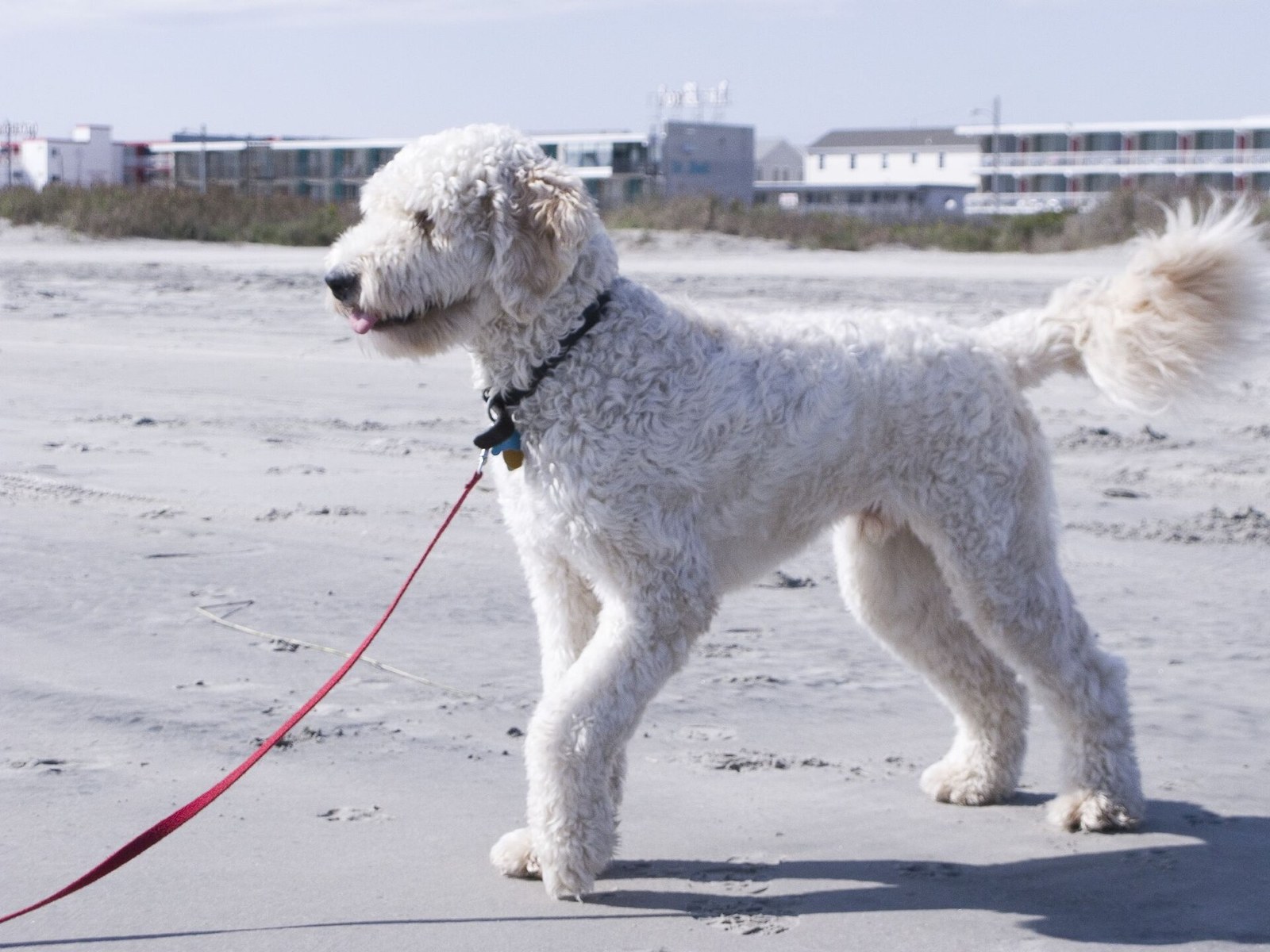
Goldendoodle grooming is skin care as much as styling. A fluffy surface can hide tight mats underneath, and a dog that leaves little hair on furniture may still require considerable brushing and professional clipping. Coat texture, density, and shedding vary across Golden Retriever–Poodle crosses and can change as a puppy matures. Build a routine around what your dog's coat actually does, not the haircut or generation label in an advertisement.
Understand the coat before buying a routine
Straighter, wavy, and curly coats can behave differently, and length changes the amount of work involved. Some coats need very frequent section-by-section maintenance to remain comfortable. Check your dog regularly and ask a skilled groomer to demonstrate an appropriate brush and comb on that coat. A calendar is useful, but it should not override evidence that tangles are forming sooner than expected. Puppy softness is not a promise about adult maintenance.
Shedding and human allergy are separate issues. Dogs produce allergenic proteins associated with dander, saliva, and other secretions, so a low-shedding appearance does not establish an allergy-safe pet. F1 and F1b labels describe ancestry conventions, not reliable coat or allergy outcomes. Grooming can remove loose debris and support skin comfort, but it cannot guarantee that a person will tolerate the dog. Avoid excessive bathing or harsh products in an attempt to deliver that impossible promise.
Brush in sections and check the coat base
Work on a secure nonslip surface with comfortable support, or at floor level if that is easier for the dog. Begin in a clear, easy area rather than attacking the worst knot first. Part the hair so you can see toward the skin and work through a small section from its base outward. The tool must reach the coat base, but its pins should not scrape the skin. Ask for a demonstration if you cannot tell the difference.
Follow with a suitable comb to check that the section is clear. Surface brushing alone can miss skin-level matting. Pay attention to areas of friction: behind the ears, under the collar or harness, around the armpits, and where legs meet the body. Keep pressure light and stop when resistance becomes firm or the dog shows discomfort. Do not repeatedly rake one spot until the skin becomes red. Several short, successful sessions are preferable to one exhausting struggle.
Choose humane removal when a mat is established
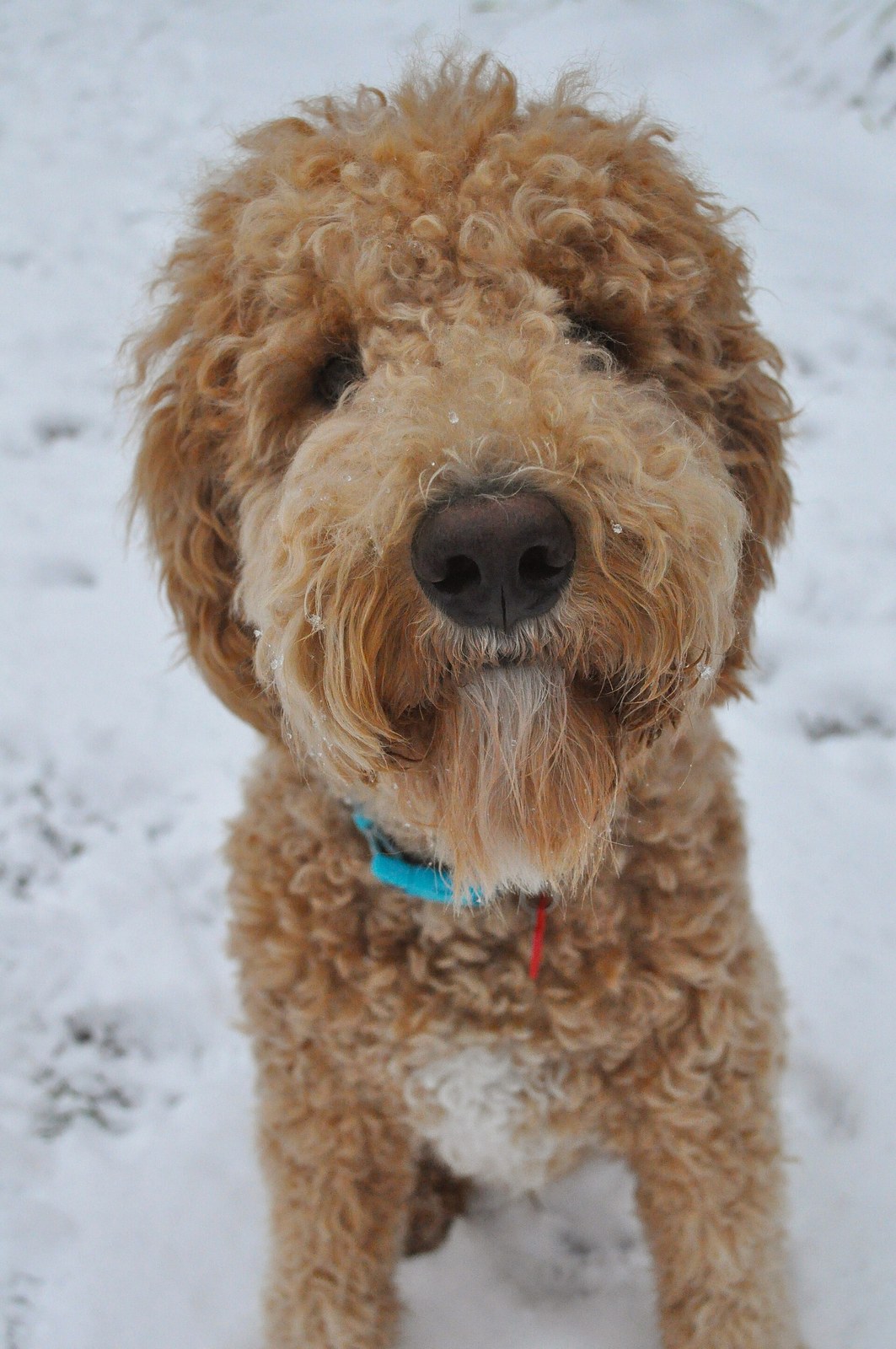
A true mat is not simply a few loose hairs that need a stronger tug. Dense knots pull at skin and may trap moisture, debris, or hidden sores. If the comb cannot pass without force, stop and arrange professional help. The goal is comfortable skin, not preserving every inch of hair. A qualified groomer may recommend clipping the coat short rather than attempting extensive dematting; this can be the kinder option even if the result looks different from the requested style.
Do not cut underneath mats with household scissors. Skin can be pulled into the knot, and a small movement can cause a serious wound. Close clipper work also requires skill because blades can injure delicate or inflamed skin. If the dog is painful, has open sores, or cannot tolerate necessary handling, involve a veterinarian rather than escalating restraint. Veterinary support may be needed before or during removal. A groomer should explain the welfare concern clearly and help plan an achievable maintenance length afterward.
Bathe a clear coat and dry it thoughtfully
Check for tangles before bathing. Water can tighten existing mats, so soaking a heavily tangled dog is not a substitute for having them removed. For an appropriate bath, prepare towels, nonslip footing, and a dog-suitable product. Use comfortable water, avoid the eyes and ear canals, and rinse thoroughly. Product residue can irritate skin, especially beneath dense hair. Follow veterinary instructions for any prescribed shampoo rather than substituting a fragranced household product.
Dry the coat thoroughly and gently, including areas that stay damp beneath the outer hair. Avoid hot air and frightening restraint; ask the groomer for a method suited to your dog's tolerance and coat. Recheck with a comb once the coat is dry and manageable. After swimming or a wet walk, inspect friction areas and dry carefully rather than letting a harness sit over damp tangles. Repeated soiling or a persistent bad smell warrants investigation of skin, ears, movement, or digestion, not simply more baths.
Include ears, nails, teeth, and skin observations
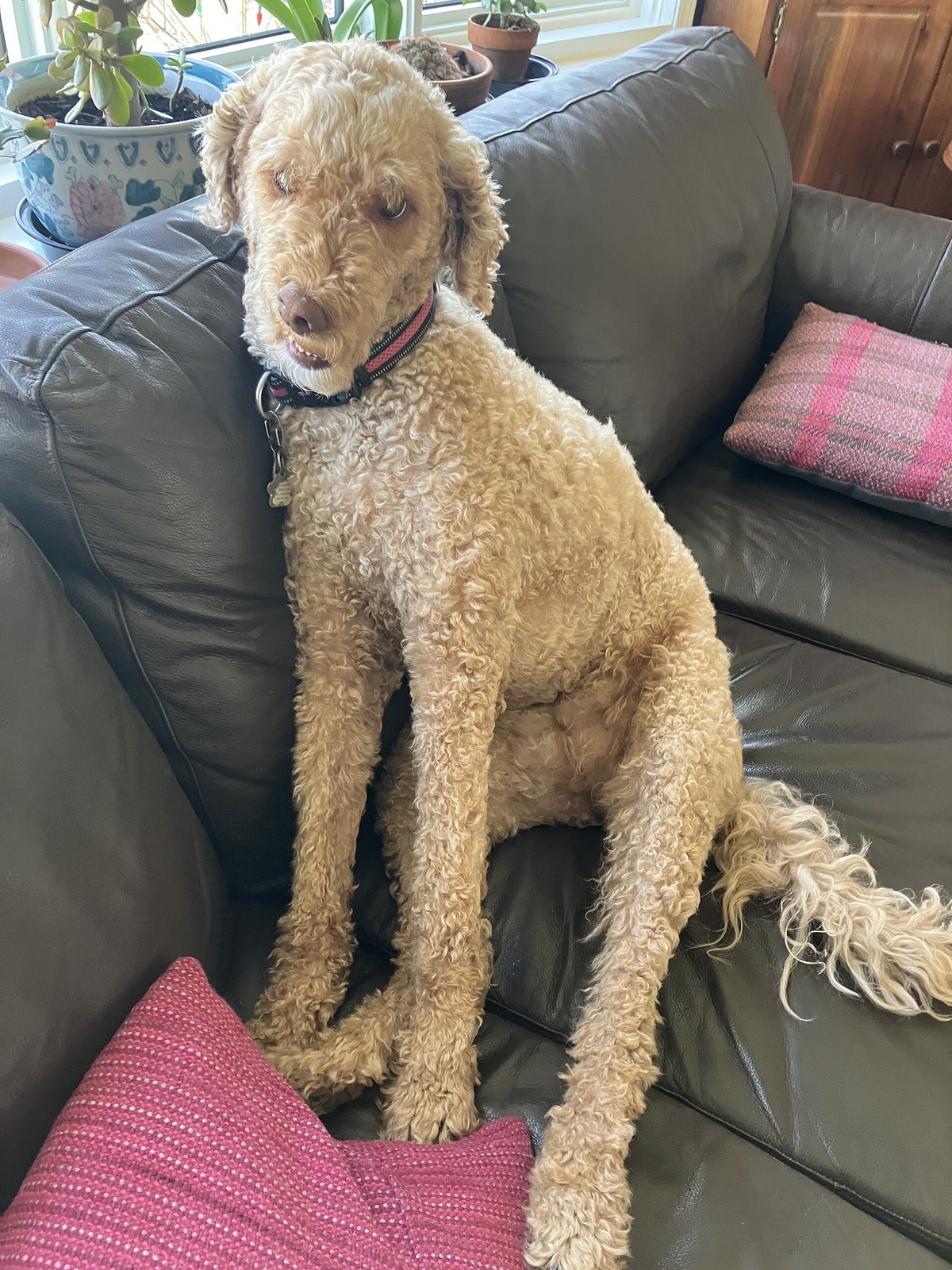
Look at the visible ear opening and note changes in smell, discharge, redness, or sensitivity. Keep the area dry and ask your veterinarian whether cleaning is needed and which product to use. Do not push cotton swabs into the canal or routinely pluck hair because every doodle is supposedly meant to have it removed. Decisions should reflect the individual ear, and a sore ear needs diagnosis rather than a cosmetic procedure.
Introduce nail handling gradually, trimming only what you can confidently identify as safe or asking a professional for help. Check for split nails and hair that interferes with comfortable footing. Build tooth-brushing tolerance with an appropriate dog product, not human toothpaste. Grooming is also a useful time to notice lumps, wounds, weight changes, or new sensitivity, but it cannot establish a medical diagnosis.
A brief home check can include:
- A comb check in the main friction areas.
- Visible skin inspection for sores or redness.
- Comfortable walking and nails that are not snagging.
- Ear changes, mouth odor, and tolerance of gentle touch.
Match professional care to welfare and real life
Schedule grooming according to coat growth, length, condition, and what you can maintain between visits. PetMD describes regular professional appointments, but the right interval is individual rather than a guaranteed number of weeks. Tell the groomer honestly about your home routine and the dog's concerns. If maintaining a long style causes repeated matting, choose a shorter practical clip and keep monitoring the skin. Less decorative length can mean more comfortable everyday life.
Practice cooperative handling between appointments: seeing a tool, accepting one touch, and choosing to remain for a reward. Stop before frustration builds. A good grooming relationship includes permission to change the plan when welfare demands it. The measure of success is a comfortable dog with healthy, accessible skin, not whether the coat matches a social-media photograph.
Continue reading: Living With a Goldendoodle: Household Fit Beyond the Fluff.
Sources and further reading:
- PetMD: Goldendoodle
- Golden Retriever Club of America: Health Screenings for the Parents of a Litter
- Poodle Club of America: Poodle Information Online
- PetMD: Pet Grooming—How to Handle Matting in Dogs and Cats
- PetMD: What Are the Benefits of Large Breed Dog Food?
Photo credits: lyrandian (CC BY 2.0), Chris Rue (CC BY-SA 4.0), Gogerr (CC BY-SA 4.0). Images resized and compressed for web display. Each image retains its linked license.


