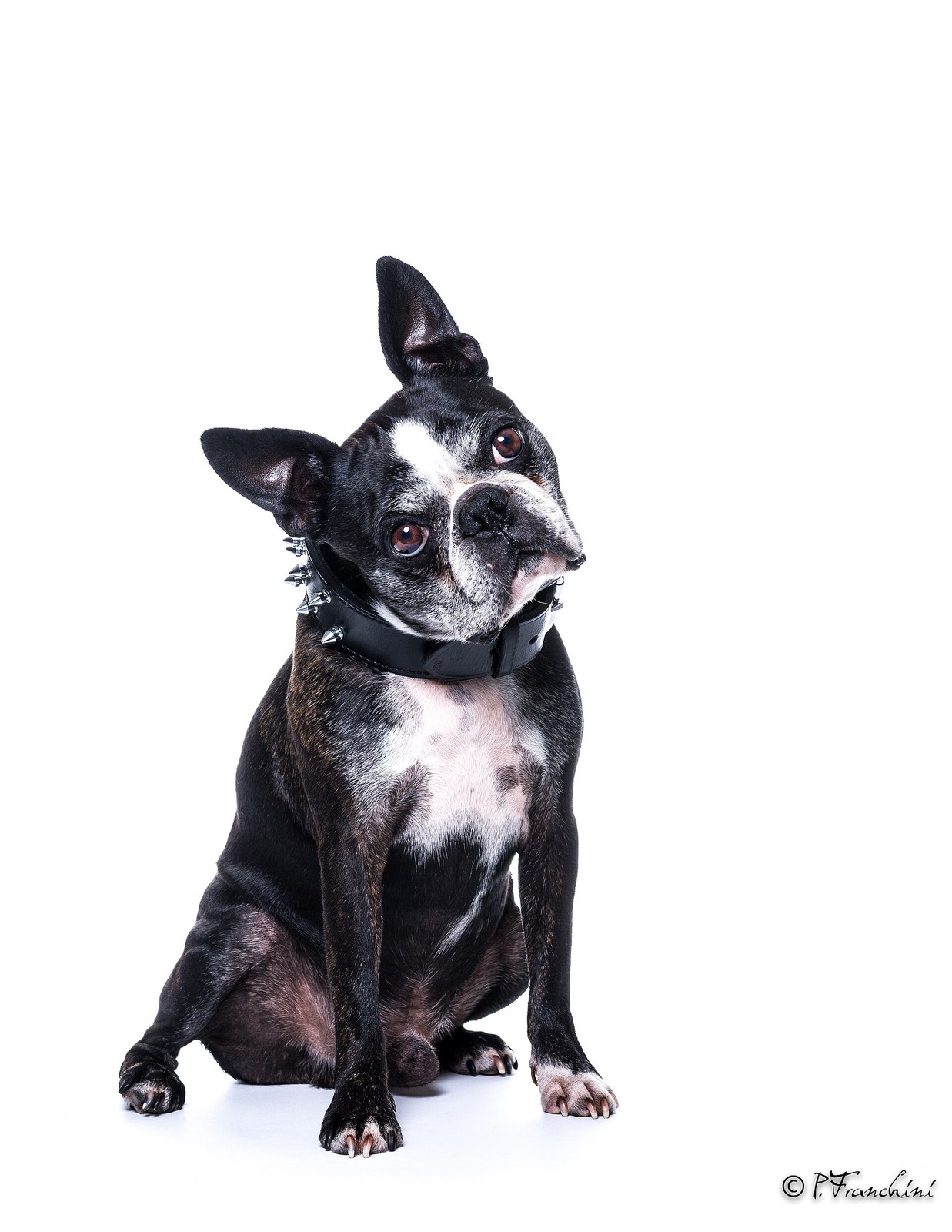
Boston Terrier training is most useful when it makes ordinary life easier: going outside calmly, returning when called, settling while someone works, and cooperating with care. You do not need to prove authority or tire the dog into compliance. A clear setup and worthwhile rewards help a lively companion understand what works. Just as importantly, breathing difficulty, pain, fear, or hearing loss can make apparent training problems into health questions.
Check comfort before asking for more
Choose a comfortable, cool environment and begin when the dog is awake but not overexcited. Have small rewards ready, preferably counted within the daily food allowance, and ask for one easy action. Mark the success with a consistent word, then deliver the reward promptly. A few relaxed repetitions are better than continuing until the dog loses interest or starts struggling. Sessions should end with the dog still comfortable, not exhausted.
If a Boston stops walking, resists a harness, avoids touch, or misses a familiar cue, consider what changed. Sore knees can affect sitting and movement; eye pain can make face handling frightening; airway difficulty can make activity unpleasant. A dog that does not respond to its name may need a hearing assessment. Behavior is information, not evidence of a dominance contest. Arrange veterinary help for new or unexplained changes and use easier alternatives while the cause is investigated.
Make toilet habits and home routines predictable
Offer regular toilet opportunities around waking, meals, play, and the dog's observed needs. Go to a suitable area, wait quietly, and reward immediately after the dog finishes. A puppy cannot be expected to match an adult's control, and an older dog may need more accessible outings. When supervision is limited, use a comfortable, appropriately arranged safe area rather than giving access to rooms where accidents are hard to notice.
Clean accidents with a suitable pet-safe product and adjust the routine. Do not rub the dog's nose in a mess or punish after the event; this teaches fear without explaining where to go. Repeated accidents, straining, increased thirst, or a sudden loss of previously reliable habits needs veterinary discussion. Keep departure and return routines simple, with the harness and rewards ready before opening a door. Predictability reduces the frantic rush that can turn an ordinary outing into an overexciting scramble.
Reward settling and greetings you want repeated
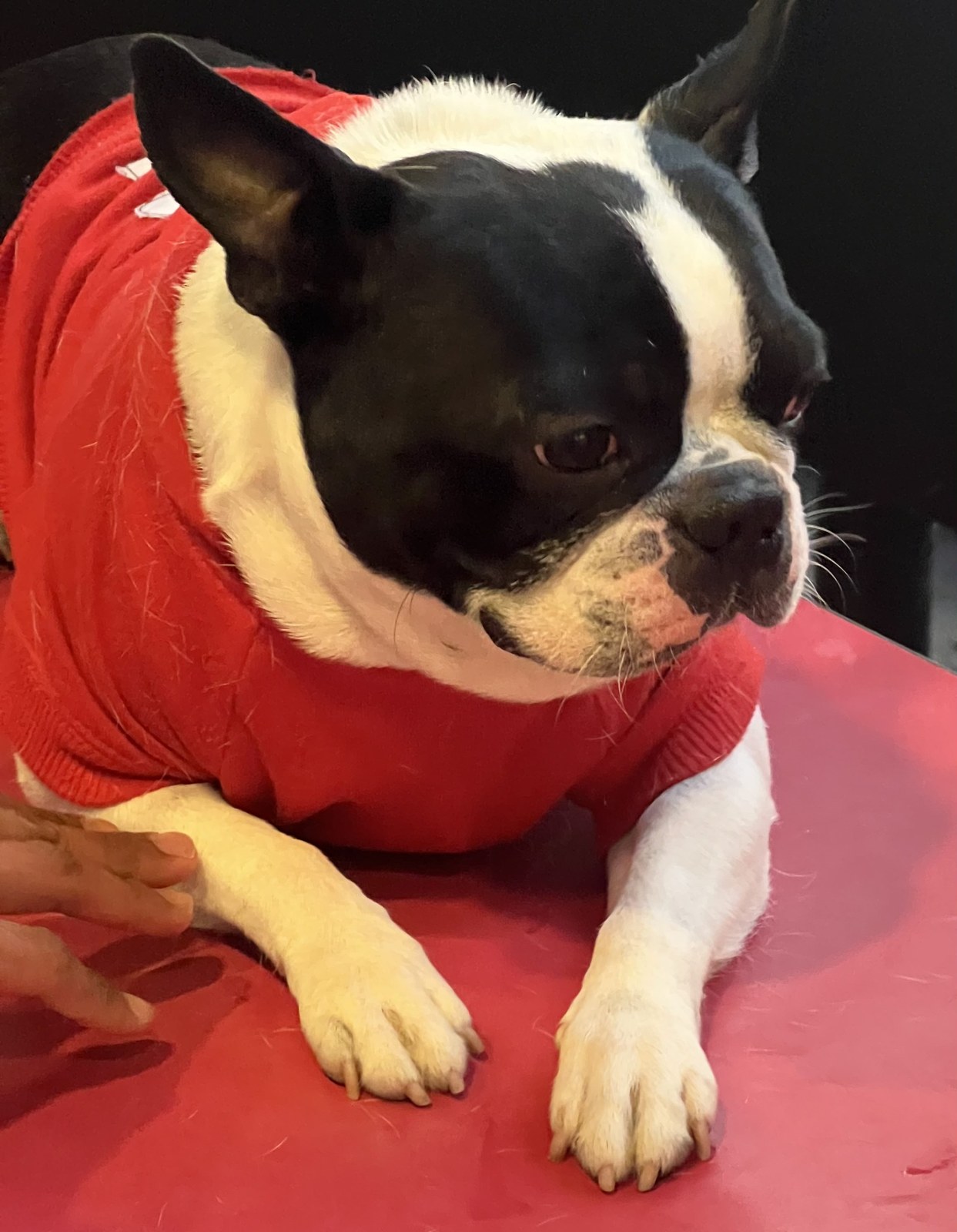
Put a comfortable mat in a quiet area and reward looking at it, stepping onto it, and eventually lying down voluntarily. Do not force a down position or repeatedly lure the dog into an uncomfortable posture. You can reward standing calmly or choosing a nearby bed instead. Add duration gradually, occasionally delivering a reward while the dog remains relaxed. Settling is a skill to teach, not something every playful Boston already knows.
For greetings, manage the distance first. A gate or lead can prevent jumping while a visitor waits quietly. Reward feet on the floor and give the dog space to disengage. If the visitor's excitement repeatedly overwhelms the dog, make the next session easier rather than correcting harder. Ask visitors not to bend over the face or insist on cuddles. A dog can be sociable without greeting every person, and the visitor's wish to pet it does not override its need for distance.
Build lead skills and recall without exertion
Start lead practice indoors or in a quiet secure space. Reward staying near you while the lead remains loose, taking only a few steps before another reward. A well-fitted harness avoids relying on pressure against the throat. If the dog pulls toward something, pause or create distance and reward an achievable alternative. Do not jerk the lead, use painful equipment, or drag a reluctant Boston forward. Check temperature, breathing, and movement before continuing.
For recall, choose one cue and practice over an easy distance when the dog is likely to succeed. Reward generously on arrival, sometimes allowing a return to safe sniffing so coming back does not always end enjoyment. Increase distractions slowly in enclosed areas. A long line may help in appropriate open spaces when safely handled, but reliable barriers remain important. No trained response guarantees road or water safety, and calling a struggling dog repeatedly should never replace physically helping it to safety.
Socialize through choice rather than forced meetings
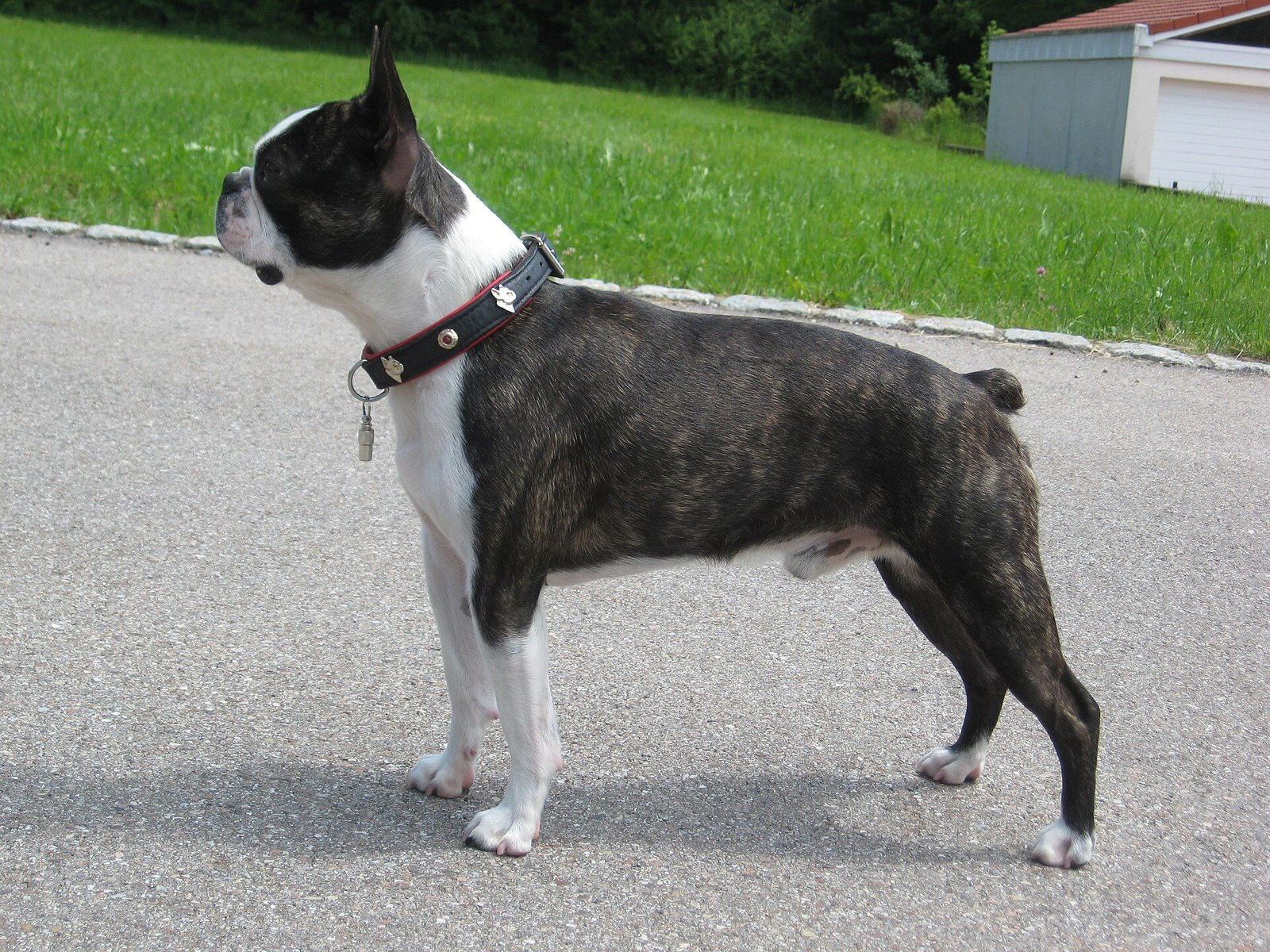
Socialization means building comfortable associations, not collecting the greatest number of greetings. Arrange experiences at a distance where the dog can watch, take a reward, and recover easily. Work with your veterinarian on appropriate puppy outings while infectious-disease protection develops. Avoid chaotic dog parks as a default teaching environment; being chased or overwhelmed does not make a worried dog resilient. For dog introductions, start with controlled, low-pressure opportunities and separate before tension builds.
A household can use a few clear rules:
- Children leave eating, sleeping, and retreating dogs alone.
- Adults supervise actively and use barriers when distracted.
- No one takes a guarded item by force; arrange safe management and professional help.
- Visitors allow the dog to approach rather than reaching into a bed.
- Growling leads to space and investigation, not punishment.
Punishing a warning can hide communication without making the dog feel safer. Breed reputation does not guarantee tolerance of children or other animals. Seek a qualified reward-based behavior professional when fear, guarding, or conflict persists.
Support alone time and different sensory needs
Teach brief separations while the dog is comfortable with you nearby, then increase difficulty gradually. Provide an appropriate resting area and begin with absences the dog can manage without distress. A camera can help identify pacing, repeated vocalizing, or inability to settle, but it is an observation tool, not treatment. If distress appears, reduce the challenge and arrange support rather than leaving the dog to panic until it becomes quiet.
For a dog with hearing loss, use consistent visual signals and reward attention. Approach within view when possible and avoid startling a sleeping dog. Hearing tests can clarify needs; shouting louder is not a training method. Keep secure boundaries because an unheard warning may not interrupt movement toward danger.
Progress is not identical at every age. Adapt goals so success means a dog that understands its world, can ask for space, and cooperates comfortably with everyday care.
Continue reading: Boston Terrier Grooming: Short Coat, Careful Eye Checks.
Sources and further reading:
- American Kennel Club: Official Standard of the Boston Terrier
- PetMD: Boston Terrier Dog Breed Health and Care
- PDSA: BOAS - breathing problems in flat-faced dogs
- PDSA: Eye ulcers (corneal ulcers) in dogs
- MSD Veterinary Manual: Deafness in Animals
Photo credits: Slash63 (CC BY-SA 4.0), Pacamah (CC BY-SA 4.0), Andreas Schlaugat (CC BY 3.0). Images resized and compressed for web display. Each image retains its linked license.


