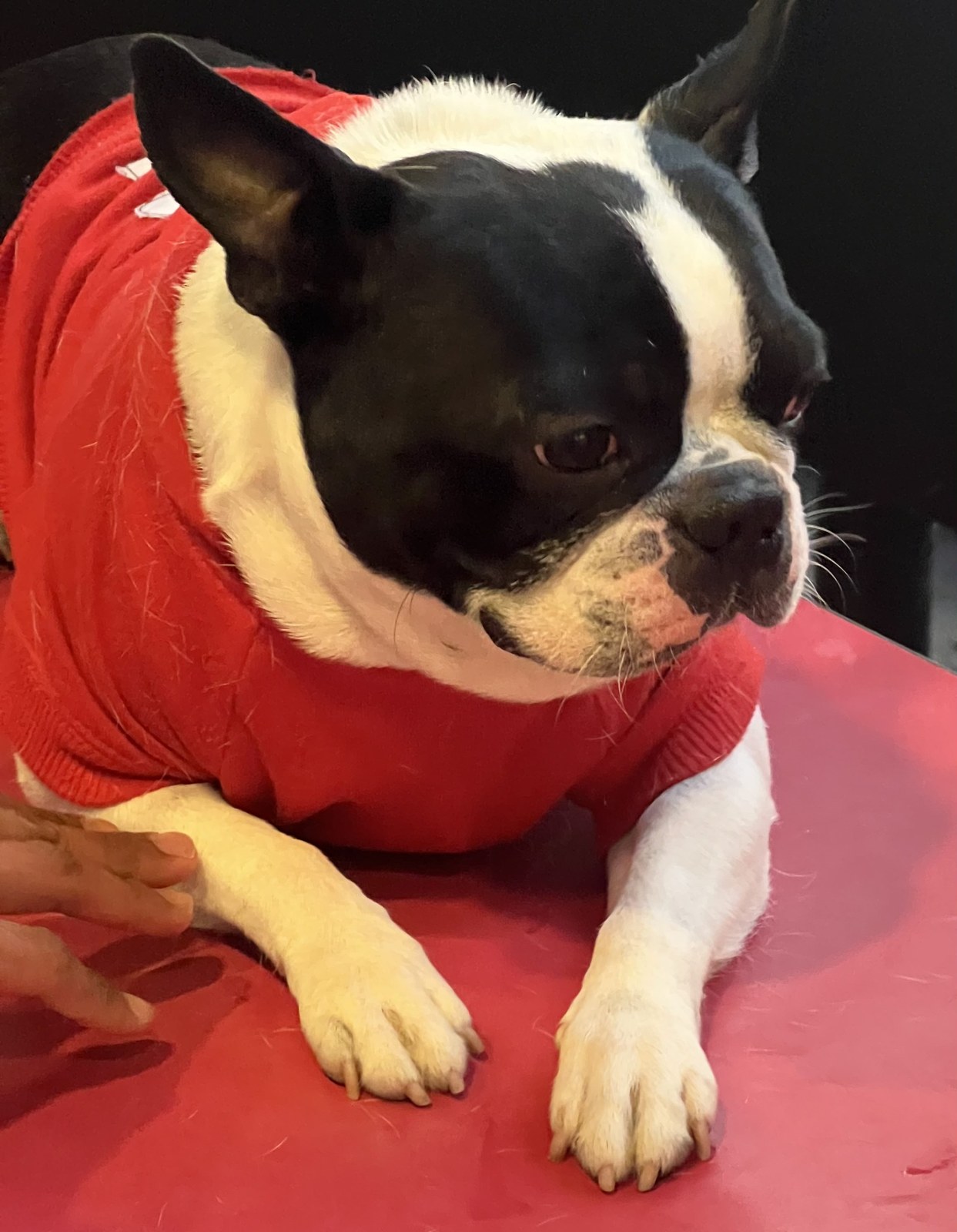
A Boston Terrier's lively interest in people can make daily care look deceptively simple. A ball, a bed, and a full bowl are not the whole plan. This short-faced companion needs a routine that protects breathing, eyes, and comfortable movement while still offering choices and enjoyable activity. Start with the individual in front of you, not an online exercise target or a picture of an unusually athletic Boston.
Establish a useful baseline before changing everything
Collect the dog's existing food details, vaccination and parasite records, medications, previous operations, and any hearing, eye, or knee screening reports. Arrange a veterinary examination and describe how the dog sleeps, walks, eats, and recovers after play. A dog that has always snorted may still have an airway problem; familiarity does not make obstruction harmless. Ask what signs should change the day's plans and where emergencies are treated after hours.
Keep the first days predictable. Use familiar food while the dog settles, provide easy toilet access, and limit the number of visitors. Observe relaxed breathing and movement without deliberately testing endurance. Note appetite, stools, eye appearance, and any skipping or hesitation on walks. These observations help distinguish an existing concern from a change after adoption. A baseline is a record for veterinary discussion, not permission to ignore an abnormal sign because it has happened before.
Make temperature control part of the home setup
Choose a resting area away from direct sun and check how the room changes through the afternoon. A cool hallway at breakfast may become warm when doors close or sunlight moves. Keep drinking water available and make sure the dog can leave a warm bed for a cooler surface. Effective cooling matters more than decorative cooling accessories; a fan alone cannot guarantee safety in an overheated room.
Arrange a backup location if cooling fails, with someone who can provide transport. Avoid parked vehicles, sunny conservatories, and outdoor confinement without reliable climate protection. On cold days, a comfortable coat may help a short-coated Boston, but remove it if the dog becomes warm and check that it does not restrict movement. There is no universal outdoor temperature that makes exercise safe for every Boston. Humidity, direct sun, airway health, age, and excitement change the risk, so use conditions and veterinary advice together.
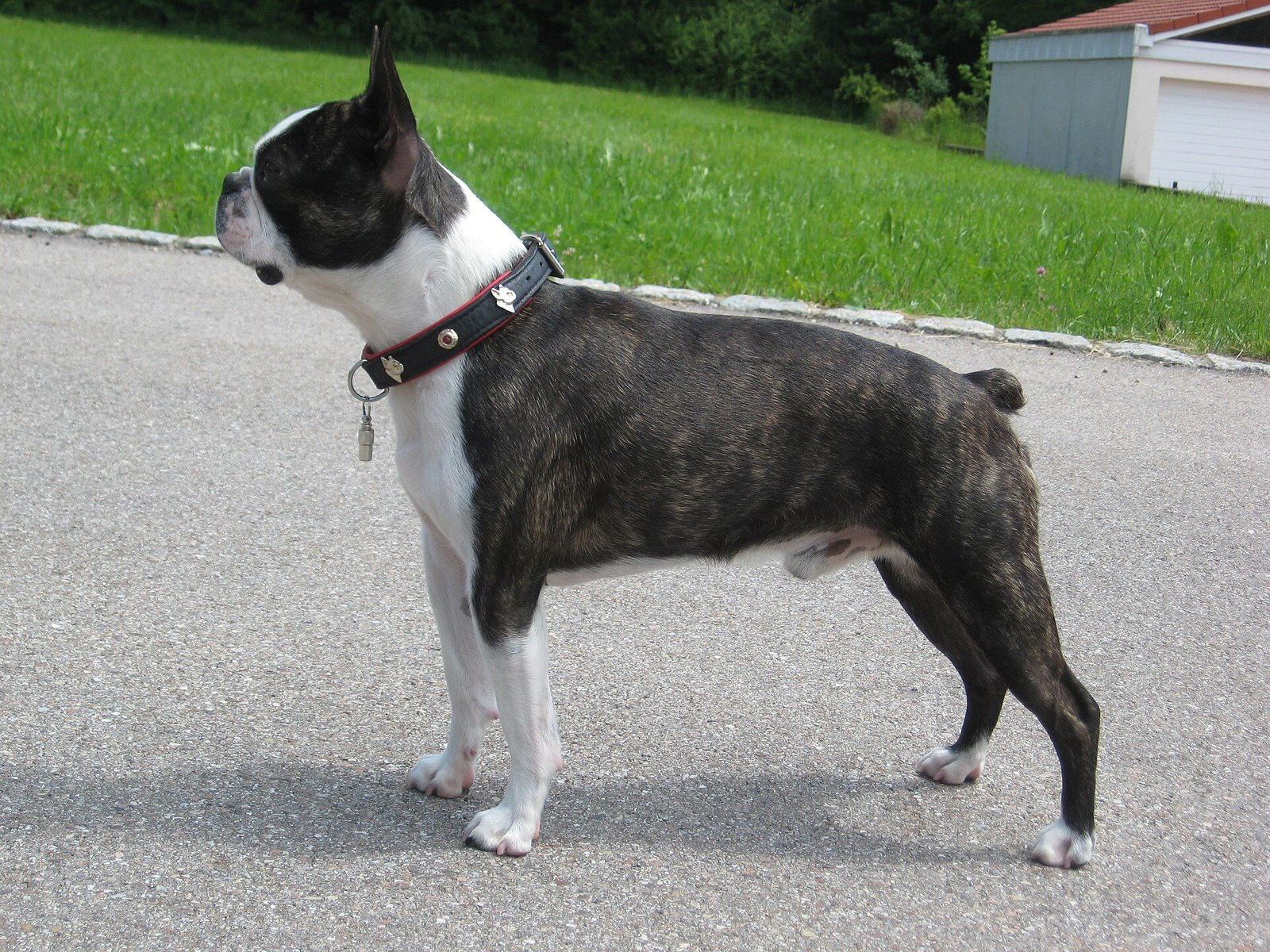
Choose movement the dog can comfortably recover from
Offer easy sniffing walks and low-impact games with pauses, using a well-fitted harness that avoids pressure on the throat. Check fit around the shoulders and under the legs rather than choosing by breed name alone. Let the route include opportunities to turn back. Puppies, older dogs, and dogs with breathing or knee problems need different plans; building stamina is not a reason to push through labored breathing.
Watch recovery as well as enthusiasm. A Boston may continue chasing a toy despite overheating or struggling, so the human must end the game. Increased noise, slowing, reluctance, or unusual effort means stopping and reassessing, with veterinary advice for abnormal breathing. Water play is not a guaranteed safer alternative. Do not throw the dog into a pool, and prevent unsupervised access to ponds or water edges. A life jacket does not remove drowning, fatigue, or respiratory risks; dry-land enrichment is a perfectly valid choice.
Pair basic care with quiet enrichment
Feed a complete life-stage-appropriate diet in measured amounts, with training rewards counted as part of intake. The breed standard's weight classes are not target weights. Ask your veterinarian to assess body condition and muscle, because extra fat can worsen airway difficulty while an apparently small dog may still carry excess fat. Keep food and water dishes clean, and provide a peaceful place to eat without competition.
A daily checklist can combine practical tasks with a few calm observations:
- Check that the eyes are open comfortably, without new redness or discharge.
- Notice appetite, drinking, toileting, and willingness to move.
- Offer a comfortable walk or indoor sniffing activity suited to conditions.
- Inspect toys and remove damaged pieces that could be swallowed.
- Allow undisturbed rest between activities rather than continuous entertainment.

Teach cooperation before care becomes urgent
Practice touching a shoulder, presenting the harness, or briefly lifting a lip, rewarding relaxed participation and ending before the dog wants to escape. Several easy repetitions are more useful than holding a struggling animal until a task is finished. For brushing, foot checks, or tooth care, use a stable nonslip surface and avoid leaning over the face. Sudden resistance to familiar handling can indicate pain, including an eye problem.
Build visitor and household routines around choice. Invite calm greetings only when the dog approaches willingly, and give it a protected bed where children do not follow. Introduce other animals gradually with physical separation available. Friendly previous behavior cannot guarantee safe future contact, especially around food, toys, or sleep. Teach children to call an adult instead of taking an object from the dog's mouth. An adult remains responsible for the interaction; a small body and cheerful reputation do not make a Boston automatically child-safe.
Prepare a response plan for changes and emergencies
Save your regular clinic and emergency service numbers where every caregiver can find them. Write down the dog's medications and important airway history without adding instructions to improvise doses. Explain that snorting or struggling is not cute or normal, and that an eye problem should not wait for the next grooming session. Squinting, cloudiness, rubbing, or sudden eye discharge requires prompt assessment because corneal injury can progress quickly.
Give a sitter a practical demonstration, not just a written feeding amount. Show how the harness fits, where the dog rests, and what a comfortable walk looks like. Good care is adaptable: choosing a quieter day when conditions change is responsible management, not a failure to provide enough exercise.
Continue reading: Boston Terrier Nutrition: Portions, Body Condition, and Calm Meals.
Sources and further reading:
- American Kennel Club: Official Standard of the Boston Terrier
- PetMD: Boston Terrier Dog Breed Health and Care
- PDSA: BOAS - breathing problems in flat-faced dogs
- PDSA: Eye ulcers (corneal ulcers) in dogs
- MSD Veterinary Manual: Deafness in Animals
Photo credits: Pacamah (CC BY-SA 4.0), Andreas Schlaugat (CC BY 3.0), Jonmills5045 (CC BY-SA 4.0). Images resized and compressed for web display. Each image retains its linked license.


