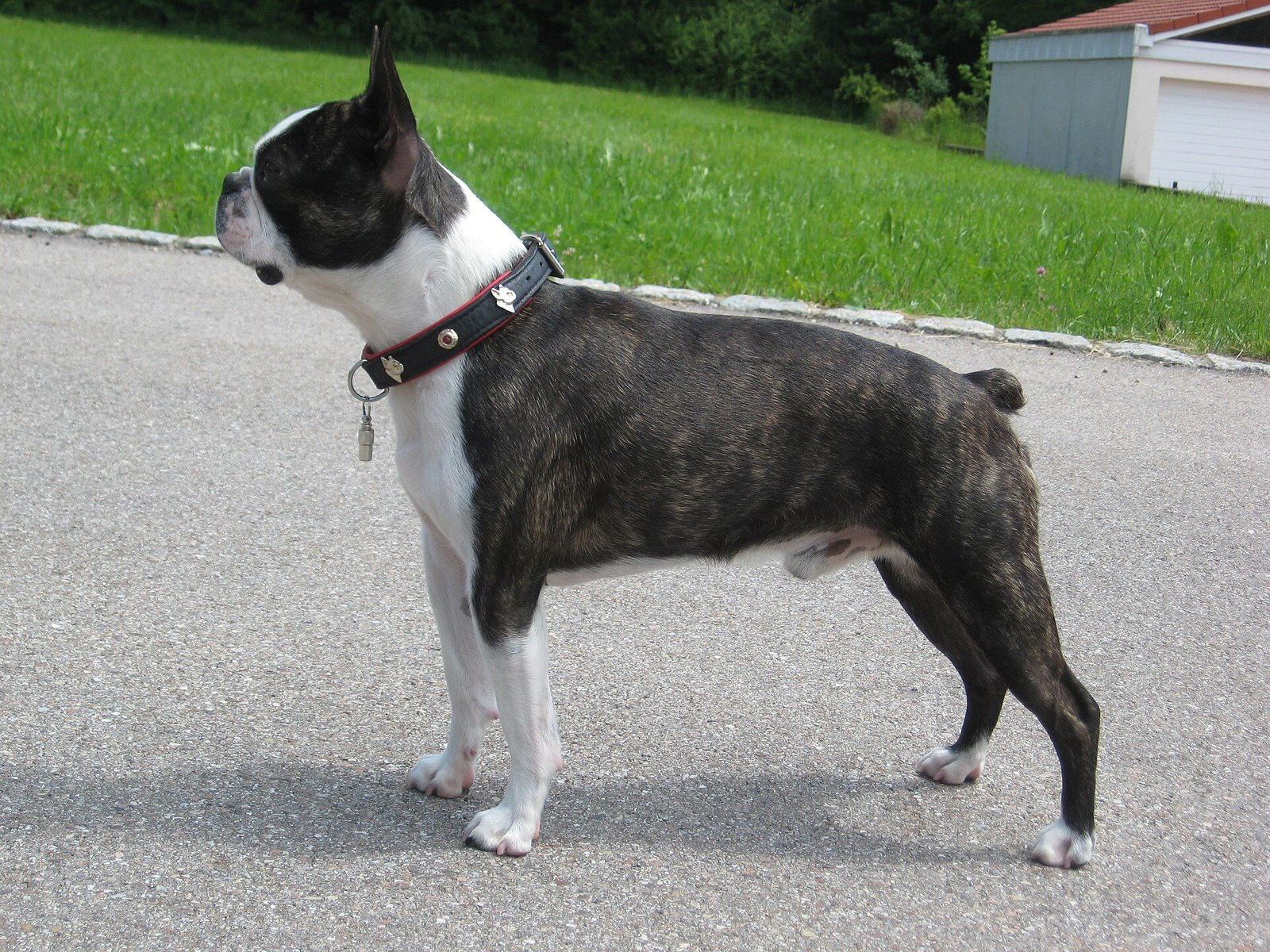
Feeding a Boston Terrier well is less about finding a special breed-branded bag and more about matching a complete diet to one dog's needs. Body condition matters particularly in a short-faced dog because extra fat can make breathing harder. That does not justify crash dieting or feeding every Boston the same amount. A useful plan combines an appropriate food, measured portions, comfortable meals, and a record of changes.
Separate breed weight descriptions from a healthy target
The AKC standard uses three weight classes: under fifteen pounds, fifteen to under twenty pounds, and twenty through twenty-five pounds. These classes apply without separate male and female weight bands, and the lightest class does not state a minimum. PetMD describes adults commonly weighing twelve to twenty-five pounds, approximately 5.4-11.3 kilograms. Neither reference tells you the correct weight for your own dog. Individuals differ in frame, muscle, growth, and medical history.
Ask your veterinarian to show you how to assess ribs, waist, abdominal outline, and muscle rather than judging from the scale alone. Record weight on the same scale where practical and look at the trend. A dog can gain fat while losing muscle, particularly with age or illness. Do not feed toward a show class. A larger-framed Boston is not automatically overweight, and a dog inside the published range can still carry more fat than is healthy.
Choose a complete diet suited to the life stage
Look for a nutritional adequacy statement, not just an attractive ingredient list. In the US, check that the food is complete and balanced for the relevant life stage through the stated AAFCO nutritional basis. In the UK, choose a product labeled complete for the appropriate life stage and ask about the manufacturer's nutritional standards. Puppy growth needs differ from adult maintenance, and a medical condition may require a veterinarian-selected diet.
A bag marketed specifically for Boston Terriers is not automatically better than another suitable complete food. Likewise, grain-free, natural, premium, or a named meat ingredient does not prove that a product matches this dog's needs. Avoid constructing a long-term menu from plain meat and vegetables without professional formulation. Home-prepared and raw plans bring nutritional and hygiene questions that need qualified advice. Do not add calcium, vitamin mixes, or joint supplements to a balanced diet merely because an advertisement describes them as essential.

Measure intake before adjusting portions
Start with the existing successful routine or your veterinarian's recommendation, using the package guide as an estimate rather than a prescription. Energy density differs between products, so the same scoop can deliver a different intake after a food change. Weighing portions makes small adjustments easier to repeat. Include everything offered by family members, walkers, and training classes; several well-intentioned handfuls can undermine an otherwise sensible plan.
For an adult, divide the daily allowance into regular meals that suit the dog's tolerance and household routine. Puppies need more frequent feeding and individual growth advice, not an adult restriction plan. If weight reduction is recommended, agree on the food, amount, monitoring, and review points with the clinic. Do not skip meals unpredictably or try to offset excess food with strenuous exercise. In a brachycephalic dog, forcing longer or hotter outings can add respiratory risk without solving the feeding problem.
Make eating calm and notice swallowing problems
Provide a quiet eating area away from children and other animals. A bowl that is stable, easy to reach, and comfortable for the dog's face is more useful than a fashionable design. If a slow feeder frustrates your Boston, causes repeated face rubbing, or makes it difficult to obtain food, choose a simpler option. Supervise new feeding toys and remove them if chewing releases pieces. Fresh water should remain available rather than being withheld to control mess.
Some short-faced dogs have feeding or regurgitation difficulties, but do not diagnose the cause at home. Describe coughing during meals, food coming back up, difficulty swallowing, or repeated gagging to your veterinarian. Changing bowl height or buying an anti-gas supplement should not replace assessment. Avoid exciting chase games around mealtimes and let the dog settle. If several dogs eat together, separate them so one cannot rush or guard another away from food; a clean communal bowl does not show who ate.
Use rewards and food changes thoughtfully
Reserve part of the normal diet for training where it works, and keep additional treats small enough that they do not displace balanced meals. Different dogs value different rewards; attention, sniffing access, or a gentle game can sometimes reward a behavior without adding food. Ask the clinic how much room the diet leaves for extras, especially during weight management or treatment of a medical condition. Everyone should know which foods are off limits.
Useful household rules include:
- Keep chocolate, grapes, raisins, alcohol, and xylitol-containing products inaccessible.
- Avoid onion or garlic-containing leftovers and heavily seasoned scraps.
- Do not offer cooked bones or hard objects that could injure teeth or be swallowed.
- Introduce a necessary diet change gradually, monitoring appetite and stools.
- Keep the original food packaging and batch details for reference.
Frequent switching can make a digestive problem harder to interpret. Persistent gas, diarrhea, itching, or vomiting deserves assessment instead of successive internet elimination diets. Food intolerance is only one possible explanation, and a diagnostic diet trial needs a controlled veterinary plan.
Know when a feeding change is a health problem
A Boston that wants food but drops it may have mouth pain; one that stops eating and becomes withdrawn may have a broader illness. Note when the change began, what was offered, and whether thirst, stools, weight, or breathing also changed. Contact your veterinarian promptly rather than waiting through repeated missed meals, particularly with a puppy, an older dog, or an animal already receiving treatment.
Bring the food label and a realistic list of treats and supplements to the appointment. There is no benefit in hiding extra snacks; accurate information helps the clinician tailor a workable plan. Good nutrition supports wellbeing, but it cannot repair every airway abnormality or guarantee freedom from eye, knee, or inherited disease.
Continue reading: Boston Terrier Health: Breathing, Eyes, Knees, and Hearing.
Sources and further reading:
- American Kennel Club: Official Standard of the Boston Terrier
- PetMD: Boston Terrier Dog Breed Health and Care
- PDSA: BOAS - breathing problems in flat-faced dogs
- PDSA: Eye ulcers (corneal ulcers) in dogs
- MSD Veterinary Manual: Deafness in Animals
Photo credits: Andreas Schlaugat (CC BY 3.0), Jonmills5045 (CC BY-SA 4.0), Slash63 (CC BY-SA 4.0). Images resized and compressed for web display. Each image retains its linked license.


