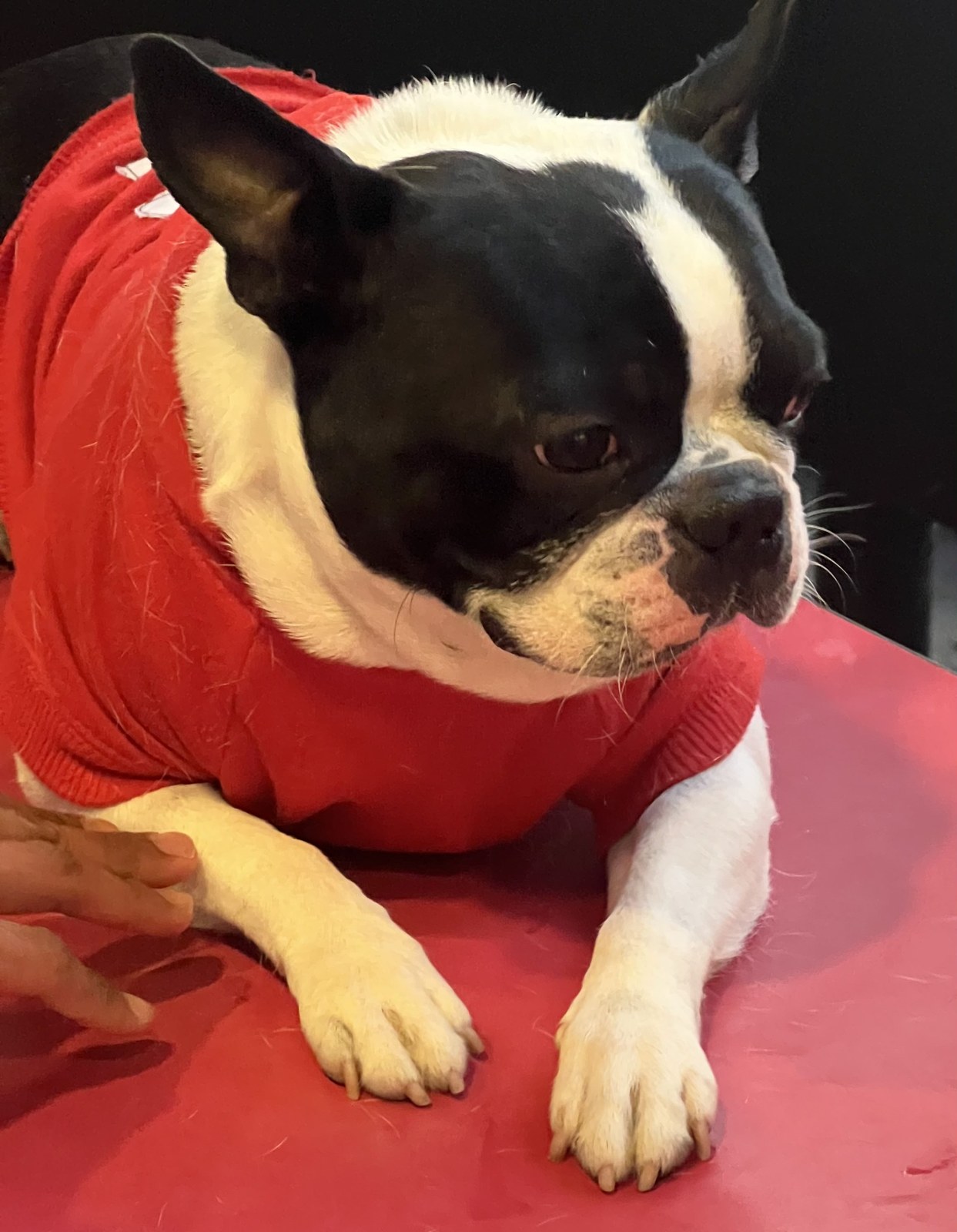
A Boston Terrier's short coat is relatively straightforward to maintain, but grooming still involves more than a quick polish. The eyes, ears, feet, skin, and mouth deserve regular attention, and handling should not make breathing harder. Think of grooming as a series of small comfort checks. You do not need to finish every task at once, and a new painful reaction should change the plan rather than lead to firmer restraint.
Prepare for cooperation instead of wrestling
Work in a cool, quiet place on a stable nonslip surface. Have tools and a few small rewards ready before inviting the dog over. Start by showing an item, touching briefly, and rewarding relaxed participation. A brush stroke or a momentary paw touch may be enough for a first session. Build gradually, keeping the dog able to move away when the task is not urgent. Avoid leaning over the face or holding the throat.
Watch breathing and posture throughout. Panting from anxiety, persistent attempts to escape, freezing, or sudden resistance means pausing and reassessing. A dog that tolerated grooming last month may now have knee pain, an ear problem, or an eye injury. Cooperation is not the same as being held still. Ask the veterinary team to demonstrate necessary handling and arrange professional support for tasks you cannot do comfortably. A salon visit should include discussion of airway history, cooling, and limits on restraint and drying.
Brush the smooth coat and bathe for a reason
Gentle brushing, often about weekly, helps remove loose hair and gives you a chance to inspect the skin. Use a soft brush or suitable grooming mitt without scraping repeatedly over one area. The short coat still sheds; it does not make the dog hypoallergenic. Watch for redness, bald patches, persistent scratching, or a new odor rather than assuming every change is routine coat turnover. Photograph a changing patch if that helps explain it at an appointment.
Bathe when genuinely dirty or according to a veterinarian's skin plan, not simply to meet an arbitrary frequent schedule. Use a suitable dog shampoo, lukewarm water, and secure footing. Keep shampoo and spray away from the face, rinse well, and towel dry gently in comfortable conditions. Do not use a hot dryer or leave a Boston unattended in a heated drying cabinet. Repeated washing, perfumes, and household products can irritate skin and do not address the cause of itching or recurrent odor.
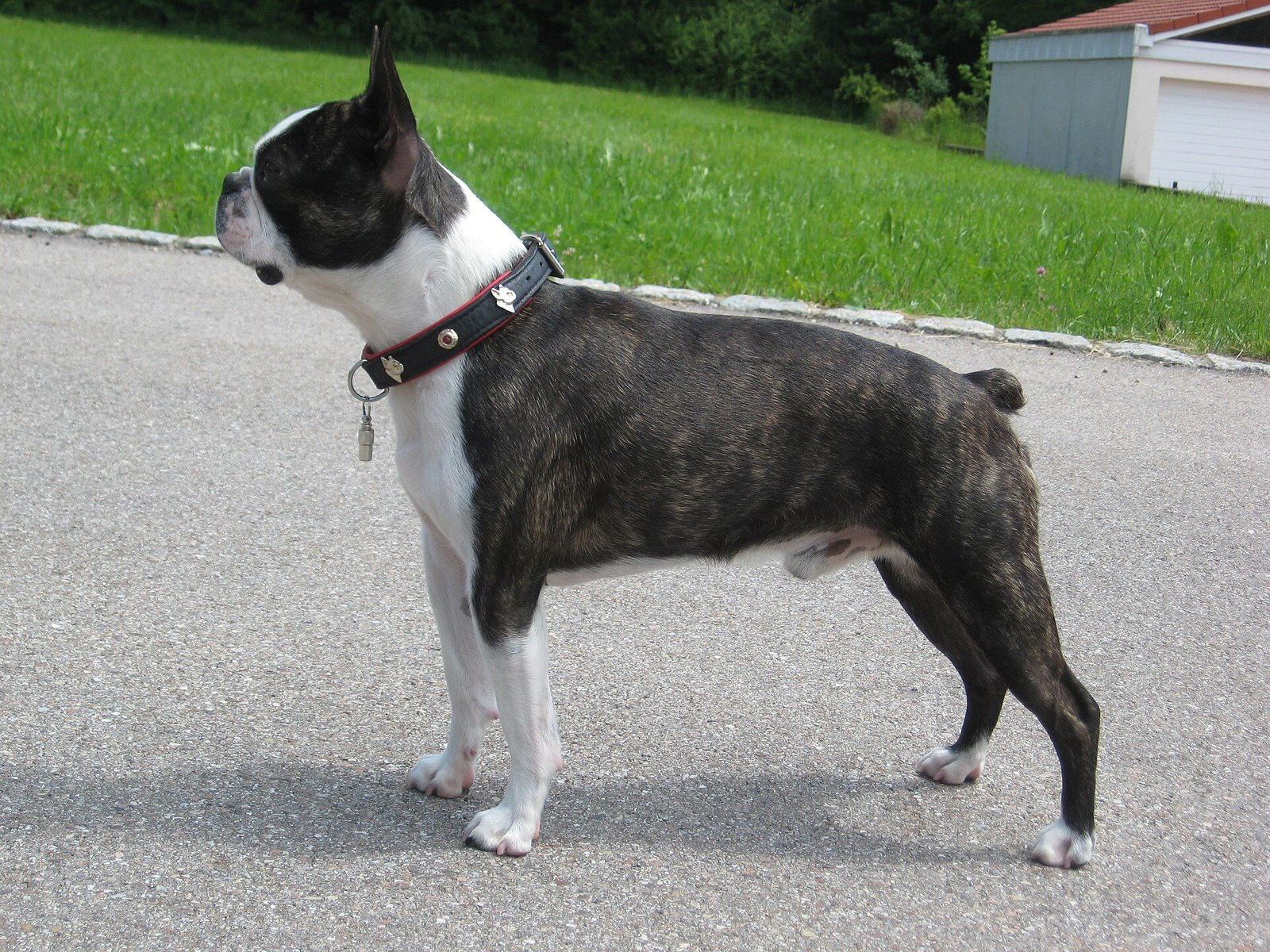
Check eyes without turning symptoms into a cleaning task
Look at both eyes in good light during calm moments. They should be held open comfortably without new redness, cloudiness, rubbing, or a sudden change in discharge. If there is a small amount of dried material on surrounding fur and the eye looks comfortable, soften and wipe the fur gently with a clean damp pad, using a separate pad for each side. Do not press on the eye, scrape crusts, or drag material across its surface.
A squinting or closed eye is different from untidy fur. Boston Terriers' prominent eyes are vulnerable to corneal injury, and painful eye disease can worsen quickly. Contact your veterinarian promptly for redness, repeated blinking, rubbing, cloudiness, or sudden tearing. Do not wait overnight or assume shampoo is the only possible explanation after a bath. Avoid tear-stain chemicals near the eye, human redness drops, or leftover medicines. If a sharp object is embedded, do not attempt to remove it; arrange urgent professional care.
Inspect ears and any skin creases individually
Check the visible outer ears for redness, discharge, smell, or discomfort. A change in head shaking, scratching, or tolerance of touch needs examination; you cannot reliably distinguish an infection, mites, allergy, or a foreign object by smell alone. Use only a veterinarian-approved cleaner when cleaning is needed and follow the demonstrated technique. Do not push cotton swabs into the canal, pour in homemade mixtures, or use leftover ear medication.
Boston Terriers do not all have identical skin folds or tail shape. Inspect any creases your dog actually has, including around the tail if relevant, without digging into tight spaces. Keep soiled external skin gently clean and dry, and report recurrent dampness, sores, pain, or odor. Avoid treating a smooth-coated dog as though it must need the same fold routine as a different breed. Hearing concerns also deserve assessment: an apparently clean ear does not prove normal hearing, and vigorous cleaning cannot correct congenital deafness.

Keep nails and feet comfortable in small steps
Inspect paws for foreign material, damaged pads, broken nails, and hair or threads caught around toes. Long nails can catch or interfere with comfortable movement, but trimming should not become a struggle. Ask a veterinary nurse or veterinarian to show where the quick lies and how much tip can safely be removed. With dark nails or an uncertain view, conservative professional help is preferable to guessing.
A simple sequence can make nail care easier:
- Reward a relaxed paw touch before holding the foot.
- Introduce the clipper or grinder without cutting.
- Support the limb in a natural, comfortable position.
- Remove only a small amount when confident about the quick.
- Finish early and return another day if needed.
Do not force a knee or shoulder into an awkward angle to reach a nail. Stop for pain or persistent bleeding and contact the clinic. A broken nail, swollen toe, or new limp may require treatment rather than a neater trim.
Build dental habits and know their limits
Begin mouth care with brief lip lifts and rewards, then introduce a suitable dog toothbrush and toothpaste gradually. Never use human toothpaste or scrape teeth with household instruments. Aim toward regular, ideally daily, brushing when the dog can cooperate comfortably, following the veterinary team's advice. Home care helps maintain oral hygiene but cannot remove every established problem or replace professional assessment.
Bad breath, dropping food, one-sided chewing, drooling, bleeding, or reluctance to have the face touched deserves examination. Hard bones and antlers can damage teeth and are not a substitute for brushing. Ask about suitable chew products for your individual dog, supervising use and removing fragments that could be swallowed. Tell the clinic about airway issues before planning dental procedures.
The goal is comfortable maintenance, not a flawless appearance. Short, trusting sessions help you notice changes early while keeping ordinary care manageable for both of you.
Continue reading: Living With a Boston Terrier: Family, Work, Travel, and Change.
Sources and further reading:
- American Kennel Club: Official Standard of the Boston Terrier
- PetMD: Boston Terrier Dog Breed Health and Care
- PDSA: BOAS - breathing problems in flat-faced dogs
- PDSA: Eye ulcers (corneal ulcers) in dogs
- MSD Veterinary Manual: Deafness in Animals
Photo credits: Pacamah (CC BY-SA 4.0), Andreas Schlaugat (CC BY 3.0), Jonmills5045 (CC BY-SA 4.0). Images resized and compressed for web display. Each image retains its linked license.


