
Knowing a breed's health concerns should help you respond thoughtfully, not make you diagnose every symptom from a checklist. Boston Terriers have important respiratory, eye, joint, and hearing considerations, but an individual may have some, none, or unrelated illnesses. Screening records are useful evidence, not lifetime guarantees. The most valuable owner skills are recognizing a change, judging urgency with a veterinary team, and describing what actually happened.
Treat noisy breathing as a welfare concern
Brachycephalic obstructive airway syndrome, often shortened to BOAS, involves restricted airflow associated with short-faced anatomy. Narrow nostrils and tissues within the upper airway can contribute, and several abnormalities may occur together. Persistent snorting, snoring, noisy breathing at rest or mild activity, poor exercise tolerance, and disturbed sleep warrant assessment. Struggling to breathe is not cute, normal, or something to train through. A dog that has always sounded noisy still deserves help.
Tell your veterinarian about sleep, meals, activity, and recovery, and provide a short video if recording does not delay care. Appearance alone cannot establish the severity of airway disease. An examination and sometimes further airway assessment are needed to guide management. Keeping a lean body condition and avoiding heat or overexertion can help, but they do not remove an anatomical obstruction. Some dogs need surgery; suitability, likely benefit, anesthetic planning, and ongoing limitations require an individual clinical discussion rather than a promise of a complete cure.
Recognize heat and respiratory emergencies early
A Boston may become dangerously hot during play, transport, or excitement, not only during a long summer walk. Humidity and limited airflow can increase the burden, while extra body fat can worsen breathing. Plan cooler outings and accessible rest, and stop before exhaustion. Enthusiasm is not a reliable safety signal: a dog may keep chasing a ball while its ability to breathe and cool is deteriorating.
Severe or suddenly worsening effort, blue or gray gums, weakness, disorientation, or collapse needs immediate emergency veterinary care. Stop activity, move to a cooler environment, and call the clinic for cooling and transport instructions. Do not delay departure while trying to collect a perfect temperature reading. Avoid forcing fluids or giving home medicines to a distressed animal. Even if signs improve after moving indoors, contact the veterinarian because heat illness and airway crises can have consequences that are not visible from the outside.
Act promptly when an eye becomes painful
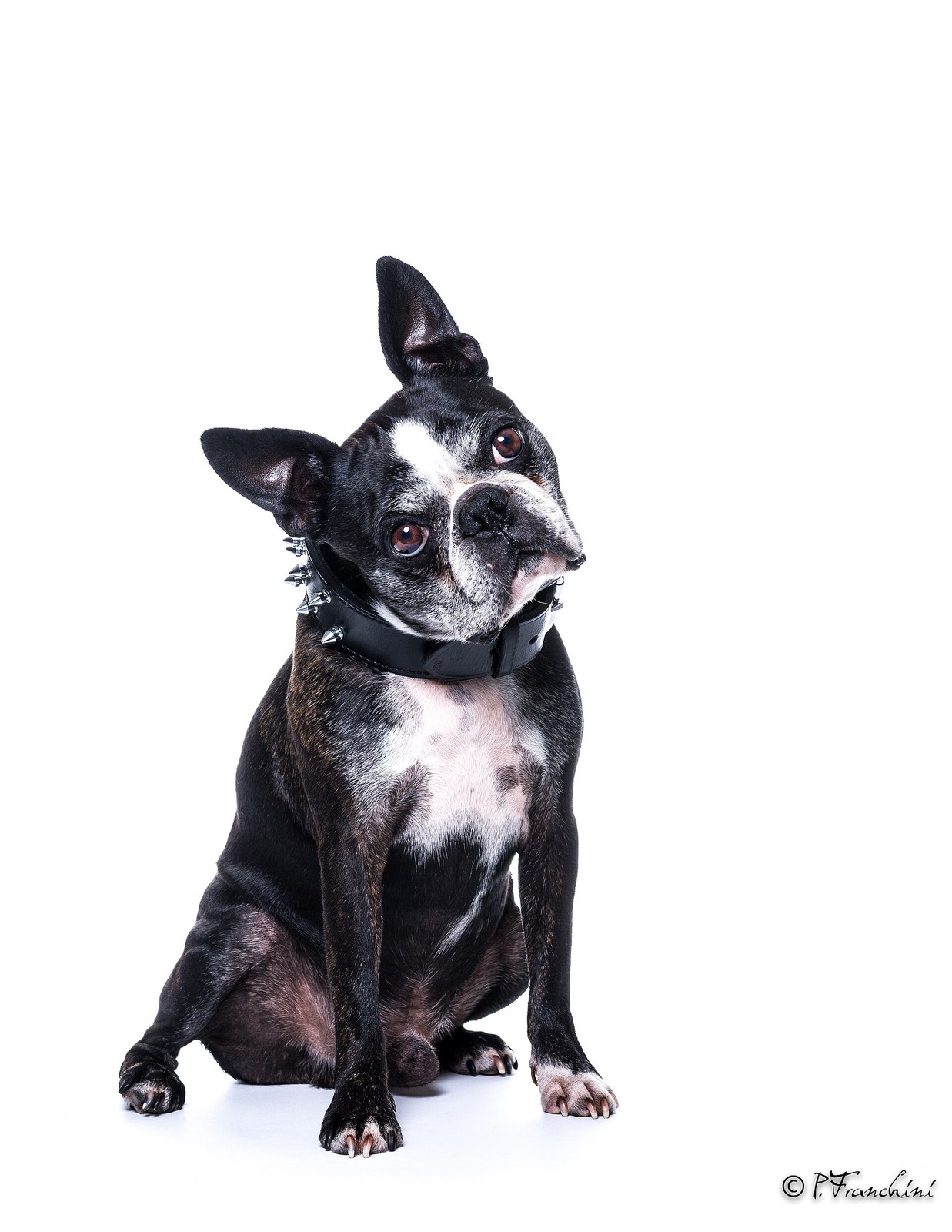
The Boston's prominent eyes are vulnerable to trauma and corneal ulceration. The cornea is the clear surface at the front of the eye; an injury there can be extremely painful and threaten vision. Squinting, keeping an eye closed, blinking repeatedly, rubbing, redness, sudden tearing or discharge, and cloudiness all deserve prompt assessment. Do not wait overnight to see whether a presumed scratch settles, especially after contact with a branch, claw, or sharp object.
Other problems, including dry eye, cataracts, and glaucoma, can also occur, and their treatments differ. A cloudy eye cannot be diagnosed from a photograph alone. A veterinarian may use specific eye tests to identify surface damage and other disease. Prevent rubbing as safely as you can while getting advice, without pressing on the eye or attempting to remove an embedded object. Do not use leftover drops, human redness treatments, or unprescribed ointments. A medicine appropriate for a previous episode may be inappropriate for the current problem.
Investigate skipping and altered movement
Patellar luxation means that the kneecap moves out of its normal position. Affected dogs may briefly skip on a hind leg, hold it up, or show more persistent lameness. Some changes are intermittent, but that does not establish that they are painless or harmless. Other knee, hip, foot, and neurological problems can look similar. Record what you notice and arrange an examination rather than labeling every hopping step a Boston quirk.
Ask about patellar examination and any existing screening reports when choosing a puppy or reviewing an adult's history. Management depends on findings, symptoms, and the individual; not every case needs the same treatment. At home, comfortable nonslip routes and sensible body condition support mobility, while repeated high jumps or forced running may be unsuitable. Do not manipulate the kneecap back into place yourself. Sudden severe pain, swelling, or inability to bear weight needs prompt veterinary attention rather than an online exercise program or borrowed pain medication.
Understand hearing and eye screening records
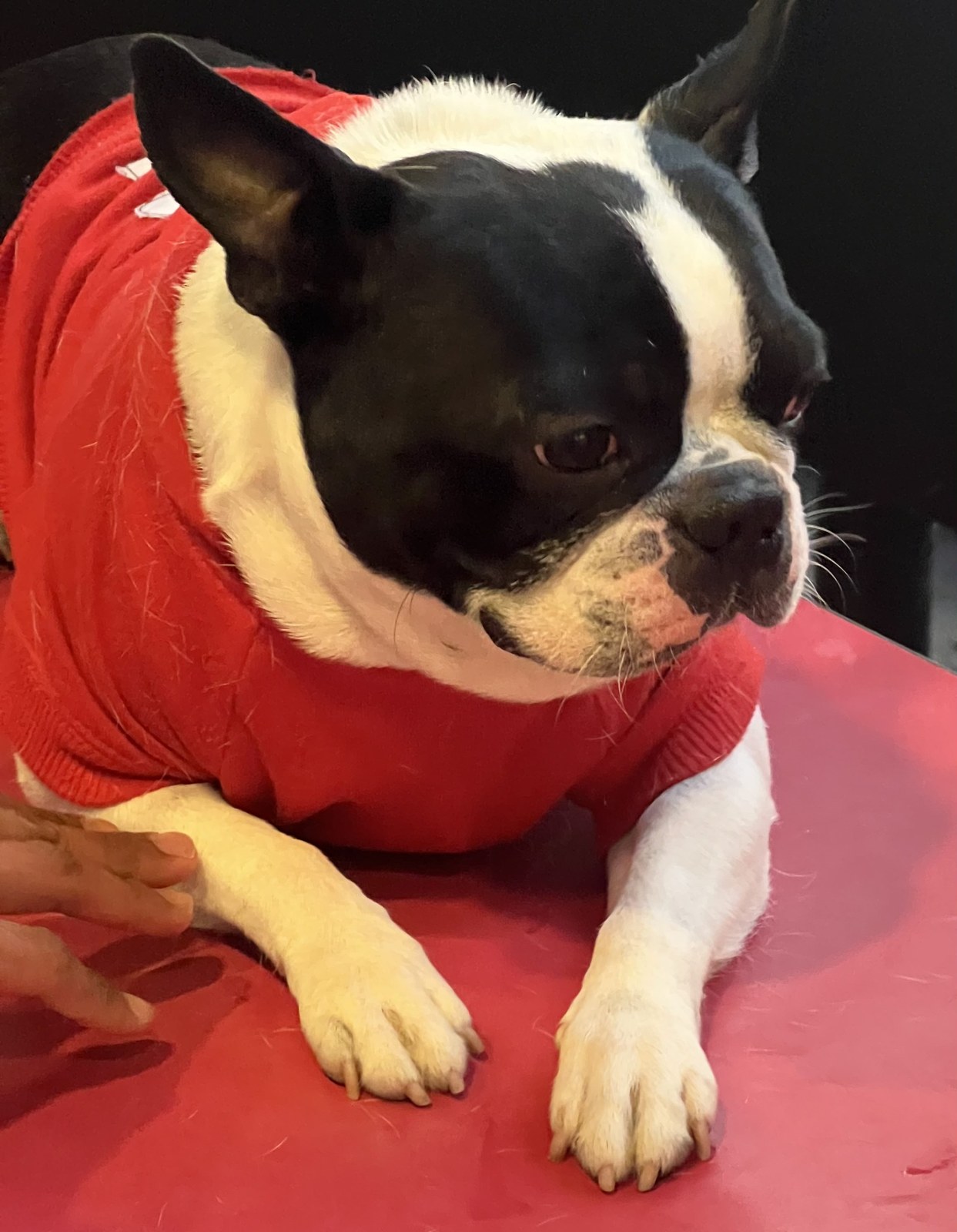
Boston Terriers are among breeds affected by congenital deafness. A dog hearing in one ear may respond to voices or household sounds, so clapping behind it cannot reliably prove normal hearing in both ears. BAER, brainstem auditory evoked response testing, objectively records auditory responses and can assess each ear. Ask for the actual report, linked to the dog's identity, and discuss what the result means. Later hearing changes can have other causes and still need investigation.
Specialist eye examinations and relevant hereditary-cataract DNA testing provide different kinds of information. An eye examination assesses findings at that time; a DNA test addresses the particular tested variant, not every cause of cataracts or every eye disease. Useful questions for a breeder or rescue include:
- Which dog does each report identify?
- What test was performed, when, and by whom?
- Are the full results available, not just a claim of being health checked?
- What findings or family history need veterinary discussion?
Screening reduces uncertainty but does not guarantee unaffected offspring. Coat pattern, eye color, or a polished pedigree document cannot replace medical evidence.
Build prevention around the individual, not a checklist
Bring previous records to routine appointments and discuss vaccinations, parasites, dental care, body condition, and examination frequency based on age, region, travel, and medical history. Tell the team about known airway issues before any procedure, including dental treatment. Ask what changes would justify an earlier review rather than waiting automatically for the next scheduled visit. A preventive plan should evolve with the dog.
Health screening is not a moral score for owners or a guarantee that careful care prevents every disease. The aim is comfortable daily life and timely treatment. A Boston that needs additional support can still have meaningful activities and relationships, but symptoms should not be minimized to protect a cheerful breed image.
Continue reading: Boston Terrier Training: Calm Skills Without Pressure.
Sources and further reading:
- American Kennel Club: Official Standard of the Boston Terrier
- PetMD: Boston Terrier Dog Breed Health and Care
- PDSA: BOAS - breathing problems in flat-faced dogs
- PDSA: Eye ulcers (corneal ulcers) in dogs
- MSD Veterinary Manual: Deafness in Animals
Photo credits: Jonmills5045 (CC BY-SA 4.0), Slash63 (CC BY-SA 4.0), Pacamah (CC BY-SA 4.0). Images resized and compressed for web display. Each image retains its linked license.


