Green-Cheeked Conure Care: Complete Guide for Owners
Your complete guide to green-cheeked conure care — cage setup, daily routine, socialization, and health tips for the cuddliest small parrot.
Read article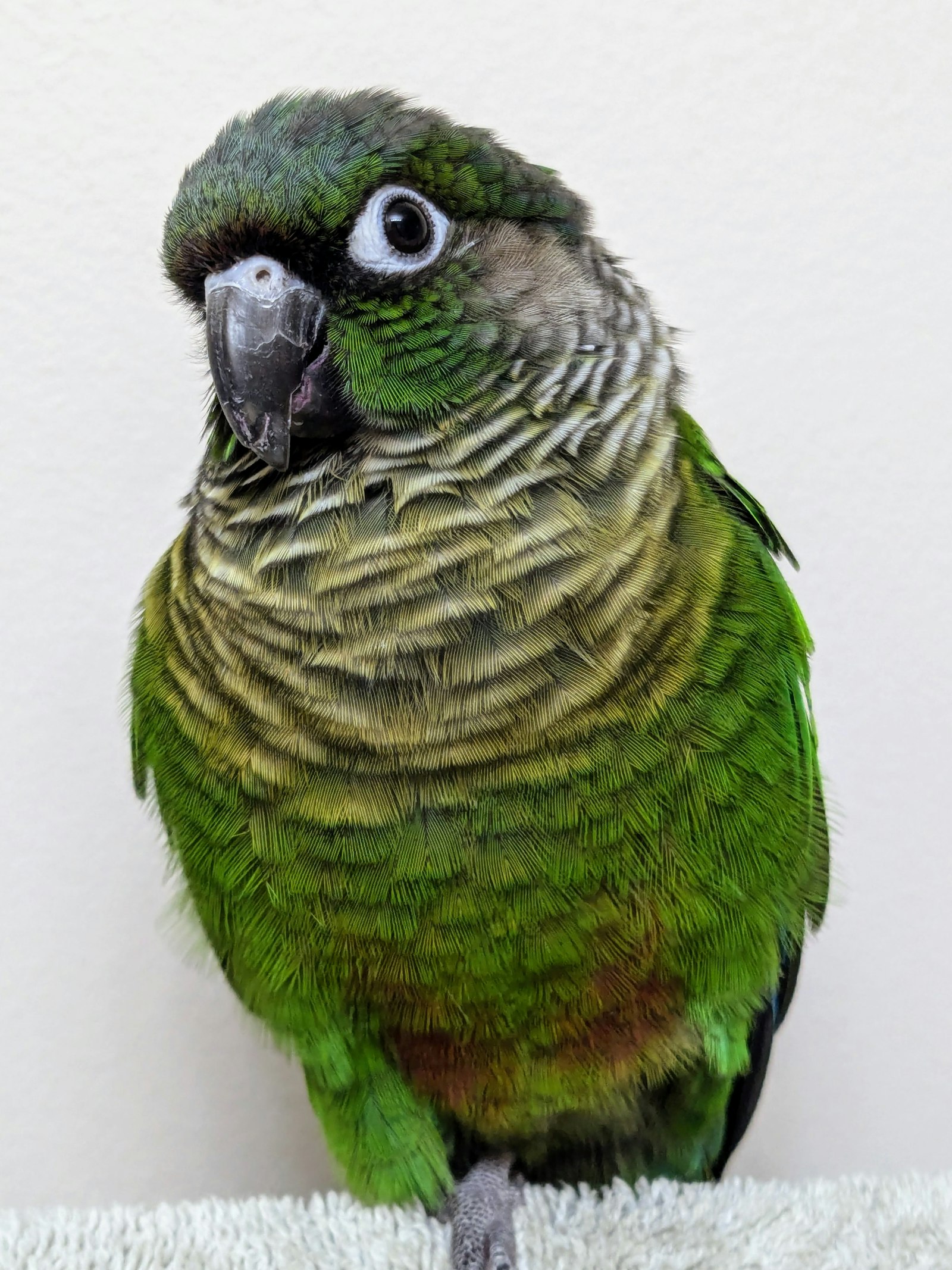
Pyrrhura molinae
The clown of the parrot world — tiny, cuddly, and endlessly entertaining.
Deep Dive
The Green-Cheeked Conure (Pyrrhura molinae) is native to the forests and woodlands of South America, ranging across parts of Brazil, Bolivia, Paraguay, and Argentina. They inhabit dense forest canopies, forest edges, and cleared areas, always in flocks of 10-20 birds. Their green plumage provides excellent camouflage among the leaves.
In the wild, Green-Cheeked Conures are highly social flock birds. They forage together, roost together, and groom each other extensively. Their social nature is the foundation of their behavior as pets — they crave companionship and interaction above all else.
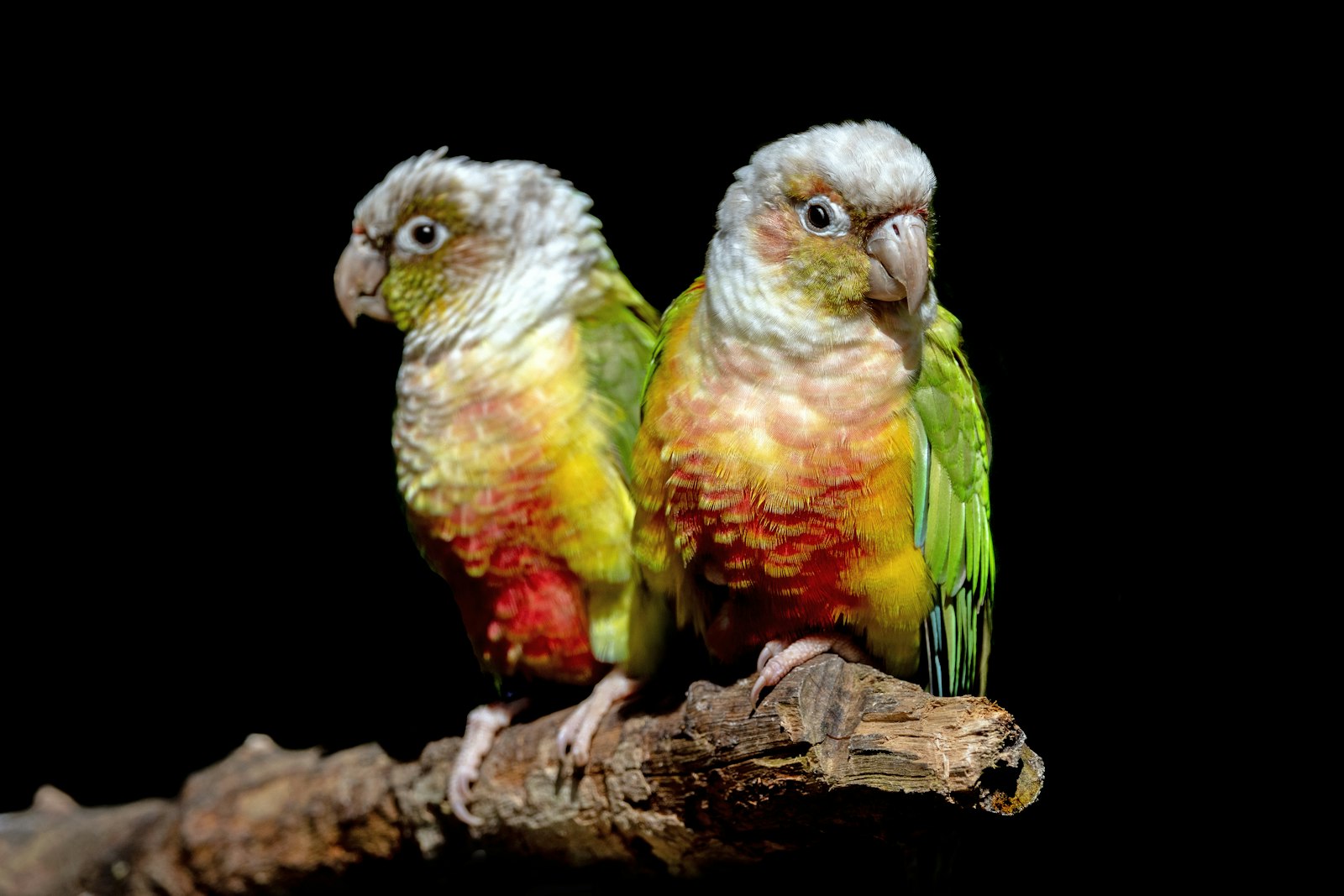
Green-Cheeked Conures were first established in aviculture in the 1940s but did not become widely popular until the 1990s. Their rise in popularity was driven by their compact size, relatively quiet voice (compared to larger parrots), and exceptionally affectionate personality. Breeders developed several color mutations including Turquoise (blue-green tones), Cinnamon (warm brown tones), Yellow-Sided (bright yellow flanks), Pineapple (a combination of yellow-sided and cinnamon), and Edmund (a striking grey mutation).
Today, Green-Cheeked Conures are among the most popular small pet parrots worldwide, beloved for their clownish personality, cuddly nature, and remarkable intelligence packed into a tiny 10-inch package.
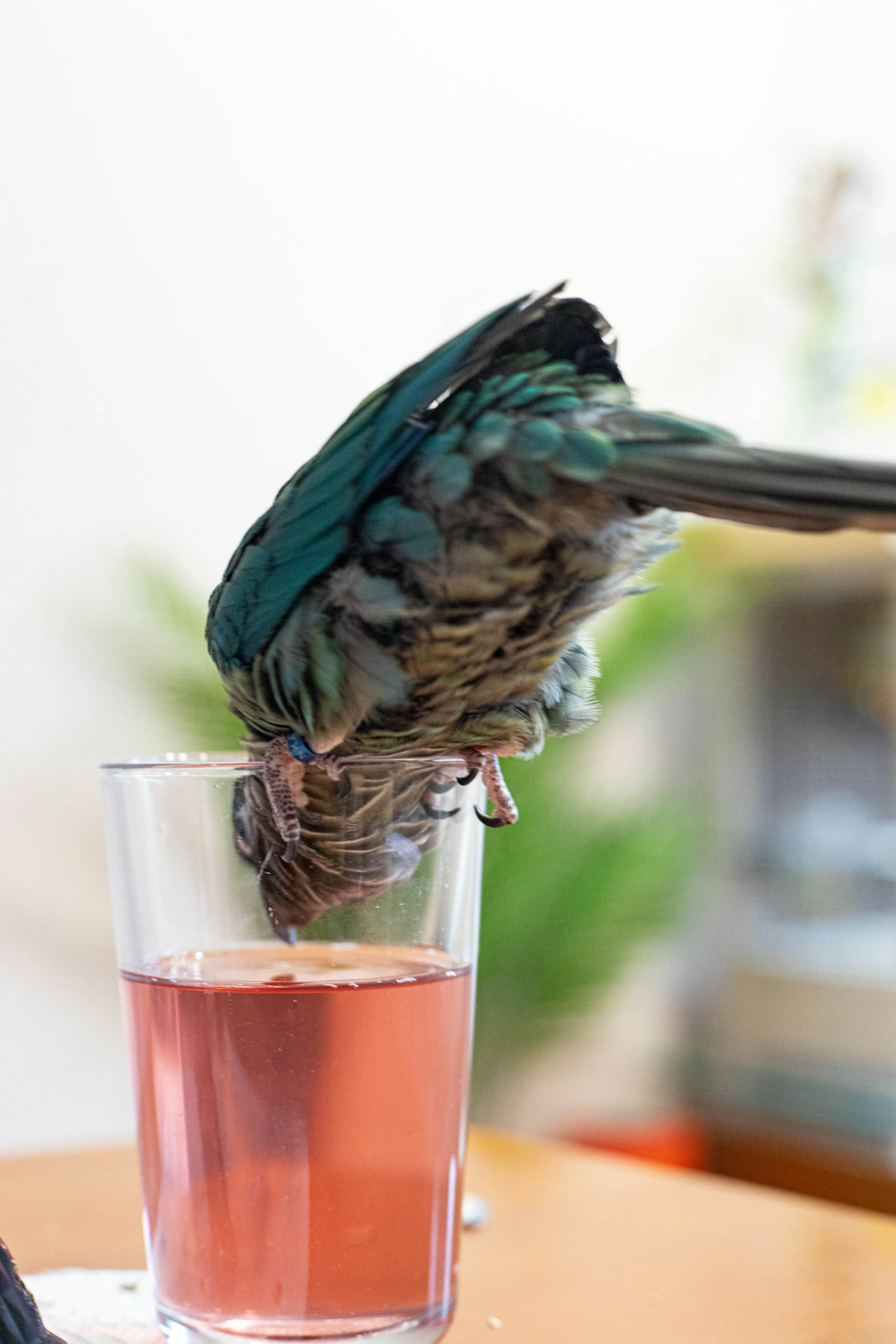
The Green-Cheeked Conure is often called the "clown of the parrot world" — and for good reason. These small birds are endlessly entertaining, mischievous, and surprisingly affectionate. They combine the intelligence of a larger parrot with a playful, silly personality that keeps their owners laughing daily.
What sets Green-Cheeked Conures apart from other small parrots is their extraordinary affectionate nature. They are famously cuddly — many GCCs love to snuggle against their owner's neck, tuck their head for scratches, and hang upside down from clothing. This "velcro bird" tendency makes them one of the most bond-oriented small parrots available.
Green-Cheeked Conures are highly intelligent and trainable. They can learn to step up, perform tricks, talk (some individuals learn 10-20 words), and even play simple games. Their intelligence means they need constant mental stimulation — without it, they become bored, destructive, and noisy.
They are mischievous and curious. GCCs love to explore, chew, climb, and get into everything. They will open cage latches, steal food from your plate, and hide in unexpected places. This curiosity makes them entertaining but also requires constant supervision during out-of-cage time.
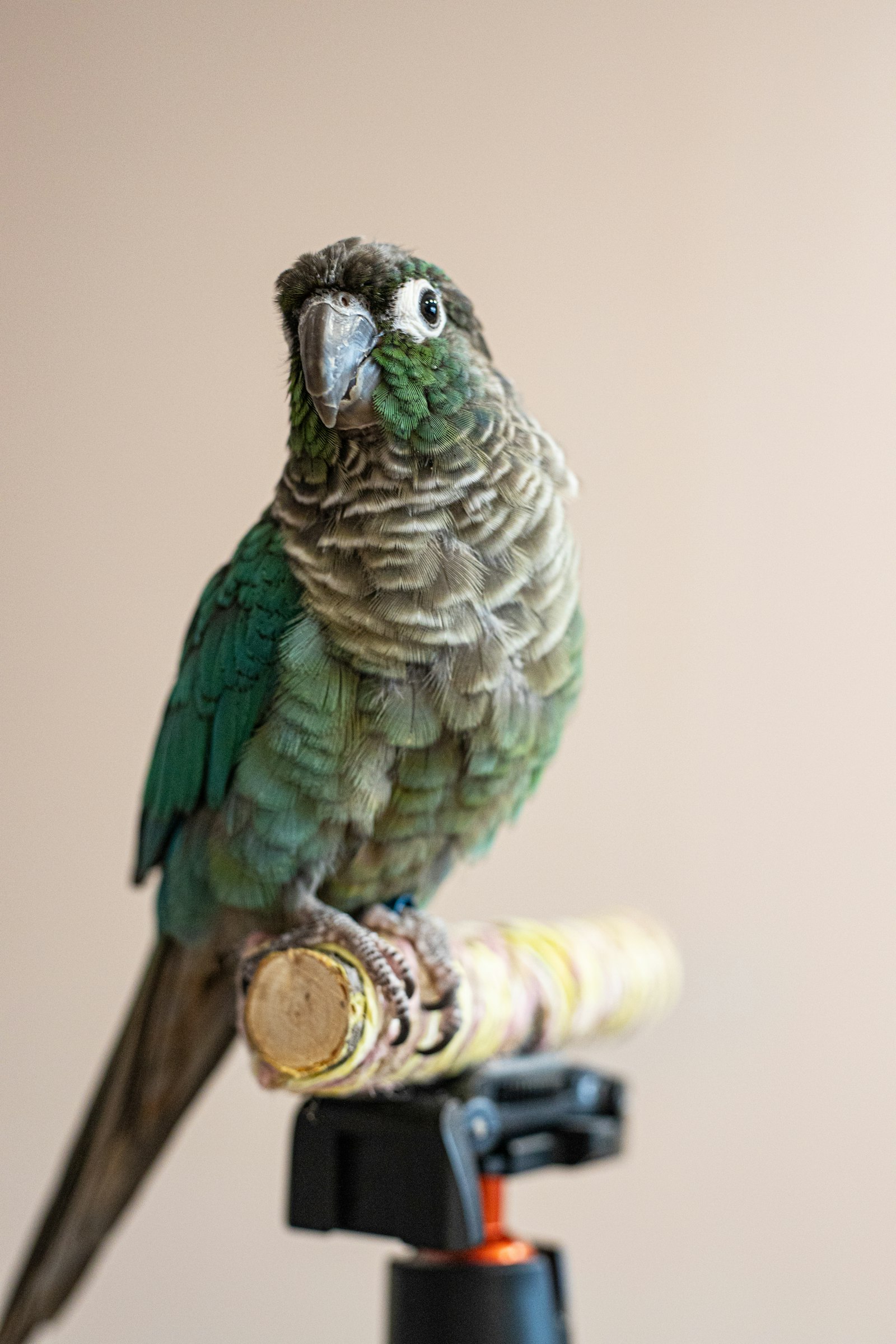
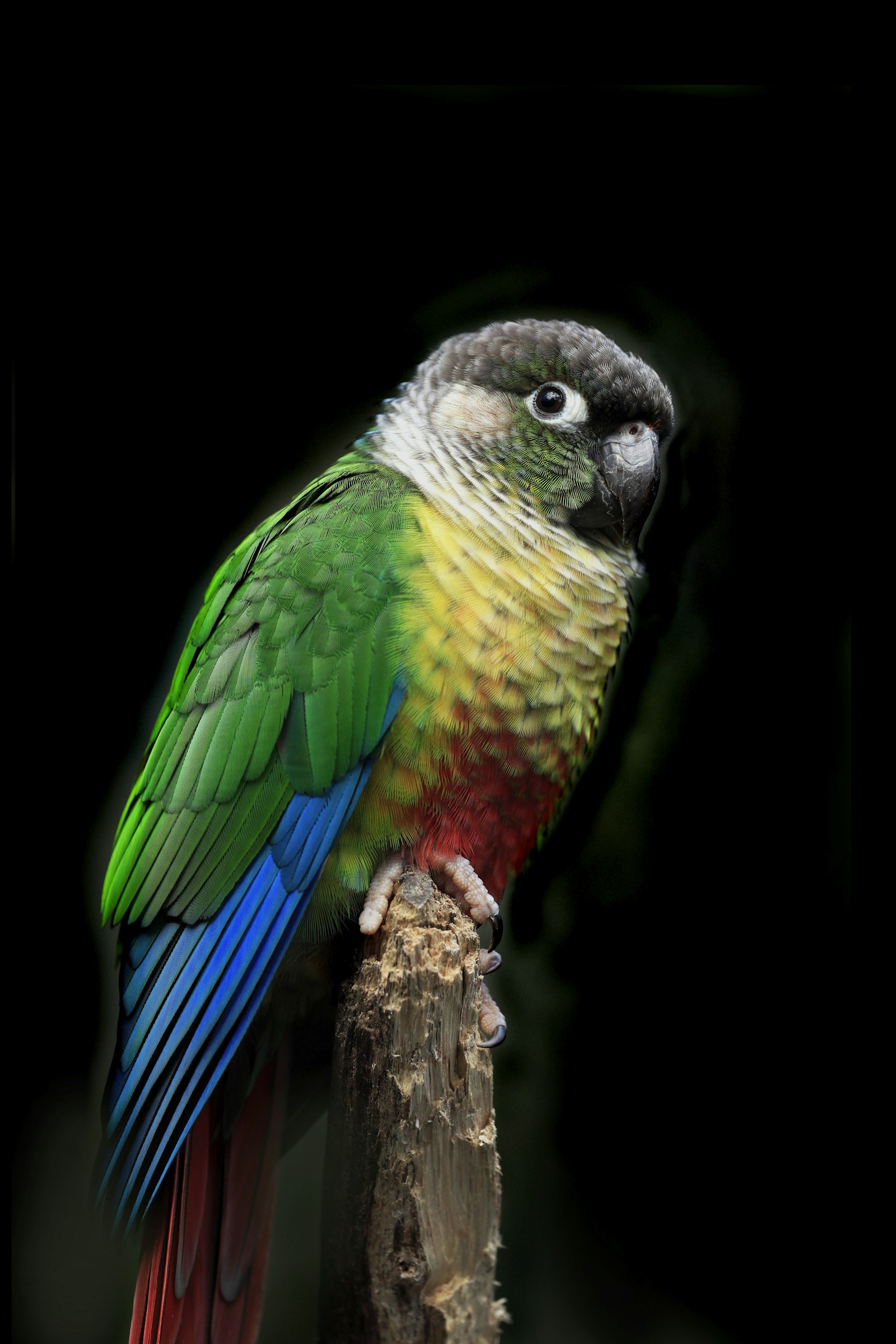
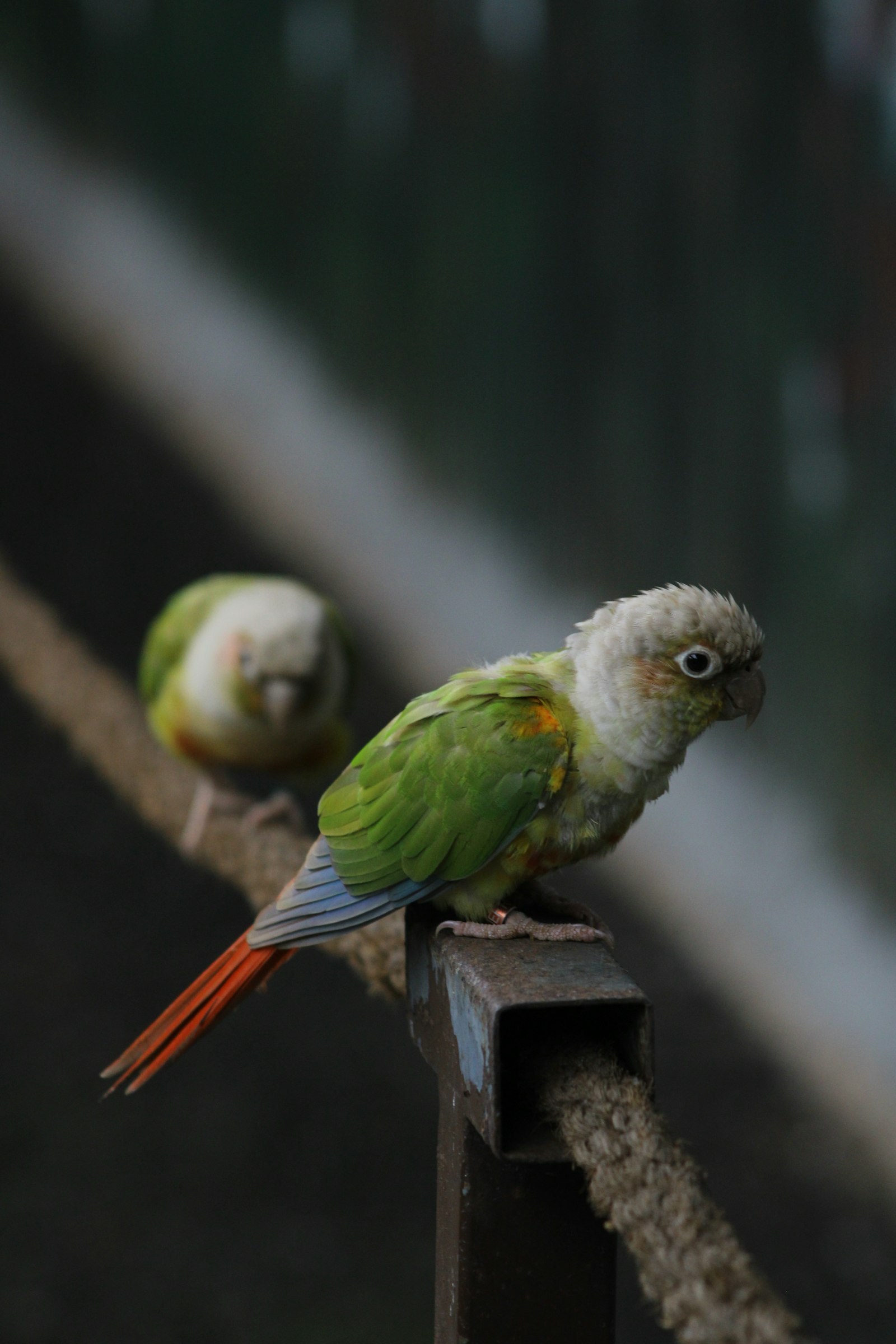
The Green-Cheeked Conure is a small, compact parrot measuring approximately 10 inches from head to tail and weighing 2-3 ounces. They have a streamlined body, long tail, and the classic conure expression — alert, bright-eyed, and always ready for adventure.
The wild-type (normal green) GCC has a predominantly olive-green body, grey breast, red belly patch, green cheeks with subtle blue barring, and a long maroon tail. Their beak is small but strong — horn-colored with a dark tip.
Captive breeding has produced stunning color mutations:
All mutations retain the characteristic long tail, compact body, and bright, alert expression. Their plumage is sleek and close-lying, giving them a streamlined appearance in flight.
Photo credits: @anna_khromova (Unsplash License), @nionila (Unsplash License), @nionila (Unsplash License), @davidclode (Unsplash License), @davidclode (Unsplash License), @abeyjohnpramod (Unsplash License)
Living with a Green-Cheeked Conure is a dynamic, entertaining, and deeply bonding experience. These small parrots are full of personality and require committed care, socialization, and enrichment.
GCCs need a spacious cage — minimum 24x18x24 inches — with multiple perches, toys, and enrichment items. They are active climbers and need horizontal bar spacing. Provide 4-6 toys rotated weekly to prevent boredom.
Daily care includes fresh food and water, cage liner change, and 3-4 hours of supervised out-of-cage time. GCCs are very active and need more exercise time than many other small parrots. They eat a pellet-based diet (60-70%) supplemented with fresh vegetables, moderate fruit, and small amounts of seeds.
GCCs are relatively quiet compared to larger parrots. Their contact call is a rapid chirping that is not as piercing as sun conures or other conure species. This makes them suitable for apartment living (with consideration for neighbors).
Important considerations: GCCs are extremely social and need 3-4 hours of daily interaction. They are not suitable for people who are away from home for long periods. Their lifespan of 15-30 years means a very long-term commitment. They can be nippy during adolescence but typically mellow with age and consistent training.
At a Glance
Ownership Guide
Provide a spacious cage (minimum 24x18x24 inches) with horizontal bars for climbing. Allow 3-4 hours of supervised out-of-cage time daily. GCCs are very active and need more exercise than most small parrots. Provide a play gym and foraging opportunities.
Pellet-based diet (60-70%) supplemented with fresh vegetables (kale, broccoli, carrot), moderate fruit, and small amounts of seed mix. Always provide fresh water and a cuttlebone. Avoid avocado, chocolate, caffeine, and high-salt foods.
Offer a shallow bath dish or mist shower 2-3 times weekly. Keep nails trimmed with natural branch perches. Wing clipping is optional — consult your avian vet. GCCs produce minimal powder down.
GCCs are highly trainable using positive reinforcement. Teach step-up, tricks, and target training using millet spray and small treats. Keep sessions short (5-10 minutes). Some GCCs can learn to talk — repeat simple words consistently.
GCCs need 3-4 hours of daily interaction. They are velcro birds who want to be physically close to their owner. Provide head scratches, shoulder time, and interactive play. Consider a companion bird if you are away frequently.
Annual wellness exams with an avian veterinarian. Monitor for feather plucking, proventricular dilation disease (PDD), and aspergillosis. Maintain a balanced diet and healthy weight. Signs of illness include fluffed feathers, discharge, lethargy, and weight loss.
Wellness
PDD (also known as Macaw Wasting Disease) is a viral disease that affects the digestive and nervous systems. Symptoms include weight loss despite eating, regurgitation, and neurological signs. There is no cure — management focuses on supportive care and stress reduction.
GCCs can develop feather plucking due to boredom, stress, lack of socialization, or medical issues. Provide ample enrichment, toys, and social interaction. Address underlying causes and consult an avian vet.
Aspergillosis is a fungal respiratory infection caused by Aspergillus spores. Symptoms include labored breathing, lethargy, and nasal discharge. Prevention focuses on clean environment, good ventilation, and avoiding mold exposure.
Young GCCs (6-18 months) often go through a "bluffing" phase where they become aggressive and bite frequently. This is normal developmental behavior. Stay calm, do not react, and continue gentle handling. The phase typically passes with consistent, patient training.
GCCs can live 15-30 years with proper care — one of the longest lifespans among small parrots. They are a very long-term commitment but reward you with decades of cuddly, entertaining companionship.
Green-Cheeked Conures are relatively quiet compared to larger parrots and other conure species. Their contact call is a rapid chirping that is not as piercing. This makes them suitable for apartment living with consideration for neighbors.
GCCs are widely considered the most cuddly and affectionate small parrot. Their velcro-bird nature, clownish personality, and intelligence make them exceptional companions for dedicated bird enthusiasts.
Further Reading
Your complete guide to green-cheeked conure care — cage setup, daily routine, socialization, and health tips for the cuddliest small parrot.
Read articleLearn the ideal diet for your green-cheeked conure — pellet-based nutrition, fresh vegetables, safe fruits, and foods to avoid for a healthy parrot.
Read articleUnderstand the health risks facing green-cheeked conures — from PDD and feather plucking to aspergillosis — and learn prevention strategies.
Read articleDiscover how to train your green-cheeked conure — step-up commands, trick training, talking ability, and managing nipping behavior.
Read articleComplete guide to green-cheeked conure grooming — bathing techniques, nail trimming, feather maintenance, and beak care tips.
Read articleDiscover what daily life with a green-cheeked conure is really like — from their cuddly nature to care routines, the joys of these clownish parrots.
Read articleYou May Also Like