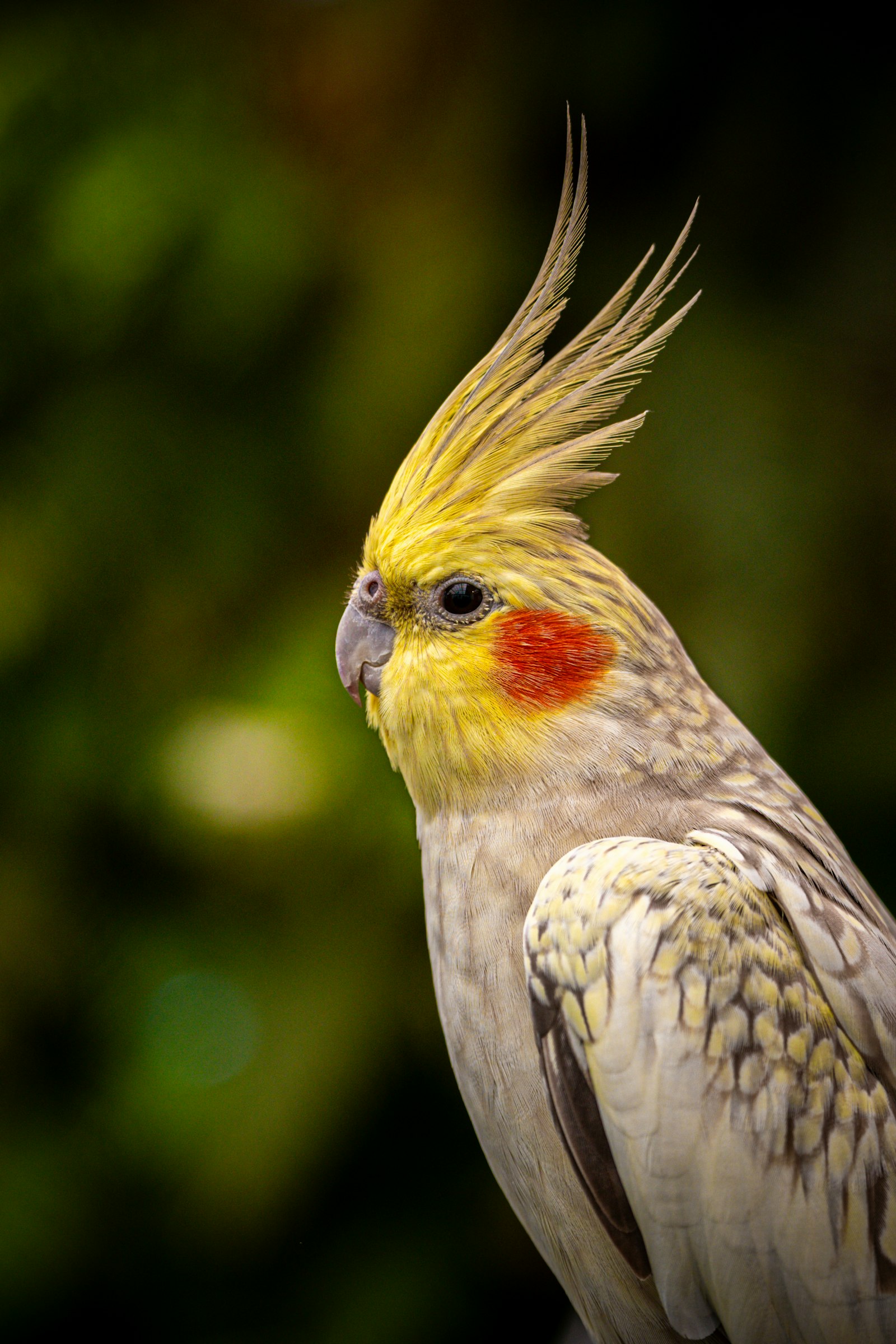
The Cockatiel is one of the most trainable pet birds, especially for their size. Their intelligence, food motivation, and desire to please make them responsive to positive reinforcement training. Whether you want to teach step-up, whistle tunes, or perform tricks, cockatiels are eager learners.
Understanding Cockatiel Behavior
Cockatiels communicate through body language, vocalizations, and crest position. Understanding these signals is essential for effective training and a strong bond.
Key behavioral signals:
- Crest up — Alert, curious, or excited. The bird is paying attention
- Crest flat — Fearful, angry, or defensive. Give the bird space
- Crest relaxed (half-up) — Content, calm. Good time for interaction
- Beak grinding — Content, relaxed. Usually heard before sleep
- Hissing — Warning. The bird feels threatened
- Wing heart — Wings held slightly away from body in heart shape. Sign of contentment or courtship display
Step-Up Training
The step-up command is the foundation of all cockatiel training. It teaches the bird to step onto your finger or hand on command.
Training steps:
- Step 1 — Approach your cockatiel calmly. Place your finger gently against their lower chest, just above the legs
- Step 2 — Say "step up" clearly. Apply gentle upward pressure. The bird will naturally step onto your finger
- Step 3 — Immediately reward with a treat (millet spray) and praise
- Step 4 — Repeat 5-10 times per session, 2-3 sessions daily
- Step 5 — Once reliable on finger, progress to hand, wrist, and shoulder
[tip]Keep training sessions short (5-10 minutes) and always end on a positive note. Cockatiels have short attention spans. Multiple short sessions are more effective than one long session.
Whistle and Music Training
Cockatiels are exceptional whistlers, especially males. They can learn to mimic tunes, melodies, and even short phrases.
Whistle training steps:
- Choose a simple tune — Start with 3-5 notes. "Twinkle Twinkle" or a simple whistle pattern works well
- Repeat consistently — Whistle the tune at the same time each day (morning is best)
- Reward attempts — When your cockatiel tries to mimic the sound, immediately reward with a treat
- Be patient — Some cockatiels learn in weeks, others take months. Consistency is key
Male cockatiels are generally better whistlers than females, but both sexes can learn. The key is repetition, patience, and positive reinforcement.
Trick Training
Once your cockatiel has mastered step-up, you can teach fun tricks:
- Wave — Teach the bird to lift one foot on command. Use a target stick and reward
- Turn around — Use a treat to lure the bird in a circle, add a verbal cue
- Fetch — Many cockatiels enjoy retrieving small objects. Start with a lightweight ball
- Play dead — Lure the bird onto their back, reward for staying still
Behavioral Issues
Common behavioral problems and solutions:
- Screaming — Cockatiels vocalize naturally, but excessive screaming may indicate boredom, attention-seeking, or stress. Ignore attention-seeking screams; reward quiet behavior
- Biting — Cockatiels rarely bite hard, but it happens. Never punish. Identify the trigger and remove it. Use positive reinforcement for gentle behavior
- Feather plucking — Often caused by stress, boredom, or medical issues. Address underlying causes and consult a vet
[warning]Never punish a cockatiel for behavioral issues. These birds are sensitive and do not understand punishment. Instead, identify the underlying cause and use positive reinforcement to encourage desired behavior.
Training your cockatiel is a rewarding journey. Their intelligence, food motivation, and desire to interact make them one of the most enjoyable birds to train. With patience, consistency, and positive reinforcement, your cockatiel will learn tricks, whistle tunes, and become a wonderful companion.