Reptile health care works best when you can recognize a change before it becomes a crisis. A single photograph rarely explains an animal's appetite, posture, or shedding problem. Your most useful tools are a reliable baseline, measured husbandry records, and access to a reptile veterinarian. This guide explains what to observe and when observation is no longer enough.
Establish a health baseline for your reptile
Arrange an initial veterinary assessment and discuss an appropriate follow-up schedule. Ask which observations matter for your species, whether testing is indicated, and how to monitor body condition without causing unnecessary stress. A care plan should reflect the individual animal's age, history, and current environment.
Start a simple health log containing the animal's identity, source, arrival date, meals, shedding, droppings, and notable behavior. Where appropriate, record weight using the same scale and method, with frequency agreed with your veterinarian. Long-term trends are more useful than repeatedly weighing a stressed animal.
Observe without opening the enclosure first. Note usual resting places, normal movement, responsiveness during the active period, and how the animal uses warmth and shelter. A daytime bearded dragon and an evening-active leopard gecko will not share the same activity pattern.
Photograph the whole enclosure as well as visible changes. A picture showing lamp placement and cover may help explain a problem that a close-up of the animal cannot.
Prevent nutritional and environmental problems together
Nutrition and habitat are connected. Appropriate food does not compensate for an unsuitable thermal gradient, and supplements cannot fix every lighting problem. Keep records of the diet, supplement products, UVB equipment, and actual conditions where the reptile spends time.
Compare the five species before deciding which part of the routine needs attention:
- Bearded dragons: review the age-dependent balance of insects and vegetation, calcium provision, and functional basking and UVB access.
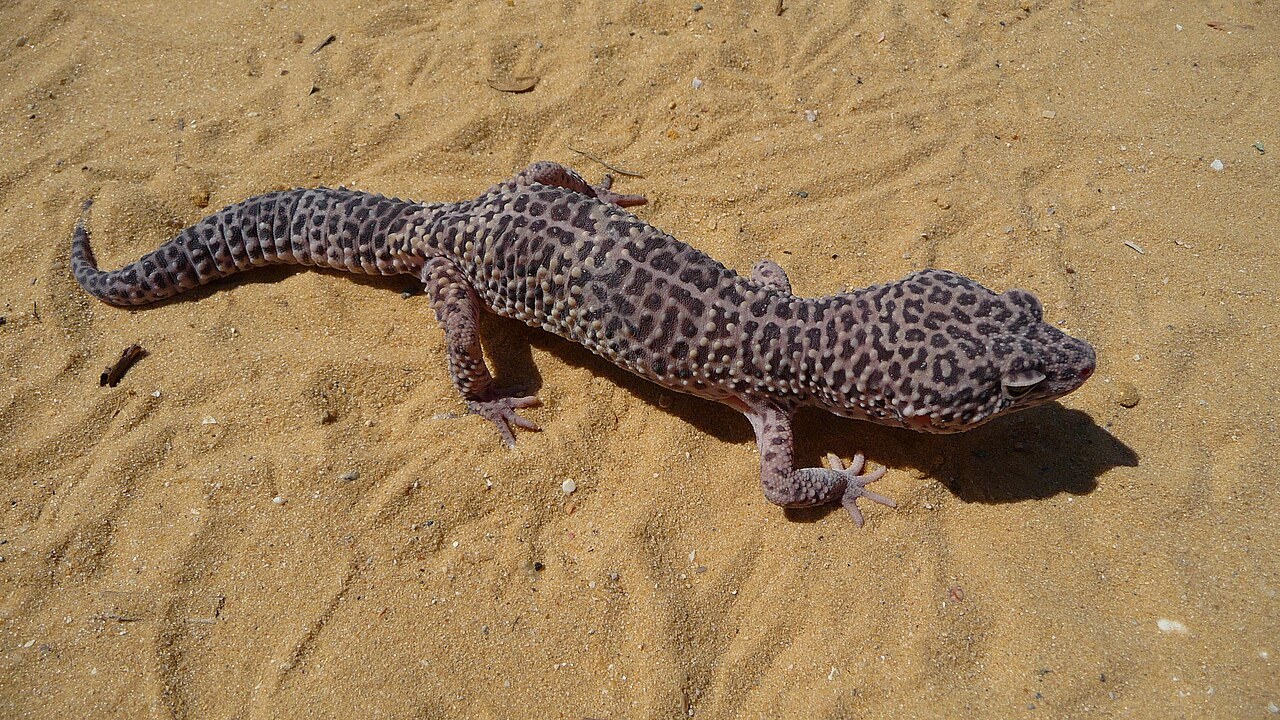
- Leopard geckos: review feeder insect variety and preparation, supplementation, and access to appropriate warmth and a humid hide.
- Crested geckos: distinguish balanced species-formulated food from fruit treats, monitor food freshness, and avoid persistent overheating or sodden conditions.
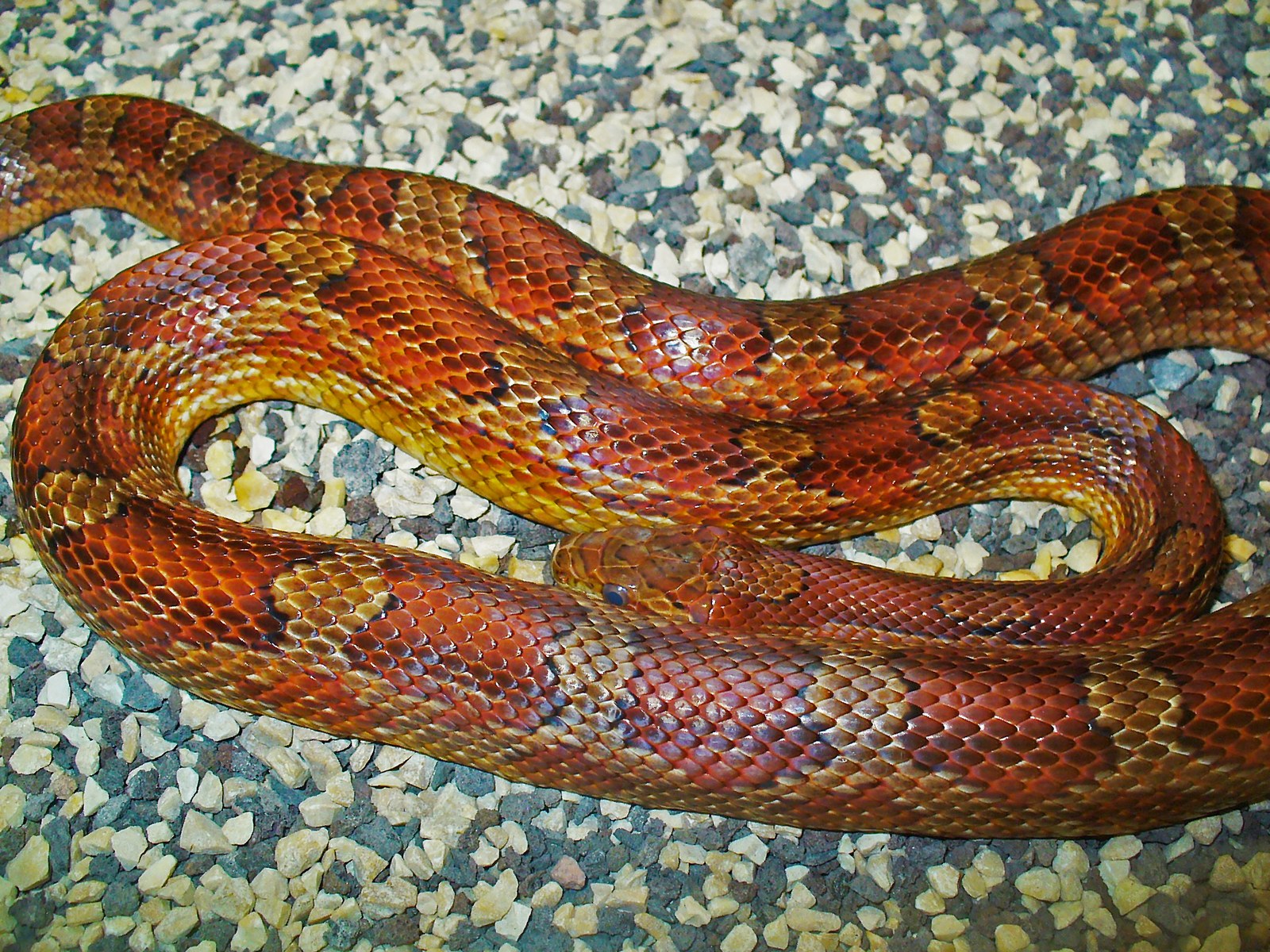
- Corn snakes: check whole-prey size and feeding history alongside cover, secure housing, and measured environmental conditions.
- Ball pythons: assess body condition, whole-prey feeding records, suitable humidity, and shelter when investigating appetite changes.
Weakness, unusual limb posture, or difficulty moving deserves veterinary assessment. Do not diagnose a calcium problem from appearance alone or increase multiple supplements without advice.

Support hydration and shedding without pulling skin
Humidity is not a single number that suits every reptile. Measure relevant locations and observe the daily pattern. Check drinking water, ventilation, substrate condition, and any humid retreat together rather than responding to every shedding problem by spraying the whole enclosure more heavily.
A leopard gecko needs access to localized moisture without turning its entire enclosure into a wet habitat. A crested gecko's humidity routine should permit appropriate variation and avoid permanently soggy surfaces. Corn snakes and ball pythons also have different humidity requirements; one snake's successful setup is not a universal prescription.
During routine observation, look for persistent retained skin, swollen areas, unusual discoloration, or changes around the eyes and toes. Shed skin can be checked after the animal has left it, without restraining the reptile to search for problems.
Investigate appetite changes with a useful checklist
A missed meal is information, not a diagnosis. Its significance depends on the species, the animal's age and condition, its usual feeding interval, and other changes. A growing lizard missing repeated feeds is not equivalent to an adult snake declining one scheduled meal.
Use a consistent sequence when appetite changes:
- Record the last confirmed meal and whether food was actually eaten.
- Verify air and relevant surface temperatures independently of the controller.
- Check water, humidity, light timing, shelter, and recent enclosure changes.
- Review food type, size, freshness, and recent handling or transport.
- Contact your veterinarian if refusal repeats, weight declines, or another abnormal sign appears.
Ball pythons may have variable feeding histories, but that should never become a reason to dismiss weight loss or illness. Likewise, do not label a quiet bearded dragon's refusal as seasonal dormancy without considering health and husbandry. Avoid force-feeding or making several major changes at once; both can complicate assessment.
Know which signs need urgent veterinary help
Seek urgent veterinary care for collapse, severe weakness, active bleeding, serious injury, seizures, or obvious breathing distress. Call ahead so the clinic can confirm reptile capability and advise safe transport. Do not delay because an enclosure adjustment seems likely to solve the problem.
Less dramatic changes can still need a prompt appointment: repeated regurgitation, persistent discharge, swelling, abnormal droppings, unexplained weight loss, or reduced movement. Describe what you observed rather than assigning a disease name. A video taken without disturbing the animal can help the clinician.
Context matters. A bearded dragon may open its mouth while basking, but persistent open-mouth breathing away from basking, especially with effort or discharge, is concerning. A hiding snake may be behaving normally, whereas a normally responsive animal becoming difficult to rouse is a different situation.
Keep quarantine and hygiene practical
Discuss quarantine for every new arrival, including its duration and any tests, with your veterinarian. Use separate accommodation and dedicated equipment; a neighboring enclosure with shared feeding tools is not meaningful separation. Attend established healthy animals before the newcomer and wash hands between tasks.
Apparently healthy reptiles can carry Salmonella. Wash with soap and water after handling animals, food, waste, or equipment. Keep reptile cleaning away from kitchens; use a suitable outdoor cleaning area when possible, or a dedicated utility area that can be cleaned and disinfected afterward.
Children younger than five should not handle reptiles or their environments. Reptiles are not recommended for households with young children, older adults, or people with weakened immune systems without careful consideration of the public-health guidance.
Prevention means combining observation with action. Keep the environment stable, preserve useful records, and contact a reptile veterinarian when a change persists or looks urgent.
Continue reading: Choosing Your First Reptile: Compare Five Popular Species.
Sources and further reading:
- Caring for reptiles and other exotic pets — RSPCA
- Management and Husbandry of Reptiles — MSD Veterinary Manual
- Reptiles and Amphibians — CDC Healthy Pets, Healthy People
- How To Care For a Leopard Gecko — RSPCA
- Caring for your Crested Gecko — RSPCA
Photo credits: George Chernilevsky (Public domain (copyright holder release; PD-self, not CC0)), Lennart Hudel (CC BY 4.0 International), H. Zell (CC BY-SA 3.0 Unported). Images resized and compressed for web display. Each image retains its linked license.


