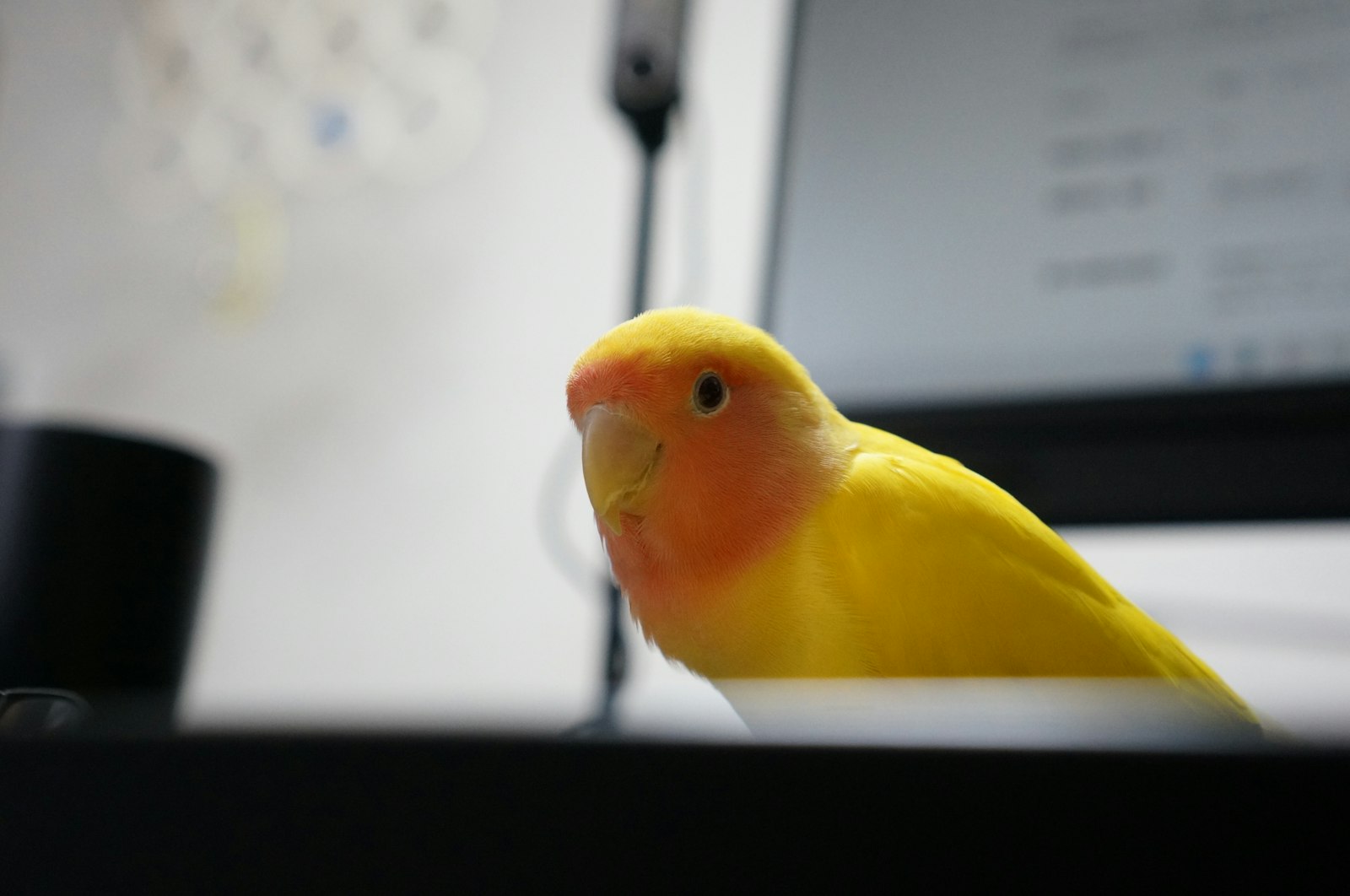
Lovebirds are intelligent, food-motivated learners who respond well to positive reinforcement training. Despite their small size, they are capable of learning tricks, step-up commands, and even simple words. The key is patience, consistency, and understanding their unique personality.
Understanding Lovebird Behavior
Lovebirds communicate through body language and vocalizations. Understanding these signals is essential:
- Pinned eyes — Excited, interested, or alert
- Fluffed feathers — Relaxed (when calm) or ill (when accompanied by lethargy)
- Lunging — Warning. The bird feels threatened or territorial
- Beak grinding — Content, relaxed
- Wing flipping — Stretching, excitement, or attention-seeking
Taming Your Lovebird
Lovebirds require patient, consistent taming, especially if not hand-raised.
- Week 1-2 — Sit near the cage daily, talking softly. Do not reach in
- Week 3-4 — Place hand inside the cage during feeding. Offer treats through the bars
- Week 5-6 — Offer treats from your hand inside the cage. Let the bird come to you
- Week 7+ — Begin step-up training using millet spray as reward
[tip]Never chase or grab your lovebird. This destroys trust and increases fear. Always let the bird come to you voluntarily.
Trick Training
Lovebirds can learn tricks using positive reinforcement:
- Step-up — Foundation command. Use finger and millet reward
- Target training — Touch a target stick for a reward
- Turn around — Lure in a circle with a treat
- Wave — Lift one foot on command
Managing Aggression
Lovebirds are naturally territorial. Managing aggression requires:
- Consistent handling — Daily interaction reduces territorial behavior
- Redirect behavior — If the bird lunges, step back and try again later
- Never punish — Lovebirds do not understand punishment
- Respect boundaries — If the bird is moody, give space
[warning]Lovebird bites can be painful — their beaks are strong for their size. Never react aggressively. Stay calm and redirect the behavior.
Training your lovebird builds trust and strengthens your bond. With patience and positive reinforcement, your lovebird will become a tame, trusting companion.