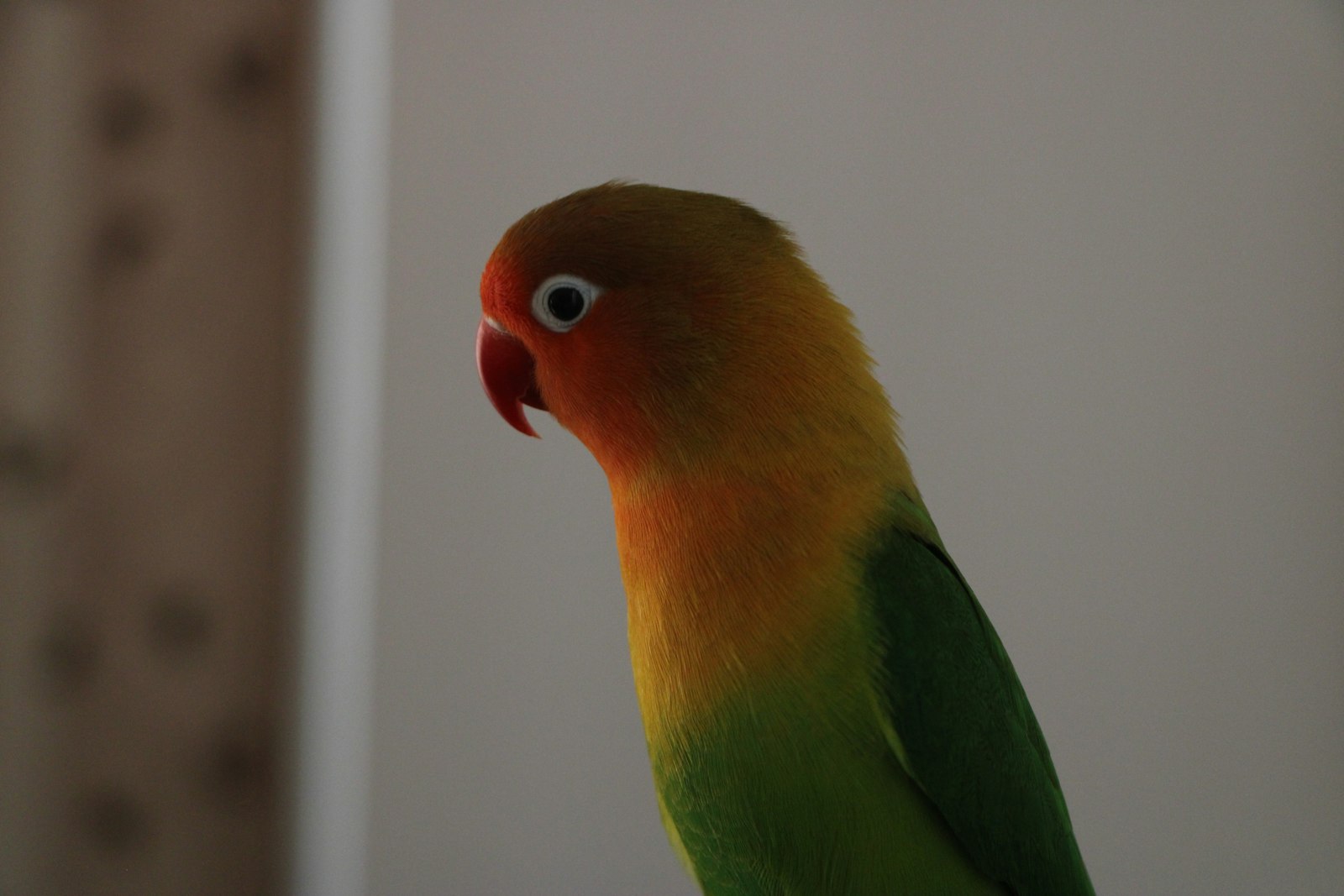
Lovebirds are generally hardy birds with a lifespan of 10-15 years. However, they are prone to specific health concerns that owners should monitor proactively. Like all birds, lovebirds hide illness until they are seriously unwell.
Feather Plucking
Feather plucking is one of the most common behavioral problems in lovebirds. It can be caused by stress, boredom, lack of socialization, nutritional deficiency, or medical issues.
Prevention strategies:
- Ample enrichment — Provide shreddable toys, foraging opportunities, and regular toy rotation
- Daily interaction — Lovebirds need 2-3 hours of socialization
- Balanced diet — Nutritional deficiencies can trigger plucking
- Consistent routine — Changes in environment or schedule can cause stress
If plucking persists, consult an avian vet to rule out medical causes such as infections, parasites, or allergies.
Egg Binding
Egg binding is a life-threatening emergency in female lovebirds. Symptoms include straining, lethargy, and sitting on the cage floor. Ensure adequate calcium intake and remove nesting materials if chronic egg laying occurs.
[warning]Egg binding is a veterinary emergency. Seek immediate veterinary care if your female lovebird shows signs of straining or lethargy.
Obesity
Overweight lovebirds are at risk for fatty liver disease. Feed a pellet-based diet, limit high-fat seeds, and ensure adequate exercise.
Aggression and Behavioral Issues
Lovebirds can be territorial and aggressive, especially around their cage. Consistent handling, proper socialization, and environmental management help reduce aggression. Never punish — redirect unwanted behavior.
Preventive Care
- Daily observation — Check feathers, breathing, droppings, activity
- Weekly weighing — Normal weight is 1.5-2 ounces
- Annual vet visit — Wellness exam with an avian veterinarian
- Cage hygiene — Clean cage, perches, and dishes regularly
Lovebirds are hardy birds whose health concerns are manageable with proactive care and attention.