Devon Rex Care Guide: Gentle Coats, Safe Climbing and Daily Comfort
Devon Rex care starts with gentle coat handling, warm resting places and safe climbing. Build a daily routine for feeding, play, litter care and vet visits.
Read article


Felis catus
A curly-coated companion with oversized ears and an appetite for shared adventures.
Deep Dive
The Devon Rex began with a curly-haired kitten discovered in Devon, England. The Cat Fanciers' Association dates that discovery to 1959. The kitten, known as Kirlee, became the foundation of a breed whose remarkable coat initially suggested a connection with the already known Cornish Rex. Further breeding work showed that the two cats did not simply carry the same inherited curl. Their neighboring English origins explain the frequent comparison, but a Devon is not a Cornish Rex with larger ears or a different haircut.
The distinction remains visible today. A Devon has a broad, characterful face, prominent cheekbones and large ears set low on the head. Its wavy coat includes sparse, short, curled guard hairs, unlike the Cornish Rex's lack of outer guard hairs. Both breeds attract people who enjoy active cats, yet neither appearance nor shared geography guarantees an identical personality. Contemporary Devons retain a reputation for curiosity, sociability and enthusiasm for being near their people rather than observing family life from a distance.
Breed history is useful when choosing questions for a breeder or rescue, not as a substitute for evaluating the individual cat. Ask about temperament, early handling, family health and documented congenital myasthenic syndrome testing where relevant. A pedigree or an unusually dramatic curl does not establish health. Preserving this distinctive cat responsibly means valuing comfortable skin, sound movement, informed breeding decisions and a home prepared for companionship as much as its memorable silhouette.
A Devon Rex often wants a role in whatever you are doing. One may supervise breakfast from a safe perch, investigate a newly opened cupboard or carry a toy back for another game. Breed descriptions consistently emphasize intelligence and close attachment to people. In practice, this can be delightful company, but it also means that buying a climbing tree is not a replacement for interacting with your cat. Plan short games, opportunities to explore and quiet time together throughout the day.
Affection does not cancel feline boundaries. A cat that enjoys sitting beside you may dislike being held, and an outgoing kitten may need time to feel secure after moving house. Watch for relaxed posture and voluntary approaches. Tail lashing, a tense body or repeated attempts to leave mean the interaction should stop. Children can enjoy a Devon's playfulness when an adult supervises, toys keep hands out of the chase and the cat has a retreat nobody follows it into.
Many Devons respond well to tiny rewards, target training and games that offer an achievable challenge. Introduce these while the cat is interested, then finish before frustration builds. Other animals should be introduced gradually, with separate resources and escape routes, rather than relying on a reputation for friendliness. The trait scores here are editorial tendencies, not measured predictions. A quieter adult Devon can be an excellent companion too, while a sudden loss of a previously lively cat's playfulness deserves attention rather than a personality label.
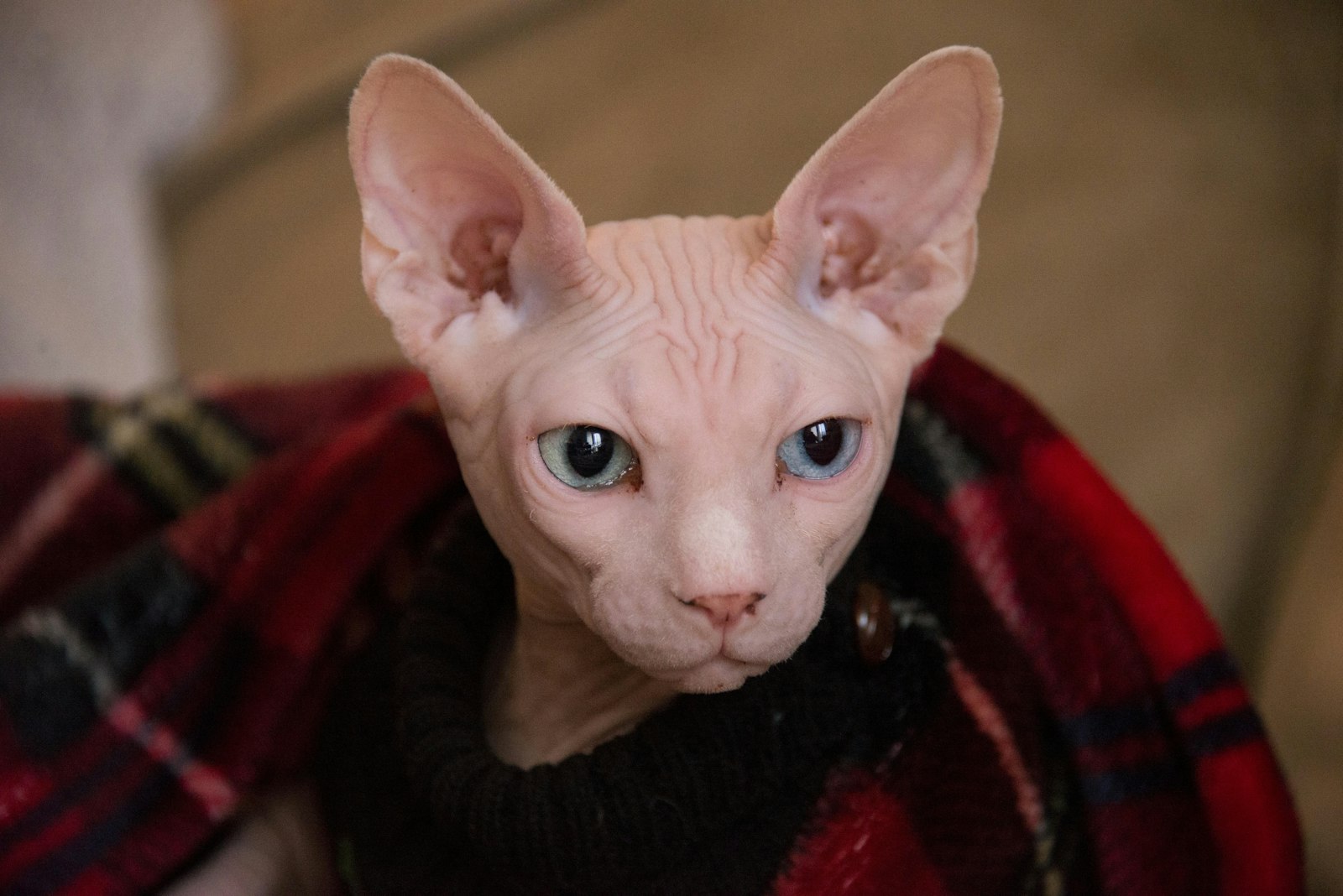
The Devon Rex combines a small outline with surprising muscle. Typical adult weight is about 6-9 pounds, although individuals and sexes vary, and that range is not a feeding target. Large ears, wide-set eyes and pronounced cheekbones give the face its distinctive expression. Long limbs and a slim tail contribute to an agile appearance. The breed comes in many colors and patterns, so recognition depends more on its structure and unusual coat than on any single color combination.
Its short coat forms soft, sometimes uneven waves rather than the familiar straight covering of most shorthairs. The Cat Fanciers' Association describes sparse, short, curled guard hairs, an important difference from the Cornish Rex. Density can vary, and the hairs are fragile. Vigorous brushing intended to make the coat look fuller may instead break it. Short or curled whiskers are part of the appearance and should never be trimmed. Low visible shedding does not make a Devon hairless or remove normal feline allergen production.
Judge coat comfort alongside appearance. A naturally thin area that has always looked the same is different from a new bald patch accompanied by redness, scratching, crusts or excessive licking. Photograph changes and ask a veterinarian rather than repeatedly washing them. Devons are not hypoallergenic, because saliva and skin-derived allergens remain even when little hair reaches your furniture. Their light covering also makes comfortable bedding and access to warmth useful, but warmth should come with choice, shade and protection from direct heaters rather than constant exposure to heat.
Living with a Devon Rex works best when your home provides both activity and refuge. Secure climbing furniture, comfortable elevated beds and a quiet sleeping space let a curious cat choose between joining you and resting. Keep an alternative resting place away from heat, and block access to hot appliances. Before starting a washing machine or dryer, check inside: a warm, enclosed space can be especially attractive to a cat that likes burrowing. Windows and balconies also need secure barriers.
Build the day around several short opportunities to hunt a toy, explore a food puzzle or practice a useful skill. Feed a complete feline diet appropriate to life stage, with portions guided by body condition and veterinary advice rather than persistent requests for snacks. Check litter trays daily and maintain separate feeding and resting resources in homes with multiple pets. Grooming is usually gentle and selective. A healthy coat does not automatically need a bath every week, and more cleaning is not a cure for unexplained skin changes.
Budget for routine veterinary care and unexpected illness as well as food and equipment. Ask about family health information and congenital myasthenic syndrome test reports before acquiring a kitten, while recognizing that a DNA result cannot guarantee overall health. Arrange dependable care when you travel, and introduce absences gradually instead of assuming an affectionate cat will cope with abrupt isolation. With children, visitors or other pets, protect the Devon's ability to withdraw. A household that welcomes companionship without demanding constant interaction is a better match than one focused only on the breed's unusual looks.
At a Glance
Ownership Guide
Offer several short interactive play sessions and stable climbing routes with safe landings. Let your Devon choose its pace, and investigate unusual fatigue or reluctance to jump rather than trying to build stamina through it.
Choose complete, balanced cat food for the appropriate life stage and measure portions against an individual veterinary calorie target. Keep treats within 10% of daily calories and adjust using body condition, not the breed's reputation for a hearty appetite.
Handle the fragile curls lightly and clean only where needed, using a veterinarian's advice for persistent oiliness or skin disease. Avoid routine overbathing, vigorous brushing and attempts to scrub away new bald patches.
Use brief, reward-based lessons for carrier entry, a hand target and settling on a perch. Provide a rewarding alternative to kitchen counters instead of spraying, shouting or forcibly restraining your cat.
Introduce people and animals gradually while preserving quiet hiding places and separate resources. Supervise children and stop play when the cat becomes tense or tries to leave.
Arrange life-stage examinations, vaccination and parasite plans, dental assessment and weight checks with your veterinarian. Discuss documented COLQ-associated congenital myasthenic syndrome testing and family history without treating any screening result as an all-health guarantee.
Wellness
A recessively inherited COLQ-associated disorder is documented in Devon Rex cats and can cause early weakness, abnormal posture and swallowing problems. DNA testing informs breeding decisions for the tested variant, but weakness in any cat still needs a veterinary workup.
Sparse curls can break with rough grooming, while itching or new hair loss may signal a separate skin problem. Do not assume redness, crusting or excessive licking is normal for the breed or treat it with increasingly frequent baths.
Hip dysplasia and patellar luxation are reported breed concerns, although not every Devon is affected. Limping, skipping steps or reduced jumping merit examination, and maintaining suitable body condition supports comfort without preventing inherited abnormalities.
Hypertrophic cardiomyopathy occurs in cats generally and is not excluded by a Devon's small size or an unrelated DNA result. Your veterinarian can advise when family history, examination findings or symptoms warrant cardiac investigation.
Dental disease and excess weight are general feline concerns rather than conditions unique to Devons. Measure food and establish gentle toothbrushing, with veterinary assessment for mouth pain, bad breath or changes in eating.
Documented CMS test results can identify carriers of the tested recessive variant and support informed breeding decisions. Screening reduces uncertainty about that specific risk, not every possible genetic or acquired condition.
Routine examinations and a simple record of appetite, movement, weight and skin changes help your veterinarian notice developing problems. Preventive care benefits individual cats without promising that inherited disease will never occur.
Further Reading

Devon Rex care starts with gentle coat handling, warm resting places and safe climbing. Build a daily routine for feeding, play, litter care and vet visits.
Read article
Feed your Devon Rex with confidence: choose complete cat food, measure portions, budget treats and use body condition rather than appetite to guide changes.
Read articleUnderstand Devon Rex health, including congenital myasthenic syndrome testing, skin concerns and joint problems, with clear signs that need veterinary care.
Read article
Train your Devon Rex with rewards, climbing alternatives and games. Teach useful skills, reduce counter surfing and recognize stress before play escalates.
Read article
Protect your Devon Rex curls with gentle grooming, selective cleaning and careful skin checks. Learn why extra baths and vigorous brushing can cause problems.
Read article
Living with a Devon Rex means sharing space with a curious climber. Plan warm retreats, safe introductions and daily companionship that fits your household.
Read articleYou May Also Like