Cats · Shorthair

Exotic Shorthair

Felis catus

A plush-coated companion whose comfort matters more than an exaggerated flat face.

📏Size Medium, compact build
⚖️Weight Typically 10-12 lbs (4.5-5.4 kg)
📅Lifespan 8-15 years
🌍Origin United States
🏃Energy Low to moderate
🧹Shedding Moderate, heavier seasonally
AffectionateQuietly playfulGentle companionRoutine-lovingFamily-orientedPatient introductionsReward-based learnerPuzzle explorer
1950s
American beginnings
Persian and shorthair crosses shaped the breed
1966
CFA recognition
Originally named Exotic Shorthair by CFA
10-12
Typical adult pounds
An approximate range, not an individual weight target
6
Practical guides
Care, food, health, behavior, grooming and home life

Deep Dive

About This Breed

The Exotic Shorthair developed in the United States rather than arriving as an ancient shorthaired Persian variety. The Cat Fanciers' Association traces its beginnings to American breeders crossing Persians with American Shorthairs in the 1950s. These cats combined a rounded Persian-like outline with a different coat texture and length. CFA recognized the breed in 1966 under the name Exotic Shorthair, later shortening its breed name to Exotic. Other organizations and everyday owners still commonly use the longer name. Its Persian relationship is therefore central to understanding the breed, not simply a resemblance created by a haircut.

The most useful distinction for an owner is coat management. A Persian carries long hair that generally requires more intensive detangling, while an Exotic Shorthair has a dense, plush coat that stands away from the body. Shorter hair does not erase the shared facial structure or its possible welfare consequences. Breathing restriction, troublesome tearing and inherited kidney disease remain relevant discussions with a veterinarian. Describing the Exotic as a low-maintenance Persian can obscure those responsibilities and encourage people to overlook discomfort.

Today, evaluate the individual cat rather than selecting for the most exaggerated expression. Ask for identifiable health records, discuss PKD screening results with your veterinarian, and observe relaxed breathing and comfortable movement. Adoption can offer the chance to learn an adult cat's established preferences. Historical recognition and pedigree paperwork describe ancestry, but neither establishes that a particular cat can breathe freely or will remain healthy.

An Exotic Shorthair often enjoys being near familiar people without narrating every activity. You may find your cat following you to another room, settling beside your laptop or waiting for a gentle game before dinner. Breed descriptions commonly emphasize quiet, loyal companionship, but affection is not a promise of lap sitting. Some cats prefer a nearby cushion to being held. Let your cat approach, offer a brief touch around a comfortable area and pause to see whether more contact is welcome.

Quiet does not mean unresponsive or untrainable. Many Exotics enjoy a toy moving around a cardboard corner, an easy food puzzle or learning to step into an open carrier. Short, successful sessions suit cats that prefer bursts of activity followed by observation. Reward participation and stop while your cat remains comfortable. A sudden decline in play, new hiding or reluctance to climb deserves attention rather than being dismissed as a naturally lazy personality. Pain and breathing difficulty can both change how a cat behaves.

The trait scores on this page are editorial tendencies, not clinical measurements or guarantees about a kitten. Early experiences, health, age and the household all influence behavior. Children need supervision and should allow the cat to leave rather than carrying or cornering it. Introductions to other pets work best with separate resources and gradual exposure. A companionable Exotic still needs private resting places and the freedom to choose when social contact ends.

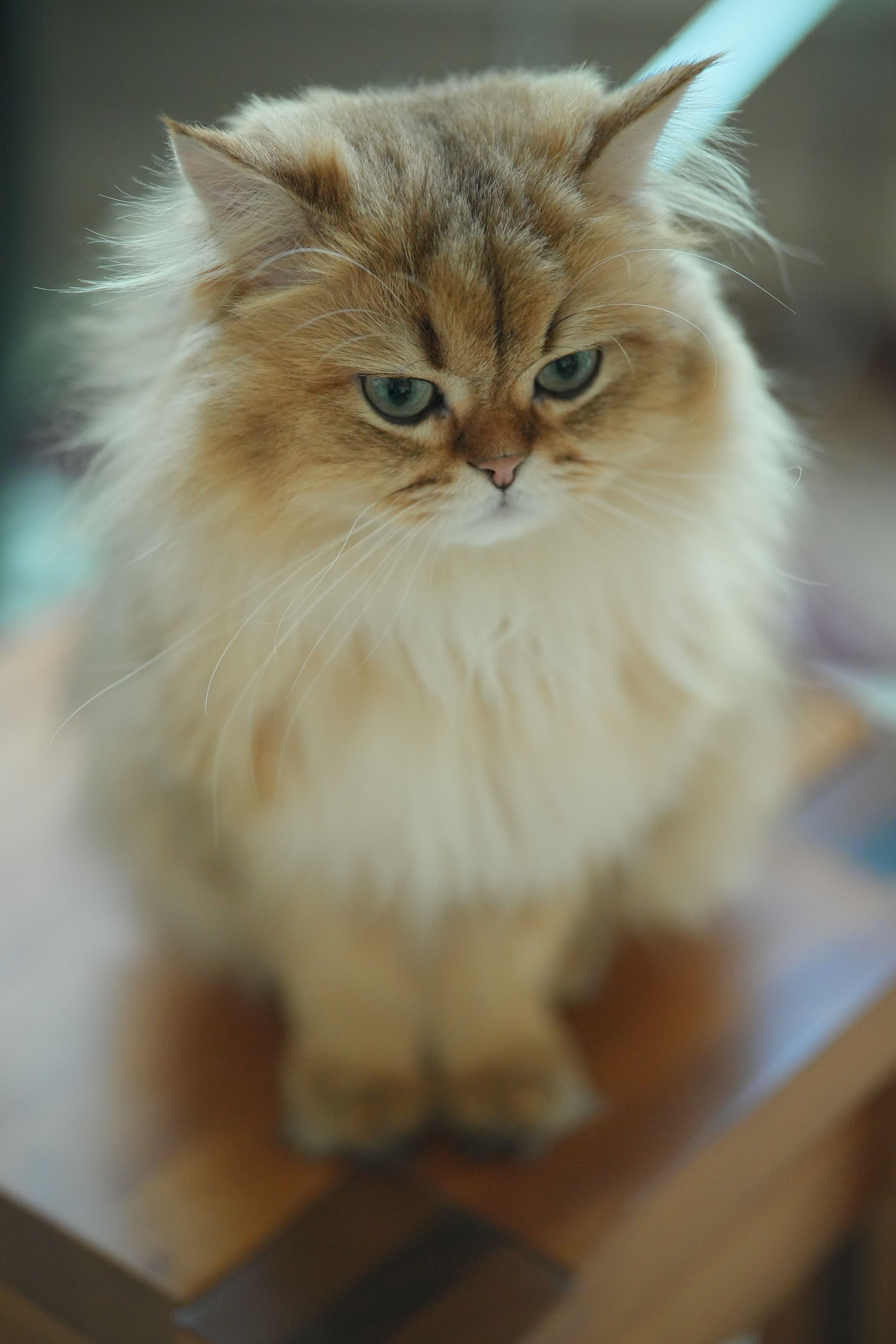
The Exotic Shorthair has a compact, substantial outline, a broad chest, rounded head and conspicuously plush coat. CFA describes a dense undercoat that lifts the hair away from the body rather than letting it lie sleekly against the skin. Compared with a Persian's long coat, this shorter covering makes the outline look softly rounded without the same flowing hair. Many colors and patterns occur. Coat color is not a shortcut for predicting personality, and a photograph cannot establish a cat's breathing comfort or medical history.

PetMD gives a typical adult weight of 10-12 pounds, approximately 4.5-5.4 kilograms, but individuals vary with sex, frame and condition. That range is descriptive rather than a goal to feed toward. A plush coat can conceal an expanding waist, so use a veterinary body-condition assessment alongside regular weights. You should not assume every broad-bodied cat is overweight, nor that the breed's naturally solid build makes excess fat harmless. Hands-on assessment matters more than comparing your cat with a heavily groomed show photograph.

The short muzzle makes the Exotic brachycephalic, meaning short-headed. Flattened anatomy can affect airways, tear drainage and eye protection. Narrow nostrils, noisy effortful breathing, persistent eye irritation or difficulty eating are welfare concerns, not attractive refinements. Choose comfort over a dramatic profile and ask a veterinarian about any concerns. A shorter coat may reduce grooming time compared with a Persian, but it does not provide protection against problems associated with the face.

Living with an Exotic Shorthair works best when companionship and observation fit naturally into your day. Provide a quiet home base with separate eating, drinking, toileting and resting areas, then add scratching surfaces and stable climbing options. An apartment can provide a good environment when it offers choices rather than one bed and a full bowl. Secure windows and balconies, and keep rooms comfortably cool. Flat-faced cats may struggle with heat or strenuous activity, so do not make energetic performance a requirement for joining family life.

Offer measured meals of complete feline food and several invitations to gentle play. Watch how comfortably your cat eats, moves and recovers after a game. Comb the plush coat regularly and inspect the eyes and facial skin without automatically treating discharge as cosmetic. Veterinary guidance is important if cleaning becomes frequent or uncomfortable. Litter habits also provide useful information, especially when cats share a home. A daily look at appetite, urine production and usual behavior is more informative than assuming a quiet cat has no concerns.

Make plans for workdays, travel and future medical needs before bringing your cat home. A reliable sitter should know the cat's baseline and have permission to seek care. Schedule preventive veterinary visits and discuss the actual scope of any PKD test rather than accepting a broad health guarantee. A calm child or compatible pet may become a good companion, but all introductions need supervision, escape routes and patience. No breed label replaces respect for an individual cat's boundaries.

At a Glance

Personality Traits

Affectionate with Family5 / 5
Ease of Training3 / 5
Good with Children3 / 5
Adaptability3 / 5
Energy Level2 / 5
Sociability with Other Pets3 / 5
Playfulness3 / 5
Vocalization2 / 5

Ownership Guide

Care Essentials

🏃

Exercise

Offer several short, voluntary games with low chases, toy ambushes and easy climbing routes. Stop if breathing becomes noisy or effortful, and seek emergency care for labored or open-mouth breathing rather than treating it as normal exertion.

🥣

Nutrition

Choose complete feline food appropriate to life stage and measure portions against a veterinary calorie target. Count treats within that budget, keeping them at no more than 10% of daily calories, and assess body condition beneath the plush coat.

🛁

Grooming

Comb the dense coat weekly as a starting point and increase gentle sessions during heavier shedding. Ask your veterinarian how to manage facial moisture, and have squinting, redness or new discharge assessed rather than simply cleaning more often.

🎓

Training

Reward small steps toward carrier entry, a resting station and comfortable handling. Keep sessions brief and allow withdrawal, never using punishment or restraint to turn a reluctant cat into a compliant one.

🤝

Socialization

Introduce people and other pets gradually while preserving a private retreat and separate resources. Supervise children and teach them to invite contact rather than pick up, chase or corner the cat.

🏥

Vet Care

Arrange regular examinations with attention to breathing, eyes, mouth, weight and age-related changes. Discuss identifiable PKD test records and their limits, since screening does not guarantee freedom from every inherited or acquired illness.

Wellness

Health Considerations

Brachycephalic airway problems

The Exotic's shortened face can be associated with restricted airways, including narrowed nostrils. Noisy effortful breathing merits veterinary assessment, while labored or open-mouth breathing and collapse require emergency care.

Tearing and painful eyes

Facial anatomy can contribute to watery eyes, but redness, squinting, cloudiness or rubbing may indicate a more serious problem. Seek prompt veterinary assessment and use only the cleaning routine or treatment advised for your cat.

Polycystic kidney disease

PKD is an inherited concern in Persian-related cats and can progressively impair kidney function. Genetic screening provides useful information about the tested variant, but a negative result is not a guarantee against every cause of kidney disease.

Excess weight

Obesity is a general feline risk, not a diagnosis unique to Exotics, and a dense coat may conceal changes in condition. Measured feeding and a veterinary weight plan support comfort without deliberate fasting or abrupt restriction.

Dental and mouth discomfort

Dental disease affects cats of all breeds, and an Exotic that drops food or resists facial handling needs a mouth examination. Home care complements professional assessment but does not replace treatment of painful teeth.

Individual preventive care

Veterinary examinations, appropriate vaccination and tailored parasite control help manage preventable risks. They cannot remove inherited susceptibility, so new symptoms still need assessment between scheduled visits.

Useful home observations

Tracking appetite, body weight, litter output and normal resting behavior can help you recognize change earlier. Records support veterinary decisions without turning home monitoring into a diagnosis or a health guarantee.

Further Reading

Related Articles

Tabby Exotic Shorthair portrait with round amber eyes and a plush coat

Exotic Shorthair Care Guide: Plush Coats, Comfortable Breathing and Daily Routines

Build an Exotic Shorthair care routine around comfortable breathing, eye checks, plush coat care, measured meals and gentle play, with clear signs to seek help.

Read article
Ginger Exotic Shorthair kitten peering over a low panel

Exotic Shorthair Feeding and Nutrition: Measured Meals for a Plush-Coated Cat

Plan Exotic Shorthair meals using complete life-stage food, label calories and body condition, with practical bowl choices and safe responses to appetite loss.

Read article
Tabby Exotic Shorthair portrait with round amber eyes and a plush coat

Exotic Shorthair Health Issues: Breathing, Eyes, PKD and Practical Monitoring

Understand Exotic Shorthair health concerns, including restricted breathing, painful eyes and PKD, plus screening limits and the symptoms that need urgent care.

Read article
Orange and white Exotic Shorthair resting indoors

Exotic Shorthair Training and Behavior: Calm Skills Without Pressure

Teach your Exotic Shorthair carrier entry, calm handling and useful home skills with short reward-based sessions, while recognizing stress and possible pain.

Read article
Ginger Exotic Shorthair kitten held gently in a white towel

Exotic Shorthair Grooming Guide: Plush Coat Care and Gentle Face Cleaning

Care for your Exotic Shorthair's dense coat with gentle combing, seasonal shedding checks and vet-advised face cleaning that never dismisses signs of eye pain.

Read article
Black Exotic Shorthair resting on a carpeted step

Living With an Exotic Shorthair: Companionship, Home Setup and Honest Expectations

Picture daily life with an Exotic Shorthair, from companionship and apartment enrichment to family boundaries, sitter plans and realistic care commitments.

Read article

You May Also Like

More Exotic Shorthair Content Coming Soon
We're working on more detailed guides, care tips, and expert advice for this breed. Check back soon for updates!